
Is Voting in the Liberal Leadership Race Secure?
The Foreign Interference Commission’s final report reaffirms vulnerabilities in party leadership contests.
GRAPHIC: Chris Curtis
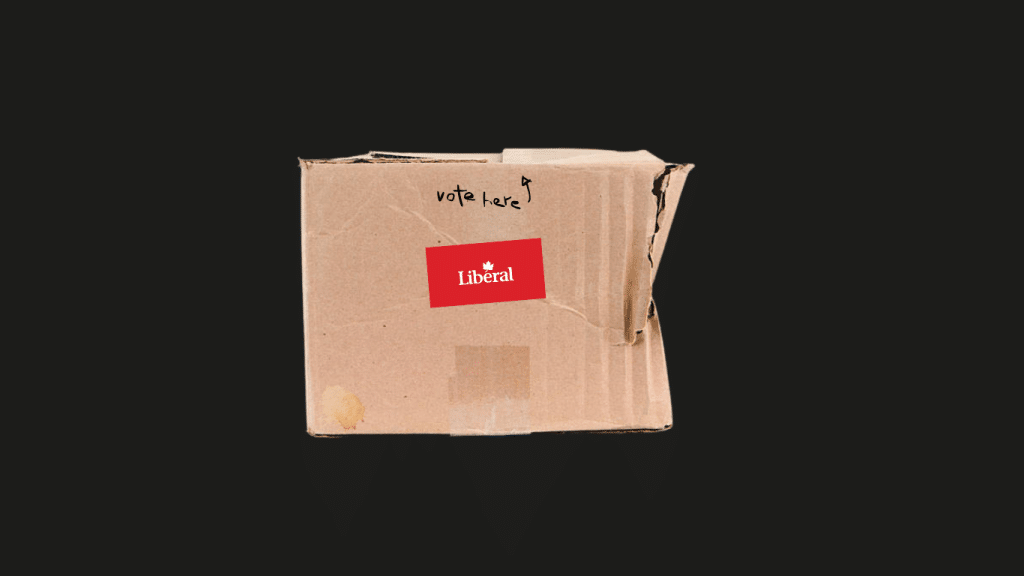
Did the Liberal Party of Canada’s (LPC) leadership race allow “anyone across the globe who is 14 years or older” to register as a liberal to vote in it?
No, it did not: users on social media are being misled into potentially committing a federal offence and may be fined up to $10,000, per the 2025 “National Leadership Rules” of the LPC.
The claim appeared in a post (archived here) on X on Jan. 24. It read:
“I am now a registered Liberal. It cost me $0 to join Anyone across the globe who is 14 years or older can register to vote for Canada’s next Liberal leader (not ridiculous at all) My vote will obviously be going to Chandra Arya Sign up here for FREE: http://liberal.ca/register/”
The X account behind the post’s claim is a Canadian journalist, Nicolas Bélanger, who runs a YouTube channel where he frequently publishes conservative-leaning provocative content, manipulated media, displays a “Make America Great Again” hat, platforms stories “trolling” liberals and “the woke left.” In one of Bélanger’s videos, he attends a Conservative Party of Canada rally and is recognized by the Conservative leader. “Keep up the great work,” Poilievre tells the journalist.

SCREENSHOT: @truckdriverpleb X account taken on Thu Jan 30 14:16:48 2025 ET
This comes as the Foreign Interference Commission (FIC) published its final report on the 2019 and 2021 federal elections Tuesday. Commissioner Marie-Josée Hogue told reporters Tuesday that “information manipulation, whether foreign or not, poses the single biggest risk to our democracy.”
Many of the FIC’s findings and recommendations are in harmony with Chief Electoral Officer of Canada (CEO) Stéphane Perrault’s report titled “Protecting Against Threats to the Electoral Process”, released last November.
In his report, Perrault identified vulnerabilities in “Nomination and Leadership Contests.” Perrault also warned against “the coordinated attempts to infiltrate and impact the results of a contest.”
Users on social media suggested manipulating the leadership race vote to elect their perceived weakest Liberal leadership candidate to maximize Conservative Leader Pierre Poilievre’s chances of winning the upcoming federal elections. Voting for Chandra Arya was first suggested by the social media users because he was deemed to have the least chance of winning the federal election against Poilievre, if their plan came to fruition. After Arya was removed from the race, they switched to supporting Ruby Dhalla.
FIGHT DISINFORMATION, SUPPORT LOCAL MEDIA
“From Watergate to the ongoing Liberal leadership race, dirty tricks are a noteworthy phenomenon in contemporary democracies,” Daniel Béland, a professor of political science at McGill University, told The Rover following an inquiry on Tuesday.
“Today a combination of growing partisan polarisation and social media mobilization has the potential of both increasing the public profile and exacerbating the nastiness and the scope of these manipulations.”
The leadership rules (archived here) state that the vote is restricted to “Canadian citizens, permanent residents, and those with Indian Act status.” That means ineligible voters should not have their vote counted. There are additional details pertaining to what makes “Registered Liberals” eligible under the rules’ Section 6 “Leadership Vote Procedure.” The LPC’s website also states its requirements.
The LPC’s website page that invited people to register is accessible through the archive WayBack Machine, as the window to register as a Liberal to be eligible to vote in the 2025 Leadership race is closed as of January 27, 2025.
Voters “in the event of any misrepresentation” may be fined up to $10,000 by its Chief Electoral Officer, per those Rules. Not only that, but the document also states that “each voter acknowledge that unlawful interference in a political process of a registered political party is a federal offence.”
LPC’s leadership race Chief Electoral Officer is not to be confused with CEO Perrault.
It is unclear how the safeguards in place will be enforced or what is considered “unlawful interference” since leadership contests are unregulated, opaque and the Canada Elections Act’s (CEA) provisions do not apply to them the same way they do during general elections. There is a possibility that the internal measures employed by the LPC are inadequate in authenticating its voters’ “Canadian citizenship, permanent residency or Indian Act status” and therefore might inadvertently allow ineligible voters. But its internal measures are not publicly available for The Rover to assess, though FIC Hogue’s final report suggested they are insufficient.
Such strategies aiming to influence the outcome of a leadership race may not have any direct impact on its outcomes, but they have the ability to erode public trust in how the campaign is safeguarded. Especially given their lack of transparency and regulation as outlined by the reports produced by Perrault and Hogue.
The Rover reached out to the LPC for comment. This story will be updated if a response is received.
The race is expected to conclude on March 9.
Six of the seven Liberal Leadership candidates were approved by the party, according to CBC: Mark Carney, Chrystia Freeland, Karina Gould, Jaime Battiste, Frank Baylis and Ruby Dhalla, while Chandra Arya was excluded from the race. The candidates have yet to be approved by Elections Canada.
In a phone call on Jan. 28, an Elections Canada employee told The Rover that “other than a few specific circumstances, the law doesn’t prevent people – foreign or domestic – from commenting on elections or the electoral process.” He also said that political parties set their own rules for leadership contests; Elections Canada only approves the contestants and oversees financing rules. Moreover, the rules can be changed during the race’s course.
CEA provisions on voting do not apply to nomination or leadership contests, since political parties have carte blanche on leadership race rules. CEO Perrault’s recommendations have not yet been implemented. As such, these contests still lack transparency, per CEO Perrault’s Nov. 1, 2024 report.
The Canadian Security and Intelligence Service (CSIS) declined to publicly comment on the matter, but it told The Rover that “During the Liberal Party of Canada’s leadership campaign, the SITE Task Force, for which CSIS is currently the Chair, will brief the Deputy Ministers’ Committee on Intelligence Action (DMIA) on a regular basis, as SITE does for by-elections. Each SITE Task Force member agency works within their respective mandate to detect and counter foreign interference threats, and will take actions and share information as appropriate.”
The FIC’s final report outlined the need to make the SITE Task Force permanent, instead of only operating during general elections, though it recommends leaving it up to political parties whether or not to receive its assistance.
According to FIC Hogue’s final report, all political parties were “firmly opposed to regulation of leadership and nomination races, and they all stated that the internal measures that have been put in place to ensure the integrity of these races were sufficient, whereas in my view, they are not.”
As long as the leadership and nomination contests remain in the dark, it is not possible for The Rover to adequately assess the credibility of those internal measures’ supposed sufficiency. The final report’s content only scratches their surface.
The Bloc Québécois is the only federal political party that does not have a citizenship or permanent residency requirement to register in its leadership or nomination contests, per Hogue. That could make it considerably more vulnerable to meddling, whether domestic or foreign.
The Globe and Mail published an opinion piece by cybersecurity expert Charles Finlay also highlighting vulnerabilities in the current LPC leadership race shortly before the FIC’s final report was released.
A northern Ontario MP called for Elections Canada to investigate potential interference by Elon Musk and his social media platform X on Jan. 28, per CTV. It’s worth noting that the X post that made the claim at the center of this fact check does not have a community note and was not moderated as of this writing.
With Meta pulling its support for fact-checkers in the United States this year, Hogue’s concerns about misinformation and disinformation being the primary threat to Canadian democracy begs the question: Should Canadian lawmakers impose fact-checking on social media platforms operating in Canada?
Author

Related Articles

McGill Spent Over $1 Million Fighting Unionization
Union organizers at the university say this is part of a broader trend towards corporatization of the public institution.

Rent Increases Set to Worsen the Housing Crisis
Experts warn that homelessness continues to grow as Quebec’s housing tribunal proposes a new way to calculate rental increases.
Montreal Leans on Condo Developers to Fix the Housing Crisis
As the number of unhoused deaths rises every year, experts say corporate interest in the housing crisis excuses the city and province from serving the public.
Comments (0)
There are no comments on this article.