
Where Do Parties Stand on the Toxic Drug Crisis?
As the crisis continues to claim lives, federal leaders bring their solutions for the 2025-2029 term.
In 2024, an average of 21 people died every single day in Canada from opioid toxicity. This amounts to over 50,000 deaths since the count began in 2016.
Quebec is also seeing a sharp increase in overdose poisonings, with 33 per cent more deaths in 2024 than the year before. The Institut national de santé publique du Québec foresees 2024 being the worst year on record for the province in regards to the crisis.
With under a week left until election day, Canada’s Conservative and Liberal leaders have voiced their plans to crack down on toxic drug use. They are motivated to move away from years of progress on harm reduction methods, which have been backed by evidence to save lives, and to instead head down a criminalization route.
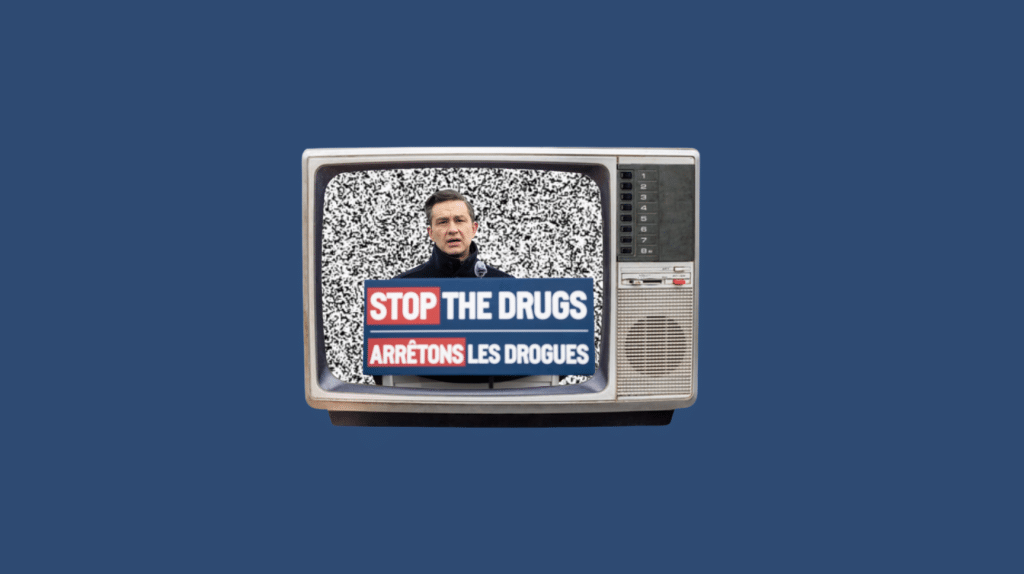
The Conservative Party and Pierre Poilievre
Out of the three main national parties, Pierre Poilievre has been the most outspoken this election campaign about the drug crisis in Canada.
A stark contrast to the party’s 2021 health-oriented approach, Poilievre’s Conservative Party has fully committed to drug criminalization efforts for its 2025 campaign. One of his plans includes enforcing life sentences for fentanyl dealers and traffickers as well as criminal organizations deemed to profit off the crisis.
According to the party leader, the sanctionable trafficking amount is over 40 milligrams, less than half a baby Aspirin. Anything between 20 and 40 milligrams is eligible for a mandatory 15 years in prison. He has repeatedly linked mass murder to the fentanyl crisis and wants to “ensure these monsters rot in jail forever.”
Additionally, he expressed a commitment to shutting down “drug dens”, more particularly temporary overdose prevention sites (OPS) and supervised consumption sites (SCS). These sites operate under legal exemptions from the Controlled Drugs and Substances Act, which grants the exempted territories and provinces the ability to open them as considered necessary by local health authorities. Poilievre’s measure could cause OPS and SCS across the country to cease operations. Quebec has five established SCS, four of which are in Montreal. Many more are pending approval.
Poilievre said that they do not work and that they would be shut down, which would occur by not renewing the exemptions in the upcoming federal term. They are set to expire on Sept. 30.
In response, executive director of SCS Maison Benoît Labre Andréane Désilets said that “the services we offer are essential to responding to the increase in homelessness and the overdose crisis.”
Established in April 2024, the site is also Montreal’s first supervised drug-inhalation centre.
The party leader’s latest proposal would introduce the possibility for judges to order treatment for addiction for people who have committed minor, non-violent drug-related crimes. This treatment would become a substitute for jail time, and Poilievre says it would be an appropriate option in cases of severe intoxication and addiction.
In October 2024, Poilievre also voiced his support for involuntary drug addiction treatments for minors and imprisoned people who are deemed incapable of making their own decisions. However, he has not mentioned it again during his current campaign.
The Liberal Party of Canada and Mark Carney
Prime Minister Mark Carney has not been as vocal as Poilievre on the drug crisis.
He has, however, clarified his stance to “protect and modernize Canada’s public healthcare system” were he to be elected.
One way the party says this modernization will help the drug crisis is by investing $500 million into the Emergency Treatment Fund. This money would then go to municipalities, Indigenous Peoples, and community health care organizations and speed up the process of bringing essential support services to those in need within those communities, according to the party platform.
On the issue of BC’s temporary overdose prevention sites, the Liberals are planning to “review their effectiveness” but remained vague on any explicit action to shut them down or maintain them.
Their remaining commitments are related to further criminalization efforts.
Carney plans to renew the Canadian Coast Guard mandate to “counter criminal activity, such as drug trafficking.” At the border, he aims to bring new and improved technology, train 1,000 border agents and hire more K-9 teams to “crack down on drugs.” Ultimately, he also intends to invest in the Public Prosecution Services of Canada to more effectively jail complex organized crime and benefactors of the drug crisis.
The New Democratic Party and Jagmeet Singh
Drug overdose issues have not been on the NDP’s radar.
Singh hasn’t pushed much on the issue for this campaign specifically, but has mentioned being in touch with affected communities and organizations such as Moms Stop the Harm. From his talks with them, he wants to implement more social programs.
According to The Rover’s debate night coverage, Singh pushed for preventative measures and community-based solutions instead of punishment tactics. Through investing in social systems, Singh would increase mental health and addiction services to improve public safety.
Under Singh’s leadership, the NDP pushed for an audit of the government’s approach to the drug crisis in September 2024. The NDP said it was to bring the Canadian people transparency and accountability from the federal government, more specifically “whether it’s delivering support to Canadians in an equitable way.”
Related Articles

Moving Day: A “Desperate” Struggle for a Growing Number of Montrealers
July 1 is now a race against time for families facing homelessness once their lease expires.

Quebec Workers Experienced a “Counter Revolution” Under Jean Boulet: Experts
The outgoing labour minister leaves behind a legacy of attacking the Constitutional right to strike.

Blainville Teenager Takes Stablex Fight International
After concluding that local avenues had been exhausted, a 14-year-old Blainville resident has brought the fight over the Stablex hazardous waste expansion before the CEC, an international environmental body established by Canada, the United States, and Mexico.
Comments (0)
There are no comments on this article.