
‘We Can’t Compete’: Small Grocer Shutters as Maxi Moves In
With two new Maxi stores opening in the Mile End, a local independent épicerie prepares to relocate after nearly three decades in the neighbourhood.
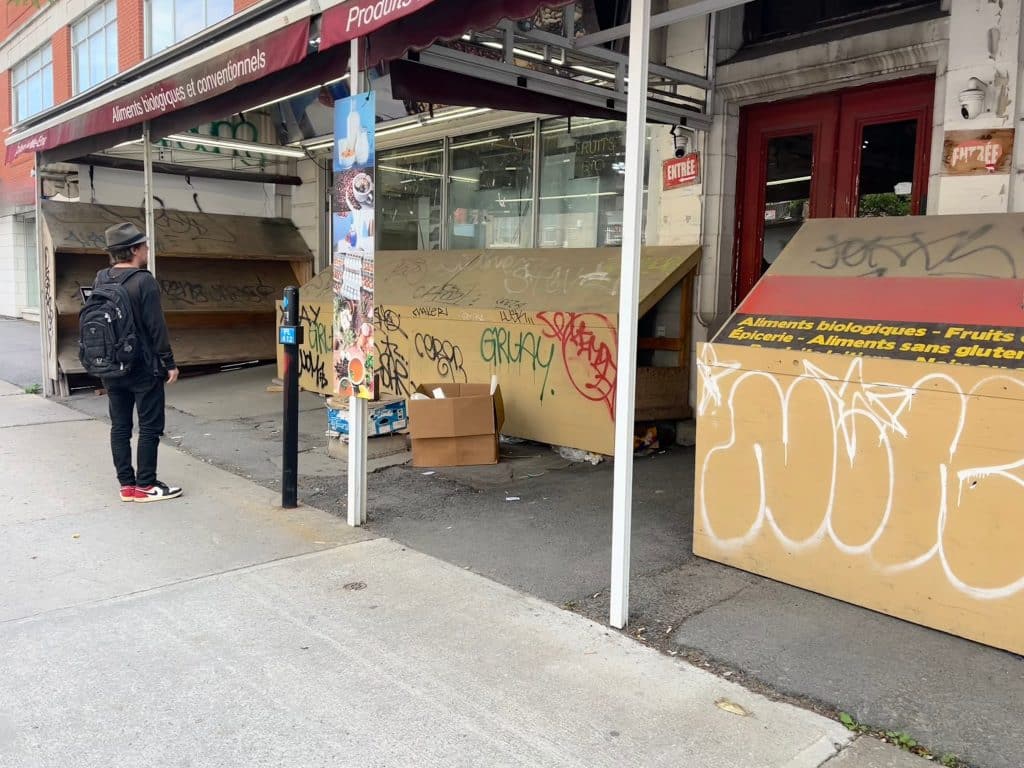
Once bustling with fresh produce and regulars, a long-time Mile End grocery store now faces relocation — its fate sealed by a Maxi supermarket set to open across the street.
Mustafa*, a South Asian immigrant who moved to Montreal in the late 1990s, has owned the business since 2001. It has become a staple for many in the neighbourhood, but Mustafa is now facing the arrival of a major competitor and is being forced to uproot and relocate his business.
“We’re heartbroken that we’re closing because we have been a part of this community for almost three decades, but we have to do what’s right for us,” says Ahmed*, who has worked at his family’s business for over 10 years.
Ahmed and his family requested to remain anonymous due to concerns about privacy and safety during this time of transition.
Mustafa is known for his generosity. He always greets his customers with a smile and offers more than he can, says his son Ali. His youngest, Ahmed, shared, “My dad is emotional because he’s worked here since he immigrated to Canada. He’s built it from the ground, and we see the sacrifices he’s made every day.”
“Rent has always been high in this area, and we have managed over the years. But now, we can’t compete with their (Maxi) prices or their scale — it’s no longer sustainable for us. It feels like we are leaving a part of our childhood behind. I have been working here since I was 15, and me and my brothers grew up in this store.”
This vulnerability isn’t unique to Mustafa’s store. According to Dr. Norma Rantisi, professor of geography and urban studies at Concordia University, “A longstanding issue in the Mile End, particularly since COVID, has been rising rents. That’s because with a lot of local independent businesses, they aren’t operating with large volumes of goods where they could spread out the cost.”
SUPPORT YOUR LOCAL INDIE JOURNALISTS
She adds that while inflation and global supply chains affect all retailers, small businesses face compounded pressures: “Other kinds of challenges include food inflation due to climate change and issues with yields, or dependence on imports, or rising energy prices. But there’s also an economic situation where there’s a small number of big players in the industry with monopolistic characteristics.”
Earlier this year, Mustafa was also heavily impacted after reciprocal tariffs were slapped on American products following U.S. President Donald Trump’s decision to levy a 25 per cent tariff on goods imported from Canada. With more and more Canadians boycotting American products, Mustafa said his wholesale suppliers were running out of Canadian alternatives due to a high demand across the country. His customers started shopping elsewhere when he couldn’t source local products. At the time, he feared bankruptcy.
Maxi-Mania in the Mile End
There are already two Maxi locations within a four-kilometre radius on Avenue du Parc. Two additional stores are set to open soon — one directly across from Mustafa’s épicerie and another on Avenue Bernard, just 500 metres away.
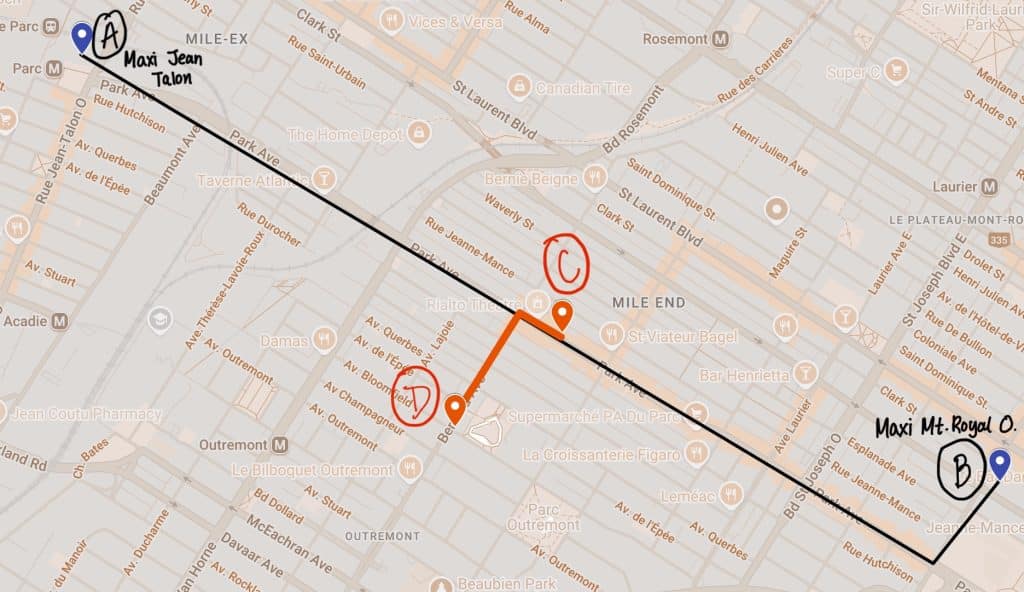
These new openings in the Mile End seem to be part of Loblaw’s broader expansion, as the company plans to open 80 new grocery and pharmacy stores across Canada and invest $2.2 billion in 2025.
Local businesses like Mustafa’s, including a lively dépanneur also owned by Asian immigrants, are raising concerns about the future of small, independently-owned convenience stores in the Mile End.
For Dr. Rantisi, who was also a regular at Mustafa’s épicerie, the significance of these businesses extends beyond their economic footprint.
“Independent grocers offer more diversity with products that we usually wouldn’t see at big chains. They give personalized service, too,” she says. “But more than anything, the distinctive features of local independent stores are that they tend to be embedded in communities. They become hubs. They become places where relations and networks are formed.
“How do you put a price on that?”
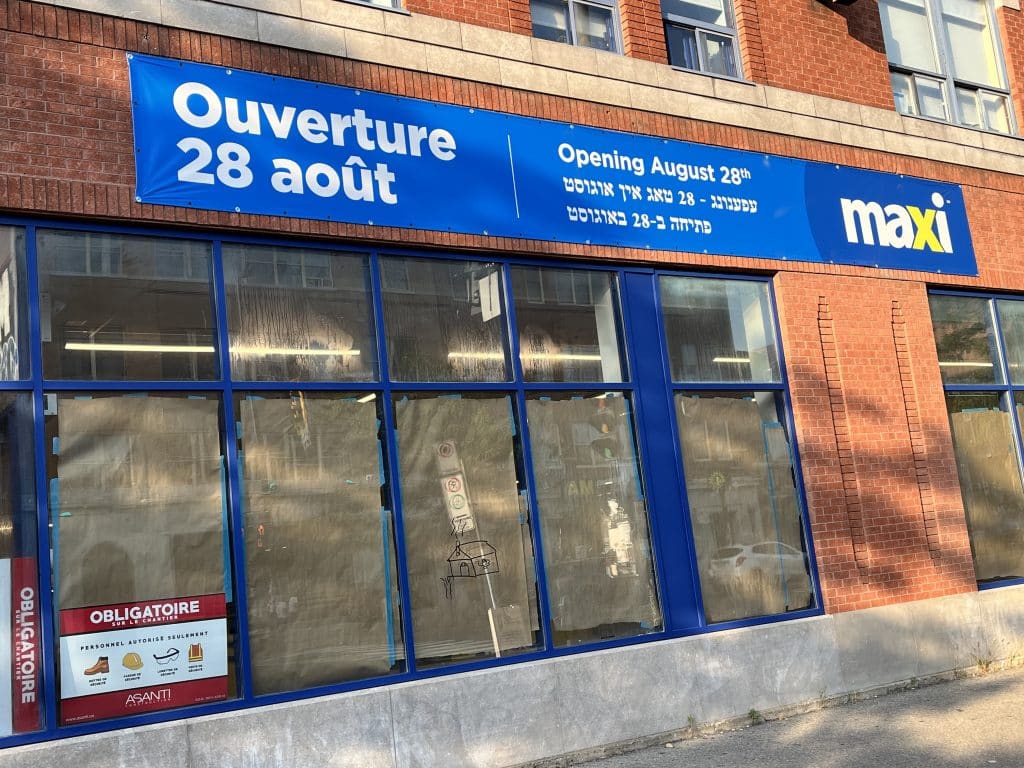
Interestingly, while the new Maxi on Avenue du Parc is intended for the Hasidic Jewish community in the Mile End and Outremont area, with its clear Kosher advertising, the second one does not specify anything. The Mile End already has go-to Kosher stores, including Lipa’s Kosher Market and Walter’s Kosher Market. Maxi promises over 5,000 kosher products.
The Rover contacted Loblaw’s Public Relations team for a comment on the situation and the company’s intention to expand in an area with an already bustling supermarket scene, but did not receive a response.
In a statement to another publication, Maxi’s multicultural department emphasized the importance of accessibility in areas like Côtes-des-Neiges, which has a smaller Jewish population (4,415 as of 2021), compared to neighbourhoods such as Outremont — the third largest Jewish community in Montreal — and Parc Avenue, which together are home to nearly 10,000 members of the Jewish community.
This begs the question: what is the need to establish a Kosher Maxi in an area with a vibrant array of Kosher stores?
Two popular Kosher stores, Walter’s and Lipa’s, did not comment on the matter.
Harry, a Jewish businessman in the Mile End, says he will shop where prices are cheaper. “If the Jewish Maxi will be cheaper than other Jewish stores in the area, then I will shop at Maxi. We live in a free society where people have choices and people are shopping mostly for their families and we have to make a living.” But, he also adds that if the prices at Maxi and a Jewish independent store are similar, then “I need to support my people.”
“We cannot act on capitalism,” says the City
So, what do we do in this situation with a surplus of grocery stores?
Well, Le Plateau-Mont-Royal Borough Councillor Marie Sterlin says the City cannot do anything about it. “We have no power over that (new Loblaw stores opening). It’s capitalism… But all market studies say there are never enough grocery stores in the neighbourhood.”
While an abundance of grocery stores may cause no harm, Canada needs more grocery competition, and the independent grocers’ culture here in Montreal is trying to fix that.
“In terms of bylaws, there is nothing we can do. We can encourage them to be a part of Les associations de commerçants (SDC),” says Sterlin. These SDCs are commercial development corporations that ensure the economic, cultural, and social development of a specific sector or region. Each business located in the SDC is automatically a part of the corporation and is required to pay an annual fee, which is then used towards organizing activities, events and projects in the area. For example, every year in May, Mile End en Fête is organised by SDC Laurier Ouest and the Mile End Business Association (AGAME), to promote foot traffic, showcase local merchants and foster a sense of community amongst residents and businesses.
In the Mile End, there is l’Association des Gens d’Affaires du Mile End (L’AGAME), which serves a similar purpose as the SDC. Sterlin says that businesses, like Mustafa’s, are encouraged to join the Association and attend the meeting to voice their concerns and grievances. “For independent businesses, the key to survival is to be a part of an association.”
While the representative reiterated that there is nothing the city can do about the closure of small independent businesses, it can tighten rules on delivery timings and trucks coming and going from the neighbourhood.
“We cannot act on capitalism. But what we can do is control how this bothers the neighbourhood. With Maxi there, there will be lots of deliveries and trucks going in and out of the neighbourhood. We can say, ‘Forget about your deliveries at six in the morning or your six-feet-tall trucks.’”
Sterlin, like Dr. Rantisi, was also a regular shopper at Mustafa’s store.
Mustafa’s épicerie doors are now closed. His family business is still looking for a new location, but nothing is confirmed. As chain stores like Maxi continue to spread across Canada, small businesses are left to navigate their survival on their own — through rising rents, limited protections and shrinking margins.
In a neighbourhood known for its unique character and diversity, another familiar store has silently closed shop, leaving behind a community it helped feed for 26 years.
Did you like this article? Share it with a friend!
Author

Comments (2)
Leave a comment
Related Articles

‘Everybody Who’s on the Stage Is Part of Your Community’: Ctrl+Alt Festival Returns for a Third Edition
Free festival stacked with queer, local performers to take over the Place du Village July 24-26.

Moving Day: A “Desperate” Struggle for a Growing Number of Montrealers
July 1 is now a race against time for families facing homelessness once their lease expires.

Quebec Workers Experienced a “Counter Revolution” Under Jean Boulet: Experts
The outgoing labour minister leaves behind a legacy of attacking the Constitutional right to strike.
The title is misleading. I understand the concern about Maxi but as you discuss in the article, there are many factors and this store has been struggling for years. A 100% kosher ‘Maxi’ is less competition than PA and Supermarché Mile-End.
Hi, thank you for engaging with the piece. To clarify, Mustafa’s store had managed to stay afloat for many years despite long-standing competition from PA and Supermarché Mile-End. What shifted was the arrival of two new Maxi stores within blocks of each other– one Kosher and one a regular Maxi (just like the one near Station Parc and Du Parc/Mont Royal).
While one is branded as a Kosher Maxi, it’s still part of Loblaw, meaning anyone can shop there, regardless of dietary practice, and their scale allows them to offer lower prices. For Mustafa and his family, this new layer of competition made it feel impossible to continue operating sustainably, which is why they chose to close after nearly three decades in the community.