
“I Just Want to Be Believed”
Woman wages a five-year battle with Quebec after she was sexually assaulted while working for the provincial government.
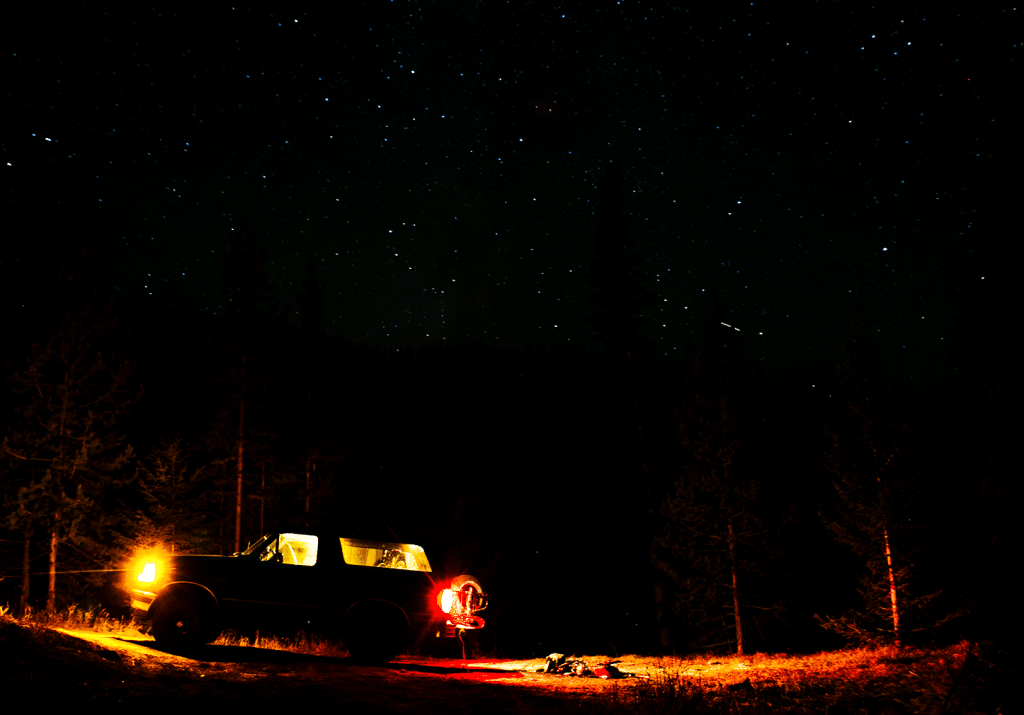
After being kidnapped and sexually assaulted on the job, a former employee of Quebec’s park system is fighting for the provincial government to recognize her ordeal.
The survivor, who we’ll call MJ, was abducted by a colleague, driven deep into the woods, and repeatedly groped while working at Parc national d’Anticosti during the summer of 2021.
Though she immediately flagged the abduction to her supervisors, it took days for the assailant to be fired, and the park service never formally recognized the assault, opting instead to terminate his contract because he’d been caught drinking on the job. Now, almost five years later, MJ barely sleeps, struggles to hold down a job, and sometimes she thinks about ending her own life.
Through its own medical experts, Quebec’s workplace safety board, the CNESST, has formally recognized that MJ suffers from post-traumatic stress disorder and severe depression. But it refuses to treat these ailments as work-related injuries because, the CNESST claims, these were pre-existing conditions and that MJ cannot prove her assault made them worse.
Support your local indie journalists
This is her story, as recounted by MJ but also through psychiatric evaluations, government reports and a trove of official documents reviewed by The Rover. From the time she reported her assault until the day her claim was rejected by CNESST last summer, MJ says she’s struggled to get basic answers about how the park service protects its 3,000 workers, whether her former employer even believes her, and how Quebec treats survivors of sexual assault.
***
When MJ accepted a ride home that night in 2021, she had no way of knowing the driver would turn out to be a predator.
They were colleagues on an island in the middle of the Gulf of St-Lawrence, working for Quebec’s park services at Parc national d’Anticosti. Over the course of the summer, they’d spend the season living in close quarters among a few hundred locals, groups of tourists, and over 150,000 deer scattered across a territory roughly the size of Corsica.
The driver, who we’ll call Yvan, had gone through the same screening process as MJ, providing his resumé, references, banking information and driver’s license. He could be a bit overbearing at times, stopping by her work station and cornering her into a bit of unwanted conversation, but otherwise, he seemed harmless.
So she climbed into the passenger seat of the pickup, and they disappeared into the night.
Shortly into the drive, they reached a fork in the road. A left turn brought them to the chalet where MJ was staying. A right turn led to the dense forests and dirt roads that snake around Anticosti Island.
“We turned right, and that was that,” said MJ, who did not want her real name published. “Pretty soon, I didn’t know if we were 15 kilometres from home or 30. He was driving really fast, there was booze in the car. Bear in mind, he’s driving a (government-owned) truck, wearing his government uniform, drinking and driving, driving like a maniac, offering me cocaine, offering me alcohol.”
Soon, a feeling of dread overtook MJ’s body. She was alone with a heavily intoxicated man, speeding across a dirt road on an island with no cell signal and accessible only via private plane. He parked the truck to pick up firewood, which gave MJ a small opening to signal for help on the CB radio. But she was new to the job and didn’t know what frequency to use.
So she did what she had to do to survive.
“I told him that my boyfriend was about to join me for the summer, that I wasn’t interested in drinking or doing cocaine, but it didn’t seem to matter,” said MJ.
“I was his prisoner, and he was going to make me listen to his life story. He told me he had a checkered past, that he sold cocaine, that he poached lobsters from licensed fishermen, that he was a bad boy.”
When they finally pulled up to what looked like a campsite, Yvan made a fire and started cuddling up to MJ. While she sat there and squirmed, Yvan groped her, kissed her neck and refused to take no for an answer. She thought about sneaking off to the truck to try to radio for help, but Yvan had locked the doors.
“I thought I was going to die,” she said. “I was terrified of what might happen if I fought back too hard or upset him. I was shitting my pants, I needed a minute to go for a pee and to be able to gather my thoughts, but even when I left to relieve myself in the forest, he followed me.”
A few minutes later, they were joined by a man who Yvan claimed was the island’s coke dealer. He brought his two kids along. MJ jumped at the opportunity to play with the children so she could get away from the men.
The night was drawing to a close but MJ still wasn’t sure when or if she’d end up back at her chalet. She had other questions too: why did Yvan mention his criminal background? Why did he introduce her to a coke dealer? Was it a not-so-subtle threat? Was this going to continue all summer?
After hours of tension and more unwanted advances, Yvan drove MJ back to her chalet. When she reported the incident to her bosses the next day, they didn’t seem to take it seriously.
“They said, ‘don’t worry, we’ll take care of it.’ They didn’t seem surprised, they didn’t seem particularly worried about my safety. If anything, they seemed annoyed,” said MJ.
Within a few days, Yvan was fired and sent home on a plane. But not for sexual assault. In the end, MJ was told he was fired because she witnessed him drinking and driving using a truck that belonged to the Société des établissements de plein air du Québec (Sépaq).
This flooded MJ’s already panicked brain with a series of questions: was this how they handled all sexual assault complaints? Did Sépaq know about Yvan’s criminal background? On an island where workers lived together in isolation, why didn’t Sépaq have a protocol for preventing sexual harassment?
Sépaq had been struggling with a labour shortage the summer she was hired. There was little screening beyond providing a driver’s license and going through a brief interview, according to MJ.
The seasonal nature of the job, isolation and the fact that employees earn about $17 an hour means the Quebec government relies on recruiting blitzes to staff its parks each year. In fact, that year and in subsequent seasons, Sépaq has relied on temporary foreign workers to fill dozens of vacancies across the province.
Last summer, a strike was averted at the last minute when the government agreed to give some workers a 25 per cent raise over three years.
***
MJ finished her season with Sépaq and went back home to Montreal a diminished version of herself. By winter, she had lost 40 pounds, stopped bathing herself, and smoked cannabis daily to deal with the constant anxiety.
In a statement sent to The Rover, Sépaq’s media relations director said cases like MJ’s are “extremely rare.” Sépaq would not, however, comment on MJ’s case for confidentiality reasons.
When asked if the park service could track how many sexual assault or harassment allegations have been levelled against its employees, the director, Simon Boivin, said no such database exists. Boivin says there’s a zero-tolerance policy for sexual misconduct, and that Sépaq has a policy to promote civility, prevent harassment, eliminate workplace violence and efficiently field complaints. Workers are encouraged to report any form of violence they experience to an immediate supervisor or to the police. Employees struggling with post traumatic stress have access to an employee assistance program.
Even so, MJ says she never received training on Sépaq’s sexual harassment and employee safety policy. After the assault, she asked her supervisors for help dealing with her trauma, but ultimately had to track down a Sépaq human resources worker on LinkedIn.
“It wasn’t a terribly efficient process,” MJ said. “I didn’t feel like the assault was taken seriously by my supervisors or Sépaq. … One superior told me I was too pretty not to know something like this would happen. Another said I shouldn’t have gotten in the truck to begin with. It felt like the whole thing was my fault and not because of the actions of an unstable, coke-dealing colleague.”
In a written statement she later gave to Sûreté du Québec investigators, MJ said her bosses refused to take her complaint to the police, that they claimed her statements about the assault “sounded confused” and that her assault was never formally recognized by Sépaq. But a police investigation into the assault went nowhere.
The Rover ran Yvan’s real name through Quebec’s criminal database, and it turned up charges for sexual assault, intrafamily violence, theft, breach of probation and simple drug possession. None of these would disqualify him from employment with the provincial government since it’s illegal, in Quebec, not to hire someone for criminal sanctions unrelated to their work. The Rover did not publish his real name since we could not reach him for comment.
Max Silverman, an expert in labour law, says the provincial government may be in violation of Quebec’s labour standards act, which requires employers to take “all reasonable measures at their disposal” to prevent harassment on the job.
“Things like lack of training, lack of process, lack of clear hierarchy to address complaints in the event of an incident indicate the employer may not have used all the means at their disposal,” said Silverman, an attorney at Grey Casgrain in Montreal. “But if an employer, following the allegations, took decisive action, that’s also a way to defend themselves from an employment law perspective.
“In Quebec’s Civil Code, an employer is ultimately responsible for the actions of their employees on the job. Even if all the right protocols are in place.”
Some 47 per cent of women experience sexual harassment or assault in the workplace, according to a 2024 study published by Statistics Canada. Women working low-wage jobs in isolated areas, as MJ was at the time of her assault, are at an even higher risk of being assaulted.
When MJ applied to Quebec’s workplace safety board last year to be compensated for being assaulted on the job, her claim was rejected. By that point, she struggled to hold down a job, to sleep without violent nightmares, and at her lowest point, she would picture herself jumping off the Concorde Bridge into the Saint Lawrence River some 80 feet below.
But CNESST claimed there was no connection between her PTSD and the workplace assault since she had previously struggled with major depressive episodes. She is appealing the decision before Quebec’s workplace administrative tribunal, but admits that it’s hard not to give up.
“(CNESST) can be pretty ruthless with some of these claims,” Silverman said. “You have to think of it, not as a government agency, but as a massive insurance program for workers. And CNESST will often reject claims on technicalities. One of my clients had a back injury that was described slightly differently by two doctors. That was enough to reject the claim.
“In (MJ’s) case, it’s possible the doctor has to literally write ‘her condition was exacerbated by the assault’ for it to be accepted. But she can still sue the employers civilly and sue her assailant civilly.”
For MJ, the claim is less about being made whole than feeling heard.
“I don’t want to just collect a fat cheque from Quebec, kick my feet up and stop working, I just want to be believed,” MJ said. “I just want to get better, I want to live a life without constant flashbacks and nightmares, I want to be able to function. And I want to know that my government protects its workers.”
Did you like this article? Share it with a friend!
Author

Comments (3)
Leave a comment
Related Articles
‘Everybody Who’s on the Stage Is Part of Your Community’: Ctrl+Alt Festival Returns for a Third Edition
Free festival stacked with queer, local performers to take over the Place du Village July 24-26.
Moving Day: A “Desperate” Struggle for a Growing Number of Montrealers
July 1 is now a race against time for families facing homelessness once their lease expires.
Quebec Workers Experienced a “Counter Revolution” Under Jean Boulet: Experts
The outgoing labour minister leaves behind a legacy of attacking the Constitutional right to strike.
Thank you for writing this.
Verbal and psychological abuse should never be tolerated at the workplace. Whether it be provincial or local municipalities, this crap cannot be tolerated any longer and the employer’s must be held accountable for the actions of their managers and employees at the workplace. The Quebec government (CMQ) needs to put these incompetent organizations in trusteeship until order is restored.
Thank you for covering this and for ensuring that we hear the survivor’s voice in this incredibly harrowing account of a system that completely failed her. What happened to MJ is not her fault, and I send her all the strength and support in healing from this tremendously heinous act committed against her.