
Becoming Ballers: How Nunavik’s Youth Built a Community Around Basketball
In villages across the North, Inuit teens are creating a safe space for each other and the next generation of athletes.
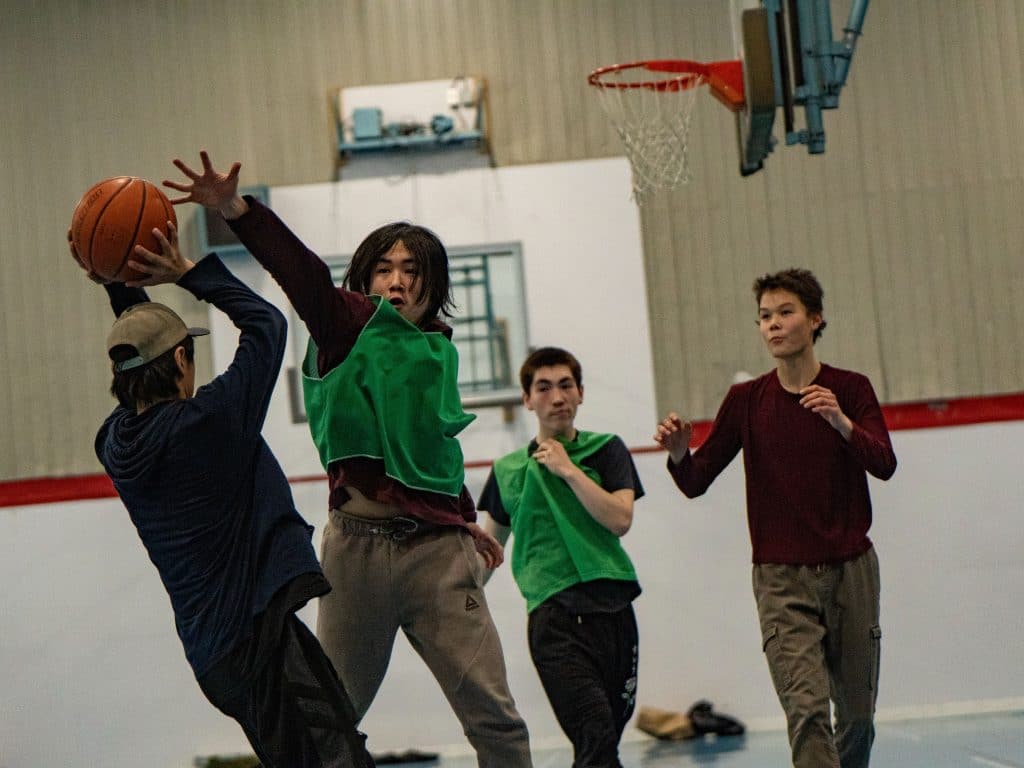
Over 90 boys from Nunavik line up in front of the backboard at the Great Whale River Triple Gymnasium.
They’re in the middle of a free-throw competition. They have two attempts to make the throw; if not, they’re eliminated.
Seventeen-year-old Salluit athlete Nicolas Cameron steps up to the line. He is sporting his Ray-Ban glasses indoors, his white T-shirt draped over his shoulders like a cape, headphones in his ears, wired in, eyes focused on the rim. The gymnasium is loud with screams of encouragement, but also with those trying to psych out Cameron.
He finds his footing, sets up his shot, and misses.
Deep breath; he looks up at the rim with intent. Misses again. The whole room explodes in laughter and surprise, yet Cameron slaps his hands with an earnest smile, unfazed by his mistake. He immediately merges with the crowd, encouraging the younger kids participating and dapping them up, no matter if they succeeded or not.
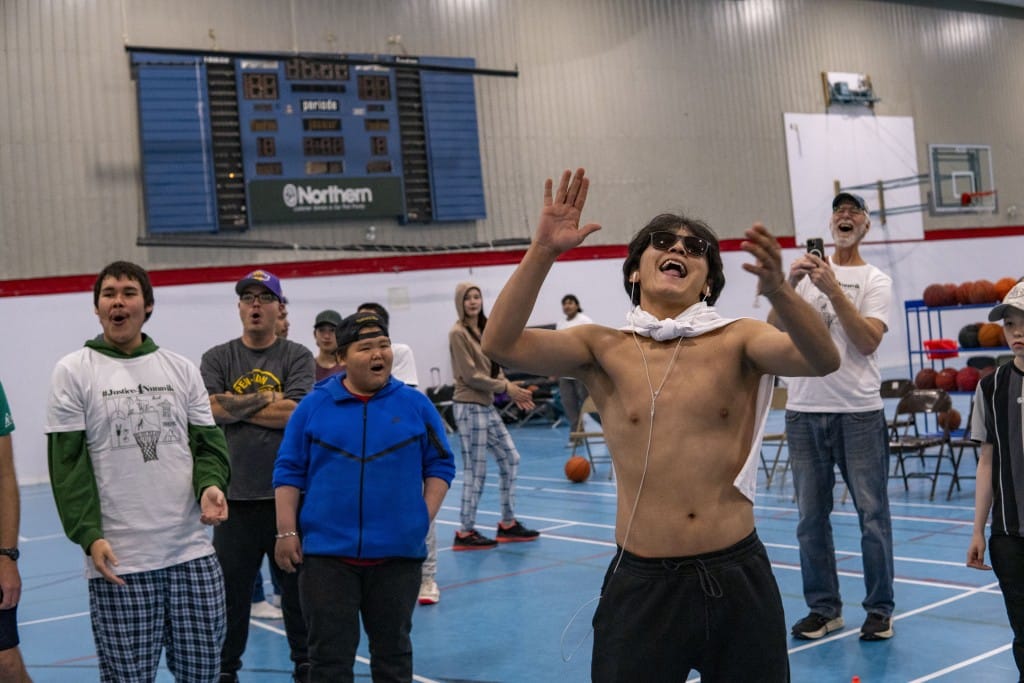
He is among the more experienced teenagers in the group, all of whom came from nine different communities in Nunavik on Nov. 6 as part of the Spirit of the Odeyak basketball jamboree.
The goal of this event is to unite young men and give them a chance to learn basketball from experienced coaches and pro basketball players. But this is also a camp that emphasizes discussing more intimate topics with their peers.
“When I walk around town, I ask kids if they play sports,” says Cameron in an interview inside the office of the gymnasium, which was filled with boxes of merchandise bearing the event’s name and Justice 4 Nunavik.
“I tell them, the younger you start, the better you will be in the future.”
Nunavik, the name for Quebec’s Arctic region, has a population of 14,000 people, with a median age of 24 years according to the 2021 census (the median age in Canada is 40). Makivvik, Nunavik’s Inuit rights-holding corporation, reports that over 60 per cent of that population is under 30 years old.
Some of that youth found a home in Nunavik’s basketball community, which can be found on the Grind Now Shine Later (GNSL) Nunavik Facebook page, which is now over 600 members strong. The creator of that page, and organizer of the event, Russ Johnson, has been working to provide a positive space for Inuit youth to share for five years now.
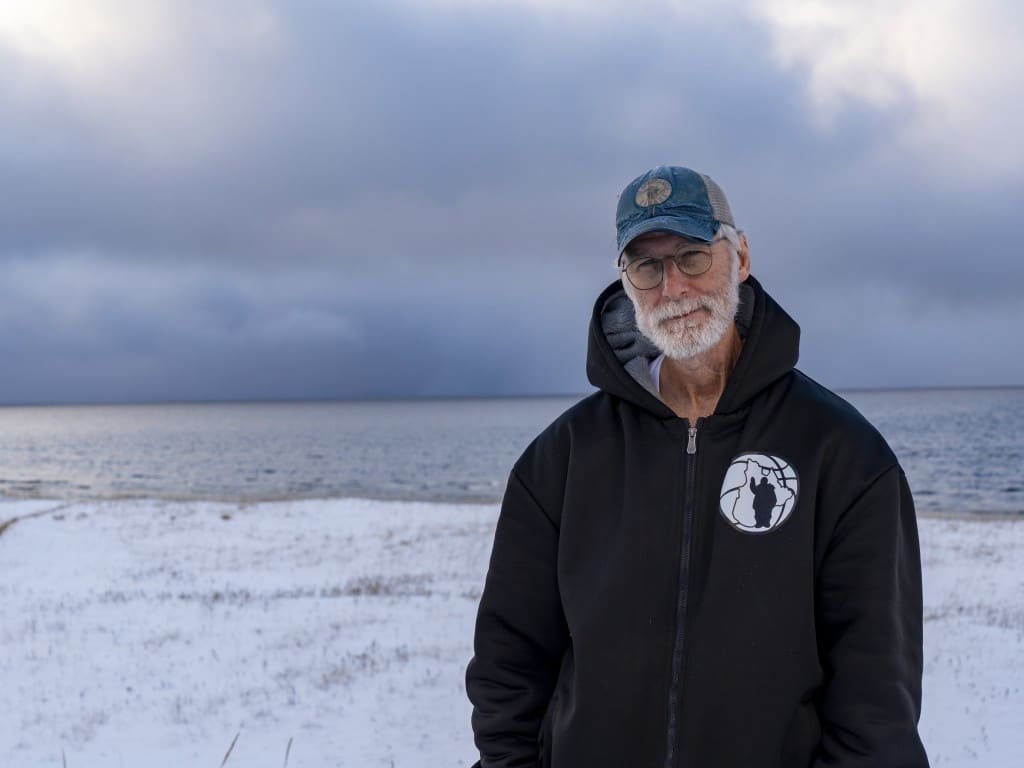
Johnson was a gym teacher in Nunavik’s smallest community, Aupaluk, which has a population of 233 people. He started keeping the school gym open for young people to come play basketball at night. It went from no one showing up to being busy most nights. What he saw there was what he wanted to see in every Nunavik gym.
Tournaments and jamborees for both boys and girls are now held every other month all over Nunavik. Johnson now solely works to create and organize GNSL events with the help of Makivvik.
For the Spirit of the Odeyak jamboree, he had a theme in mind. Odeyak refers to the 35th anniversary of an adventure that started in Great Whale River. A group of Inuit and Cree men built a hybrid vessel combining elements of both the canoe and the kayak. Using that unique creation, 60 of them travelled nearly 2,000 kilometres from Nunavik to New York City in protest against the newest hydroelectric dam project, named James Bay II, that the Quebec government had approved.
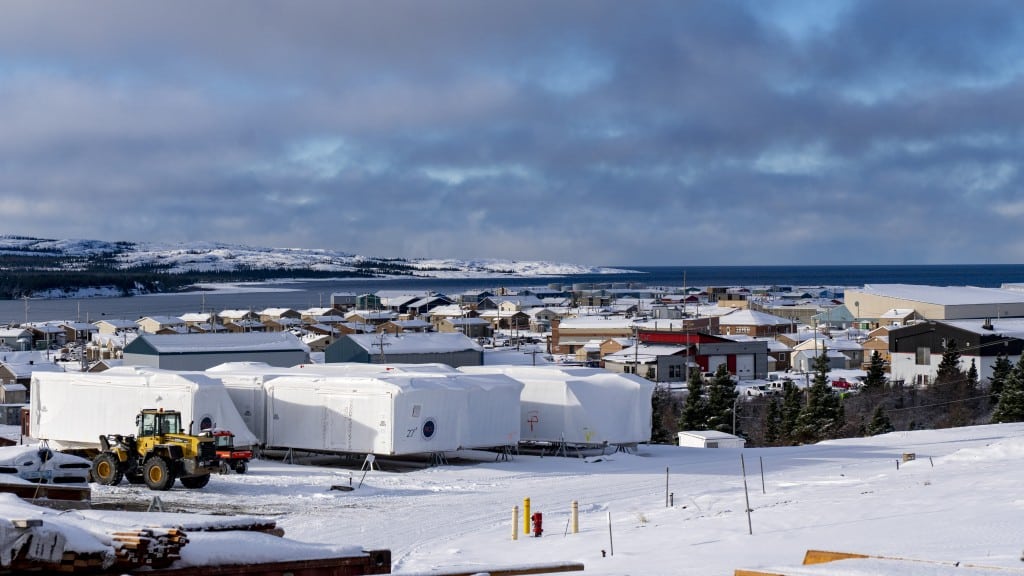
It was an opportunity to teach the kids playing basketball in Great Whale River about their own history, “to show them that they are empowered, that they can fight back,” said Johnson in the empty gymnasium after most of the kids had left.
“These kids need to understand that their reality has been dictated for them from the South; it needs to be the other way around, pushing back and demanding more for themselves.”
Johnson points out that Inuit youth are facing huge challenges. Only 23.5 per cent of Nunavimmiut graduated from secondary school in 2023, according to the Ministère de l’Éducation du Québec. The region recorded a suicide rate of 142.2 per 100,000 people that same year, over 10 times higher than the provincial average, according to the Institut national de santé publique du Québec.
For Nunavik men, the statistic increases to 206.7 per 100,000.
Support your local indie journalists.
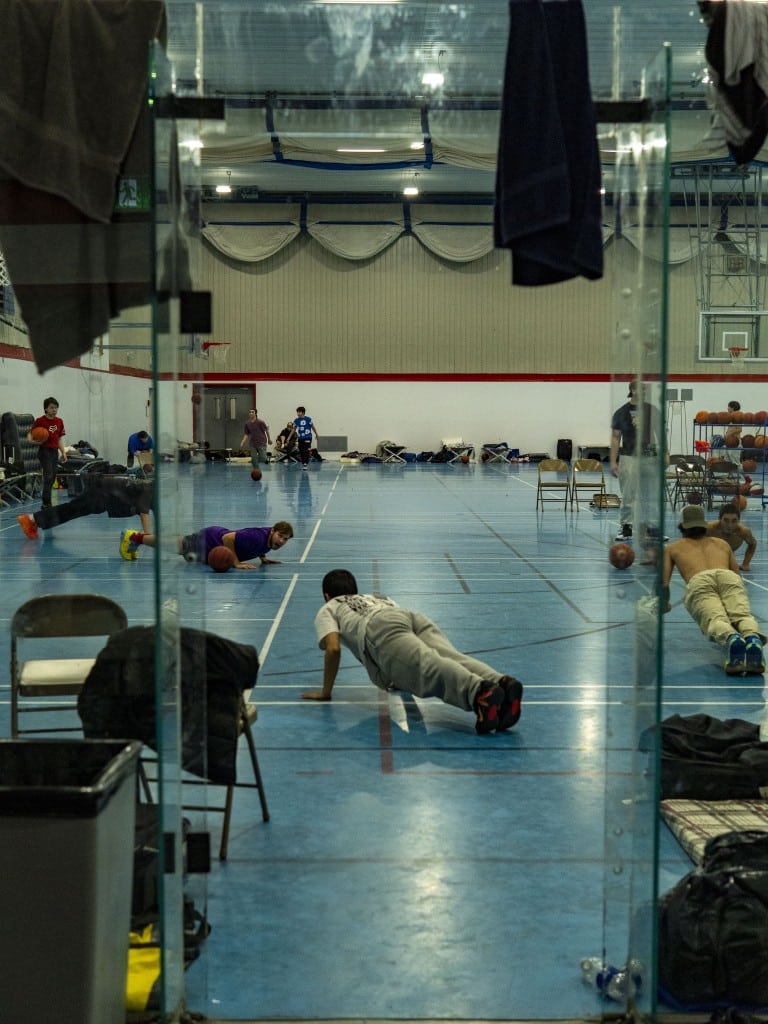
“Mental health issues are probably at the top of the pyramid in things that we are trying to deal with here,” said Johnson. He said that since the creation of the program, there have been several suicides within the GNSL community. “I really can’t remember a month going by where I haven’t heard about a suicide (in Nunavik).”
Yes, the event is about learning to play basketball. But it is also a place to learn about opening up, “because if you bottle up all the pain, all the anger, all the emotion, you are either going to poison yourself or explode,” says Johnson.
For Cameron, the jamboree came at the right time. He explained that Salluit’s gymnasium has been closed for months, preventing him and many other kids from playing sports and having a third space, somewhere that isn’t home or school, available for them to share. That is why events like this one get him, and so many others, so excited.
“I feel peaceful when I play basketball,” he said. “I never want to leave that.”
Cameron is dealing with a lot at home. His mother moved away with his brother, further away in town, and he now lives alone with his father.
“It breaks my heart to not be able to see my mom every day,” he admitted. “That was the deepest connection I had. I still go to them, but I feel out of place when I am there.” His father was struggling to find work over the summer, so Cameron had to buy his own food.
He is among many kids in Nunavik who are having a tough time at home, but he remains positive. “I am always happy, nothing can hurt that,” he said. “It is just my family that is kind of hurting me.”
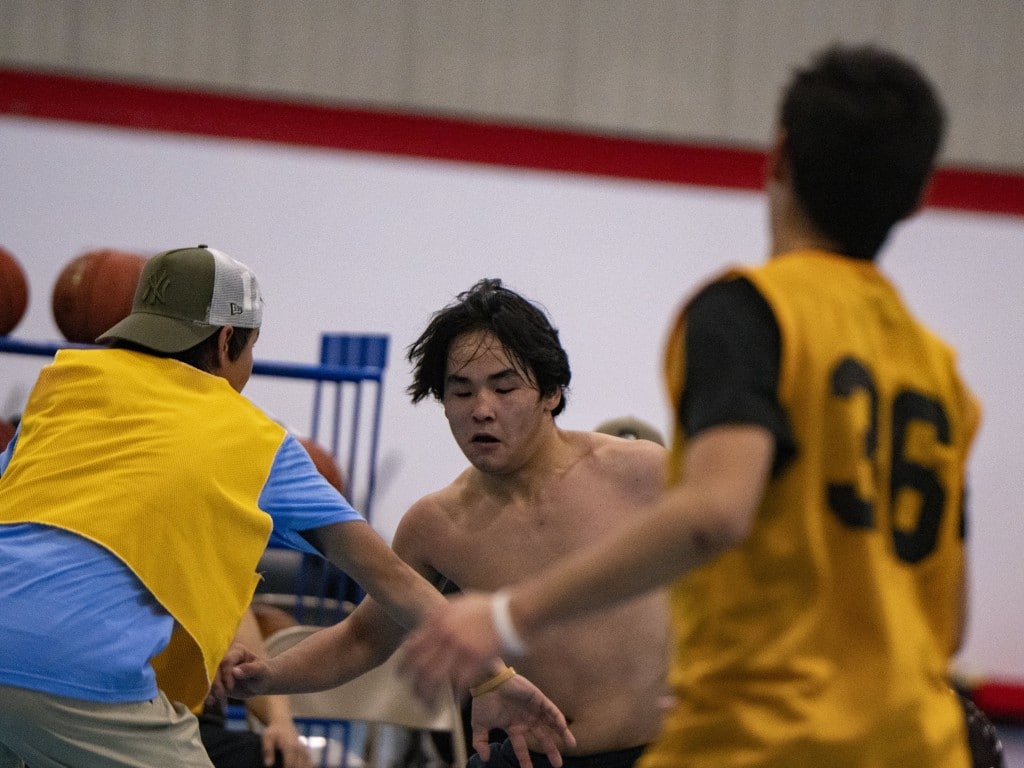
Basketball is his outlet; it is where he finds joy. The exertion of his body, the state of mind he attains on the court, is where he heals. “I built my career through [sports], so I can help all the youth in all the Nunavik villages,” he said. “This is a real connection, one of the realest ones I have.”
Basketball is an accessible sport compared to sports like hockey in Nunavik. Instead of investing in full hockey gear that can cost thousands, kids need shoes, a court, and a few balls. They can play alone or with others, they can focus on themselves or socialize, the choice is theirs.
At the jamboree, 11 coaches were also acting as camp counselors. Some were ex-pros, some are currently pro-level ballers, whilst some are mainly coaches for kids in their communities.
Aftab Ahmed Khan has been a behaviour specialist at the schools in Inukjuak for 25 years. Similar to Johnson, he initially opened the school’s gym after hours for a table tennis program. The gym that he opens six nights a week is now dedicated to all the sports that the kids want to play.
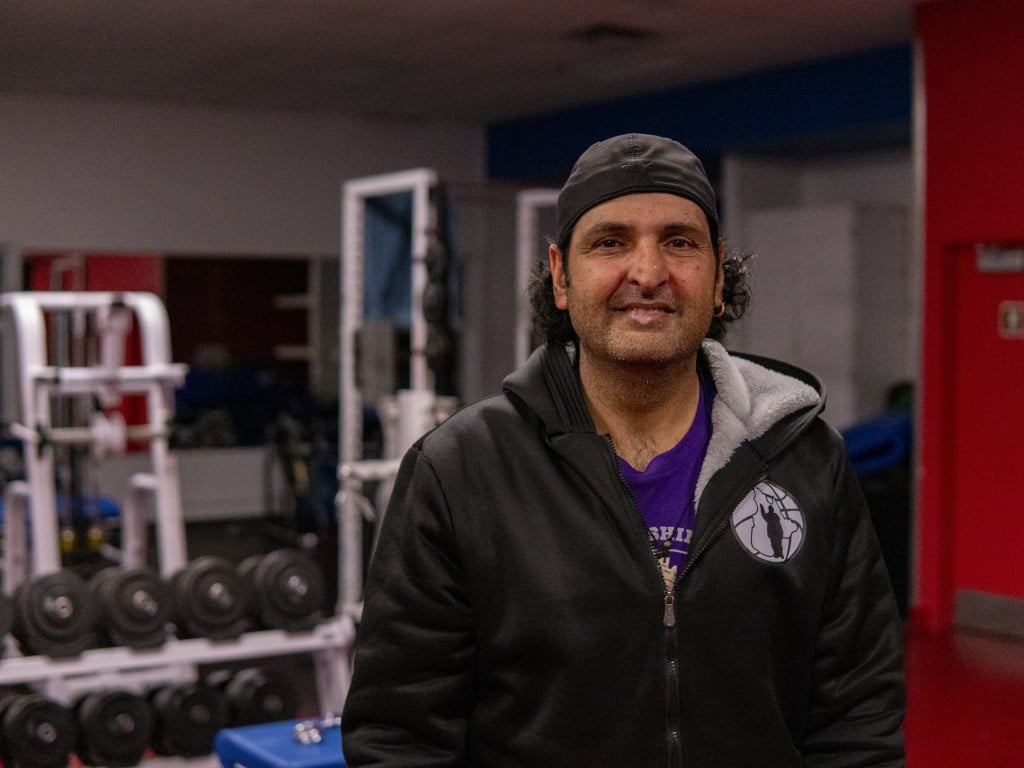
“Sports are so important for the kids,” he said, surrounded by the dumbbells and weight machines of the gymnasium’s second floor. He argues that using it as a reward for good school performance is positive. It also fosters socialization between older and younger kids, helping them learn from each other about social skills and leadership. “You can see sports brought a lot of kids back to school, and a lot of positive came out of that.”
These events allow kids from fly-in communities across the region to see each other on a semi-regular basis. “I see so many of my kids who are talking to other kids, talking to them by name, and they are from the Ungava [coast],” adds Khan.
He saw some of his kids who had the most difficulties being social flourish into becoming leaders, teaching other kids how to play sports. “I have seen how big of an impact (sports) had on their mental health,” he said.
Those emotional conversations often spill over to the coaches. Many of the kids there look up to these coaches as positive role models, and so they open up about their issues at home.
Walter Whitebean is a coach from Kahnawà:ke and was invited to the jamboree by Johnson to give a few pointers, as he himself runs a basketball program similar to this in his community.
“You get to know these kids pretty closely,” he said. As the kids become more comfortable with the coaches, “you become more than a coach.”

One of the kids who was supposed to attend the jamboree passed away in an ATV accident just weeks prior. That was at the forefront of many minds at the event. “Just getting to know them, hearing their struggles, they are so open with sharing it,” said Whitebean. A similar accident happened in his community, so hearing the stories “hit close to home.”
A positive outlet for energy also helps prevent kids from using it negatively. “If you don’t have positive outlets to utilize it, there is only one other way you’re going to be going,” said Whitebean.
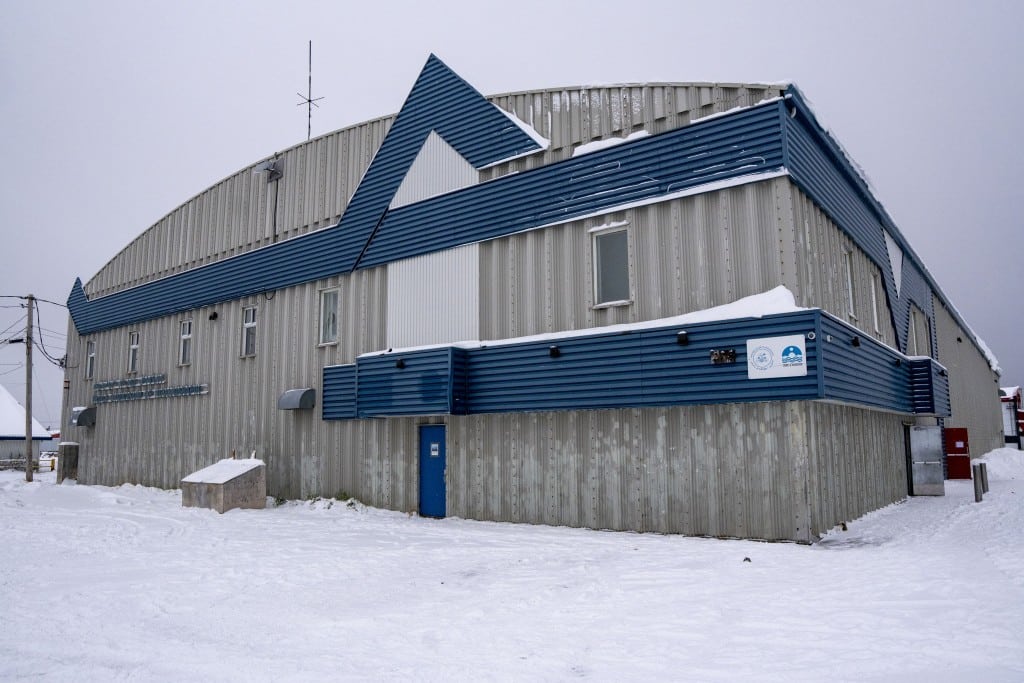
Four communities did not have active youth centres in March this year, according to the Nunavik Youth Houses Association. Five youth houses were also considered aging infrastructure, as they were built in old nurse housing or churches from the 1970s. Kuujjuaq, the largest community in the region, had its youth centre shut down for nearly five years during the pandemic.
Etienne Sioui is a Huron-Wendat former pro basketball player from Wendake. He was invited to coach in Nunavik, where he trained a group of older kids on their footing and stances, making sure they are solid on the ball when defenders rough them up.
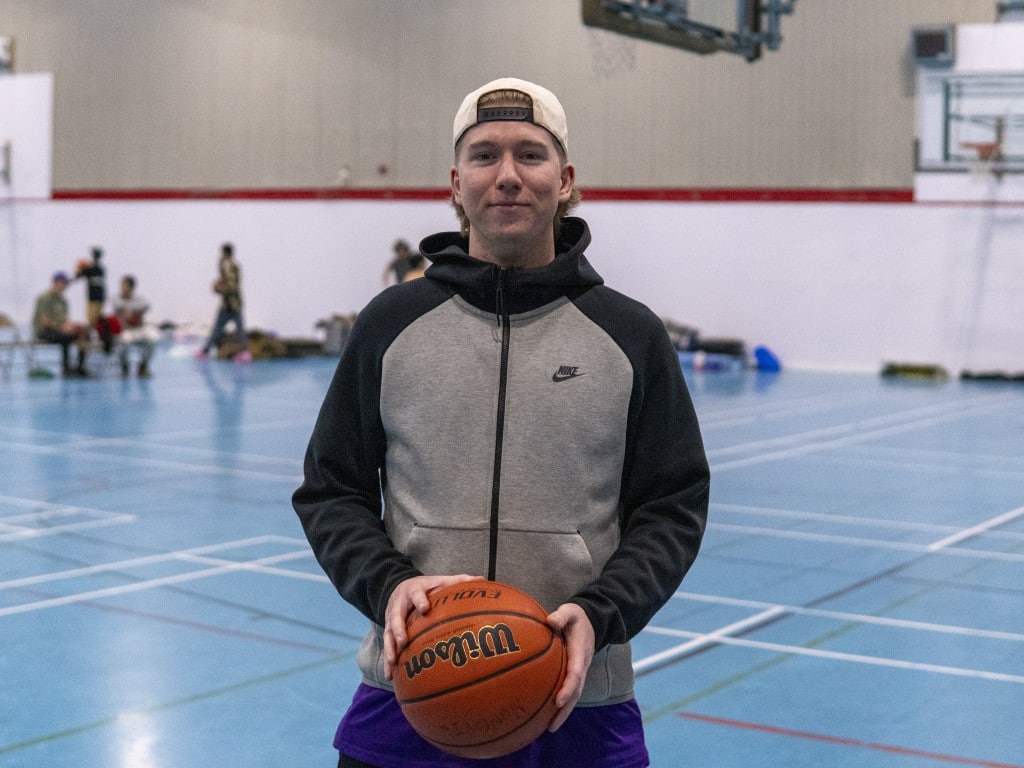
“It is not only about teaching them how to make three-point shots, layups, all that,” says Sioui. “It is also about focusing up, staying happy if you miss a shot, but it also doesn’t matter because you’ll make the next one.”
“If you get one per cent better every day, you will be twice as good in a hundred days,” he adds.
The end goal of this program is for the Inuit youth playing now to eventually take over GNSL. To do that, the coaches are creating leaders out of the teenagers like Cameron.
Three certified basketball referees travelled to Great Whale River to train some teenagers during the event, anticipating that they would return to their respective communities and start refereeing tournaments there.
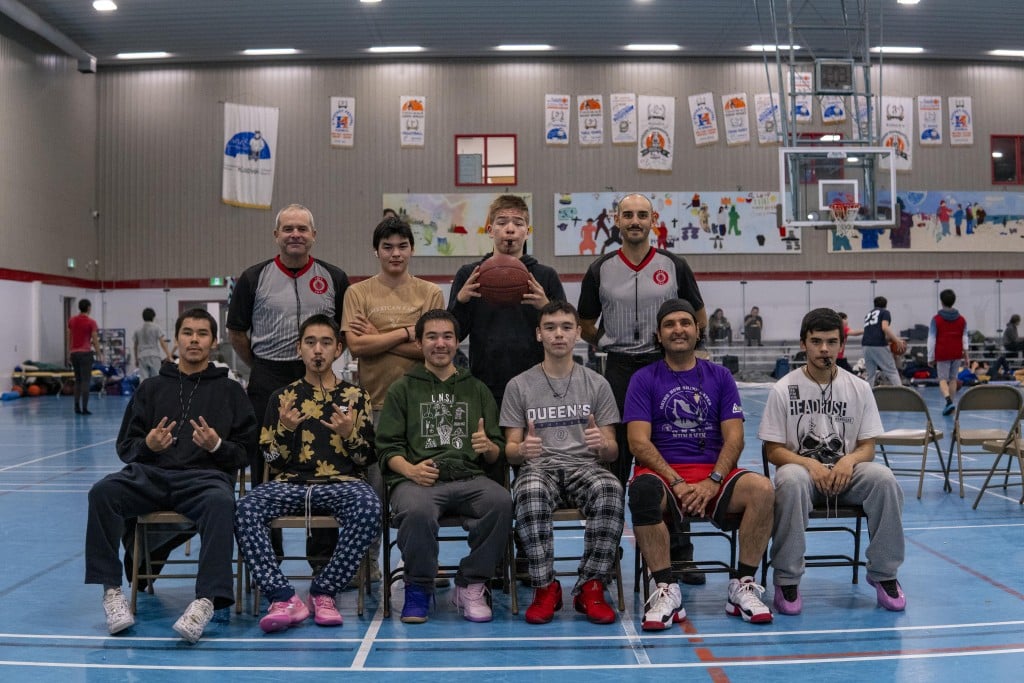
These very teenagers would then become figureheads of basketball in their communities, acting as leaders and role models. “Everyone needs to be able to look up to someone,” adds Sioui.
“Those kids need framing, and if we can give them that, they will develop into better humans, better athletes, better people,” he says.
Johnson expects that within five years, the Inuit will take over. “The kids are happy with how it is growing,” but it is important not to rush the process. “There are several kids with the brains, the drive, the wisdom, but they want a little more life experience,” he adds.
Eventually, they will be the ones opening up the gyms in their respective communities, hosting sports events, and developing spaces for their youth to thrive. It has always been about building communities, building a network of friends for Nunavik’s youth.
Author
Comments (3)
Leave a comment
Related Articles

Prison Recipes By and For Incarcerated People
La Cantine is a cookbook that helps inmates discuss risk prevention and reflect on food in prison.
By and For: Exhibit Traces History of Sex Worker Resistance
Sex worker support organization Stella wants to change the public’s perception of sex work with an exhibit at the Centre des mémoires montréalaises.
Live from the Fall Classic: Game 7 with The Rover
Cheering for Canada’s Team in the World Series was a balm for my soul. But no matter what, my heart will always belong to the Expos.
Such good news. Bravo to the players, the coaches and to Russ for bringing community together.
Great article! Amazing story – so much positivity to focus on! More stories like this!
Great article! When Nelson Mandela was freed, he knew that soccer would unite the country and it was his first priority for his Presidency of South Africà.
He knew the value of sport to unite and stengthen his nation. So glad to read this article.