
Cancelled Elections Spark “Full-Scale Governance Emergency” in Kanesatake
Voters on Mohawk territory warn that tensions could “ignite” at any moment.

A last-minute decision to cancel the Kanesatake general election has plunged the Kanien’kehá:ka (Mohawk) community into a governance crisis with no clear solution.
The campaign’s chief electoral officer (CEO) made the announcement on social media just hours before polls were set to open Saturday. Citing an emergency clause in Kanesatake’s Custom Electoral Code, CEO Graeme Drew ruled that the band’s current council will remain in power for another six months.
Critics are calling this an unlawful and unprecedented threat to democracy on the north shore reserve. At least one community member is filing an injunction against Drew and, after an emergency meeting in the band council parking lot Saturday, some are calling for outside management of Kanesatake’s government.
“This situation has crossed every reasonable threshold of tolerance and legality… in my professional opinion (the crisis) could ignite at any moment,” wrote Tracy Cross, Kanesatake’s former chief of police, in a letter to the federal government obtained by The Rover. “The federal and provincial governments have a fiduciary obligation and must act now — not to intervene in governance — but to uphold the rule of law and restore democratic order.
“I urge you to recognize this for what it is: a full-scale governance emergency and we call upon you to treat it as such.”
Citing critical flaws in the Kanesatake electoral code, Drew recommended that it should be revised and ratified through a community consultation process before the elections can be held.
Support The Rover: we get results!
“If the electoral code was applied to the letter, we would’ve had to disqualify six out of 16 candidates,” Drew told The Rover. “You want people to be able to trust the democratic process, and it’s hard to do that with this electoral code. It’s hard to trust an election where the rules take away the community’s ability to choose their leaders.”
The question of who will govern in the interim remains unclear. Drew invoked a clause in the electoral code that would extend the current council’s mandate into February. But invoking that clause without first holding a community meeting could also be interpreted as a violation of the code.
When two chiefs showed up at the band office on Monday with the intent of resuming their mandate, they were met with protesters who persuaded them to return home until the community could meet and decide on next steps.
This crisis is unfolding as an investigation by the Sûreté du Québec into band council finances sits on the desk of Quebec’s Crown prosecutor. Sources close to the investigation say the Crown delayed an announcement about whether it would file charges to avoid unduly influencing the election. The investigation involves $1.2 million in emergency funds that may have been misappropriated by at least one former chief and senior employees of the band.
But now that the vote has been delayed for an undetermined period, Cross and others are demanding answers from the Crown.
“This is an absolute clusterfuck,” said Clifton Nicholas, a Mohawk filmmaker and activist who attended Saturday’s emergency meeting. “I don’t want to sound paranoid, but this election had already been delayed, and now it’s just straight-up cancelled?
“Seriously, I think we need to scrap this whole system and start over. I never dreamed I would say this, but, at this point, maybe they should kick the entire slate out of office and bring in a third-party manager to oversee our governance while we sort this out.”
Amanda Simon, a candidate for council chief, said she’s skeptical of Drew’s justification for cancelling the vote.
“He took this job and the money that comes with it knowing full well he would have to apply our electoral code,” she said. “But now the code is unworkable? Why did we just go through an entire election if the code was so problematic? Listen, I’ve said it before: this is a Swiss cheese code. It’s full of holes. But we’ve held two successful elections under it without any problems.”
Council adopted the code in 2015 because Kanesatake didn’t have any laws on the books governing elections. Without its own code, the band would have to use election provisions outlined in the Indian Act, a wildly unpopular and colonial piece of legislation.
But while there have been successful elections, referendum questions, and byelections since adopting the Kanesatake code, it has also been a source of constant tension on the council.
As an example of just how byzantine the legislation is, the code dictates that council elections are held every four years on the second Saturday of June. But the code also stipulates that chiefs must serve a full four-year term before a new election can be held. Since the 2021 election was delayed by six weeks because of COVID-19 protocols, the Mohawk council’s lawyers decided the “full term” requirement could only be met if this year’s election was delayed. But that delay is a violation of the code.
“The code is messy, it disagrees with itself, and it is selectively applied,” Simon said.
Simon, the former lands manager at Kanesatake, was running as a change candidate with a promise to reform the territory’s dysfunctional governance. Shortly into her campaign, Drew said he informed Simon she was in violation of the code because she owed a debt to the band council.
After she hired a lawyer and proved there was no debt, her candidacy was confirmed.
“I left my job over a year ago and received severance pay. If I owed them anything, they would have taken it out of my severance,” said Simon. “I suspect the so-called debt was a way for this council to take me off the ballot. They’re scared of change.”
Drew said the issue with Simon was related to inconsistent bookkeeping, adding that the reason for the “no debt rule” is to ensure that elected officials don’t abuse their power to eliminate financial obligations.
Some candidates didn’t make it onto the ballot because of the debt rule, while other violations included candidates having a criminal record and one candidate who had been removed from office during the previous term.
“I’ve taken codes that were less than 10/10 in clarity and been able to administer in a way that I deem fair,” Drew said. “I am able to say that I’ve never had a successfully appealed election out of the dozens of elections I’ve run. I did get to a point like this with two other (First Nations) clients, where the rules were unworkable.
“And what we did was pause the election, take an expedited approach to fix the parts of the code that are unworkable and then have it ratified through a community vote. In the last two times I encountered this, we were able to have an amended code and a new election within six months.”
Politics in Kanesatake have been simmering for years, with police being called to council meetings that devolved into shoving matches, a 2021 community meeting in the band office parking lot where members voted chiefs out, and chiefs taking each other to court. During this election, Drew said one meeting got so intense that he needed security to escort his team out of the community.
“Kane Montour — the head of security (in Kanesatake) — he deserves the Order of Canada,” Drew said. “His team and so many others in the community they want everyone to get a chance to vote and play their part in democracy. (Kanesatake) is a great community and I’m confident they’ll be able to fix the code. Post-colonial politics aren’t easy, there’s a lot of work to be done to repair the damage of colonization.”
Serge “Otsi” Simon, an incumbent chief, says he doesn’t want to resume his duties until the community can work out a better, more democratic solution than delaying the election six months.
“Win or lose, I was looking for closure with this election,” said “Otsi” Simon, who was the grand chief when the council adopted the code in 2015. “If the voters would have told me ‘thanks but no thanks,’ I’d be out there on the lake, fishing with my son. … Honestly, I’ve been thinking about stepping away from politics if it means diffusing this crisis.
“Because the last time a council chief’s mandate was extended like this, he got his house burned down.”
The only other instance of an election being delayed was in 2004, after Grand Chief James Gabriel’s house was burned down during a failed drug raid in Kanesatake. The raid ended with Kanesatake’s police station being trashed and dozens of cops being chased out of town. This was widely considered the darkest period in Kanesatake’s political history.
“Extending a mandate, that’s ‘act of God’ stuff,” Amanda Simon said. “You don’t do that sort of thing lightly.”
Candidates in Saturday’s election said they hoped the vote would bring an end to a political crisis that has halted the council’s activities over the past three years. In March, Grand Chief Victor Bonspille and Chief Valerie Bonspille were removed from office in the culmination of a years-long dispute between them and the other five elected chiefs.
The Bonspilles said they stopped attending council meetings in 2022 after the dynamic became “too toxic,” citing one instance where police were called to de-escalate an argument at the band office. Since they missed more than three meetings, they were in violation of the electoral code.
Victor Bonspille says his political opponents are selectively applying the code, since the remaining elected councillors haven’t held a community meeting in years — also a violation of the electoral code.
Bonspille believed the real reason he was ousted was connected to his investigation into allegations of corruption at the band council. In a March 2022 email obtained by The Rover, Bonspille accused his colleagues of participating in a fraudulent scheme to divert emergency federal funds to companies that don’t exist.
The former Grand Chief showed The Rover accounting ledgers to back up his claims, and police sources say they believe cash was illegally funnelled from the council to a small number of community members. But none of this has been tested in court.
As the political crisis deepens, Quebec’s Minister of Indigenous Affairs Ian Lafrenière has repeatedly warned Kanesatake’s elected leaders that organized crime could take advantage of this power vacuum and further entrench itself on the reserve.
Though most of the community’s cannabis dispensaries are family-owned and operated, several have ties to outside gangs — who supply them with seed money and protection. That’s according to sources in the cannabis industry and law enforcement.
Even so, in a March letter to the council, Minister Lafrenière said that an election should bring resolution to the crisis.
But the election was cancelled.
Did you like this article? Share it with a friend!
Author

Related Articles

School Board Votes to Support Candidate who Smeared Rival, Acted in ‘Undignified’ Manner
Julien Feldman gets off scot-free after falsely associating his rival candidate with antisemitism and referring to her as “Ms. Gaza.”

« Je veux juste qu’on me croie »
Victime d’une agression sexuelle alors qu’elle travaillait pour le gouvernement provincial, une femme lutte avec Québec depuis cinq ans.
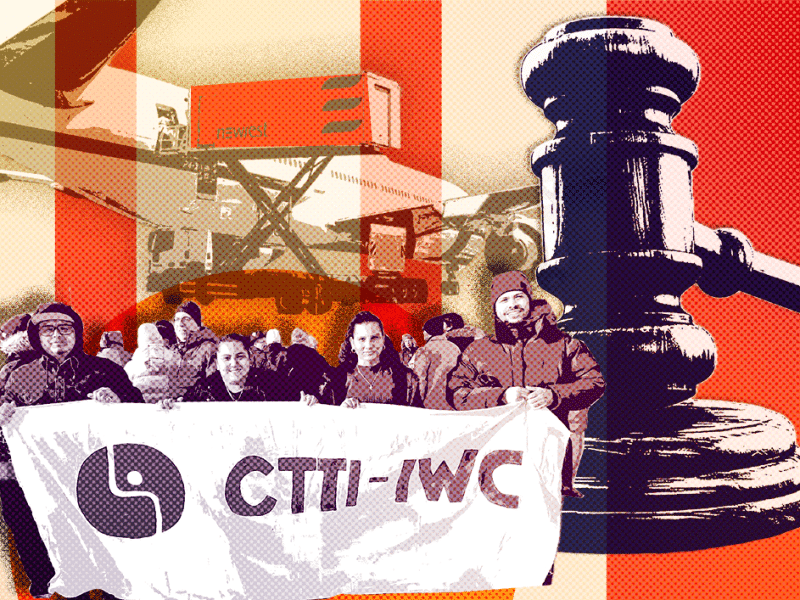
Hundreds of Migrant Workers Compensated After Fraudulent Recruitment Scheme
The multinational Newrest and the Montreal agency Trésor must pay $2.1 million to migrants tricked into working without authorization under the false promise of obtaining a valid work permit in Canada.
Comments (0)
There are no comments on this article.