
Cars Race as the World Burns
A look back on Formula One in Montreal.
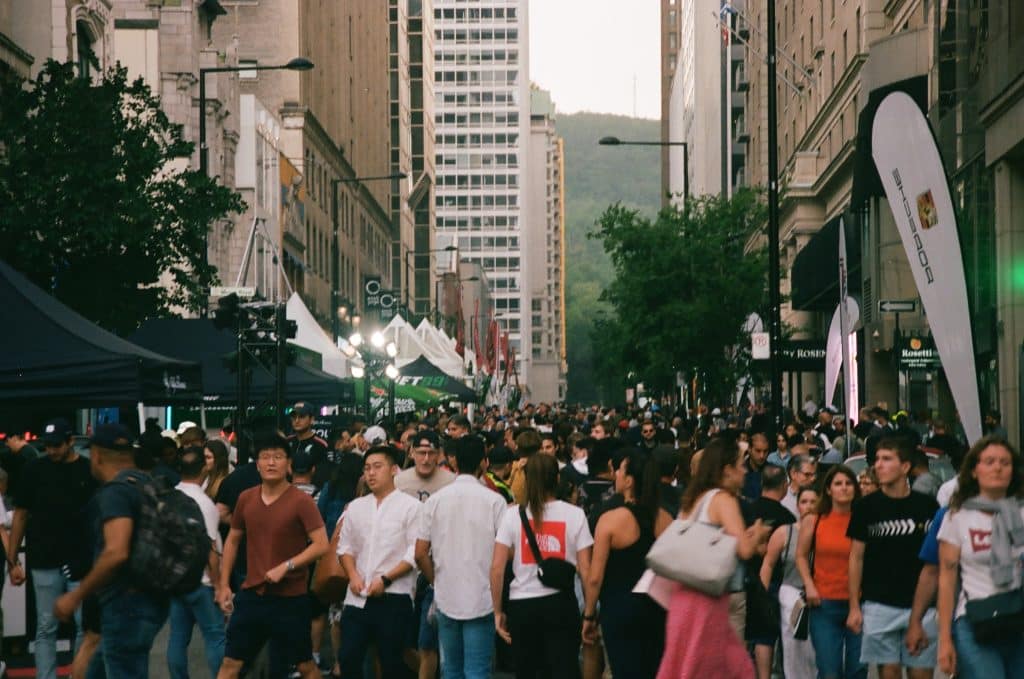
This year’s Grand Prix in Montreal occurred under a veil of smog. As the track opened up on the Friday for two 90-minute sessions, the city was cast in tones of gold and brown. The sun above glowed an ominous red.
Facing north towards downtown Montreal, in the shadow of Alexander Calder’s sculpture of “L’homme,” an abstract steel structure representing humankind, the city looked hazy, and the air had the faint scent of firewood. Many wondered if the race that day would be cancelled (it would be, but due to a technical rather than an environmental issue). If it were, it would be the second Formula One event of 2023 directly impacted by the climate crisis.
Earlier this year, the Emilia Romagna Grand Prix in Italy was postponed due to floods that devastated the region, claiming the lives of at least eight people; over 5,000 were forced to abandon their homes.
For many Montrealers, the cognitive dissonance between the branding of Formula One as a sport of elegance and the future clashes with the reality on the ground. Though Formula One has committed to Net Zero Carbon by 2030, the race remains a celebration of consumption and excess. In downtown Montreal, luxury and novelty vehicles circle the same city blocks, caught in a standstill of traffic for hours. They rev their engines, clashing with the sound of tourists and attractions on Peel and Crescent.
Downtown, the streets explode with noise. The garish sounds of advertisements and leftover misogyny of Bernie Eccleston’s Formula One reign linger, overshadowing the catered images of refined Italians espousing class and grace in the countryside. Energy drinks with names like Bang! ride the coat-tails of one of the most popular teams, Red Bull, promising flavours like Frosé Rosé and Krazy Key Lime Pie will “fuel your destiny.”
The energy isn’t much better on Notre Dame Island that Friday. Waiting in line for overpriced coffee, sports fans discuss the recent Stanley Cup champions. They laugh at the absurdity that a sport on ice has found its way to another artificial island, Las Vegas, a false oasis in the desert. Passively, they segway from discussing the improbability of a Vegas cup to the bad air in Montreal. They laugh. Nearby garbages overflow with Monster energy drinks. By the shore, you can watch seabirds fly back and forth, hunting for fish, allowing themselves to be swept by the violent rapids.
Crossing over to Île Notre Dame at a glacial pace, it’s easy to get lost watching the churning waters and the passive birds. It’s easy to imagine the sea serpent of Leviathan gnashing below the surface. In Thomas Hobbes’ Leviathan, he writes, “Hell is truth seen too late.” With the red sun burning above the crowds, a direct sign of a world literally on fire, it’s easy to see how smoothly we descend into a hell of our own making. We go to the races as our province burns. We watch on hopelessly as day after day this summer, new heat records are set.
Though the Friday race was swiftly cancelled, the first few rounds of the races echo through the landscape. The cars are so fast, without a good vantage point, if you blink, you’ll miss them. One immediately senses, though, the vehicles’ violent power and majesty. Close your eyes, and you can still feel the air pressure drop, the engines echoing so powerfully that you feel breathless. The sheer force of their presence is so intense that it’s easy to see how someone could become a convert. To buy into the world of Formula One is to buy into the lost promise of Man as God. If humanity has “dominion over the fish of the sea and over the birds of the heavens and over every living thing that moves on the earth,” Formula One race cars exemplify the interpretation of that ideology as taking control of the Earth by force.
The rest of the weekend, it rained as the smog persisted. The race on Sunday went as planned. M. Verstappen, driving for Red Bull, won the race — continuing his dominating season. After the Montreal Grand Prix, Verstappen would go on to win the two following races in Austria and the United Kingdom. Red Bull is unstoppable.
—-
In season five of Netflix’s popular series Formula 1: Drive to Survive, we dive into the 2022 season of Formula One racing. The popular show has played no small part in contributing to the sport’s popularity among a more general audience. The new season begins in Italy, following the team Ferrari, as they discuss the team’s history and their newfound success.
The sequence exemplifies an old-world vision of the race, driven by elegance and elitism. Buying into the world of Formula One in 2023 is to buy into an idea of a world long gone. The promise once offered by the race seems long ago past. The reality on the ground does not match the old-world splendour of the Ferrari team sipping expensive wine in the Italian countryside.
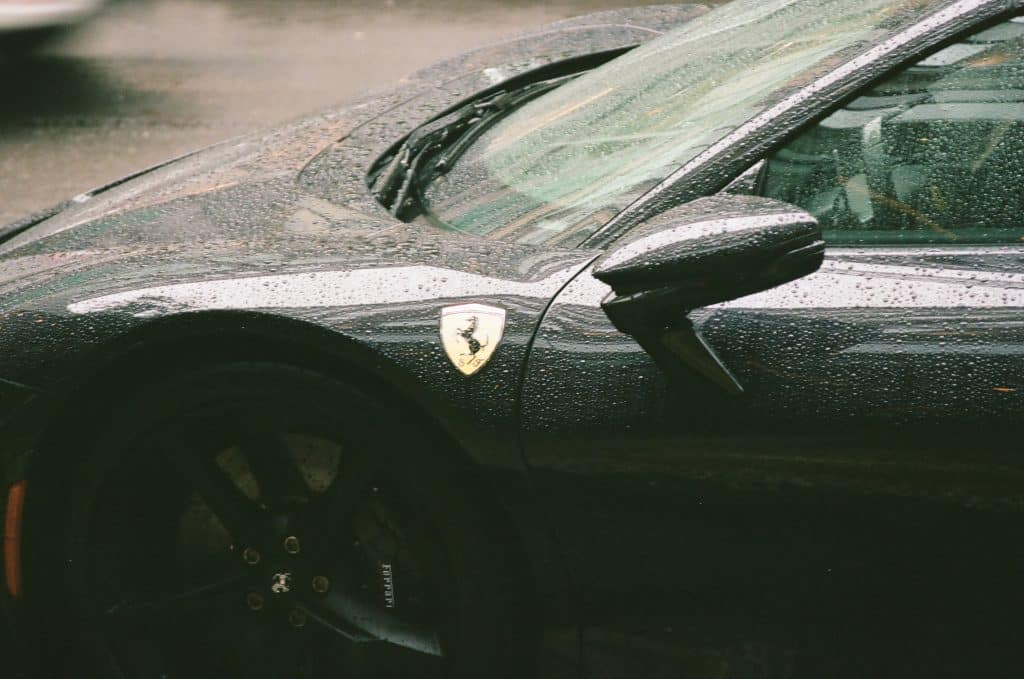
The image presented by Formula 1: Drive to Survive shows the sport as an elaborate chess game. Amidst the opera of strong personalities and feats of athleticism (lest you imagine driving a car isn’t physically gruelling, the heat in an F1 cockpit can reach up to 60 degrees Celcius, and the average driver will experience at least up to 5 g-force on a typical race) there’s also a robust technological bent.
For many fans of the sport, the vehicle itself becomes the centrepiece of attraction, a sculptural marvel of sleek curves and a work of ingenuity and imagination. Most Formula One teams comprise of hundreds, if not thousands of workers and engineers optimizing vehicles that are meant to perform in races where every millisecond counts.
Formula One racing goes back over half a century. The first race occurred in 1950 and was borne out of other races gaining popularity in the pre-World War period. During this period, car ownership soared among lower and middle classes for the first time, and motor vehicles became symbolic of the new freedom of mobility.
The first few decades of Formula One coincided with a boom in the Western world. The post-war period in Europe and the United States was a time vast urbanization and increased living standards. The Canadian Grand Prix was first introduced in 1961, moving permanently to Montreal in 1978.
On the Circuit Gilles Villeneuve on Notre Dame Island in Montreal, even with changes to the track, the race has taken place under the real and also metaphorical shadow of the Biosphere – a symbol of modernism and hope for a future that never came to be. Even before the race found its way to Montreal, the promise of Formula One coincided with the promise of the city, exemplified by Expo 67, as a hopeful look toward the future.
Montreal’s Expo 67 was the birth of a new era for Canada. The theme “Man and His World” was inspired by a book of the same name by the author Antoine de Saint-Exupéry (best known as the author of Le Petit Prince). In an introduction written by author Gabrielle Roy, she explained the idea behind the theme;
In truth, being made aware of our own solitude can give us insight into the solitude of others. It can even cause us to gravitate towards one another as if to lessen our distress. Without this inevitable solitude, would there be any fusion at all, any tenderness between human beings? Moved as he was by a heightened awareness of the solitude of all creation and by the human need for solidarity, Saint-Exupéry found a phrase to express his anguish and his hope that was as simple as it was rich in meaning, and because that phrase was chosen many years later to be the governing idea of Expo 67, a group of people from all walks of life was invited by the Corporation to reflect upon it and to see how it could be given tangible form.
—Gabrielle Roy
Expo 67 was about the present, yes. It was an opportunity for the world to showcase its best and brightest, to unite in the same place, hoping to forge something new. But it also looked forward to a bright future. Expo 67 imagined a future we never saw.
As Douglas Murphy writes in his book, Last Futures: Nature Technology and the End of Architecture, the era of the 1960s for much of the world felt like “the future was up for grabs” and “that changes in the very patterns of life were possible.” It was also an era of apocalyptic ideation and growing environmental concerns. Architecture like the Biosphere, originally the American pavilion, represented a radical response to a culture that felt hope that the trajectory of history could be changed. When the promise of that world failed to materialize, though, “The city of the future went from being an imminent prospect to become a thing of the past.”
Formula One represents a world that has come and gone. The race puts a spotlight on Montreal and a boost to local businesses, but as the world burns, it is a towering relic of a future that never was. If the race ever symbolized ingenuity and freedom, the power of man over nature, we’ve long since lost that fight. We’ve fundamentally misunderstood our mandate if some divine force inscribes humanity’s dominion over nature.
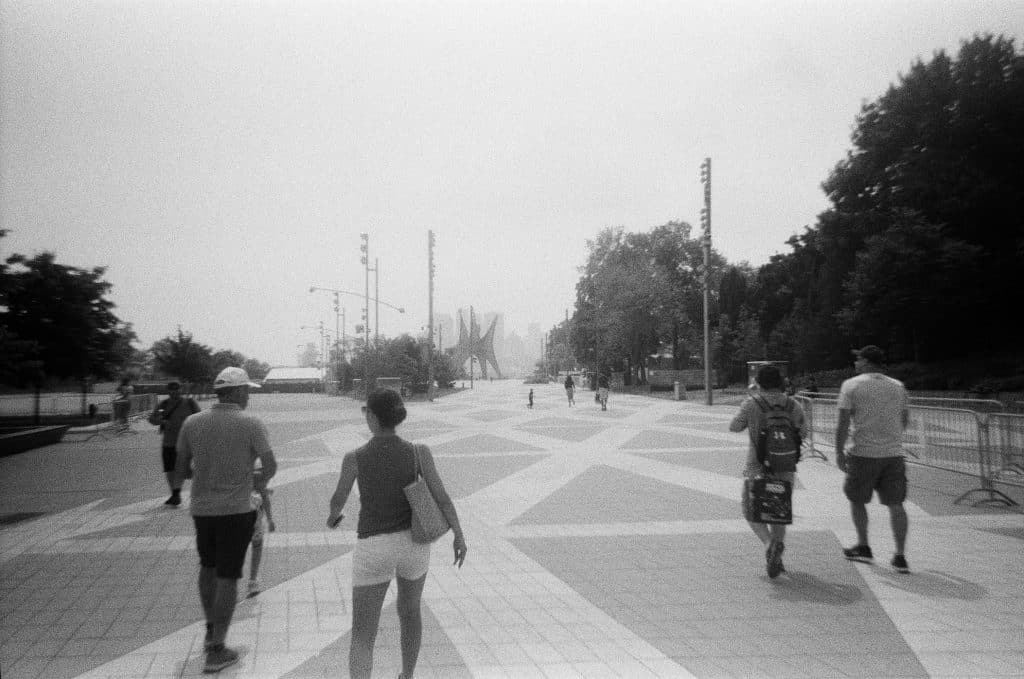
Today the stray images of Expo 67 and “Man and His World” linger around Montreal. The skeletal remains of the Biosphere, whose exterior surface went up in flames over two decades ago, and Calder’s steely “Man” feel like painful reminders of the power of collective change and our inability to follow through on it. Formula One racing takes us down a road that we already know leads to a dead end. It doesn’t matter how elegant the athletes are and how powerful the cars are, it feels like Nero playing his fiddle as Rome burns.
It’s now mid-July, and the forest fires across Quebec and Canada are still burning. A smog warning earlier this week reminded Montrealers with respiratory ailments or heart disease to avoid intense physical activity outdoors. The air was hazy and thick, though not as bad as earlier this year. With record forest fires raging, the climate apocalypse is no longer a distant fear but right at our doorsteps. In a year of record climate destruction, our lives remain strangely unchanged as we witness our destruction. Over half a century ago, Montreal seemed to be a city on the precipes of a new future, but the collective dream never came to be.
As we barrel down the same streets over and over again, hoping for different results, it’s clear that without radical and substantial change, our demise to climate destruction will be as unstoppable as M. Verstappen.
Comments (1)
Leave a comment
Related Articles

Live from the Fall Classic: Game 7 with The Rover
Cheering for Canada’s Team in the World Series was a balm for my soul. But no matter what, my heart will always belong to the Expos.
Gaza: Rubble Invades the City and Its Memory
Can memories survive destruction and guarantee a future for Gaza City?
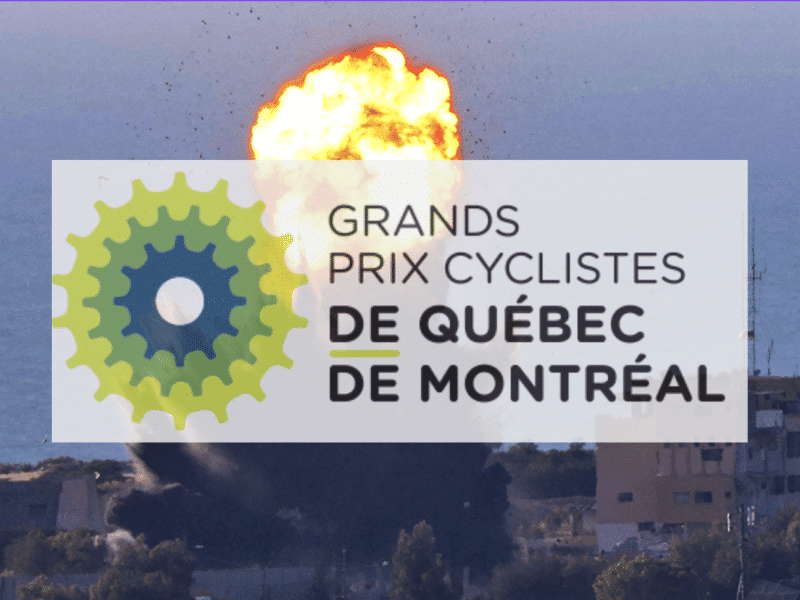
Opinion: Montreal Cycling Race a Win for Genocide Supporters
Montreal is being used as a prop to clean up Israel’s image on the international stage
What about the arsonists that set many of the fires that causrd the smoke, Noone has
mentioned that many of these fires were st by climate avtivists!