
In Nunavik, climate change threatens Inuit traditions
Climate change is affecting traditional cultural practices and knowledge transmission among the Inuit of Nunavik.

Weather changes, shifts in wildlife, and evolving flora: in Nunavik, the climate crisis is altering people’s relationship with their land and traditions. Faced with this reality, Nunavimmiut share the challenges they face in preserving and passing on their culture to the next generation.
A stroll through the villages of Nunavik is enough to understand that fishing and hunting are still very much part of everyday life here. Snowmobiles and qamutiks (Inuit wooden sleds for carrying hunting and fishing equipment) can be found in front of houses, in the streets, and on frozen rivers.
And for good reason: a few days before our visit in early May, a Kuujjuaq resident spotted the first goose of the season. Since then, the Kuujjuamiut took advantage of the short hunting season to catch this much-prized game.
According to Statistics Canada data, in 2017, 65 per cent of Nunavik’s adult population participated in fishing, hunting or trapping, and 70 per cent in wild plant gathering.
However, as with many Indigenous nations, particularly in Inuit Nunangat (the four ancestral lands of the Inuit of Canada), climate change is having a profound impact on traditional ways of life.
“We have shorter seasons or periods where we can hunt,” said Kuujjuamiuq Anita Gordon. “So here, if you’re going to goose hunt, you have a one or two-week period, but in the past it would be like a month.”A 2022 study by the Nature group indicated that the Arctic had warmed by 0.75 degrees per decade over the past 40 years, about four times faster than the rest of the world.
Traditional food and food security
Traditional activities remain essential for communities in Canada’s Far North.
Hunting plays a vital role for the Inuit, who generally use all parts of an animal, both for food and for making clothing, for example.
“We have our rules: no sport hunting, no killing animals for nothing, no wasting,” said Johnny Oovaut, former mayor of Quaqtaq and project manager for the municipality.
He estimates that to feed his community of approximately 500 people, they need about 40 beluga whales, five to eight walruses, and about 100 caribou per year.
Support The Rover: we get results!
However, he notes that the community refrigerator, which is funded by hunter support programs, is currently empty.
“Because the caribou are far away right now, I don’t know where they are,” he said.
Anita Gordon estimates that her household, which still includes four of her eight children, consumes locally hunted, fished, and foraged foods about two to three times a week, depending on the season. Traditional foods are in high demand in the household: “It doesn’t last not even a week. It’s so good!”
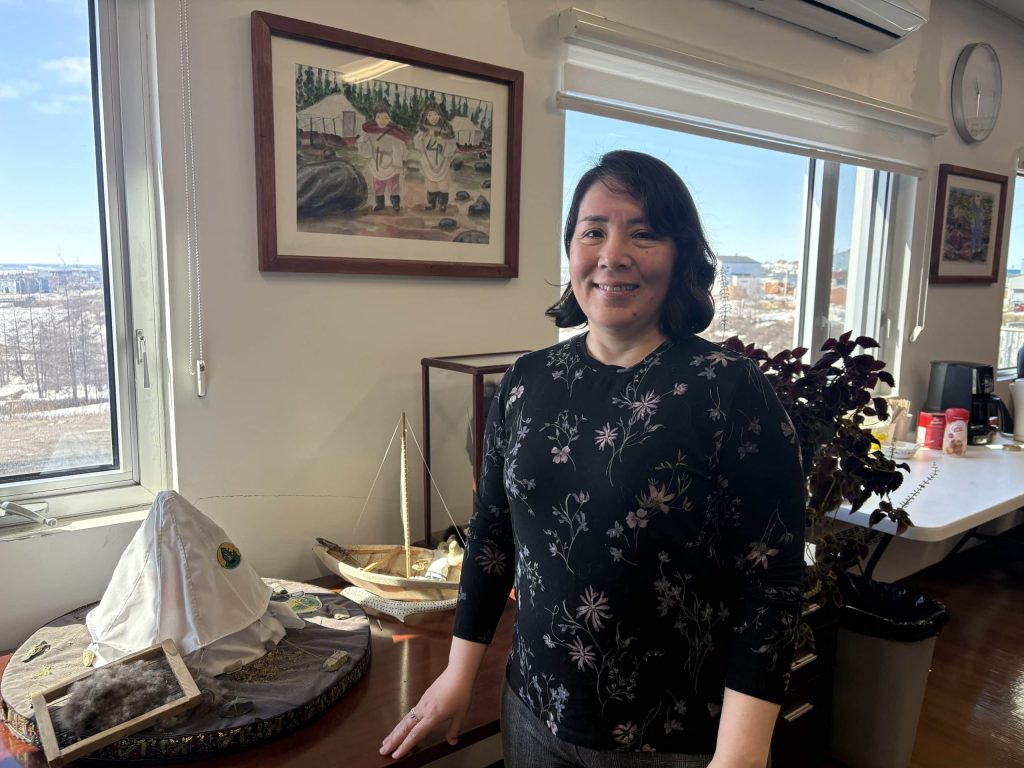
The mother adds that given the price of food at the grocery store, it is more practical to eat traditional foods.
According to a report by Inuit Tapiriit Kanatami, food insecurity in Nunavik stood at 77.3 per cent in 2017.
In 2023, consumer food prices there were 35.1 per cent higher than in Quebec City, according to the Nunivaat statistical program.
In her book The Right to be Cold: One Woman’s Story of Protecting Her Culture, the Arctic, and the Whole Planet, Inuk activist Sheila Watt-Cloutier asserts that “beyond taste and individual preferences,” traditional foods are essential to the well-being of her people in the Arctic, particularly because of their nutritional qualities.
However, the high cost of equipment and the impact of climate change are making access to traditional food more difficult, especially for households living on a single income, such as Anita Gordon’s.
This is compounded by the unpredictability of the weather and the rapid melting of snow, which can also damage snowmobiles, according to Anita Gordon. “The ice and the snow protect you from bumpy roads and rocks and rivers,” she said.
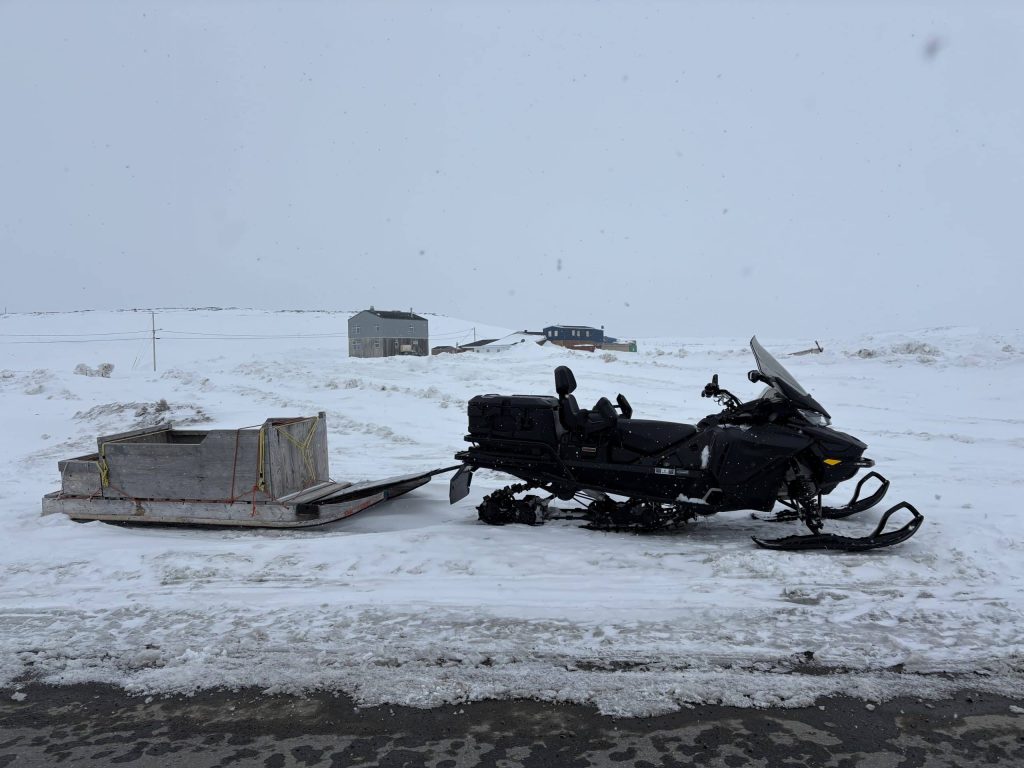
This issue is also of concern to Makivik, which has included in its Climate Change Adaptation Strategy, published in 2024, the goal of “improved delivery of space parts (i.e faster), as vehicles are increasingly damaged by the impacts of climate change.”
More dangerous to travel within the territory
Several Inuit also note that travelling to the land (the area outside the villages) is becoming more dangerous due to unstable weather and temperatures.
“In the last, let’s say, 15 years, I’ve noticed that the ice takes longer to form,” said Michael Cameron, a resident of Salluit. “So, for example, the ice used to start forming beginning of November, end of October, and now it’s starting only to form end of December, early January.”He coordinates the Uumajuit program at the Kativik Regional Government and one of his roles is to measure ice thickness at the beginning, middle, and end of the winter season to help residents travel safely.
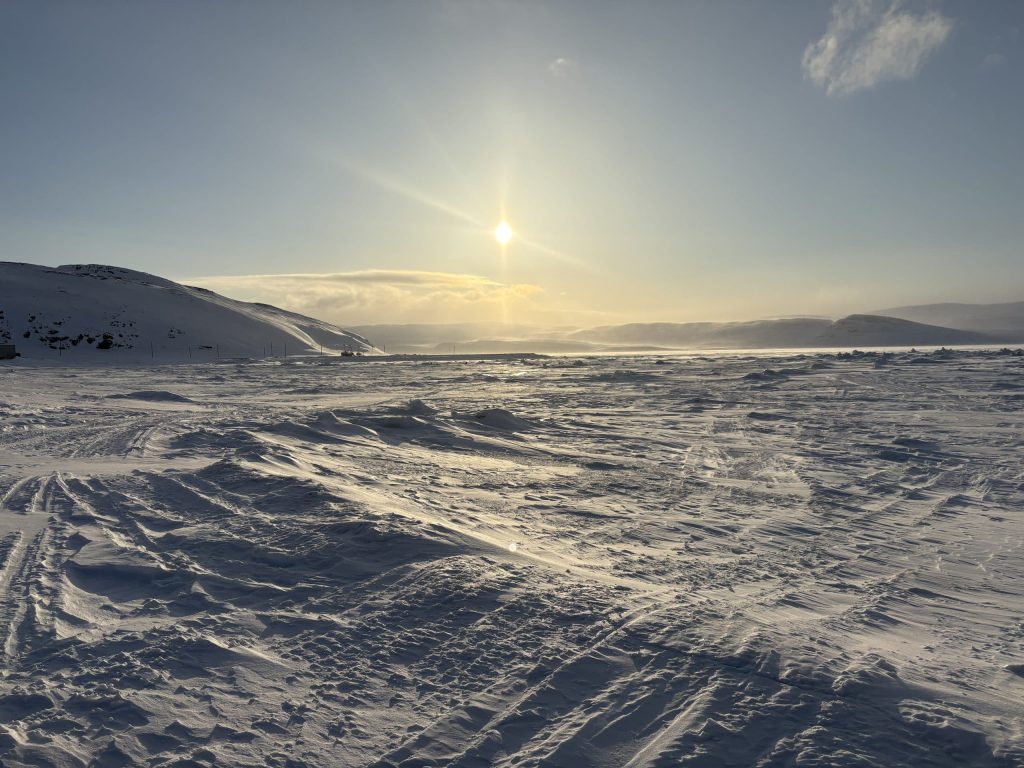
Last February, a Uumajuit program warden in Salluit even found that the ice was only 30 inches thick, when it should have been at least twice that.
The instability of the ice increases the risk of fatal accidents, such as the one that claimed the lives of two people last March.
Anita Gordon, meanwhile, has already had to deal with a sudden change in temperature when her partner at the time came to pick her up by snowmobile in Aupaluk from Kangirsuk.
“What took him two hours to come, it took 15 hours for us to go,” she said. The ice had melted so quickly that Anita and her partner were unable to use the lakes and rivers that normally serve as shortcuts.
Valley Saunders is a project coordinator at the Kuujjuaq Land Corporation. He and his team are responsible for the 22 survival cabins located in the area around his village, particularly along the snowmobile trails.
He has noticed that with the increase in blizzards, residents are using them more often than before.

He himself has noticed a significant increase in wind: gusts have already blown away one of the cabins on the edge of Ungava Bay, and last summer the wind was so strong that it caused such high waves on the river that his boat capsized.
“I’ve never seen it the way I saw it the last time,” he said of the experience.
Janice Parsons, president of the Qarjuit Youth Council, says that in the past, elders could easily predict the weather for the next two days. “Today, it’s unpredictable, it’s unrecognizable.”
She said that it is now difficult for them to pass on this knowledge to younger generations. “(The elders) are not as confident anymore. And they are educating us to be vigilant, follow the weather forecast and all that,” said the young woman.
Knowledge under threat
Like many Inuit, Anita Gordon did not acquire most of her traditional knowledge at school or from books, but by watching her mother. “Thanks to her, I learned how to gut a fish, throw a net, sew and cook,” she said with pride.
The mother of seven daughters and one son has, in turn, passed on her knowledge to her children. “I teach all my girls how to hunt. I teach all my kids, whether they’re boys or girls, how to cook, clean, how to sew.”
But while climate change is altering the seasons and migration patterns of animals, it is also affecting the transmission of traditional knowledge. Since people have to travel further and further to hunt caribou, as several Nunavimmiut we spoke to told us, it is becoming more difficult to learn how to prepare the meat for eating or how to sew the hides, for example.
“If we allow the Arctic to melt, we lose more than the planet that has nurtured us for all of human history. We lose the wisdom required for us to sustain it,” writes Sheila Watt-Cloutier in The Right to be Cold.
Together with her colleague Élisapie Lamoureux, Janice Parsons attended the 2022 UN Climate Change Conference in Egypt to talk about how climate change is affecting their traditional culture.
“I met also people that have lost their community, their city due to water rising,” she said about this trip, the furthest she’d ever been from home. Thanks to this encounter, she understood that her experience with melting ice was inextricably linked to the rising waters facing other Indigenous communities.
Sheila Watt-Cloutier also shares her concern about the disappearance of her people’s culture and identity in her book: “We have been stewards of the land. All this wisdom, too, is threatened by the changing climate.”
This report was made possible thanks to a grant from the Association des journalistes indépendants du Québec (Quebec Association of Independent Journalists).
Did you like this article? Share it with a friend!
Comments (1)
Leave a comment
Related Articles

Guilty Until Proven Innocent: A Man’s 12-year Battle with Revenu Québec
Quebec’s tax agency freezes retirement savings, seizes assets and “ruins lives” with investigations based on mere assumptions.

School Board Votes to Support Candidate who Smeared Rival, Acted in ‘Undignified’ Manner
Julien Feldman gets off scot-free after falsely associating his rival candidate with antisemitism and referring to her as “Ms. Gaza.”
« Je veux juste qu’on me croie »
Victime d’une agression sexuelle alors qu’elle travaillait pour le gouvernement provincial, une femme lutte avec Québec depuis cinq ans.
Greatly enjoyed the article. It triggered memories and continued appreciation of the beautiful Inuit who have so much enriched my life. I’m 85.