
Is Israel Preparing a Legal Framework to Execute Palestinian Prisoners?
Since October 7, 2023, prison conditions for Palestinian detainees have seriously deteriorated.
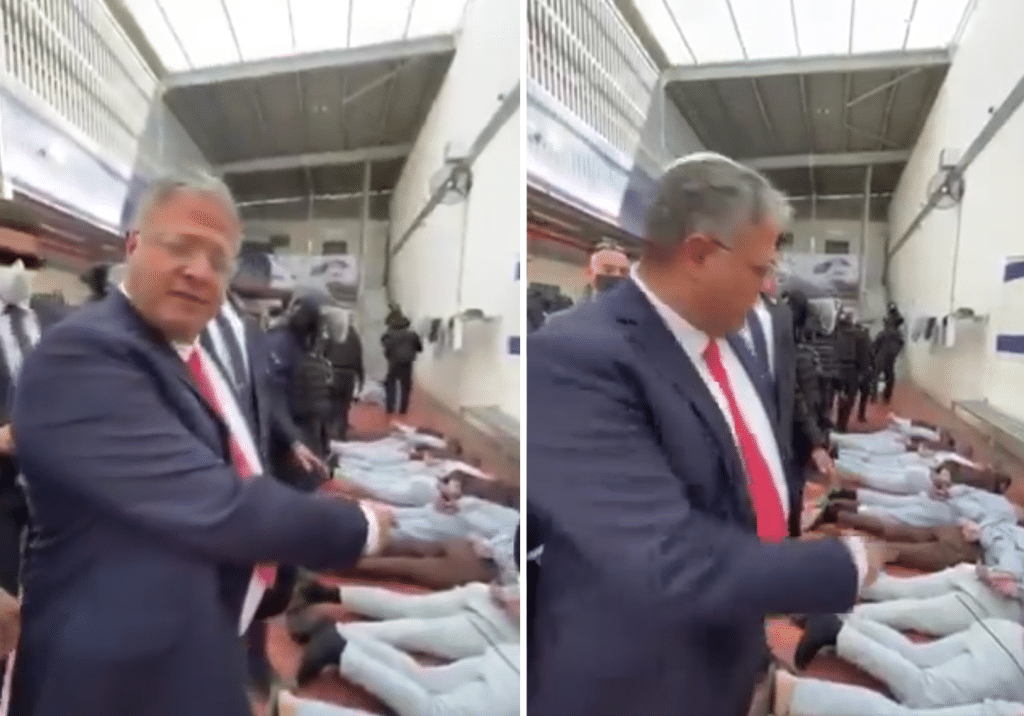
More than 11,000 Palestinians are currently detained, including women and children, and many of them are being held without trial under administrative detention.
The debate surrounding a bill authorizing the death penalty for Palestinian prisoners suggests that Israel may reinstate this punishment. However, history shows that executions, whether extrajudicial or in prison, have been practiced for decades.
Overcrowding of Palestinian detainees in Israeli-controlled prisons has become extreme. Cells designed for a few people sometimes hold twice that number. Prisoners decry insufficient food, limited access to water, lack of adequate medical care, and routine collective punishments. Several detainees have died in prison since the beginning of this phase of the war, in circumstances denounced as resulting from ill-treatment or medical negligence.
Sarah’s family is raising money to leave Gaza. You can donate here.
It is in this context that the death penalty bill takes on a particular significance. It does not arise in a legal vacuum, but in a system already marked by structural violence. Recent transfers of prisoners to isolated sections and reported logistical preparations suggest that the possibility of execution is no longer theoretical.
Many released prisoners have described extremely harsh conditions of imprisonment in Israeli prisons. Some speak of prolonged hunger, an almost total lack of medical care, and physical and psychological violence inflicted by guards. Former prisoners report being held in overcrowded cells, deprived of sleep by constant noise, and placed in painful positions for long periods of time, sometimes without the possibility of lying down. Others testify that they were denied all communication with their families or lawyers for weeks, and that forms of humiliation and ill-treatment were part of daily life in detention.
These accounts, from prisoners released after months of imprisonment, reveal a prison experience marked by violence, neglect, and systematic degradation of detention conditions.
Israeli prisons and detention centers are now described by human rights organizations as places where fundamental guarantees have completely broken down, while former detainees refer to them as “graveyards for the living” and “antechambers of death.”
During the last two years of the war of extermination, approximately 81 Palestinian prisoners and detainees have been killed in detention, according to documentation from Palestinian institutions specializing in monitoring prisoners. This figure only includes cases where the identity of the victim has been confirmed. Estimates suggest a higher toll, as several cases have not been officially recognized, and in some cases, neither the place of burial nor the fate of the remains has been clarified.
A report published in November by Physicians for Human Rights–Israel documents at least 94 Palestinians killed in Israeli detention centers between October 7, 2023, and August 31, 2025. Four others were killed after that date, bringing the documented total to 98 prisoners killed in custody during that period. Meanwhile, health authorities in Gaza have reported that several of the approximately 300 bodies returned under the recent ceasefire agreement showed signs of torture, burns, gunshot wounds, and mutilation. Some of the bodies, according to these reports, were returned handcuffed and blindfolded.
These testimonies contain damning accounts of torture and systematic repression inflicted on prisoners by Israeli prison authorities:
One prisoner was killed simply for asking for medical treatment. As Muhannad recounts, when he asked for painkillers, he was told to “die.” He was handcuffed, locked in a room, and beaten by 10 guards until he lost consciousness three times. He remained unable to move for a month, suffering from broken ribs. These accounts show the extent of the torture and systematic repression inflicted on prisoners by prison authorities.
Druweish, 46, a widower and resident of eastern Khan Younes, recounts: “I was arrested and tortured, and when I was released, I was shocked to discover that several members of my family had been killed. I spent weeks searching for information about their fate, until I realized that they had perished when our house was bombed. We had to extract the bodies from under the rubble with very rudimentary tools. The smell of blood and the sight of my dead relatives were unbearable.”
A.A., a 35-year-old Palestinian father, was arrested while he was in the hospital. He recounts the abuse he suffered during 19 months of detention: constant humiliation, insults, threats of rape against him and his family, and extreme physical violence.
“They took us to an isolated corridor, away from the cameras, and stripped us completely naked. Soldiers used dogs against us: one dog attacked me while the guards beat and insulted me, urinating on me before the attack. The attack lasted several minutes, while the guards continued to beat me and spray pepper spray in my face. The torture session lasted nearly three hours, and by the end, we all had injuries on different parts of our bodies.
“I was then transferred to a corner of the corridor, where a doctor had to stitch up a serious wound to my skull with seven stitches, without anesthesia, as a result of the blows I had received. I also suffered bruises, broken ribs, and hematomas on my limbs. This experience deeply traumatized and humiliated me and caused me to lose control of my emotions. I never imagined I would experience such horror in my life.”
Prisoners are at the heart of the Palestinian cause and the struggle for national liberation. Isn’t this death penalty bill aimed at punishing the entire Palestinian people by criminalizing their resistance and their struggle for freedom? It is imperative to act immediately to repeal this law, protect prisoners, preserve their rights and identity, and defend the inalienable right of the Palestinian people to continue their struggle for independence.
Recently released prisoners describe a regime marked by physical violence, forced transfers, deprivation of medical care, and prolonged isolation. A 29-year-old former detainee testifies: “We were treated as if our lives were worthless. Beatings and humiliation were part of everyday life. Constant searches, lack of food, and lack of medical care made detention almost unbearable. The hardest part was feeling completely abandoned.”
Did you like this article? Share it with a friend!
Author

Comments (1)
Leave a comment
Related Articles

A Road Trip Through Trump’s America
What a week in West Virginia reveals about the direction of the United States.

Editor’s Note: When the Comments Section Gets Out of Hand
As our Instagram follower count grows, so too does the number of problematic comments. What are we supposed to do about it?
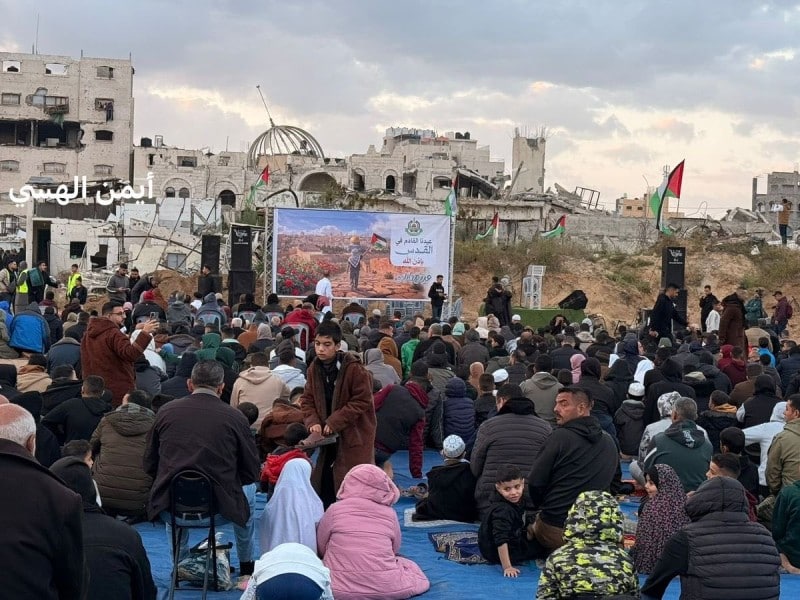
Eid in Gaza: Solidarity in the Face of Deprivation
The people of Gaza continue to help one another, sharing what little they have despite their own sorrow.
“Criminalizing their resistance” yeah I mean when your “resistance” consists of thousands of soldiers and civilians invading your neighbouring sovereign state and raping, killing, and kidnapping every man woman and child you can get your hands on, yeah I mean your resistance SHOULD obviously be heavily criminalized. I can’t believe this needs to be even said. Maybe instead of “resisting” they can try making a peace deal for once.