
Montreal Police Pressured Community Leaders not to Attend Vigil for Abisay Cruz
Sources say that while police spoke of listening to community after the killing of Cruz, they took a much harsher line behind the scenes.
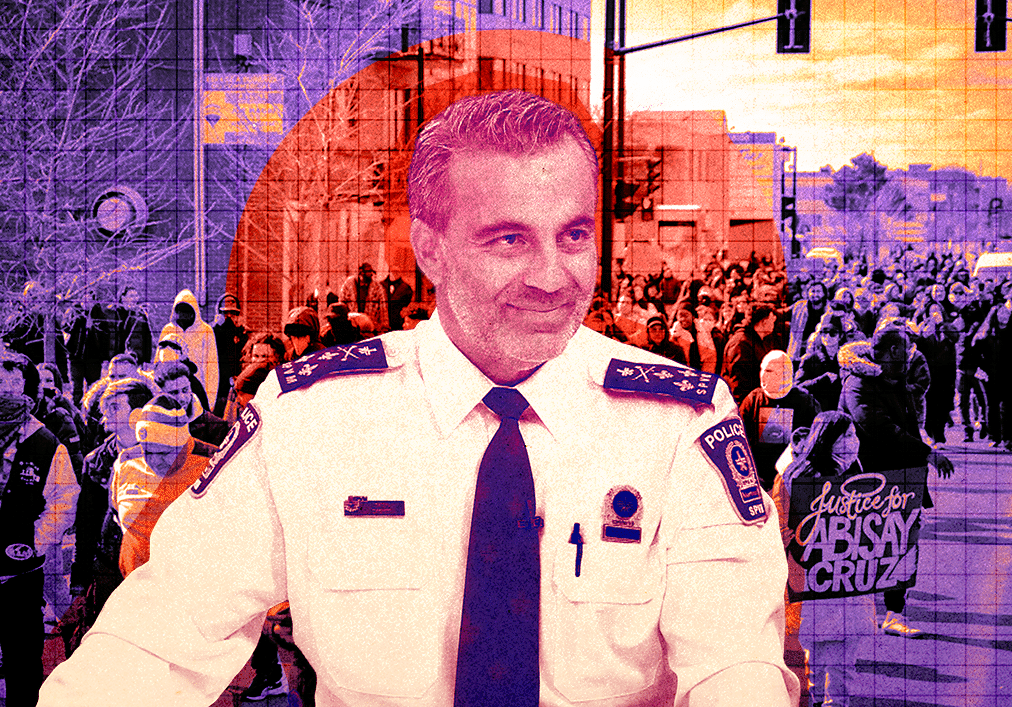
The commander of a police station in St-Michel pressured community leaders not to attend a vigil for Abisay Cruz after he was slain by Montreal police last year, according to three sources.
Police brass summoned community groups to a meeting following Cruz’s death, allegedly instructing them not to encourage people marching in the vigil. They were concerned the event would “turn into a riot,” according to the three sources, who were present at the April meeting.
“I told them, ‘No! A member of our community is dead, and we’re allowed to support his family,’” said one community leader, who did not want his name published. “It was clear they were pressuring us not to participate in any march or protest. They wanted us to pick sides.”
Police were called to Cruz’s St-Michel apartment on March 30, 2025, responding to reports that he was in crisis. They wrestled him to the ground, handcuffed him and kneeled on his back until he suffocated to death. Witnesses say he wasn’t armed and posed no threat to the officers.
Support your local indie journalists
It was the second officer-involved killing of a Montrealer in under 12 hours that weekend and police worried about a possible uprising, according to three sources and the department’s own internal emails. As Montreal police allegedly pressured community groups to publicly appeal for calm and refrain from criticizing the department, the communications team went on a public relations blitz.
The team staged a video shoot with Chief Fady Dagher at Station 30 in St-Michel, where he “shared a reassuring message to youth and citizens,” according to internal police emails obtained by The Rover. They scheduled appearances for Dagher on community radio and tried to book a ride-along with a social media influencer to have a “positive impact” for the police department.
The message Dagher put forward was twofold, reminding folks that police were listening to the concerns of St-Michel’s residents and that Cruz’s death would be reviewed by the Bureau des Enquêtes Indépendantes, a government body that investigated police killings.
But as the public-facing arm of the department spoke about community outreach and listening to the people of St-Michel, sources say they struck a harsher tone behind the scenes. One source, who works with youth in the community, said she was berated by police for attending a vigil in Cruz’s honour.
In an email obtained by The Rover, police invite the source to a meeting to “learn more about your expertise and role as a leader in the community.” But when she arrived, she said she felt ambushed.
A few days earlier, the source had been to a vigil for Cruz that ended with six people arrested for mischief after they ignited fireworks near Station 30. It was in this context that they met with the source and other community leaders to discourage them from participating in protests and vigils supporting Cruz.
“They accused me of secretly organizing that protest. The commander was very authoritarian with me at first, so much so he later apologized for it,” said the source. “All I told them is, ‘These kids need somewhere to put their anger, their grief! If they can’t protest, what message are you sending them?’ I was there to make sure they stayed safe. I told the kids they could occupy the street, they could give their rage an outlet but that they shouldn’t start breaking things.
“The commander told me: ‘I have one priority, to keep St-Michel safe!’ But they had just killed an unarmed man in St-Michel. How does that keep us safe?”
Montreal police spokesperson Samantha Velandia flatly denied this characterization of the meeting. She said it was never the commander’s intention to discourage people’s right to protest.
“The goal was to call for calm in a context of high tensions,” Velandia wrote in an email to The Rover. “In other words, the commander was looking to prevent dangerous behaviour or behaviour that could lead to excesses during the protests, but without ever putting into question the right to protest.”
Velandia quoted an excerpt from an April 8 newsletter sent by Station 30’s commander, wherein he stated “protesting is a fundamental right” that the Montreal police respect. The commander added that protests needed to respect the law and unfold in an orderly fashion.
Footage of Cruz’s arrest shows officers kneeling on his spine as he lies face down on the ground with his hands cuffed behind his back. Cruz can be heard whimpering “je vais mourir” as his family watches the life slowly squeezed out of him.
At the time, family members told reporters they saw parallels between the death of Cruz, a person of colour, and the 2020 police murder of George Floyd in Minneapolis. Floyd, whose killing sparked a wave of Black Lives Matter protests across the United States, also died while handcuffed with police kneeling on his back.
An investigation by the BEI ultimately cleared Montreal police of wrongdoing. Sources who spoke to The Rover said they had hesitated to speak publicly until now so as not to disrupt the investigation. But with the investigation over, they came forward to express their disappointment in how the police handled the fallout from Cruz’s killing.
The week after Cruz died, hundreds mobilized in St-Michel, an East End district with a history of police repression against Black, Arab and Latino youth. During the march, a handful of protesters shot fireworks and threw debris on the road before police called in the riot squad. Six people were arrested and the crowd was doused with pepper spray.
“It felt like the main goal was to suppress, to shut us up,” said Svens Telemaque, a community worker who was pepper-sprayed at the vigil. “There may have been a few people who threw things, but the crowd was peaceful. There were grandparents there, mothers pushing strollers, a whole community that gathered to pay their respects.
“It’s kind of like, if you don’t show up, it never happened. So you want to fight for the memory of Abisay, for his family and for all the youths who see their lives as being worth less because of what they look like. It was our way of telling (the police), ‘We saw what you did!’ But I don’t think the police wanted to hear that.”
Concordia University professor Ted Rutland says it didn’t surprise him to learn of the police pressuring community members not to protest. He says it harkens back to the 1987 killing of Anthony Griffin, an unarmed Black teenager who was shot while running from police.
“After the outrage around Anthony Griffin’s death, the police began to attempt to build relationships with organizations in the communities they were most targeting,” said Rutland, an author and expert in the history of Montreal policing. “They essentially sought to build alliances with some groups and turn them against more radical groups who organized protests against police violence. It was a strategy of turning these communities against themselves.
“After the killing of Abisay Cruz, I noticed a lot of community groups urging for calm and to allow the (BEI) investigation to proceed. I assumed they were doing that on the suggestion of police. It turns out the police were working to quell dissent and tell folks to put their faith in the BEI investigation. We know these investigations don’t go anywhere.”
The BEI was launched in 2016 as a result of the public coroner’s inquiry into the shooting death of Fredy Villanueva in Montréal-Nord. The unarmed teenager was killed by a police constable and an investigation by the coroner found major breaches in protocol by the Montreal detectives investigating a shooting involving their colleagues.
Since its inception, the BEI has completed over 400 investigations into Quebec police shootings and allegations of misconduct. Only three of those cases were ever brought to trial and none involved the use of lethal force, according to the bureau’s statistics. The BEI is composed of some civilian observers but mostly made up of former cops.
Rutland says police killings are just one part of a crisis of systematic discrimination within the department. In 2019, the city of Montreal commissioned a study by two university researchers using years’ worth of police reports to investigate claims of bias in its “street check” policy. At the time, a street check was when police randomly stopped someone and asked them for identification.
The study found that Black Montrealers were four times more likely to be “street checked” by police than whites. Indigenous women, meanwhile, were 11 times more likely to be stopped than white women, according to the study.
This caused police to adopt a less harsh street check policy, but a follow-up report, released in 2023, found no decrease in profiling after the new methods were adopted. A 2024 Superior Court ruling found Montreal’s street checks are unconstitutional, awarding upwards of $5,000 in damages to people whom the department racially profiled between 2017 and 2019.
Finally, late last year, the police adopted a new street-check policy that required officers to stop civilians only on the basis of “observable facts.” The policy also required police to remind the people they stop that they’re free to leave at any time.
To leaders in St-Michel, these are superficial actions that do little to quell the crisis of trust between youth in the community and the police who swear an oath to protect them.
“There is a real crisis of confidence, kids see the police and it makes them want to run away,” said one source, who attended the meeting in April of last year. “I cannot tell those kids not to be afraid, not to protest, not to have their voices heard. The police want us to listen to them but they should start by listening to us.”
Author
Related Articles
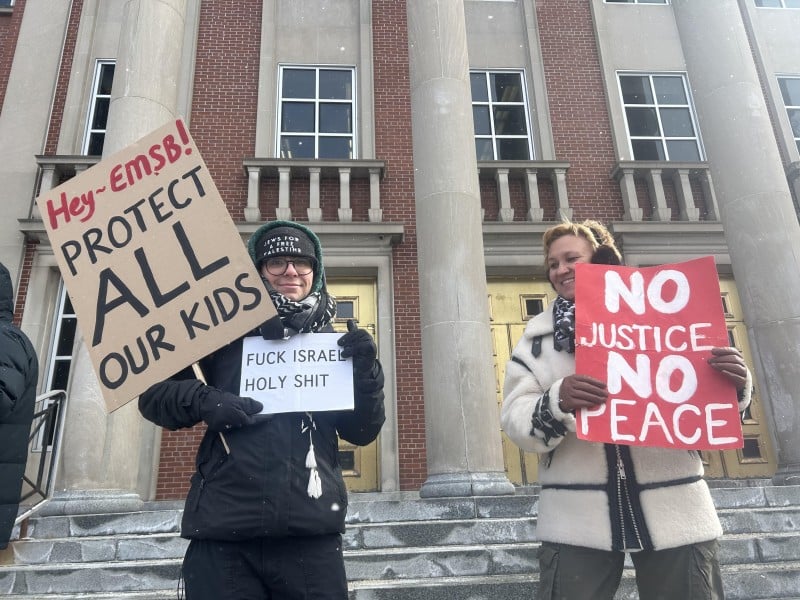
Ombudsman Rules in Favour of Student Suspended for “F*ck Israel” Post
The English Montreal School Board was ordered to retrain staff on its anti-bullying policy and students’ rights.
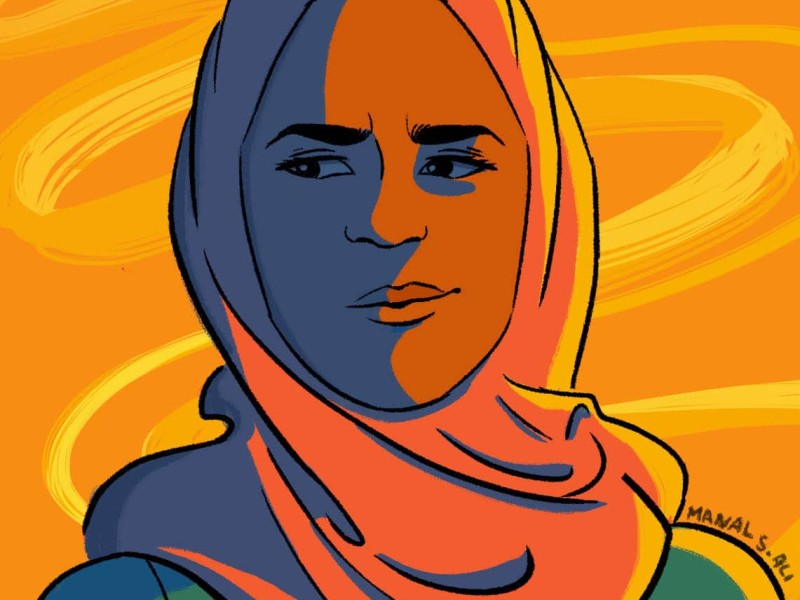
Will Bill 21 ‘Erase’ a Generation of Muslim Teachers from Quebec?
The legal battle over Quebec’s religious symbols ban has reached the Supreme Court in a case that will make Canadian history.
Nunavik Police Get a Pay Raise Amid Community Concerns
Inuit activists say the pay raise should match police efforts to rebuild trust with the communities.
Comments (0)
There are no comments on this article.