
The Problem with Fixing Heat Waves in Parc-Ex
Planting more trees will cool down the heat island in Parc-Extension, but it might also change the neighbourhood’s social fabric.
Parc-Extension is coated in crimson on Montreal’s heat map.
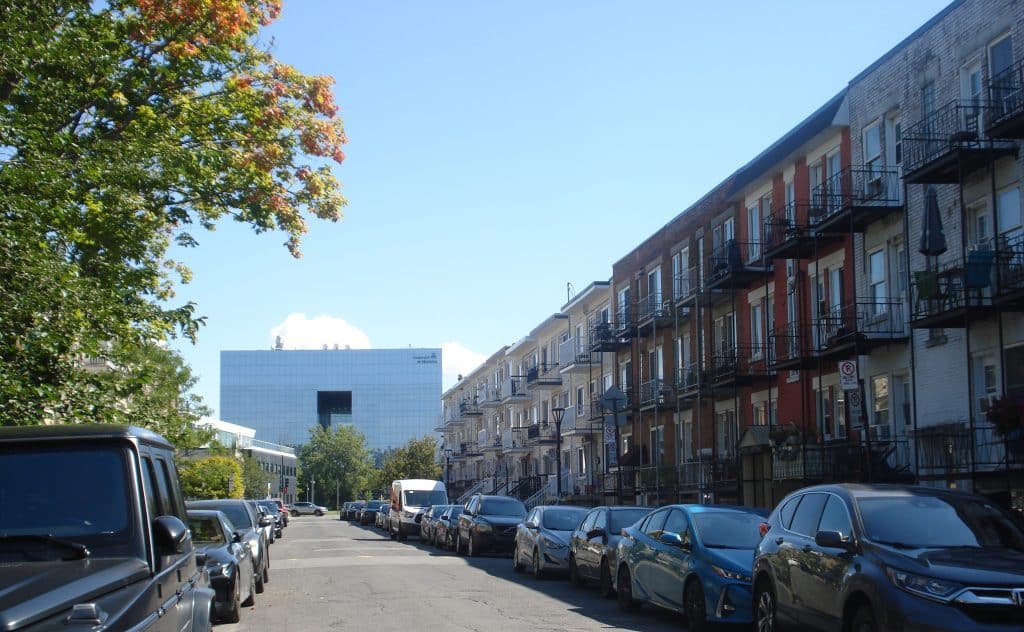
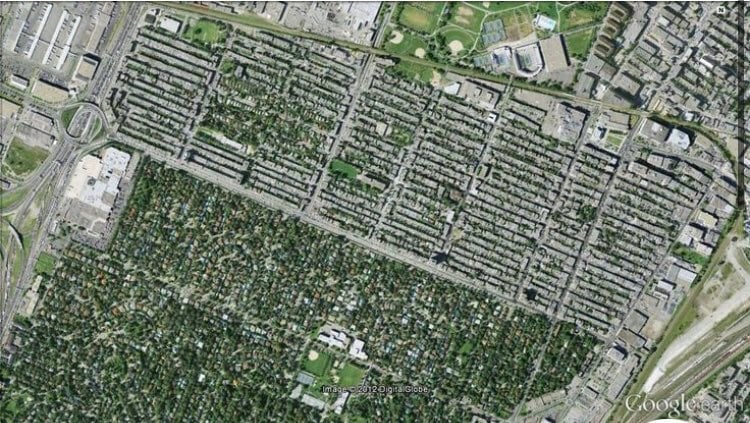
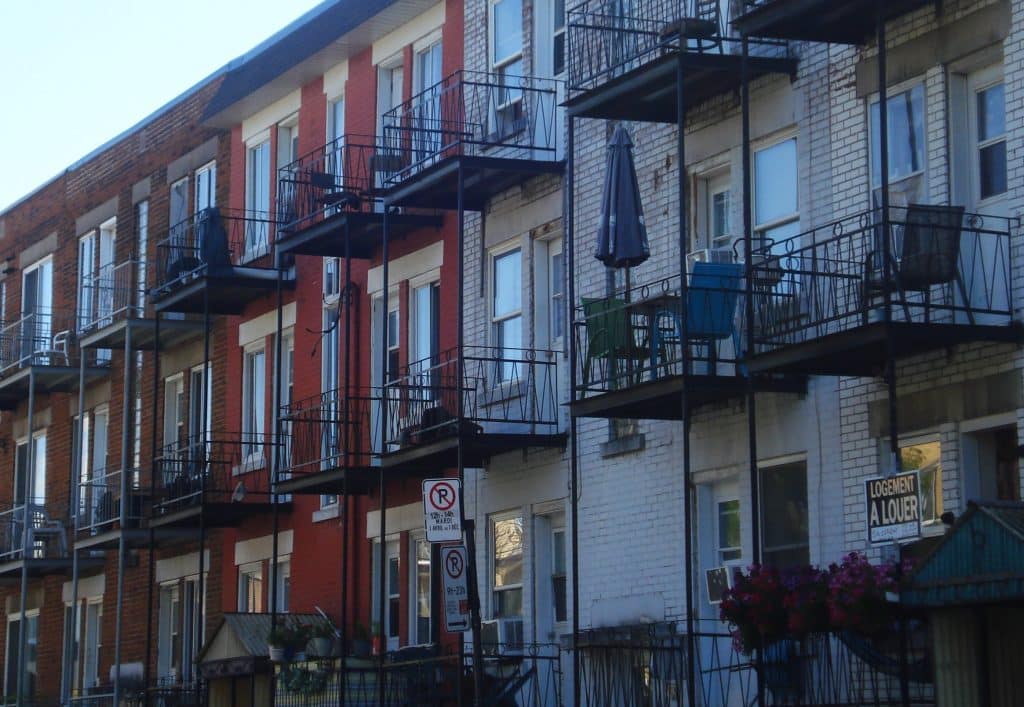
The neighbourhood, packed with asphalt and concrete, swelters through the summers, absorbing and holding onto the blistering heat. The buildings here are denser and more tightly packed together than what’s found in the rest of the city — they also get much hotter, with apartments that are often overcrowded.
Still, many people choose to stay inside, in cramped apartments, just to avoid the blinding sun. The streaks of shade and foliage peppered around most other neighbourhoods in Montreal are few and far between in Parc-Ex.
The density of the area is particularly stark in contrast to the neighbouring Town of Mont Royal, which is a pale yellow on the heat map and one of the wealthiest parts of the city. A chain link fence separates the two.
This year, on June 24, Saint-Jean-Baptiste Day, Montreal broke a historic record for the hottest day recorded in June, with temperatures peaking at 35.6°C.
Julia Pohl-Miranda, a longtime Parc-Ex resident, heard that the library and community centre would stay open on the holiday. These spaces serve as the main cooling centres for residents. But when Pohl-Miranda marched down to the library, all she found was a locked door and a closed sign.
It was a national holiday. Many people were home from work with nowhere to go to cool down. The large population of low-income residents, children, and the elderly had no place to seek shelter from the heat.
“I was very annoyed and disappointed to discover that there was not a single place in the hottest neighbourhood in Montreal for people to go that was air-conditioned,” says Pohl-Miranda, who then went home to her hot apartment to email the borough mayor and the public health authority about how frustrated she was.
“If somebody didn’t die in this heat wave, you’re lucky,” she wrote to the city. “They could very well die in the next heat wave.”
Jill, another Parc-Ex resident, says the impact of extreme heat is increasingly concerning this year. She lives on a block with more than 350 apartments where the temperature stays high at night.
More green spaces are something Jill wants to see in the neighbourhood, and she has been advocating for a new green alley. She says these spaces could help provide more cool spots in the dense area, improve air quality, and people’s health. But at the same time, she is frustrated knowing that these green spaces could also gentrify Parc-Ex.
Eco-gentrification, or green gentrification, is a process in which greening initiatives, like a new park or green alley in a neighbourhood, increase property value and rent, attract more affluent residents and displace the low-income population of the area.
For Jill, eco-gentrification is something that blocks all possibility of making working-class neighbourhoods greener because it creates a bind where either they must remain as urban heat islands or have green spaces and risk gentrification.
Understanding Eco-gentrification in Montreal
Montreal has a long history of using environmental projects to attract capital into the city.
In the 1990s, Montreal Mayor Pierre Bourque advocated for making Montreal into an environmentally friendly city and using that as a driver for economic growth. He was a key figure in the construction of the botanical garden in Montreal and in turning the Miron quarry into Frédéric Back Park in Saint-Michel.
Yaya Baumann, a PhD researcher in geography at Université de Montréal, says many urban gentrification projects around the world involve some element of greening, whether it’s planting trees or constructing a new park. He also broadens the definition of eco-gentrification to include sustainability projects that aim to “green” a neighbourhood through eco-friendly infrastructure like sponge sidewalks, electric vehicle charging stations, and low-emission buildings.
Baumann was a former member of the community-based action research network (CBAR) in Parc-Ex and also did his master’s thesis on the case of eco-gentrification in Saint-Michel, focusing on Parc Frédéric Back. He describes eco-gentrification as a “Trojan horse for gentrification.”
Other neighbourhoods in Montreal have gone through similar patterns.
In the early 2000s, the Lachine Canal underwent a huge redevelopment project that aimed to revitalize the area after years of neglect by the federal government. New, shiny commercial spaces popped up, and luxury condos grew from where old factories stood in the working-class neighbourhoods of Saint-Henri, Pointe-Saint-Charles and Griffintown. The Woonerf Saint-Pierre transformed a regular alleyway into a wide green alley and was praised for fighting extreme heat. The canal path has become a popular spot for cyclists and joggers.
The shift slowly but certainly morphed the streets, buildings, and stores surrounding the canal into a whole new reality — especially Saint-Henri, one of the hippest spots in the city.
Community members like Baumann and Pohl-Miranda are fearful that the same story could repeat itself in Parc-Ex.
The Greening of Parc-Ex
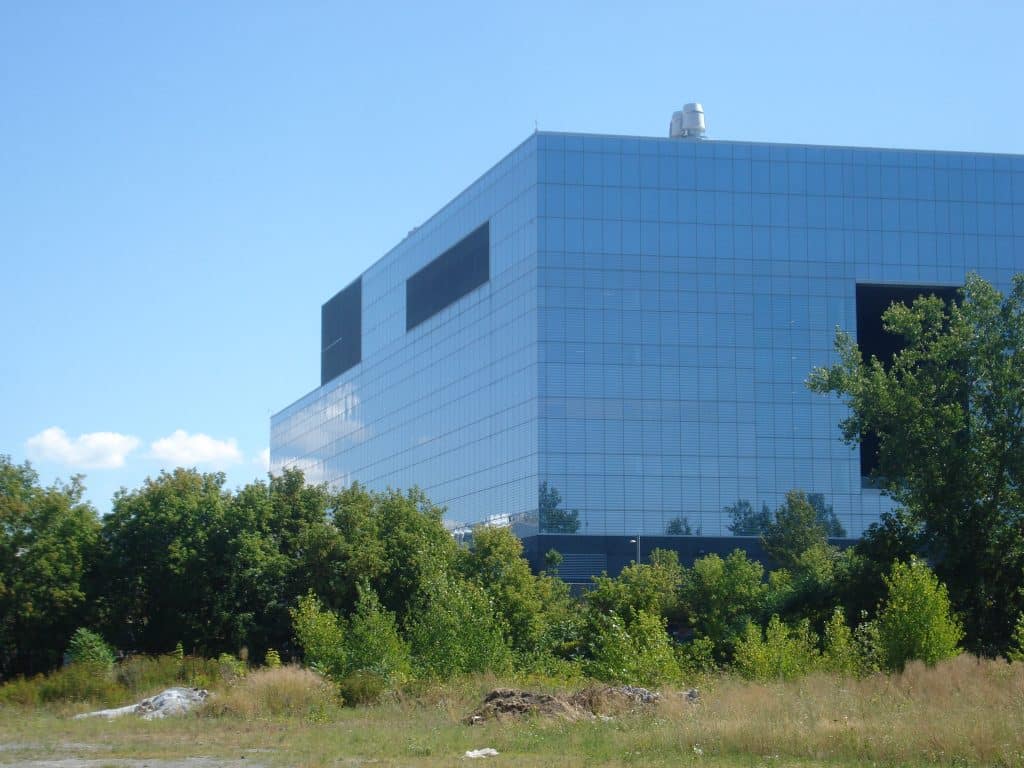
The new Université de Montréal MIL campus sits right in the middle of Parc-Ex and Outremont. The campus, which opened in 2019, is Leadership in Energy and Environmental Design (LEED)-certified, integrates green infrastructure in public spaces, and aims to reduce car traffic in the neighbourhood.
Sleek glass buildings tower right on the edges of Parc-Ex as an innovation hub for university students and researchers. For many in the area, the campus has planted a seed that has grown and slowly spread, bringing an onslaught of changes to Parc-Ex.
A 2019 study on the impact of the new campus on rents in Parc-Ex found that one-third of listings in the neighbourhood used the new campus as a selling point and that the listings that mentioned the university were on average $100 more per month than those that didn’t.
The study, authored by UdeM professor Violaine Jolivet, also found that there was a large concentration of listings near the university itself in the southern part of the neighbourhood, which “suggests a greater residential mobility of tenants during the past year in this area bordering the MIL campus.”
“The location of the site on the borders of one of the most affluent districts of the municipality, Outremont, and one of the most vulnerable districts of the agglomeration, makes it possible to revalue a gap in the metropolis and to place Parc-Extension on the map of spaces to be invested in by developers and small owners,” states the study.
Pohl-Miranda says that even when the plans to open the campus first came up, many community members (including her) were concerned. She attended public consultations and community meetings to voice her concerns about how the campus would change the neighbourhood and impact the residents.
“It was a really big concern that, I think, has been totally vindicated,” she says.
The university had promised earlier on in the project that a portion of land would be allocated to student housing. This would’ve relieved some of the pressure on Parc-Ex, where the new students would flock for its affordability among the more expensive surrounding neighbourhoods like Mile-Ex and Outremont.
In the end, the university sold the land to condo developers building dedicated student housing.
Former Parc-Exer Vijay Kolinjivadi and Aaron Vansintjan co-authored the book The Sustainability Class on how mainstream “eco-friendly” lifestyles and transformations can often exclude working-class people. The changes they noticed in Parc-Ex around 2019 were a keystone for the topics they cover in the book.
Kolinjivadi, a professor of sustainable and equitable economies at Concordia University, says that he was seeing changes in Parc-Ex even before the new campus was built. New, trendy businesses were popping up on Avenue Beaumont, which seemed like an extension of Mile-Ex. Then came the campus, which amplified the gentrification that was already in motion.
In 2019, Parc Pierre-Dansereau was built as part of the goals for the campus to “revitalize” and “green” the surrounding neighbourhood. Parc Dickie Moore was also constructed in an area adjacent to the campus in 2022. The budget for the campus was $350 million, which combined funding from the federal and provincial governments, along with the university.
Understanding Parc-Ex’s needs
The tricky thing about eco-gentrification, according to Baumann, is that it’s difficult to be critical of greening projects.
It’s hard to make a case against planting more trees. And indeed, people are not against greening, per se, but rather the invisible impacts it can have on the most vulnerable populations.
In 2021, the City of Montreal invested $1 million in a project called Vert le Nord under the organization Ville en Vert. The organization aimed to “green” the neighbourhoods of Ahuntsic-Cartierville, Saint-Laurent, and Villeray-Saint-Michel-Parc-Extension by planting more trees in the area and creating green alleys.
Despite its good intentions, the project attracted some criticism from Parc-Ex community leaders and organizers for not taking into account the specific community needs.
Baumann was a member of CBAR at the time and was part of the community consultations with Ville en Vert. He said that while the organization reached out to community organizations for input, their projects were already developed, and they couldn’t take feedback and incorporate it into their plans. The organization’s idea of community participation did not really involve figuring out what the community needs, but rather “having a stamp of community approval,” according to Baumann.
The issue with the greening projects, for community members like Baumann, was not the greening itself but the lack of measures to protect the neighbourhood from real estate speculations. A report on the impacts of green gentrification in Parc-Ex (which Baumann was an author of) recommends that similar initiatives in the future apply social structures like rent control or social housing alongside any environmental project.
Ville en Vert did not respond to The Rover’s request for an interview by the time of publication.
CBAR member Sepideh Shahamati says that there’s no denying that the issues of extreme heat need to be dealt with, but “unfortunately, in terms of addressing this problem, a lot of the (government) funding is going to external organizations who have no idea of what the context is in Parc-Ex.”
There is a strong sense of community and grassroots efforts in Parc-Ex, and the plethora of local groups have a much better understanding of the specific needs of the residents, according to Shahamati. She says greening shouldn’t be about doing the most innovative and trendy project. Instead, funding should be given to community groups that already exist in the neighbourhood, who actually know the community.
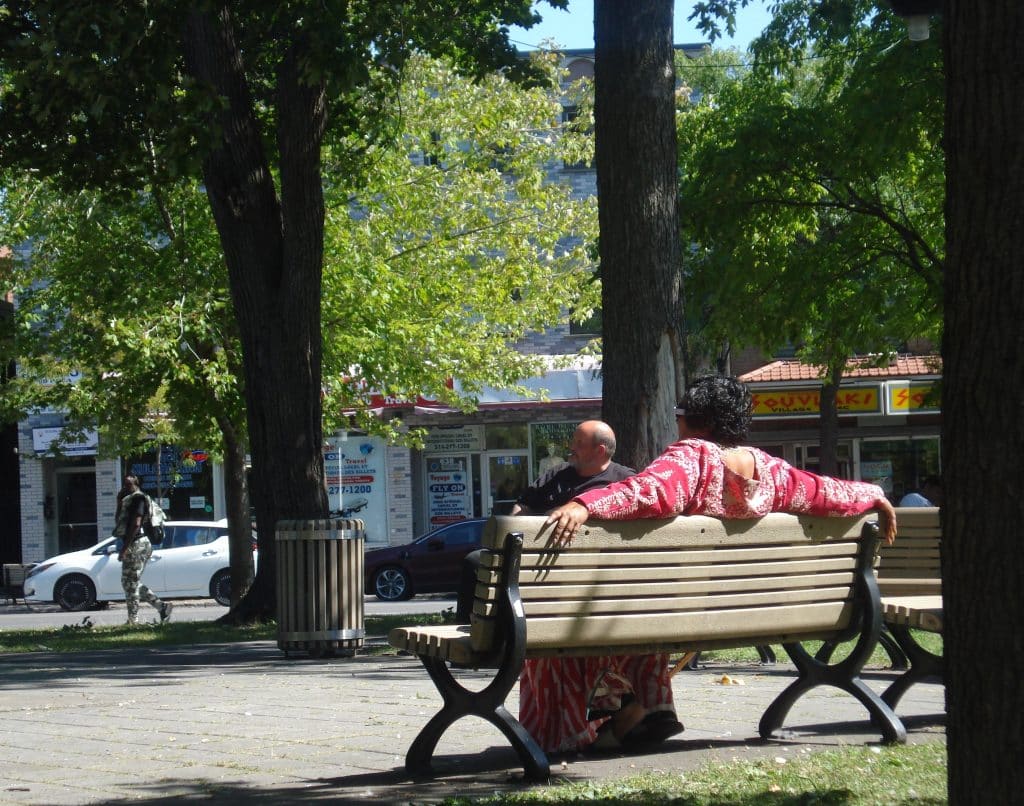
In 2023, the city proposed a new bike lane in Parc-Ex on Querbes and Ball Avenues, which would remove 250 parking spaces. This issue triggered a massive debate (and a legal battle) as many residents were furious about the loss of parking spaces, which were integral to them.
For many young, middle-class residents in Montreal, more bike lanes are something to be celebrated, not fought. But for new immigrants, Vansintjan explains, having a car is essential to survive in a new country. They might have to drive much further away for work or need it for their family. They are often less focused on being eco-friendly because they are preoccupied with the daily hustle of getting their basic needs met.
“What often happens is that people impose these ideas of what is environmental, and they’re often these exclusive policies that are more for a specific class,” says Vansintjan. “So let’s say things like charging stations for electric vehicles, bike lanes, or subsidies for solar panels on your roof — these are all things that are for the middle class, for people who have access to electric vehicles or who own a roof.”
Social needs as an ecological strategy
The image of an eco-friendly, green city is often a painting that frames only a certain sector of the population. The others are left outside the borders.
“If we actually want to create an environmentalism that’s for everyone, you have to start from people’s basic needs and think about environmentalism as something like social or cooperative housing — that’s environmentalism,” says Vansintjan. “If you supply affordable housing to people, and fast and reliable public transit, that’s essential for a lot of people, and that will help them not use their car or not have to rely on their car all the time.”
The alternative is an environmentalism that is exclusive and comes off as elitist.
If we think about meeting people’s immediate needs in times like heatwaves, practical solutions would include increased cooling stations in the city and access to air conditioners, according to Pohl-Miranda. This could be through government grants for community organizations or mutual aid programs to buy air conditioners for vulnerable people impacted by climate change.
While these solutions might not be seen as the most “eco-friendly,” Kolinjivadi says that preventing real estate speculation is far more ecological than any bike lane or charging station.
“There is a real material basis to putting social needs first as ecological strategy,” he says.
Did you like this article? Share it with a friend!
Author
Comments (5)
Leave a comment
Related Articles

Bill 94 Put Their Teaching Degrees on Hold
Two Muslim women who wear the hijab discuss the moment they learned they could no longer complete their education degrees in Quebec.
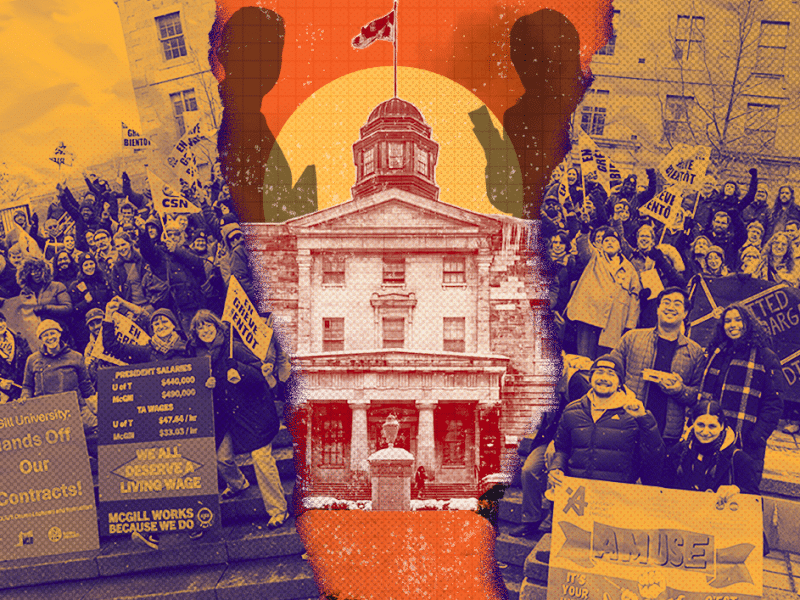
McGill Spent Over $1 Million Fighting Unionization
Union organizers at the university say this is part of a broader trend towards corporatization of the public institution.
Rent Increases Set to Worsen the Housing Crisis
Experts warn that homelessness continues to grow as Quebec’s housing tribunal proposes a new way to calculate rental increases.
Excellent article qui apporte un point de vue pertinent et rarement entendu, qui porte à réfléchir et qui amène à relativiser, voire réviser, l’opinion que l’on pouvait avoir sur le sujet. L’intérêt particulier et intéressant de votre article est qu’il souligne avec justesse les besoins spécifiques des résidents de Parc-Extension, un quartier où j’habite depuis plusieurs décennies. Et comme le mentionne un autre commentateur, je partage l’article là où je crois qu’il aura le plus d’impact. Merci pour ce texte apprécié.
Every urban forestry professional needs to read this article. Thank you for your absolutely excellent work on this Ms. Chollangi. I’ve shared it where I hope it will have the most impact.
“So let’s say things like charging stations for electric vehicles, bike lanes, or subsidies for solar panels on your roof — these are all things that are for the middle class, for people who have access to electric vehicles or who own a roof.”
One of these things is not like the others. How are bike lanes “for the middle class”?
I ride a bike not because it is “eco-friendly,” but because I can’t afford to own a car. This is the case for almost everyone else I know who bikes in Montreal. This seems like an aesthetic understanding of class (“cyclists are all lycra-clad hobbyists”) rather than a material understanding of class (owing a bike is significantly cheaper than owning a car).
Biking in Parc Ex is more dangerous than in other nearby neighbourhoods. Biking on Jean Talon, Parc, or Acadie can be legitimately terrifying. The “controversial” bike lane on Querbes is probably the least respected in the city, as it is constantly blocked by cabs, delivery trucks, or other idling vehicles. If the streets were safer, biking would be a more viable (and more affordable) option for those in Parc Ex
L’Éco-gentrification est un problème d’orientation politique. Lorsque la Ville veut intervenir dans un quartier pour réduire les îlots de chaleur, elle doit intervenir en amont pour éviter le phénomène de spéculation immobilière et protéger les résidents des évictions et le remplacement des commerces locaux par des commerces de luxe. Depuis toujours elle fait exactement le contraire c’est-à-dire qu’on améliore la qualité de l’environnement urbain pour les futurs résidents qui auront déloger ceux qui y habitent. C’est un choix politique.
A major contributor to heat islands is also ac, something that will add to the problem as residences get “upgraded,” whether by renovation or government initiative.