
The Refusal of Asylum to Ranjit Singh
An activist for the Sikh independence movement in the state of Punjab, Ranjit Singh fled police persecution to seek refuge in Canada in 2019. Two weeks ago, his asylum application was rejected, his deportation scheduled for March 6.
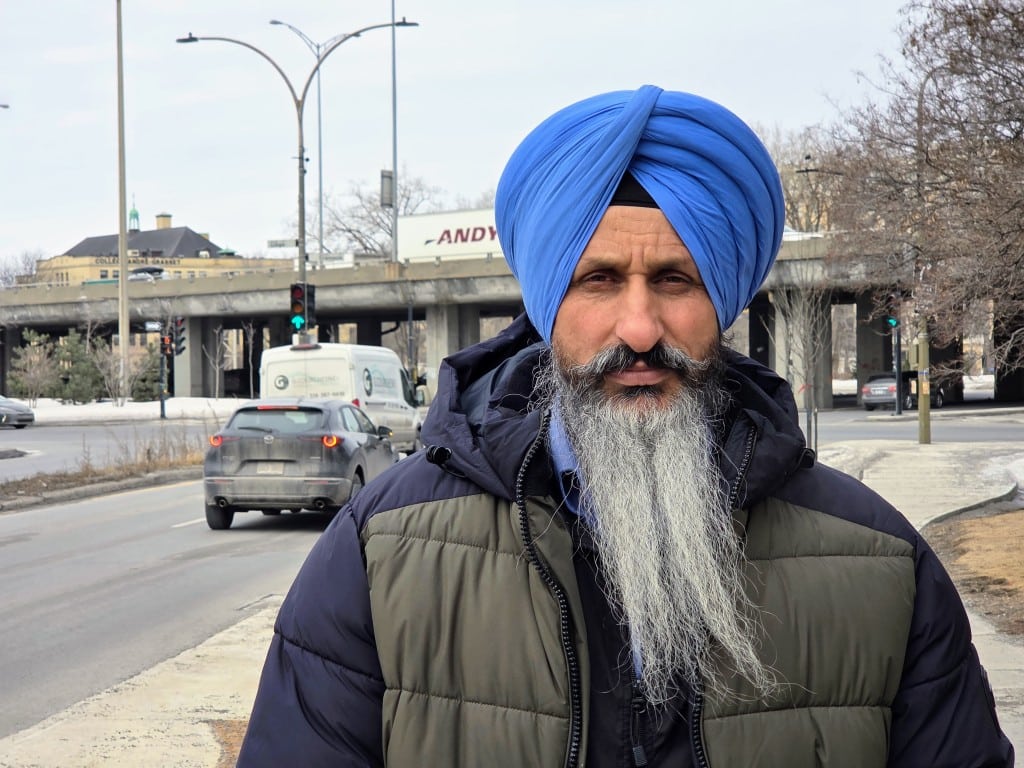
Under a leaden sky, his nose reddened by the icy wind, Ranjit Singh quickened his pace to reach the building housing the office of Liberal MP Marjorie Michel in Montreal.
Inside, he found a dozen people who had responded to the call to action launched by the Immigrant Workers Centre (IWC-CTI). The community organization has been supporting him since he received a deportation letter to send him back to the country where his life is in danger. Near the elevators, three police officers stood guard.
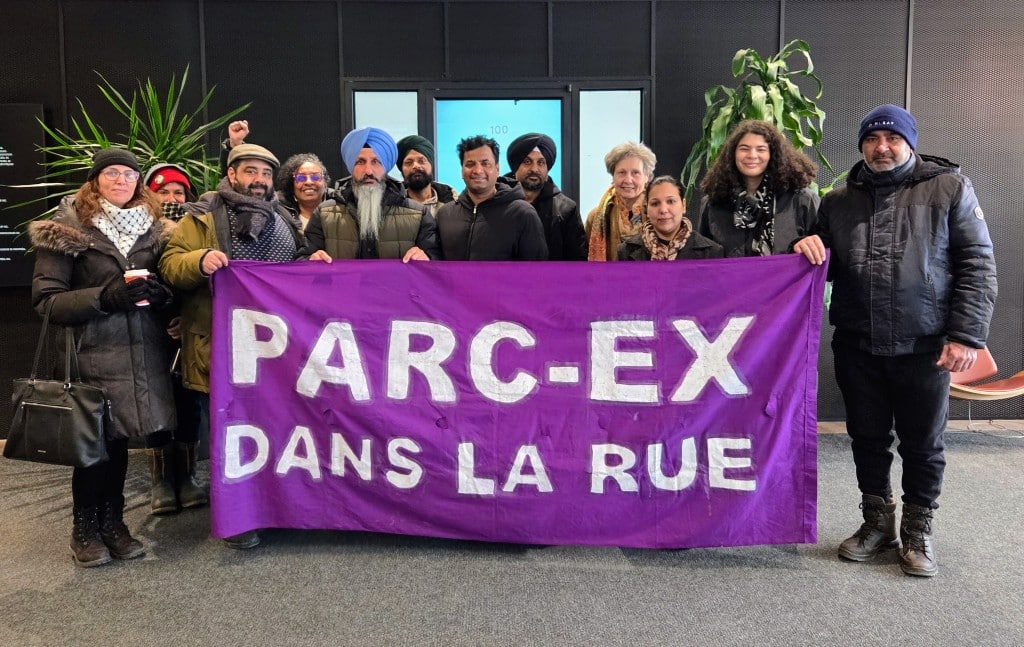
Wearing a blue turban and with his hands clasped in gratitude, Ranjit Singh smiled shyly and greeted those present. Their support is all the more valuable because, at the last minute, the pressure paid off: his deportation has been suspended — but only for a month. This “good news” came the night before the March 5 gathering, just as he was about to pack his bags.
“This is by no means a long-term victory. It’s a temporary cancellation to give us some time to develop a strategy on how to keep him here,” says Mostafa Henaway, community organizer at IWC-CTI and human rights researcher at Concordia University. The organization filed a request for postponement with the MP, who agreed to forward it to the Immigration, Refugees and Citizenship Canada (IRCC). “One month is nothing. Nothing at all,” he insists.
With a vague look in his eyes and features drawn from sleepless nights, Ranjit Singh bears the weight of this precarious reprieve. At 56, the stakes are high for this man, whom even the judge who ruled on his asylum application recognizes would be in danger if he returned to live in Punjab.
“The judge found him credible as a refugee and believes he would not be safe in Punjab, but thinks he could live in New Delhi,” says Henaway. This decision is difficult to understand, given that the two places are only a few hundred kilometres apart.
Support your local indie journalists
The price of political engagement
Ranjit Singh’s story begins in the fertile lands of Punjab. There, he was a respected farmer and village leader who decided to get involved in politics. For years, Ranjit campaigned for the Indian National Congress Party. Then, tired of internal strife, he switched sides to support the party formed in 2012 in the wake of an anti-corruption movement: the Aam Aadmi Party (AAP). At the time, the Congress Party dominated the region where Ranjit was a candidate. The local MP, “a rich and influential man,” reportedly saw this departure as a personal affront.
“The police arrested me under his influence,” Ranjit says in a frail voice. “They tortured me and made me sign a blank piece of paper.” After two days in the hospital to treat his injuries, he decided to flee to Canada, where his brother lives.
Arriving on a visitor’s visa in 2019, Ranjit hoped that the situation in India would calm down and that he would be able to return home. “COVID arrived, my family who stayed behind was being harassed by the police since my departure, and I realized that applying for asylum was the only option left to me,” says the father of two boys, now aged 13 and 18. He therefore filed an asylum application in 2021.
Without legal support, speaking poor English and no French at all, Ranjit Singh struggled with the Canadian immigration system. During his hearing before the Immigration and Refugee Board, he lost his footing. “I take medication for depression, and because of the side effects, I tend to forget things and have trouble thinking,” he says. The hearing, scheduled to last five hours, was an ordeal. Under the weight of trauma and memory loss, he says he omitted crucial details. The judge found him credible but rejected his application.
For Ranjit, it is a disguised conviction. “I can’t hide anywhere in India, they will always find me.” With no network, no family in New Delhi, and a profile as an activist on file with the national police, he fears being arrested as soon as he arrives in India.
Ranjit Singh’s case highlights the contradictions in Canadian diplomacy and the asylum system. According to Henaway, it is one example among many of the Carney government’s toughening of immigration policy.
A “hypocritical” ruling
Mostafa Henaway denounces the grounds for rejecting Ranjit Singh’s asylum application. According to the researcher, this is a “hypocritical and increasingly common internal resettlement strategy” that serves diplomatic interests at the expense of human rights. “How can they claim that someone will be safe in India when they acknowledge that the Indian government is killing political opponents right here in Canada?” he asks indignantly.
The community organizer is referring to the fact that former Canadian prime minister Justin Trudeau publicly accused New Delhi of ordering the assassination of Sikh leader Hardeep Singh Nijjar in British Columbia in June 2023. The incident sparked a diplomatic crisis between the two countries, which lasted until Mark Carney was elected last year.
The new prime minister has reestablished relations with Narendra Modi’s government, with which he signed a series of agreements last week.
This change of tone was seen as a betrayal by Canada’s Sikh community, of which Ranjit Singh is a member. Like Hardeep Singh Nijjar, it is his activism in support of the Khalistan movement, the proposed state entity whose creation is desired by part of the Sikh community in Punjab, which he pursued through volunteer work in Ottawa, that has earned him threats of reprisals in his country.
According to Henaway, the rejection of Ranjit Singh’s asylum application must also be viewed in the context of Canadian immigration policy.
“We are seeing a very harsh shift on the part of the minister, similar to what is happening in Europe and the United States. The Liberals are only doing this because they think their immigration policies were unpopular,” the researcher said.
However, he points out that behind the numbers and polls, there are people like Ranjit who work at Dollarama, pay their taxes, and simply want to sleep without fear.
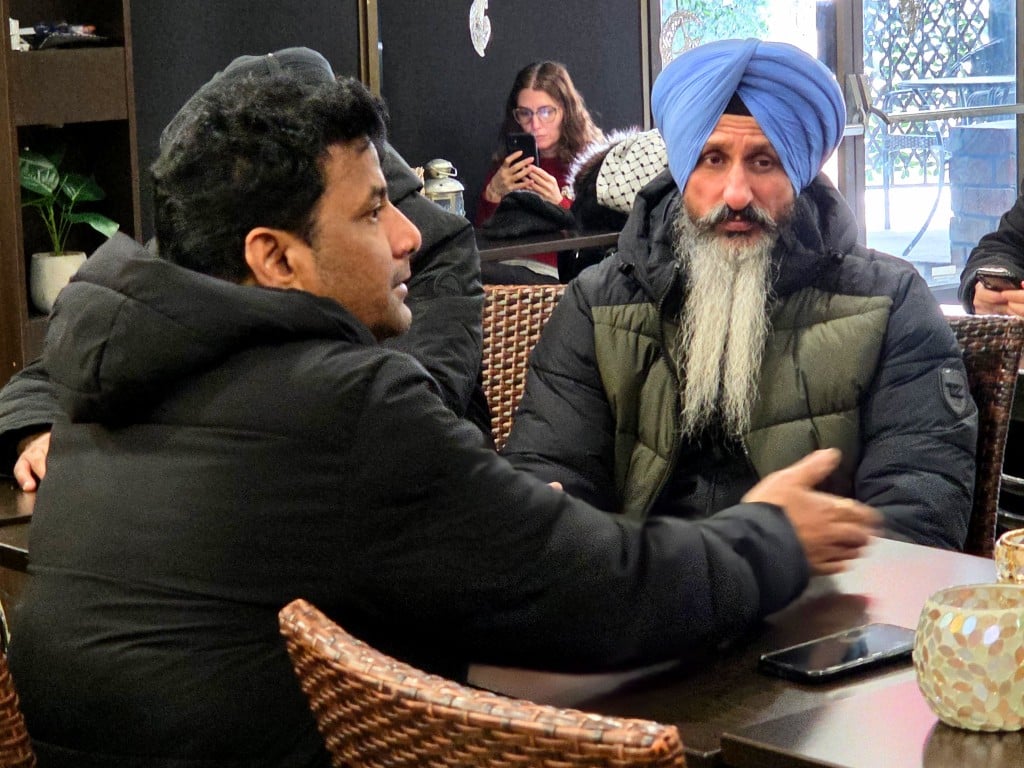
Once the rally has dispersed, a handful of IWC-CTI activists take refuge in a nearby café to escape the wind. The mood is not one of celebration; preparations are already underway for the next step.
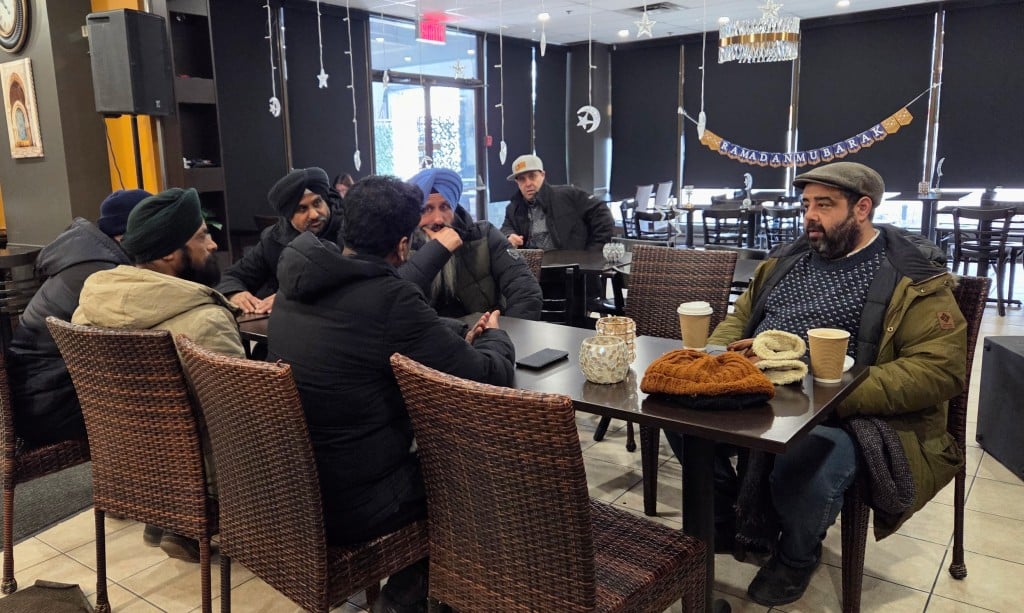
Sitting at a table, his forehead creased with worry lines, Ranjit Singh sometimes seemed absent. “I don’t sleep more than three to four hours a night,” whispered the man with the long gray beard. Despite everything, his resilience remains intact. He says he is fighting for his wife and children, the eldest of whom is now also threatened by the Indian police since reaching the age of majority adulthood.
His last chance? A humanitarian request. “It’s a long, complex process with an uncertain outcome, but it’s the only option we have left,” says Henaway. Thanks to the IWC-CTI, Ranjit Singh now has the essential support of a lawyer to begin such a complex process and build a solid case in less than 30 days. The countdown has begun.
Author

Related Articles
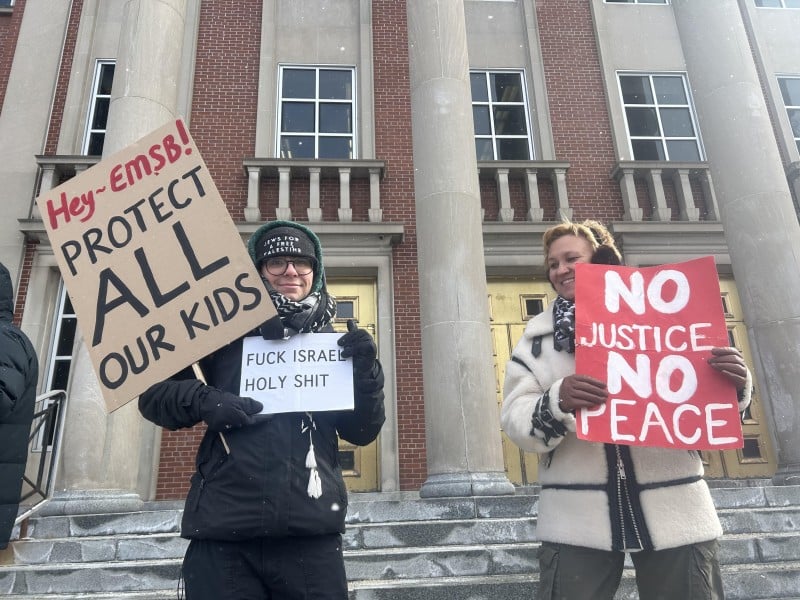
Ombudsman Rules in Favour of Student Suspended for “F*ck Israel” Post
The English Montreal School Board was ordered to retrain staff on its anti-bullying policy and students’ rights.

Will Bill 21 ‘Erase’ a Generation of Muslim Teachers from Quebec?
The legal battle over Quebec’s religious symbols ban has reached the Supreme Court in a case that will make Canadian history.

Nunavik Police Get a Pay Raise Amid Community Concerns
Inuit activists say the pay raise should match police efforts to rebuild trust with the communities.
Comments (0)
There are no comments on this article.