
Turbo Haüs and the Fight for the Soul of Montreal’s Cultural Scene
The City’s Politique de la vie nocturne is long overdue.
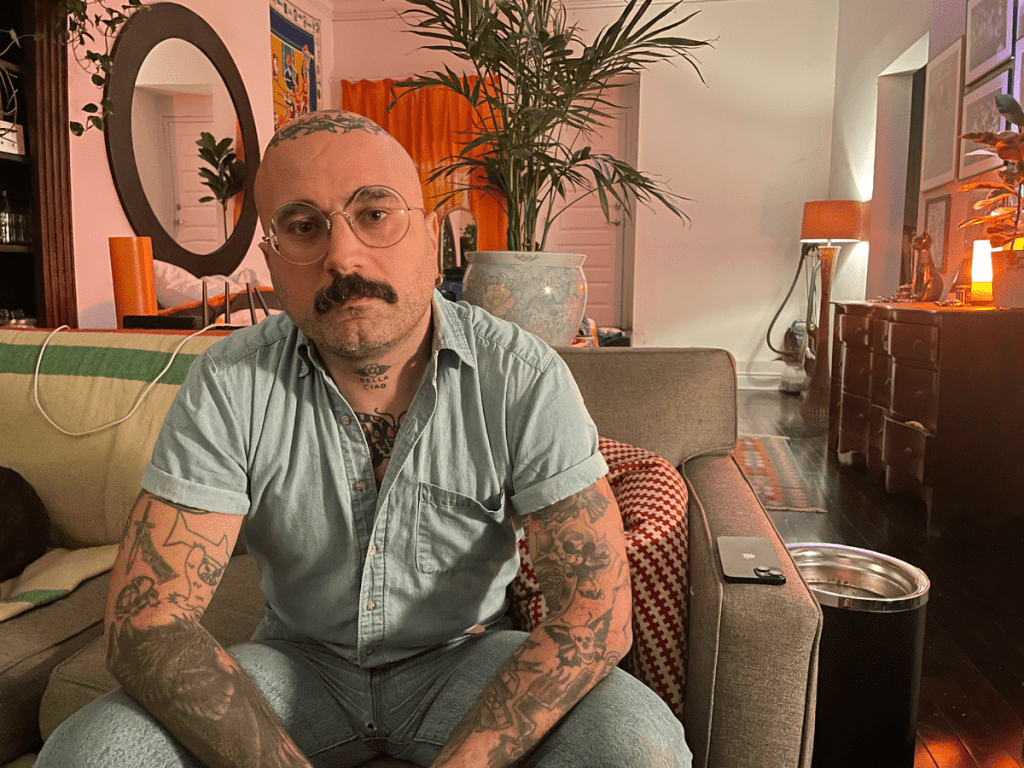
Sergio Da Silva, co-founder of Turbo Haüs, is speaking out after receiving a noise complaint that jeopardizes the future of his business. PHOTO: Julien Lamoureux
This article was originally published in French. The English version was translated by Savannah Stewart.
In the quiet of his loft above Turbo Haüs, the bar and music venue he co-founded, a slightly exasperated Sergio Da Silva vents about the state of the cultural scene in Montreal.
“It’s a very fragile sort of ecosystem that we exist in, and that has been put together and nourished for a long time. And you don’t just get to just come in and disturb that ecosystem with your bullshit,” he says.
An example of the bullshit Da Silva is referring to is a noise complaint from the neighbouring building that led to a warning from the City of Montreal.
“Please take note that legal persons who contravene these regulations are liable to a fine of $1,500 to $12,000,” reads the email that Sergio published on Instagram, in keeping with his reputation as someone very vocal on social media.
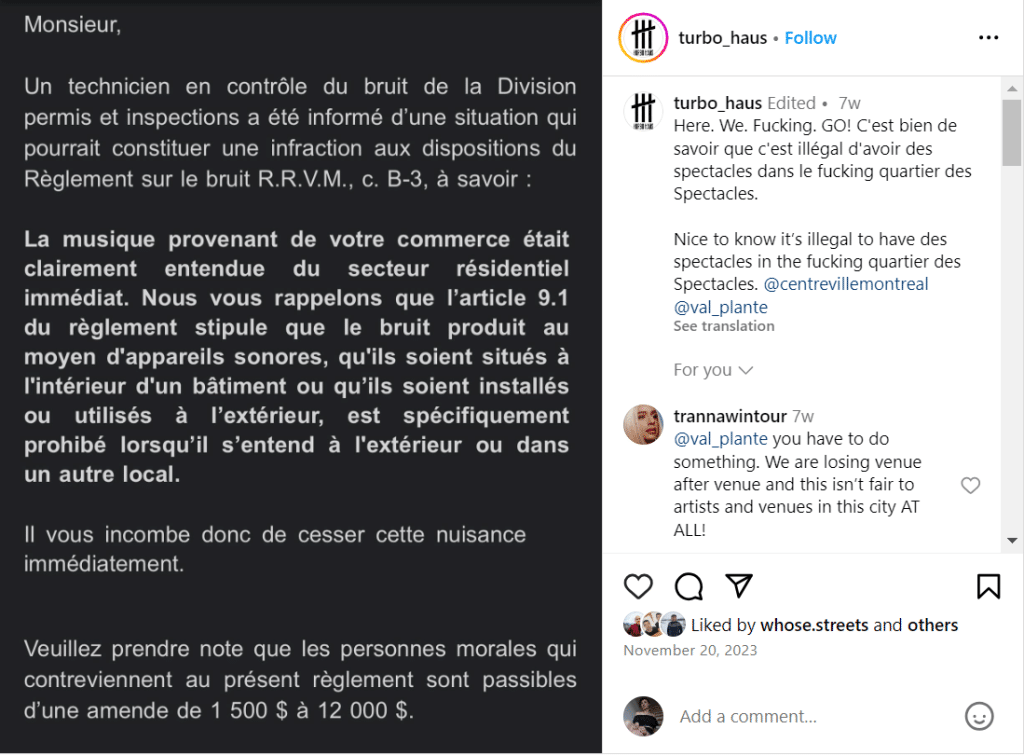
What would a $12,000 fine mean for him and his establishment?
“Oh, fuck that. It’s finished,” he says. “You know, that’s almost all my sales for a week.
“That’s payroll. That’s my salary. That’s everything. It’s just gone. Because why? Because one person is unhappy.”
Since then, the dust has settled (a little). There have been no other complaints, and two city representatives met with him to discuss the situation. But for Da Silva, the threat is still present — for his bar and for underground culture as a whole which, he believes, is a hallmark of Montreal.
From DIY to established venue
Ten years ago, Turbo Haüs was an underground DIY space on Saint-Antoine St. in downtown Montreal.
“We were running a not-for-profit that was allowed to get wedding licenses, so we were using those to be able to sell liquor,” he explains.
The building had to be destroyed, so Turbo moved to Saint-Henri.
“It’s like a really residential neighbourhood, so it just didn’t work. People would get mad at us because they would find people having sex in their backyard, and they would come and yell at me, and be like, ‘That’s your fault!’” he recounts, smiling.
Support Independent Journalism.
In 2018, the bar, a place where shows of all kinds are presented but is particularly recognized for its punk and metal events, moved to a sector which would soon be absorbed by the Quartier des Spectacles, on Saint-Denis St. between Sherbrooke St. and Ontario St. East.
The co-founder has a very clear vision of his establishment’s purpose. “A bar, especially like a venue bar, is like a community space. It’s not just to go out and get drunk and get fucked up. It’s about meeting the people who do the things that you do, meeting your contemporaries and being able to start bands, talk to each other, learn from each other.”
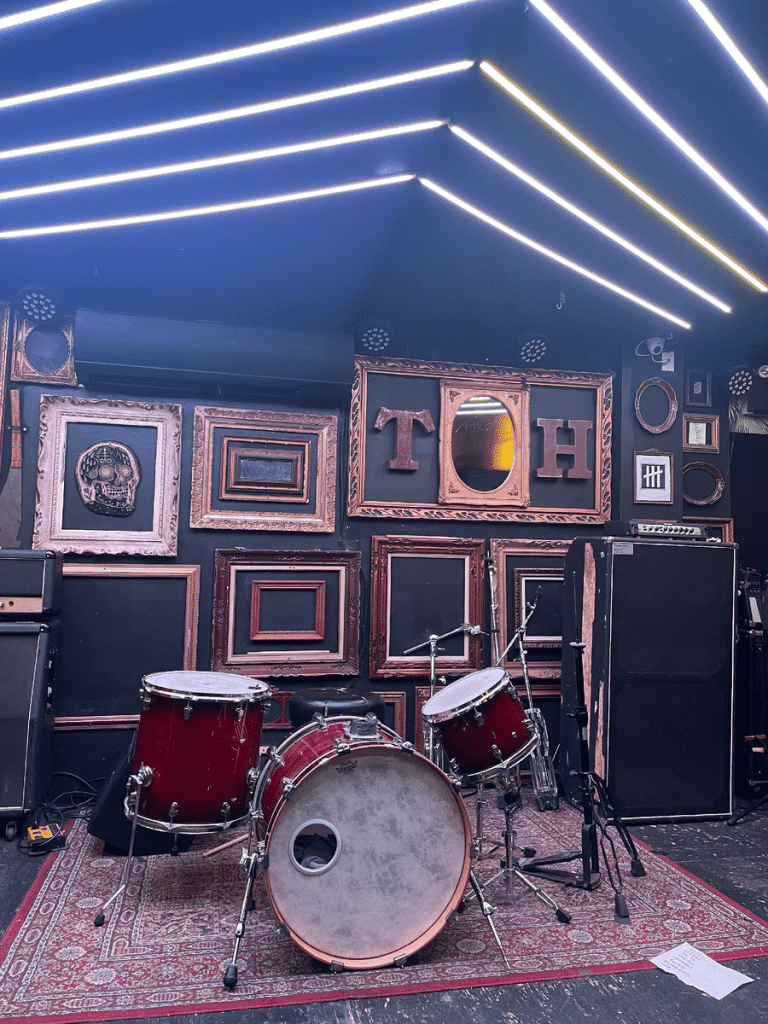
The Turbo Haüs stage, where many emerging punk and metal bands played to an enthusiastic audience. PHOTO: Julien Lamoureux
This is why he says he wants to do things right: the shows must always end at 11:00 p.m. on the dot, he put tens of thousands of dollars into soundproofing the space, and the two apartments directly above are his own loft and an apartment reserved for visiting artists to avoid noise complaints.
The rear door of Da Silva’s loft used to open onto a parking lot — an ideal neighbour for a show venue. But the 40-something-year-old shows me what this door now hides: the corridor of a new housing building built during the pandemic. And, about eight feet away, the door to an apartment.
It is from one of these new dwellings that the complaint was filed, the complaint that presents a threat to the survival of his business, he says.

Montréal Punk City
Chance Hutchinson, 39, arrived in Montreal in 2010 growing up in Moncton, in the Maritimes, and having lived in London, Ontario. He says that he moved to follow his girlfriend at the time, but that was partly an excuse to finally live in a city that he already really loved.
He had already visited the city on tour with different groups. “It’s a special place. The vibe of Montreal is hard to put into words. I always knew I wanted to be here.”
In 2016 he founded PRIORS, a punk group that has been taking him on a journey ever since. A wandering Canadian who settles in Montreal to make music, enjoy its laidback vibe and take advantage of its low cost of living is a story heard thousands of times.
“When I arrived I worked in a call centre on and off for 8 years. Not the best job, but I was working with musicians; it was run by a guy from BARF: all metal heads and people in the arts. My rent was 660$ and I split that with another person.”
In 2014, he lived in the Plateau-Mont-Royal, in a “crazy” area. “It was a happening place, and I moved there because I wanted to party.” Now, he has settled down and lives with his wife in Châteauguay, who is not quite a lover of punk music.
“I had a crisis at 30; I stopped drinking,” Hutchinson says.
Essentially, he chose to leave the animated areas of the city when his life changed rather than hoping those places would change with him.
“People need to research,” he says. “I can’t imagine what people have in their heads, living near Turbo Haüs, that they call the police.”
Da Silva makes the same point, with a few more curse words. “Go fucking live somewhere else. Don’t bother a well-established business that contributes to the culture of the city.”
Change of mentality
“We celebrate individualism at the expense of places that serve the community.”
For Mathieu Grondin, Managing Director of MTL 24/24, an organization promoting nightlife development, there is a very simple way of protecting music venues like the Turbo Haüs: adopting the change agent principle.
The basic idea is that the person who causes a change must be responsible for limiting their irritants. If a promoter wants to open a club in a residential area, he must soundproof his building correctly. If an apartment building is built in an old parking lot, the surrounding bars and rooms should not have to modify their activities.
“The agent of change is a principle,” says Grondin. “[If a dispute arrives] on a judge’s desk, he should take this principle into account. It doesn’t mean it prevents noise complaints.”
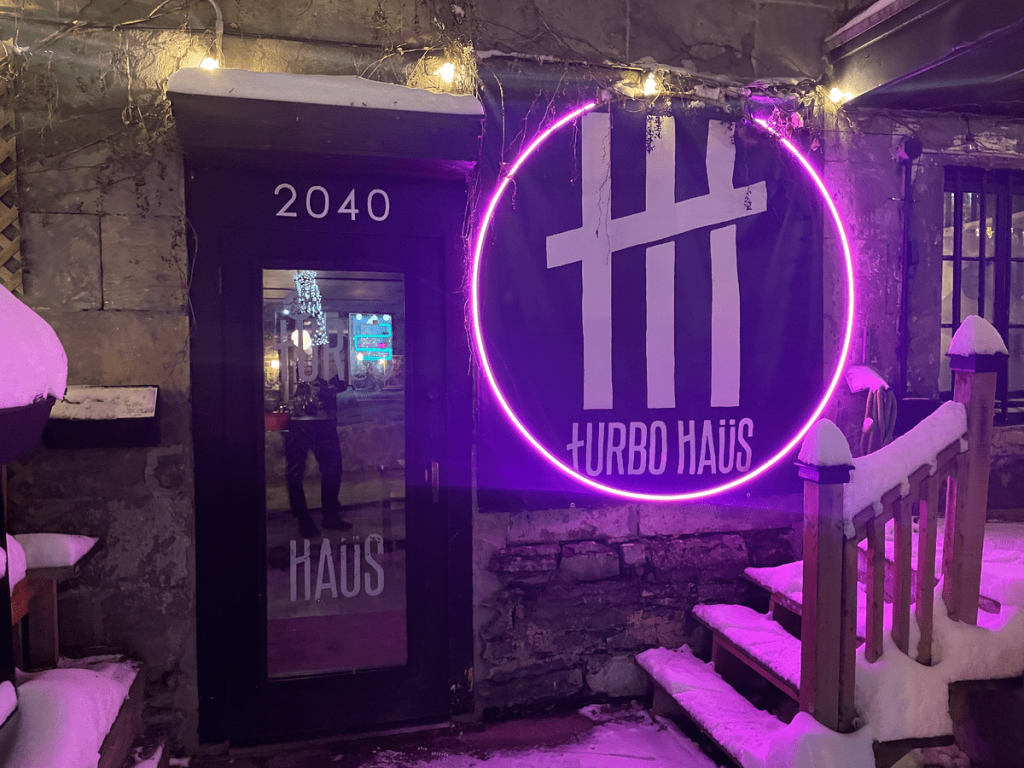
This defender of nightlife is familiar with the Turbo Haüs case.
“You have to go there to grasp the magnitude of this vaudevillesque situation. You have a bar that moved from the west, that opens in the Quartier des Spectacles. During the pandemic, the borough allows residential construction. Behind his building, there are now condos. And it’s up to the bar to conform…” he trails off to avoid repeating himself.
Projet Montréal has promised a policy on nightlife since coming into power in 2017. Halfway through its second term in office and the policy is still not public, although that could change this winter according to Radio-Canada.
“We can’t wait another three years to get an action plan. This is a race against the clock to protect the scene and the vitality of alternative culture,” adds Mathieu Grondin.
For many people in the scene, the Divan Orange closure at the start of Valérie Plante’s first mandate is still an open wound, a trauma brandished as the example of what can’t happen again, and the omen of a city losing its uniqueness.
“Do I think Montreal will be just another Canadian city? No. The art will prevail 100 per cent,” says Hutchison. But he remains worried about places like Turbo Haüs, which do a lot with a tight budget.
Da Silva isn’t ready to give up. Even if days like the one when he received the noise complaint are difficult, “I feel like you have to defend [alternative culture] at all costs.”
Why?
“Nobody ever brags about going to the Bell Centre and seeing Bon Jovi. That has never left anybody’s mouth. But I bet you that there are probably 400 people still in Montreal who will tell you that they saw Nirvana at Foufounes in 1991.”
Author
Related Articles
Montreal Police Pressured Community Leaders not to Attend Vigil for Abisay Cruz
Sources say that while police spoke of listening to community after the killing of Cruz, they took a much harsher line behind the scenes.
Le refus de l’asile à Ranjit Singh
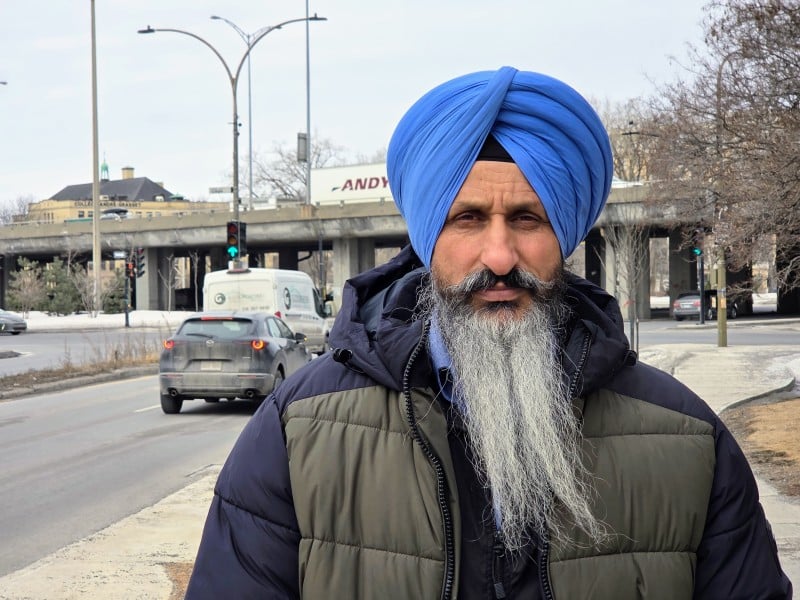
Militant pour le mouvement indépendantiste sikh de l’État du Pendjab, au nord de l’Inde, Ranjit Singh fuit les persécutions policières pour trouver refuge au Canada en 2019. Il y a deux semaines, sa demande d’asile est rejetée et sa déportation prévue le vendredi 6 mars 2026.
The Refusal of Asylum to Ranjit Singh
An activist for the Sikh independence movement in the state of Punjab, Ranjit Singh fled police persecution to seek refuge in Canada in 2019. Two weeks ago, his asylum application was rejected, his deportation scheduled for March 6.
Comments (0)
There are no comments on this article.