
“No Matter What I’ll Still be Here”
Cree families say they’ll continue protecting and preserving their land long after the wildfires burn out.

Every August after Donovan Blacksmith turned eight, his father Sam would prepare him for the fall hunting season by waking him at the crack of dawn.
He’d help his father load the truck, often with supplies that his kokum had requested out at her camp. Along the way, Sam trained Donovan to hunt small game near logging roads, like beaver or partridge. They’d arrive at his kokum’s to help with chores, then she’d leave them with a new list of errands for their next visit. On the way back to the town of Waswanipi, they’d make stops at camps along the route, with young Donovan knocking on doors and offering what he’d hunted to elders. Once they were back home, he would prepare for school.
It was Donovan’s fall routine until his teens.
“I always felt like I had it in me to become a hunter—a provider, I should say,” said Donovan, who’s now 24 years old. “I like to provide for people that are in need.”
Sam’s own camp was built when Donovan was a toddler. It was a handsome wood cabin complete with a porch and white framed windows, perched on the lake at the edge of the forest. The camp was nestled somewhere on the Blacksmith family trapline, a stretch of forest in Eeyou Istchee where Sam learned to hunt from his father, and his father had learned from his father. It was where Donovan inherited generations of Cree knowledge from his parents, matured into a provider for his loved ones, and nurtured his relationship with his ancestral lands.
When Donovan arrived at his father’s camp in June, he found nothing but ash.
“Went to check our camp, this is the result after the forest fire,” he wrote in a Facebook post.
The patch of land was now barren, save for a couple of cinder blocks that once served as part of the cabin’s structure. A video of Donovan, who was crying as he walked on the burnt soil, struck a chord with hundreds of his Facebook friends.
“It was my late dad’s camp. Ever since he passed (last year), it’s been passed down to us, to me and my brothers,” Donovan said.
An unprecedented wildfire season has devastated Eeyou Istchee since the spring, and forced thousands in Cree Nation communities to evacuate. It was marked as the worst wildfire season in Canadian history, with more than 1.5 million hectares burnt in Quebec alone, an area nearly 35 times the size of Montreal.
In Waswanipi, 28 Cree camps belonging to families like the Blacksmith’s have burnt, according to Allan Saganash, a consultant on the forestry file for the Cree First Nation of Waswanipi. And in the largest fire that raged in the Waswanipi forest, at least 196 registered camps that belong to non-Indigenous hunters, fishers, outfitters, and other recreational groups were affected. But the damage isn’t the same for everybody.
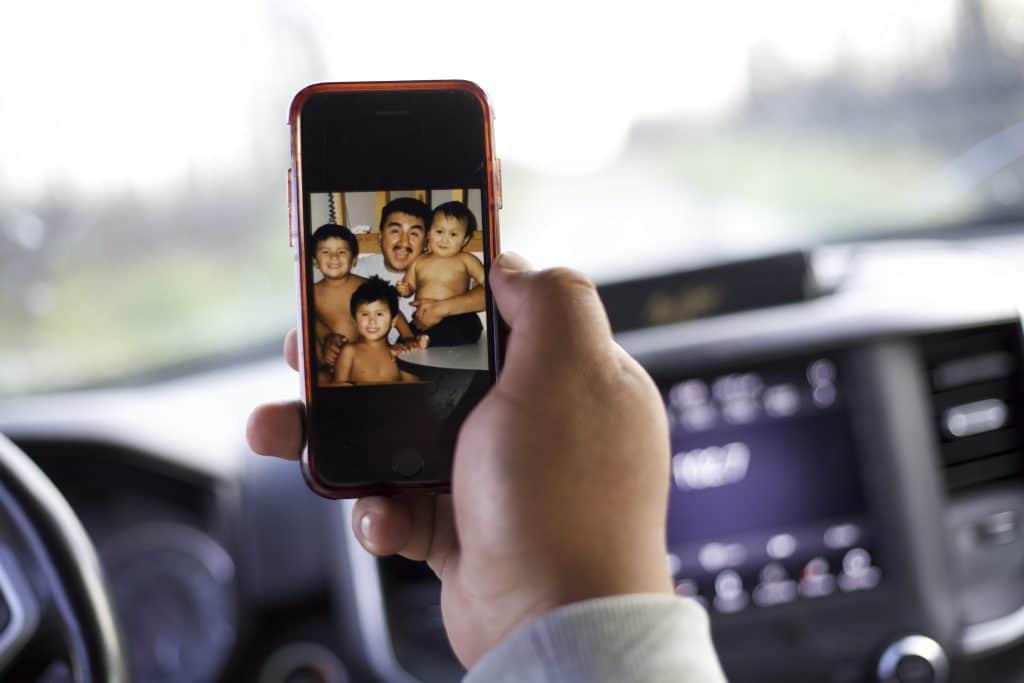
“When you lose a camp as a Native person that has been passed down from one generation to another, not only do you lose that camp but the history and all the memories behind it,” said Saganash, who’s worked to protect his ancestral territory for more than four decades. “Some of these camps we lost were very old but renovated by the family when required.”
For Cree families, camps are places that hold cultural significance. In July, the CBC reported on Cree Nation communities whose traplines were affected and resulting cultural loss. Along with tools and supplies, wildlife and access to land could be lost. Hunters like Donovan will temporarily be left without game, and the devastation could impact those practicing the Cree way of life.
“We have a tendency to maintain what we were brought up with. And even if our people have a tendency to be a nomadic society, they would return. So sites become historic,” said Chief Irene Neeposh of the Cree First Nation of Waswanipi. “The development of (our) camps really helps shape how we preserve the culture. Because we’re a young population, and the fact of that reality is bringing the children out to the land, to a familiar place, where they can connect with and see it as home.
“So the culture in terms of heritage gets impacted. And the fact that it’s so unprecedented will definitely mark our people as a society.”
—
Neeposh is bracing for a report of the damages in her community’s lands.
She’s already seen rapid changes in the forest since increased development over the last two decades, but the fires are nothing like what she and her elders have ever seen before.
“We have to do a thorough inventory of potential impacts. I’m told about flash floods and things like that, and the landslides that can come from that,” Neeposh said. “I don’t think we’re done with the inventory for this. So I think we need to be ready in the spring.”
Since July, Waswanipi’s Natural Resources Department and its chapter of the Cree Trappers Association (CTA) have been working to survey the land after the fires. For weeks, CTA team members drove more than 300 kilometres a day to assess damages, and the count of registered Cree camps that have burnt is still ongoing.
The job of reporting how many of Waswanipi’s 60 traplines have been burnt isn’t easy. Multiple Cree families share a single trap line, and when one is affected, it means those families are unable to hunt and access the lands. While it’s customary for families to invite friends and extended family members to hunt on their trap lines, the fires are squeezing resources where it’s already tight because of encroaching non-Indigenous camps in the Waswanipi forest.
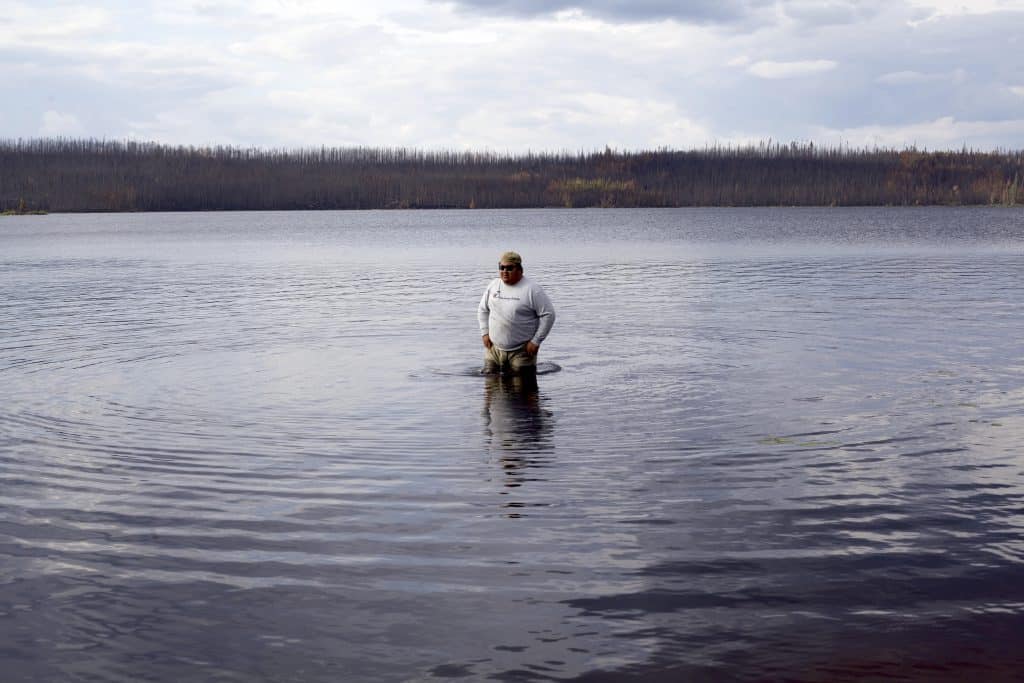
Several traplines have already been marked as completely burnt, as well as Cree camps that served as homes for some people. Camps that were closer to trees and deeper into the forest were the most affected.
But Neeposh isn’t waiting for the next fire. She says teams of experts are already drawing out plans for firebreaks; it would require clearing out of highly flammable, fast-burning pine trees, replacing them with a line of leafy, slow-burning deciduous trees, and thinning or clearing out the growths around cabins.
“As a leader, a mother, and an Indigenous person, I always try to make sure that I identify the lessons learned from whatever comes my way,” Neeposh said. “So being able to capture and being able to evolve from what we go through is key. And not taking it granted as just something we went through and survived.”
—
Of the Blacksmith children, Donovan took after his father’s sensibilities the most.
Sam was known as the unofficial town chef, and enjoyed feeding large groups of people. He was a generous host and talented cook, but took the utmost pride in the Cree way of life — which he poured into Donovan and his siblings by spending as much time at the Blacksmith family camp as possible.
“Before he passed, (Sam) wanted to make a big, open fire roast out at our camp,” said his wife, Bridget Salt-Blacksmith. “He wanted to invite everybody to come and eat together, but he never got to.”
Donovan and Bridget made fewer trips to the camp after Sam died. Last fall, the Blacksmiths held a roast at the camp just as Sam had wanted, and made a tribute to him with an offering plate of his favourite foods. They’d only made one other brief trip this spring before it was burnt down.
“You’re not just losing your camp. You’re losing a part of your land,” Donovan said. “For example, my trapline was burnt 99.99 per cent. So I’m left with 0.01 per cent or something. But I still see the bright side of it. I’m young, I’m 24 years old, and I can rebuild it along with my brothers.”
Donovan says he’s received dozens of messages from his friends and community offering support and help since his Facebook post. He plans to rebuild in the next year, and feels optimistic that he’ll still be able to go out on the land even before his camp is resurrected.
“This is where I grew up. It’s where I hunted my first moose, caught my first fish, hunted my first beaver,” Donovan said. “It’s where I inherited my dad’s ways and how he lived off the land. No matter what, I’ll still be here.”
Author

Related Articles
Nunavik Police Get a Pay Raise Amid Community Concerns
Inuit activists say the pay raise should match police efforts to rebuild trust with the communities.
Montreal Police Pressured Community Leaders not to Attend Vigil for Abisay Cruz
Sources say that while police spoke of listening to community after the killing of Cruz, they took a much harsher line behind the scenes.
Le refus de l’asile à Ranjit Singh
Militant pour le mouvement indépendantiste sikh de l’État du Pendjab, au nord de l’Inde, Ranjit Singh fuit les persécutions policières pour trouver refuge au Canada en 2019. Il y a deux semaines, sa demande d’asile est rejetée et sa déportation prévue le vendredi 6 mars 2026.
Comments (0)
There are no comments on this article.