
The Closure of ‘Iconic’ Nouvel Établissement and the Uncertain Future of Nightlife
The City of Montreal is promising a better future for nightlife venues, but bylaws impacting venues are left up to the boroughs.
Nouvel Établissement was only around for a few years before it closed its doors the weekend after Halloween 2024.
It opened during the stop-and-go COVID restrictions of the fall of 2021 and quickly became a staple haunt in the underground scene. Young people flocked to 5817 Saint-Laurent Blvd, where they were guaranteed high-energy, fast BMP techno and hyperpop, and never had to pay more than a $7 cover.
Ariane Roy Geromin, one of the owners, says she and Nouvel’s co-founders wanted to create a community space.
“We didn’t really have the vision to make money with this,” she said. “(The co-founders) and I weren’t business people. It was really a mix of artists and music lovers, who knew the hospitality and event industry too. So it was more of a project to create something good rather than monetize.
“I’ll admit we didn’t make much money with the project. But we know we brought a lot to the culture.”
Support Independent Journalism.
Nouvel Établissement had about a 100-person capacity and was packed shoulder-to-shoulder on the dancefloor most weekends. Abstract meshy decor hung from the ceilings, a foosball table sat by the entrance, the bathrooms lit up in alien blue light. The tiny dancefloor was framed by a DJ deck and Nouvel’s most recognizable feature: two human-sized cages on platforms where revellers could get a bird’s-eye view as they danced, climbed the inside of the cage, and peacocked for the rest of the crowd.
On Halloween, one of the venue’s last nights open, a partygoer showed up dressed as the cage.
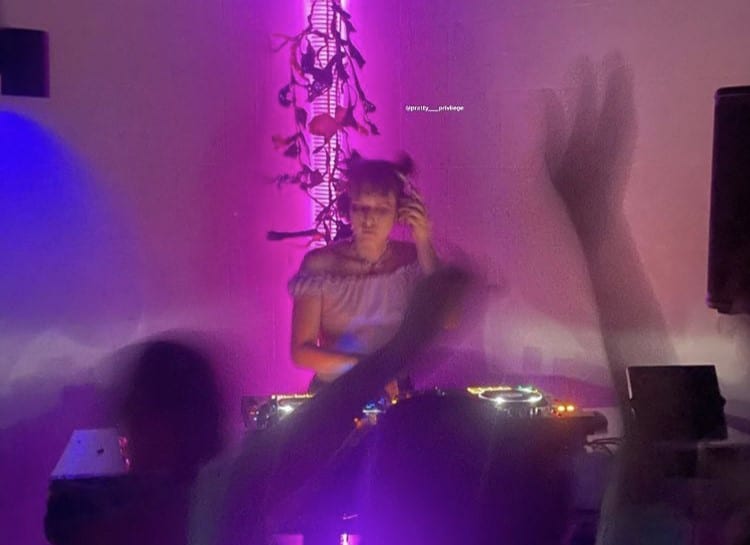
Audrey Kaye, who DJs under the name Pretty Privilege, was one of Nouvel Établissement’s regular performers. She said the bar was “so iconic, so unlike any other club that we have.”
“‘Loose,’ that’s the main word I would use to describe Nouvel. Going to parties there didn’t really feel like going to the club. It felt more like a house party,” she says.

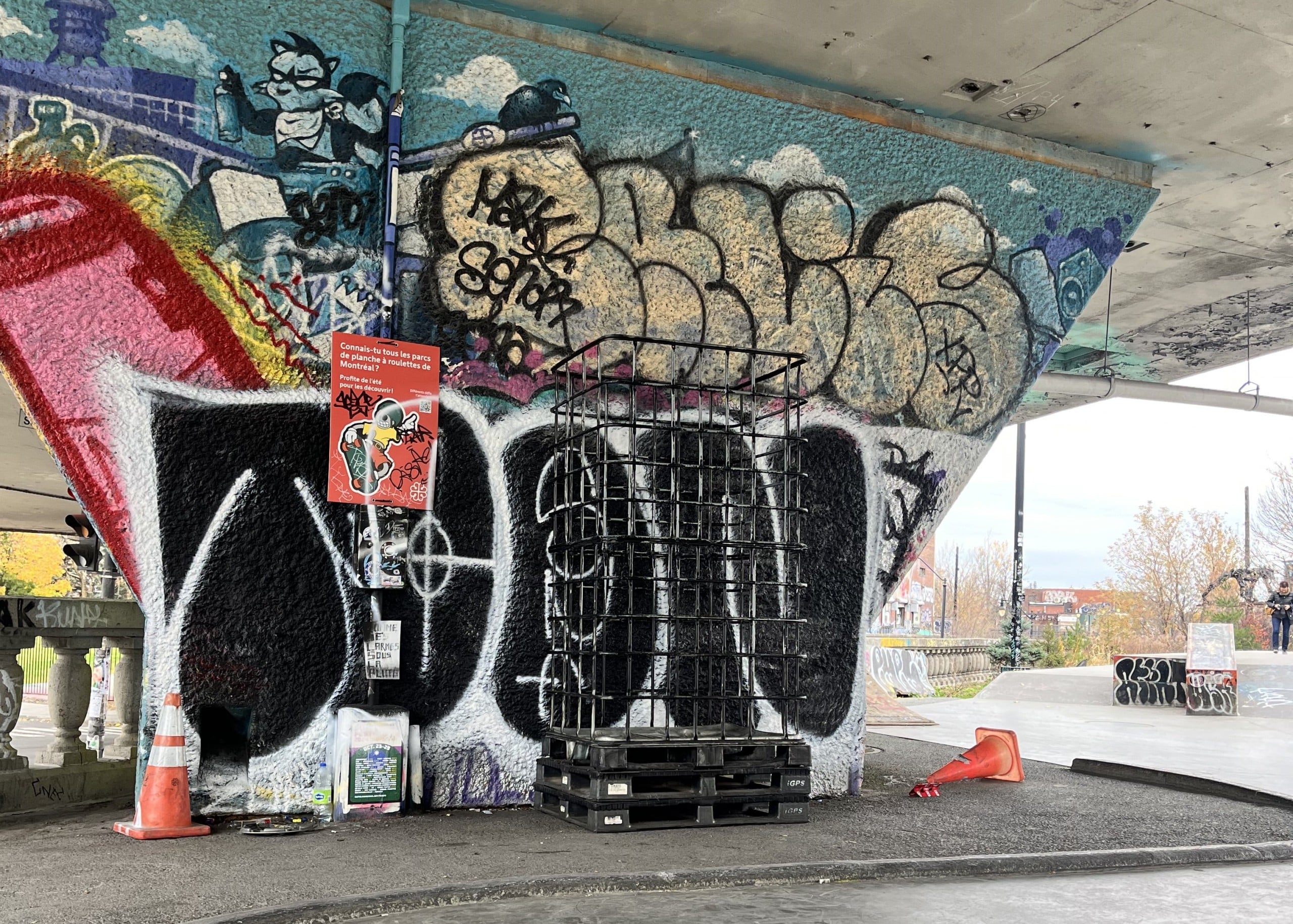
The average evening at Nouvel Établissment would see young, “alternative” people across the city bumping shoulders, dancing wildly, their outfits displaying Montreal’s wide array of street style, clad in hand-distressed garments, chains, skimpy and oversized clothes, or whatever they felt like throwing on. Some wore earplugs or over-ear headphones to protect their ears from the loud, pulsing music, and you had to yell to be overheard — or step outside into the expanse of Cloutier St. and the Van Horne skatepark. It was an affordable, “come-as-you-are” establishment that catered to students, artists, ravers, queer people and nightlife lovers.
Places like Nouvel Établissement are getting rarer. Venues, including The Diving Bell Social Club, Divan Orange and L’Escalier, have been shuttering across Montreal over the past decade, plagued by exorbitant noise fines, a convoluted permit process, bureaucratic blockades, and rising rents. The closure that made the most waves last year was the closure of La Tulipe. Coverage of Nouvel Établissement’s closure was virtually non-existent, but it was a huge loss for the underground community, according to Kaye.
Nouvel let Kaye organize her very first party on a Saturday night in the spring of 2022, when she was still getting her start as a DJ in Montreal.
“Even now that I’m more well-known, getting a party on a Saturday night is a pain… But [Nouvel’s owners] just said yes, and they just trusted me. I remember it was 11 o’clock and I was just pacing, and there were just a few people playing foosball. I was like, this is a disaster. Like I’m done. I’m cooked. And then what always happens happened, at midnight, suddenly all of these people just showed up,” recalls Kaye.
She says that Nouvel often took a chance on smaller, lesser-known DJs, helping them grow an audience — and getting a decent payout from their gig.
“It was like a positive feedback loop. They were saying yes to these parties, people are going to them and then [the DJs] became more well-known. And then the parties got bigger and bigger and more stable and popular.”
Kaye is now a resident DJ at one of Montreal’s largest rave series, Latex, and spins at parties around the city most weekends. She credits her performances at Nouvel as key to honing her skills.
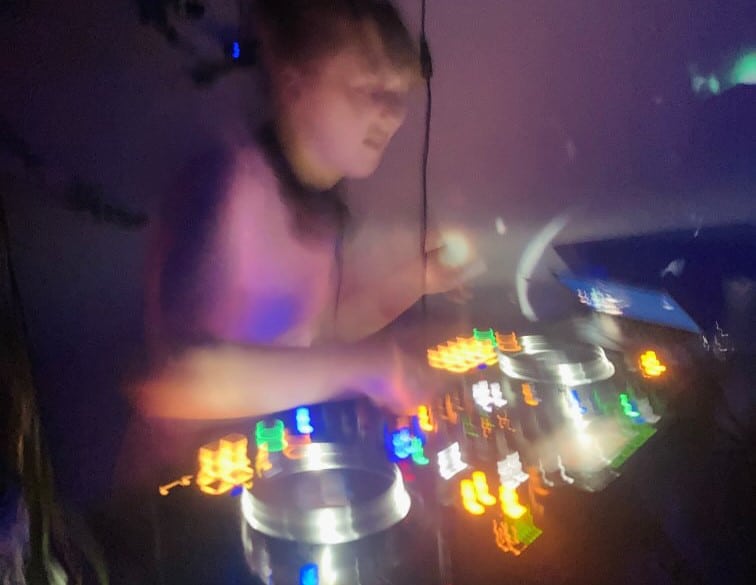
“At Nouvel… it felt a lot more like play. I could take a risk and play a crazy track, or try out some new technique, or [DJ] back to back with someone I wouldn’t normally play with. The crowd basically, no matter what, was always so hyped up in there. It was such a high-energy crowd always, just because it was so young and queer and everyone was down,” she said.“And now I know in the future when I’m at a bigger, more high-profile thing I can try this thing that I developed at Nouvel,” says Kaye.
Occupying the ground floor of a triplex, Nouvel’s quarters were a rare find — the landlord lived on the top floor of the building, and he rented out the second floor as a “party AirBnB.” The stand-alone building’s next-door neighbours were an auto body shop and the Van Horne skatepark, where partygoers could spill out during their smoke breaks.
But this Goldilocks combination couldn’t last forever.
Nouvel Établissement announced their Nov. 2 closure in an Instagram post, saying that their landlord had decided to lease the floors above the space for regular residents. Geromin said their landlord gave them the option to either rent out both the first and second floor — adding to an already steep rent — or buy the place entirely, which was in disrepair.
Leading up to its closure, Nouvel Établissement went out with three straight nights of a full dancefloor jumping and dancing to local DJs playing high-intensity, often experimental tracks.
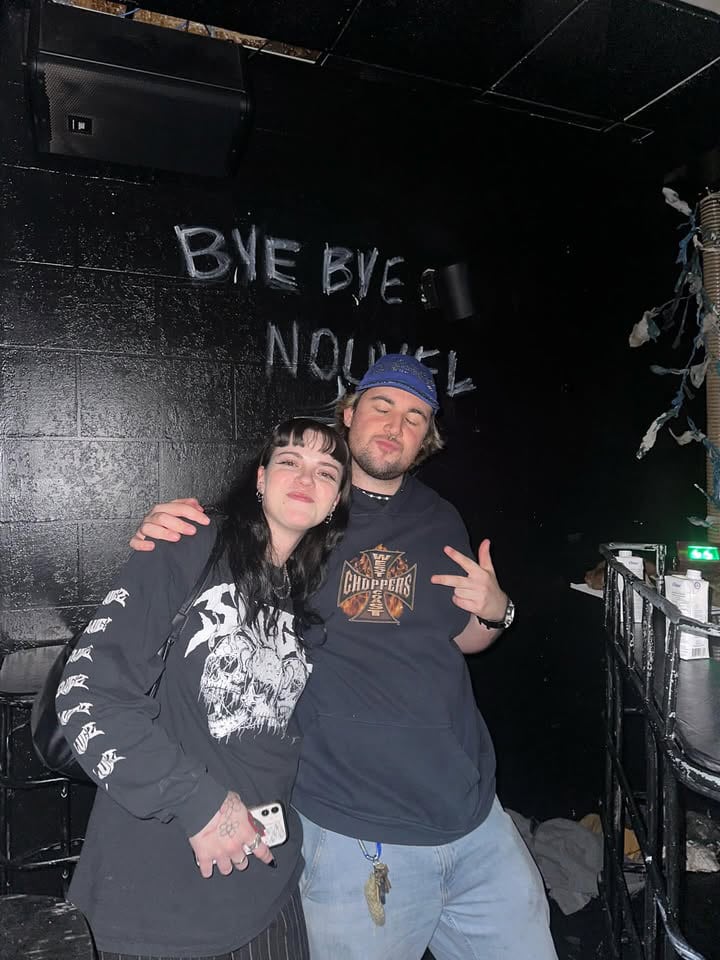
Geromin said the venue’s closure hit a lot of people hard.
“It was a cultural establishment, a community, a lot of memories. For me, I’m grieving a loss. It’s a loss for the people who came often. And I know that a lot of people are losing their safe space, the main spot they went out. For the employees too, they’ve definitely grieved. Most of them were really attached to the space,” said Geromin.
But the minds behind Nouvel haven’t abandoned the scene altogether. After taking a break, she and the other founders will transform the Nouvel Établissement project, either by finding a new venue or starting an event series.
“We’re losing a lot, but I know that [nightlife] is always undergoing a metamorphosis,” Geromin said.
The City’s Nightlife Policy
Amid the closure of her venue, Geromin says she was happy to see that the city released its new nightlife policy.
“I’m seeing they want to improve [government] structure and security. If it’s put in place, it just might go well,” she says.
The new nightlife policy promises to form a dedicated nightlife roundtable, streamline related regulations, create nightlife vitality establishments and hubs, and dedicate funding for soundproofing and community organizations working in nightlife safety.
The city has also dedicated $5.5 million over three years to its nightlife initiatives. Three million of that would go to “support establishments and centres of nightlife vitality for launching policy actions” and “innovative and foundational projects.”
Some $2.5 million is dedicated to soundproofing for small venues.
Venues with a “Music hall” (salle de spectacle) permit can now apply for a special designation as an “establishment or nightlife vitality.” This would allow venues to open for extended hours, receive recognition for their cultural value, and access additional support from the city, like additional funding for soundproofing, adapting noise regulations and finding solutions for cohabitation.
Would Montreal’s new nightlife policy help prevent closures of staple spots like Nouvel Établissment? Possibly, says Geromin.
“A venue [like Nouvel] would be able to submit an application, and if it’s well-organized, it would definitely help,” she says — and by well-organized, she means that they would need to make sure they get all of their proper permits. Nouvel Établissement never had a “salle de spectacle” permit. Their venue was qualified as a bar. Many nightlife hotspots are in the same boat, and would not be able to access this special designation.
Right now, getting permits from the city is an arduous, convoluted process, says Shermine Sawalha, one of the owners of ESC, a venue on St Laurent in the Ville-Marie borough.
They’re now getting back on their feet after months of cleaning up a bureaucratic mess.
Their alcohol permit was revoked in the first place due to noise complaints on their file. Even though they dealt with soundproofing right away, it took months before the permits were put back in place. They had to cancel months of events in the spring, paying $15,000 of rent, scramble to host non-alcoholic events, verging on bankruptcy and almost losing their business.
They were also juggling issues with occupancy permits, and stringent and ever-changing demands from the fire department, the liquor board, the police and the Ville-Marie borough.
“I don’t even understand how anyone can make a business in this city. Information is lost between different departments and we were trying to find the ways to connect all these dots together so something would happen,” she says.
But things are looking up — they’ve had their own alcohol permits since late October, they are able to stay open after-hours, and have a “salle de spectacle” designation, making them eligible to apply for the nightlife vitality establishment designation.
“We are a DIY space that provides for emerging mid-career and some professional artists to create and decimate their work. We have the capability of being open after hours within restrictions, but we are still struggling to make ends meet,” Sawalha says.
Sawalha is looking forward to the establishment of the nightlife roundtable, which will streamline the permit process and ensure the nightlife policy is being implemented.
She says the nightlife roundtable “is definitely going to help, that’s the bottom line. I think we need to educate the public and educate the internal (bureaucratic) systems. It’s going to take a while, but it is one step in the right direction,” says Sawalha.
The nightlife roundtable will be made up of 14 officials named by the city and 14 to be chosen from applications by the city, which are now open.
Overall, Oliver Philbin-Brisco of FANTOM (Fédération pour les Arts Nocturnes comprenant les Travailleur·euses et Organisateur·ices de Montréal), a nightlife advocacy organization, says the city has been receptive to feedback from months of consultations.
“Now that the town hall has sort of shown itself to be a willing cooperator when it comes to nightlife, I definitely see the advocacy (tactics), like protests, shifting from being aimed at (the City of Montreal) to being aimed at specific boroughs that might be more or less favourable to nightlife, maybe looking at ways to support specific venues that are still alive but struggling, helping them not go the same way as all these places that have closed just in the last few months,” says Philbin-Brisco.
Noise regulations, like decibel levels, noise complaint fines, and conditions for filing a noise complaint, will have to be determined by each of Montreal’s boroughs — a process the city promises to help negotiate in the new year.
La Tulipe, a century-old music venue in the Plateau-Mont-Royal, closed last September due to repeated noise complaints, provoking public outcry and demonstrations in the streets. The day after the closure of La Tulipe, Plateau-Mont-Royal mayor Luc Rabouin and Montreal mayor Valérie Plante announced that music venues in the borough would no longer be subject to the bylaw stating that amplified sound cannot be audible in a neighbouring building until the noise regulations were revamped.
Sawalha says this same urgent approach and advocacy needs to be done for smaller independent venues — before they close.
“Because of its history, suddenly the whole city cared to make a difference,” she said. “Suddenly people went and rioted on the street, suddenly there were articles left right and centre about this topic of noise pollution and the permits because suddenly the mayor said that we had to deal with the situation. Of course I was standing with (La Tulipe)… but it doesn’t have to have to be about viral (stories) to make a change.”
Philbin-Brisco says those concerned about nightlife should get involved in their borough’s public meetings, where a lot of the big decisions will be made.
“Borough council meetings are often very small, so one person can really sway the tide of the conversation,” he said. “Often that’s one person who maybe doesn’t understand or appreciate nightlife as much who’s going there and being quite vocal, so if we have one or two vocal supporters of nightlife, we’re able to show up and show that this isn’t a one-sided issue, then I think that goes a long way.”
Further reading:
- Read the full nightlife policy (French only).
- Apply for soundproofing funding (applications close Jan. 20, 2025).
- Apply for a nightlife vitality hub or establishment designation (applications close Jan. 20, 2025).
- Apply to become a member of Montreal’s Nightlife Roundtable (applications close Jan. 20, 2025).
- Click here to find your borough and its public assembly dates.
Did you like this article? Share it with a friend!
Related Articles
‘Everybody Who’s on the Stage Is Part of Your Community’: Ctrl+Alt Festival Returns for a Third Edition
Free festival stacked with queer, local performers to take over the Place du Village July 24-26.
Moving Day: A “Desperate” Struggle for a Growing Number of Montrealers
July 1 is now a race against time for families facing homelessness once their lease expires.

Quebec Workers Experienced a “Counter Revolution” Under Jean Boulet: Experts
The outgoing labour minister leaves behind a legacy of attacking the Constitutional right to strike.
Comments (0)
There are no comments on this article.