
A Gut Punch of a Film Exposes Cracks in Quebec’s Electoral System
“Representative democracy is anything but representative.”
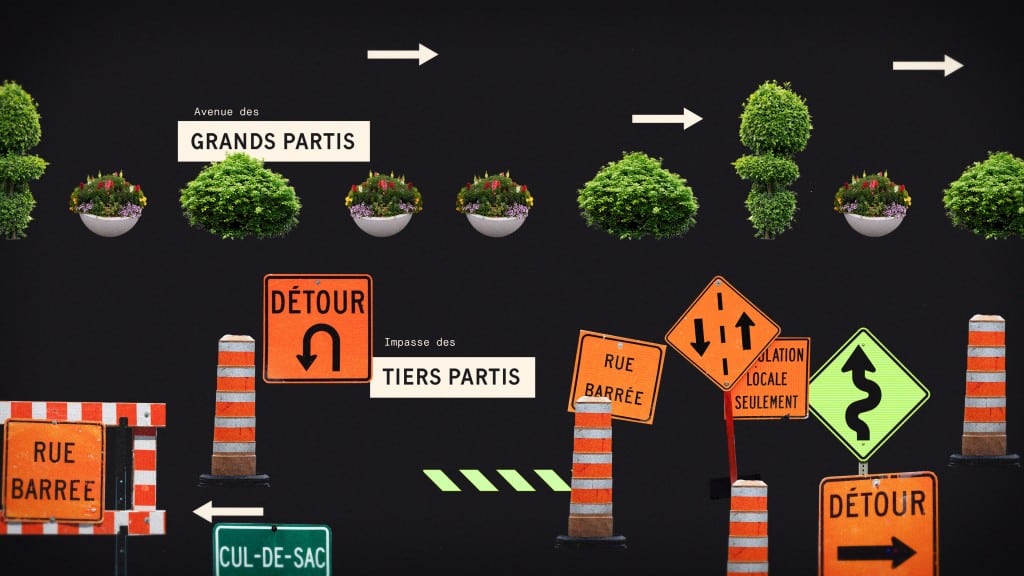
PHOTO: Courtesy NFB
In 2012, Jenny Cartwright agreed to act as the official agent for an independent candidate in Quebec’s provincial election.
She had no intention of getting elected — her goal was to understand the inner workings of an electoral game she already suspected was rigged. Armed with a borrowed tie, makeshift signs, and 119 votes, she came away with one certainty: something wasn’t right. That’s when the seed for A Losing Game was planted — a documentary nearly ten years in the making.
Produced by the National Film Board of Canada and selected to open the 2024 Rendez-vous Québec Cinéma, A Losing Game follows three unconventional candidates during Quebec’s 2022 provincial election: Renaud Blais, founder of the satirical Parti nul (Null Party); Elza Kephart, an independent environmentalist candidate; and Jean-Louis Thémis, the culinary maverick behind the Parti culinaire du Québec.
None of them were elected — and that’s precisely the point. As Cartwright puts it, they were taking part in a form of “civic resistance.” By documenting their marginal campaigns, the film exposes the structural inequalities of Quebec’s electoral process — and the threat these inequalities pose to democracy itself.
Be a Winner, Support Local Journalism!
This critical lens is one Cartwright sharpened over a long, obstacle-ridden journey. In 2014, she tried to run another campaign, but failed to gather the 100 signatures required to officially register a candidate. That setback only deepened her commitment. She began compiling research in earnest, writing a first version of the project in 2018. But funding and timing didn’t align, and the shoot fell through. It wasn’t until 2021 that the project came to life at the NFB, in time to film the next provincial election. By then, Cartwright had amassed over 350 pages of research and interviewed more than 40 independent and fringe candidates. Today, she calls herself a research-based filmmaker — an artist rooted in methodical inquiry.
While it’s not uncommon for documentaries to take years to complete, Cartwright needed that time to step back, observe, and refine her vision. Her conclusion? “Representative democracy is anything but representative.”
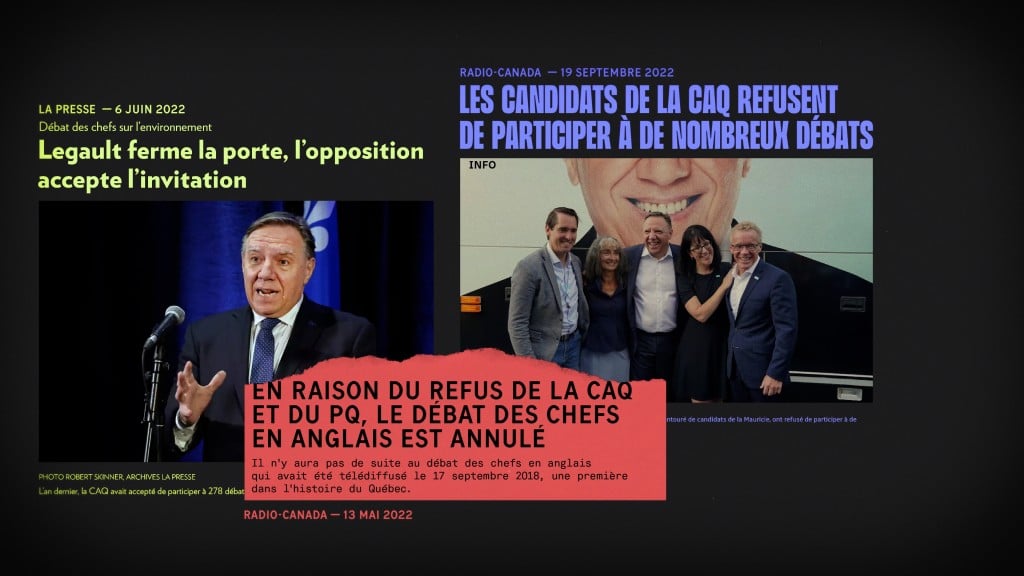
The film backs up this claim with surgical precision. Cartwright presents hard data: in 2018, 60 per cent of people earning under $20,000 a year did not vote. In both 2018 and 2022, more voters abstained than voted for the winning party. And the Coalition Avenir Québec — widely portrayed as having secured a solid mandate — only actually received 26.7% of the popular vote. The numbers tell a different story from what mainstream media and political discourse suggest.
And yet, A Losing Game is far from a disheartening watch. On the contrary, the film pulses with the energy of joyful resistance. We meet people who refuse to stay silent, who invent new forms of engagement, who — often with humour and persistence — try to disrupt the rules of the game. For Cartwright, losing can be, and must be, a political act.
“Elections are often a way for fringe parties and independent candidates to bring attention to overlooked issues,” she said. “Their campaigns can be grains of sand in the machine.”
She speaks from experience. This year, Cartwright joined the Longest Ballot Initiative, a collective effort where 91 people are running in Pierre Poilievre’s federal riding. The goal? To create a ballot so comically long that it forces voters — and the media — to reflect on the failures of our outdated first-past-the-post voting system. “It’s a striking image,” she says. “Maybe when people see the absurd length of that ballot, they’ll start having conversations on their way home from the polls.
“Social change comes from disruption, not compliance.”
By turning the ballot itself into a distorted mirror, the Longest Ballot Initiative reveals just how skewed our current system is — where the winner takes all, even with only a fraction of the votes.
These kinds of poetic, subversive gestures animate Cartwright’s work. She no longer believes in the vote as the sole means of political expression. Instead, she dreams of citizens’ assemblies, random selection, self-managed villages like Marinaleda, integral cooperatives. She quotes Ursula K. Le Guin: “We live in capitalism. Its power seems inescapable — but then, so did the divine right of kings.” What feels immovable can, and must, eventually shift.
For those who call her outlook disillusioned, she has a quick retort: “Would it be better to be illusioned?!” She insists that clarity is essential for meaningful change. “You can’t change what you don’t understand. And I think my film helps people understand. Knowledge is power. There’s a reason so many books get banned.”
So — can a film shift the tide? Perhaps it already has. Viewers have written to Cartwright saying they now want to run for fringe parties. Others say they’ll vote differently. The greatest hope lies in realizing that the game isn’t fair — and that lucidity can itself be a form of resistance.Les perdants / A Losing Game will be available to stream for free on the NFB’s website starting April 24, in both French and English. Don’t miss it — especially before heading back to the polls.
Author

Related Articles

Prison Recipes By and For Incarcerated People
La Cantine is a cookbook that helps inmates discuss risk prevention and reflect on food in prison.

Becoming Ballers: How Nunavik’s Youth Built a Community Around Basketball
In villages across the North, Inuit teens are creating a safe space for each other and the next generation of athletes.
By and For: Exhibit Traces History of Sex Worker Resistance
Sex worker support organization Stella wants to change the public’s perception of sex work with an exhibit at the Centre des mémoires montréalaises.
Comments (0)
There are no comments on this article.