
A Women’s League, Made Possible by Hockey Pioneers
The PWHL could offer young women hockey players a new future in the sport.
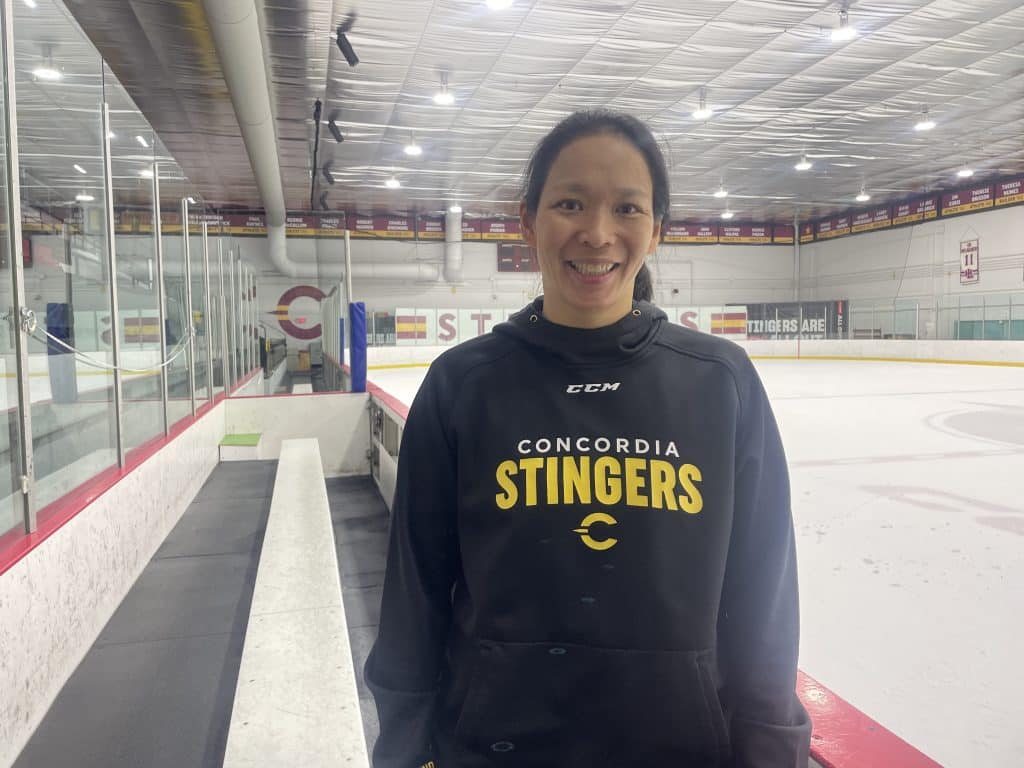
Julie Chu, a champion of women’s hockey, trains the next generation of players with the Concordia Stingers. PHOTO: Julien Lamoureux
This article was translated from French by Savannah Stewart. Find the original here.
Concordia University’s Stingers are the best women’s university hockey team in Canada.
They won their second championship in three years against the Toronto Varsity Blues on Sunday in Saskatoon, after winning all their games of the season and dominating the Quebec playoffs. Jessymaude Drapeau, who scored the game-winning goal, was also named the championship’s most valuable player.
Ten days earlier, Drapeau and her teammates kneeled on the ice as they listened to the instructions of their head coach, Julie Chu, during a practice at the Ed Meagher Arena on the Loyola campus of Concordia University. They wanted to avoid 2023’s scenario: a heartbreaking loss in the final against Mount Royal, who tied the score with two seconds left in the game.
Behind the group of players, assistant coach Caroline Ouellette gathered pucks for the next drill.
Between them, Ouellette and Chu have won eight Olympic medals — the former for Canada, the latter for the perennial American rival. The presence of the two women, who are a couple off the ice, is one of the main reasons Jessymaude Drapeau is here.
“At Concordia, with the coaches we have, I thought I would develop to the fullest and go to the next level. I really don’t regret my choice: we learn every day with them,” she says.
The forward, wearing number 15, says her dream is to play for Team Canada.
“You want to play with the best, you want to compete against the best. I work hard every day for that; you never know what might happen,” adds the player, who claims to be the first to arrive and the last to leave training sessions.
But with the creation of the Professional Women’s Hockey League (PWHL), which will host a sold out game at the 20,000 seat Bell Centre next month, Drapeau and the other Stingers now have a more accessible dream.
And possibly a more lucrative one.
Support Independent Journalism.
A new league with style
The PWHL has six teams: Montreal, Toronto, Ottawa, New York, Minnesota, and Boston.
The league and its teams are owned by Mark Walter, the billionaire who also owns Chelsea FC and is president of the Los Angeles Dodgers. Legendary tennis player Billie Jean King also played a role in the organization’s creation.
“I always loved hockey, I loved going to NHL games. But there’s something about going, and now you’re watching your friends, you’re watching incredibly strong and awesome female role models,” says Chu. “It’s been really special for me to see.
Chu, who was named Women’s Hockey Coach of the Year in the Quebec and Canadian university sports networks, played seven years in the Canadian Women’s Hockey League (CWHL) and can see the difference between it and the PWHL.
“I think the most important thing is that there is starting to be a bigger infrastructure around the teams and a larger staff,” she says. “One of the difficulties [in the CWHL] has always been not having enough full-time staff.”
“I think the biggest thing is now you’re starting to have more of an infrastructure around teams, like a bigger staff that allows it,” she says. “I think one of the things that was always a challenge [in the CWHL] was when you didn’t have full time staff members.”
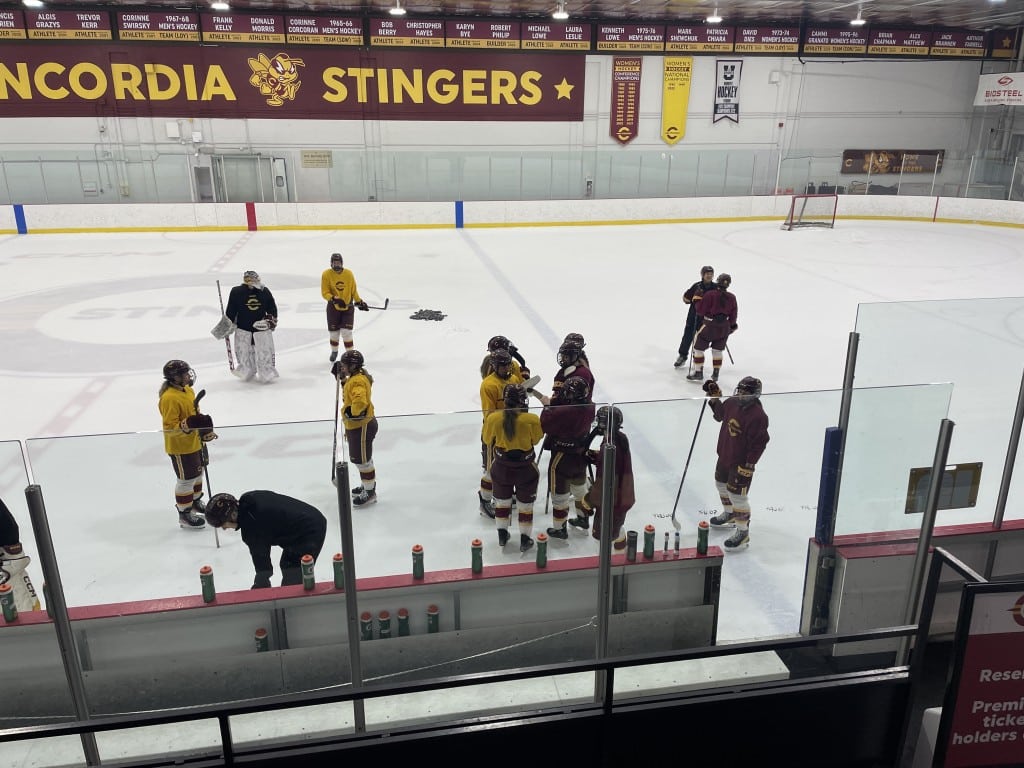
The Concordia Stingers during a practice at the Ed Meagher arena. PHOTO: Julien Lamoureux
Another major difference between the PWHL and previous attempts to form a women’s hockey league in North America is the issue of salaries. According to the collective agreement, each team must offer at least $80,000 to a minimum of six players, and no more than nine athletes can earn the minimum salary of $35,000. Teams must aim for an average salary of $55,000.
When the CWHL collapsed in 2019, players received compensation ranging from $2,000 to $10,000.
“What we’ve learned is in order to be successful on the ice, you need to pay the players so that they have the ability to train [at their best]. If you don’t have to have another job or two, the product’s just going to get better,” concludes Chu, who nonetheless does not regret her time in the CWHL.
The pioneers
Forward Émilie Lavoie moves on the ice with ease. Her skating stride is fluid and natural. “She flies and it looks effortless, even though it’s not, right?” her head coach remarks.
With 27 points during the regular season — the same number as Jessymaude Drapeau — Lavoie is one of the most dangerous Stingers in the offensive zone.
Even though her journey might take her to the PWHL, she doesn’t want to think about it now, as she still has the opportunity to play two more years in the university system. But “Montreal, Minnesota, whatever [team], it would be a goal,” she says.
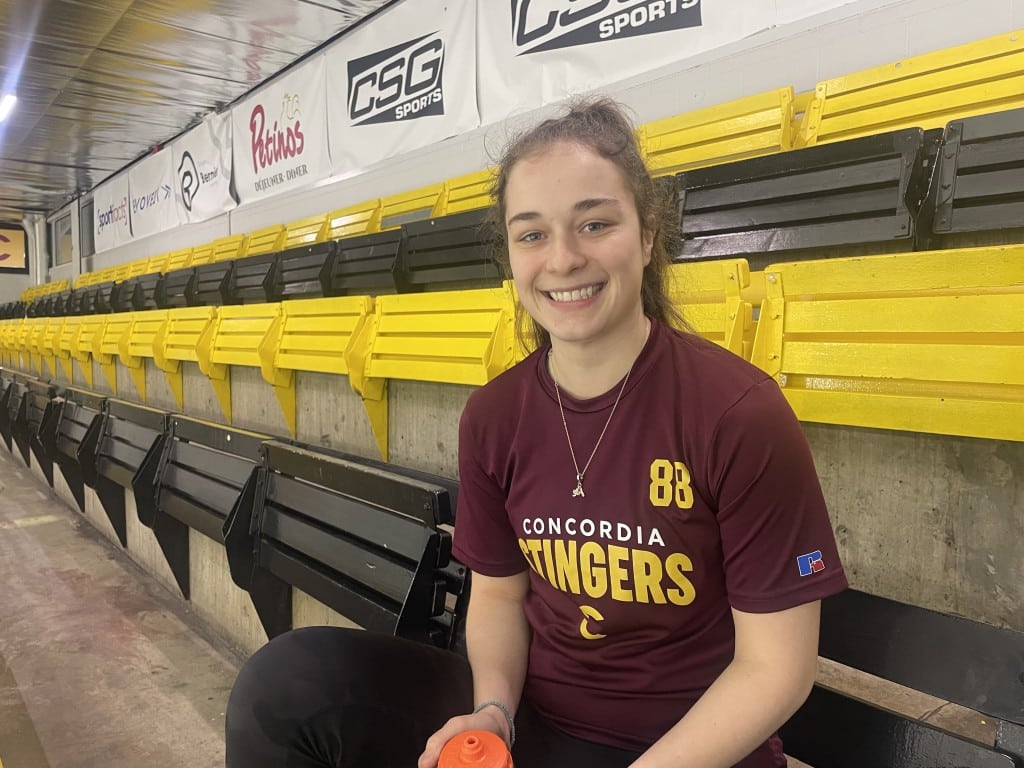
Émilie Lavoie. PHOTO: Julien Lamoureux
The young woman born in Fermont — a mining town in Quebec’s faraway Côte Nord region — arrived in the Montreal area after two years of high school. She says she knows who to thank for the possibility of playing pro hockey.
“Julie [Chu] and Caroline [Ouellette] didn’t have that, but they worked to create that league.” Not directly, of course, but by becoming legends of women’s hockey, they helped make this sport credible and interesting, not only to thousands of young girls but also to people like Mark Walter and Billie Jean King, who have the financial means and networks to professionalize the sport.
“It’s partly thanks to them, to pioneers like them, that we can finally aspire to do this as a job,” Drapeau said.
Chu reluctantly accepts the title of women’s hockey pioneer but refuses to take too much credit.
“Every league that came before was needed as a stepping stone for the next. So I think what we see in the PWHL is just that learning process of, okay, what were the good things that were happening that then we need to continue with, but then mould into different ways?”
A small world
It is, of course, too early to qualify the PWHL as a success.
After all, its inaugural match took place just three months ago. We’ll have to see if the excitement remains after the buzz of the first season. But the league has captured attention for the right reasons.
The question of salary is one. The addition of innovative rules, like the “jailbreak,” which allows a team playing shorthanded to end its penalty by scoring a goal, encouraging it to take certain risks, is another. There’s also the recent arrival of recognized sponsors, like Molson Brewery, or the announcement of a game between Montreal and Toronto at the Bell Centre on April 20 (the Montreal team normally plays at the Verdun Auditorium or Place Bell).
“The world is getting on board and it’s fun,” comments Jessymaude Drapeau. When I ask her if she could have imagined such success, even for a limited time, five or 10 years ago, her answer is unequivocal. “Of course not!” She long believed that her prospects for continuing hockey would be very limited after university, but she finally hopes that there may be more for her in this environment.
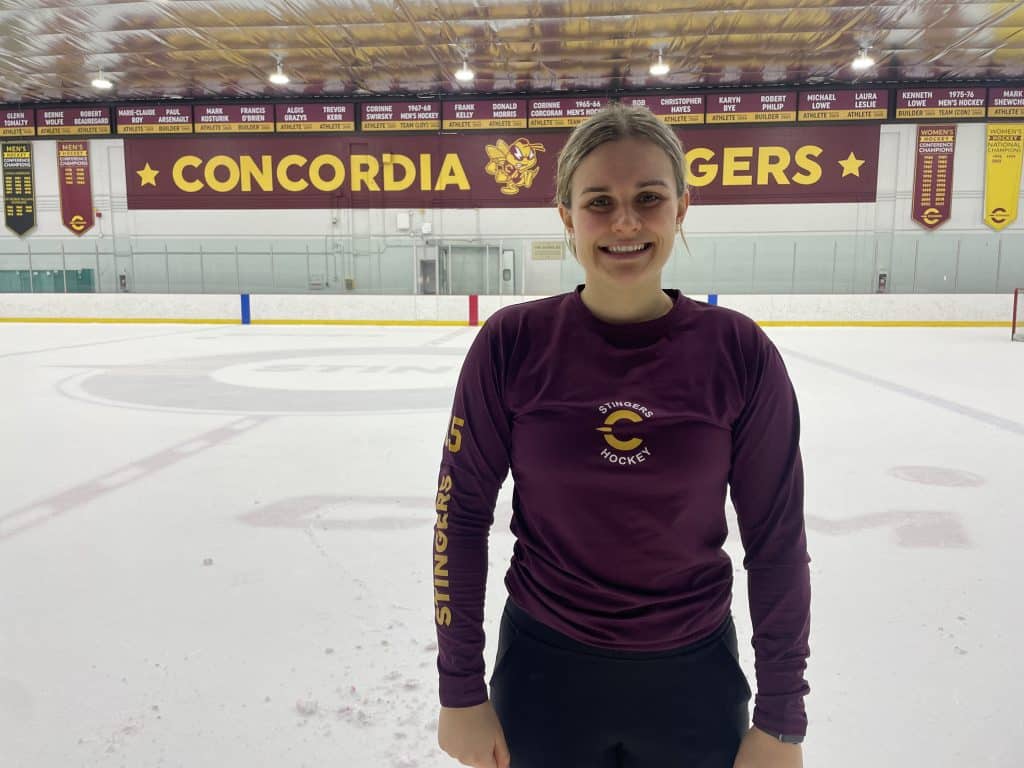
Jessymaude Drapeau. PHOTO: Julien Lamoureux
Despite all her ambitions, the world of women’s hockey remains a close-knit community. A few days before my visit to the Ed Meagher Arena, the Stingers had won the Quebec championship against the University of Montreal Carabins. In the stands, Laura Stacey and Marie-Philip Poulin, two stars of the PWHL, came to cheer on the university athletes.
“They come to our games, we go to theirs, we encourage each other, we’re there for each other,” says Lavoie, who explains that she trains with Poulin and Stacey in the summer.
“We’re all working for the same thing,” assures Drapeau. “At the end of the day, we just want women’s sports to grow.”
Chu sees something more important in her roles as a pioneer and coach than victories and championships. “It’s about student-athletes who are in a critical phase of their development, not only on the hockey side but also as individuals. […] Our players will be truly incredible individuals, ready to become great ambassadors [of the sport] or model citizens of their communities, great leaders in whatever they choose to do afterward.’
“These are student-athletes that are in a really critical part of their development, not only in hockey, but just as people. […] When we’re all done with hockey, our players are going to be really incredible people that are ready to be great ambassadors or citizens of our communities, great leaders in whatever they choose to go into afterwards.”
A few minutes earlier, our interview was interrupted by an unexpected visitor: Chu and Ouellette’s second child, who was wandering in the stands after practice at the age of three.
It’s impossible to know if she will follow in the athletic footsteps of her parents, but one thing is almost certain: if that’s the path she chooses, it will be in a professional league.
Author

Related Articles

Prison Recipes By and For Incarcerated People
La Cantine is a cookbook that helps inmates discuss risk prevention and reflect on food in prison.
Becoming Ballers: How Nunavik’s Youth Built a Community Around Basketball
In villages across the North, Inuit teens are creating a safe space for each other and the next generation of athletes.
By and For: Exhibit Traces History of Sex Worker Resistance
Sex worker support organization Stella wants to change the public’s perception of sex work with an exhibit at the Centre des mémoires montréalaises.
Comments (0)
There are no comments on this article.