
Eid in Gaza: Solidarity in the Face of Deprivation
The people of Gaza continue to help one another, sharing what little they have despite their own sorrow.
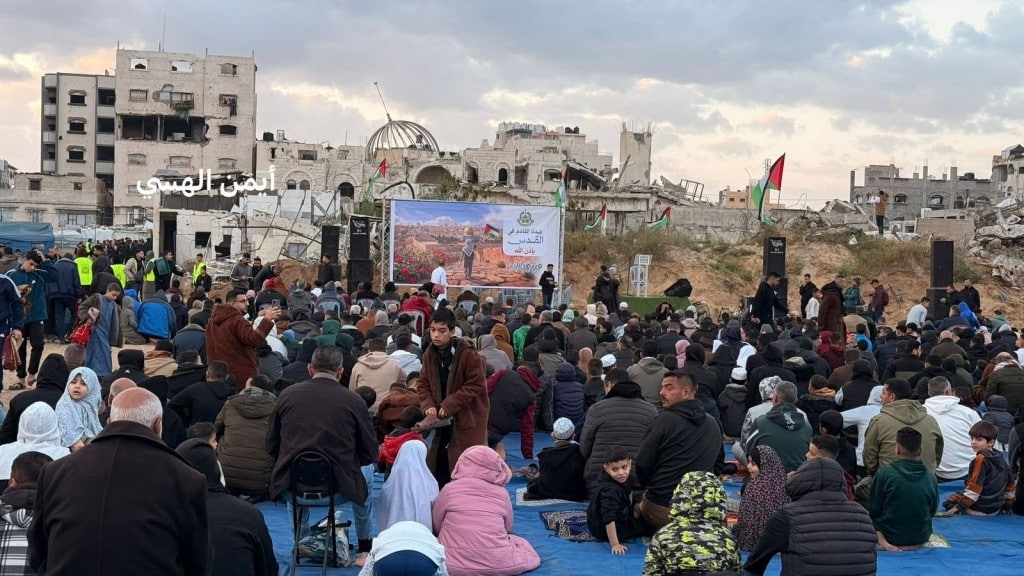
In Gaza, Eid doesn’t arrive suddenly. It is always preceded by a long period of preparation, which begins several days in advance: crowded markets, the scent of Eid sweets in homes, and mothers trying to balance it all: joy, expenses, and time.
Before the war, and especially during Eid al-Fitr, Gaza was a wonderful place.
I remember the last days of Ramadan: we cleaned our homes, prepared maamoul and ka’ak bi ajwa, and decorated everything we could. We went out to buy new clothes, even simple ones. The children, for their part, eagerly awaited these days, dressed in their new clothes, going from house to house, bathed in a certain joy. The streets were lit up with a thousand lights. Walking through them, one was struck by their beauty. You could hear the soothing chants of the takbirs (the Islamic call to prayer) and the Eid songs echoing from homes, cars, and markets. It wasn’t uncommon to join in the singing.
Sarah is raising money to fund her education. You can donate here.
The morning began with the Fajr prayer, followed by the Eid prayer at the mosque. There, gifts and chocolates were handed out to the children, making the start of Eid even more special for them. Families and friends visited one another and shared sumptuous feasts, a reward for their fasting throughout the month of Ramadan. The air resonated with laughter, love, and shared joy. People hurried to decorate the mosques and make them shine for Eid. The mosques, notably the Great Omari Mosque and the Al-Khaldi Mosque, filled with worshippers for the Eid prayer. The children competed to sing the Eid takbirs into the microphone, and everyone listened to their voices with silent joy.
I used to pray at the Tariq ibn Ziyad Mosque. There, with my sisters, friends, and neighbours, I would wish each of them a happy Eid.
The best part of Eid morning, for me, was always after the prayer. As a family, we would prepare breakfast, which, according to Gaza tradition, was usually feseekh, salted fish. After eating, we would savour strong, hot coffee, sipping it slowly, while the house settled back into a calm and warm rhythm. The night before, on the last evening of Ramadan, my mother would bake ka’ak for Eid, filling the house with their sweet, comforting scent. In the morning, we would help set the Eid table, arranging the ka’ak, cakes, and other treats before the guests arrived. While my father and brothers visited family, we girls stayed home in our pyjamas, savouring those moments of peace. This simple ritual was always my favourite part of every Eid. The aroma of feseekh, the sweet scent of ka’ak, the warmth of the coffee, and the laughter shared in the kitchen made those mornings unforgettable.
If you had the chance to spend Eid with the people of Gaza, you would have been warmly welcomed into their homes with steaming cups of coffee, dates, and all kinds of chocolates. Everyone would enjoy maamoul, and the mothers would compete to see who could make the most delicious ones. You might even have left with a little money as a gift. “The Eidiya,” as it’s affectionately called.
Our happiness lasted until October 7, 2023. Israel’s war against Gaza devastated the entire Gaza Strip, turning it into a post-apocalyptic wasteland.
We deeply miss those blessed days of Eid.
The very essence of Eid lies in strengthening family bonds through visits, gatherings, and shared meals in our homes. But for the third consecutive year, the unwelcome guest during Eid was the Israeli army. How can people visit one another when their homes have been reduced to rubble?
Many have been forced to flee and now live in deplorable conditions, on the streets, in makeshift shelters surrounded by rubble and ruins. In the past, people would begin Eid by bathing, putting on new clothes, and perfuming themselves with the finest fragrances. Today, they walk for miles to find a few litres of water to drink and cook with. This unbearable life is accompanied by other burdens and traumas. For nearly 29 months, the people of Gaza have witnessed bombings, killings, torture, arrests, ethnic cleansing, genocide, and famine. Deprived of basic necessities, they suffer unspeakable physical and psychological trauma. I know this suffering firsthand.
Following the announcement of the ceasefire in the Gaza Strip, residents are celebrating Eid al-Fitr this year amid a landscape of destruction and precarious living conditions, in tents and makeshift shelters. While a few cries of “Allahu Akbar” have once again echoed across the skies of Gaza since the end of the bombings, expressions of joy remain limited. Many families have lost their homes and loved ones, and children who were looking forward to gifts and new clothes for Eid now find themselves in a difficult environment, a reflection of the consequences of war.
This year, fathers, mothers, children, and friends were killed before they could even pray for Eid, eat maamouls, play with their friends, or receive the money traditionally given. Since the ceasefire was announced, approximately 677 Palestinians have been killed — including more than 120 children — and over 1,100 wounded, while violations and strikes continue in Gaza. This year, for the third consecutive year since the start of the latest conflict, most traditional expressions of joy have disappeared, and the small details of Eid are now nothing more than a distant memory.
Eid al-Fitr without true joy
Palestinians in the Gaza Strip say that this year’s Eid al-Fitr is little different from the holidays they used to celebrate during wartime.
“Eid al-Fitr without joy,” laments Abu Khaled Al-Dahdouh, 35, a father of four, two of whom perished during the genocide. “Prices have skyrocketed, and I can’t even afford the simplest Eid treats or new clothes for my children. This is the second Eid we’re spending without them. I’m living like a displaced person in a tent here in Gaza, surrounded by rubble. No gifts, no outings—nothing that used to make Eid al-Fitr so special.”
As for 11-year-old Adam Al-Salmi, he spends most of his time wandering between the tents with a group of friends. When asked about Eid, he replies without hesitation: “There is no Eid anymore.”
Before, Adam used to spend Eid days in one of Gaza’s public parks, where children from different neighborhoods would enjoy the swings and merry-go-rounds. But those parks no longer exist: “All the swings we used to play on have been destroyed.”
The celebration of Eid al-Fitr in Gaza is radically different, fraught with difficulties and suffering. A large portion of Gaza Strip residents have lost the small rituals that once marked their preparations, such as cleaning and tidying the house, and creating a festive atmosphere.
“During Eid, my grandchildren would gather around me in an atmosphere of joy and merriment,” says Um Mohammed, 50. “I would hand out gifts and share ka’ak with them, and the house would echo with laughter and excitement. But today, we have lost all those moments. Most of my children and grandchildren have left; some have traveled, others have fallen in battle, and the rest are scattered throughout the Gaza Strip.”
She adds: “Even if people try to embrace the festive spirit or prepare for it, circumstances prevent them from doing so. Prices are exorbitant, and the food supplies that reach Gaza disappear from the market within a day or two due to high demand. ”
This year, Eid al-Fitr arrives in the Gaza Strip, marked by nearly two years and five months of war, siege, famine, and economic and structural collapse. While the final days of Ramadan were once synonymous with shopping and family visits, the camps now seem plunged into deep mourning and psychological detachment, disturbed only by the sounds of daily life in the overcrowded tents.
Author

Related Articles
Ramadan in Gaza: The Month of Mercy Amid the Rubble
Since the start of the Israeli genocide, Palestinians across the Gaza Strip have struggled to rekindle the spirit of Ramadan.
Parlons de violence étatique
En 2026, les prestations d’assistance sociale demeurent largement inférieures au minimum reconnu pour vivre au Québec.

Is Israel Preparing a Legal Framework to Execute Palestinian Prisoners?
Since October 7, 2023, prison conditions for Palestinian detainees have seriously deteriorated.
Comments (0)
There are no comments on this article.