
Gaza: Rubble Invades the City and Its Memory
Can memories survive destruction and guarantee a future for Gaza City?
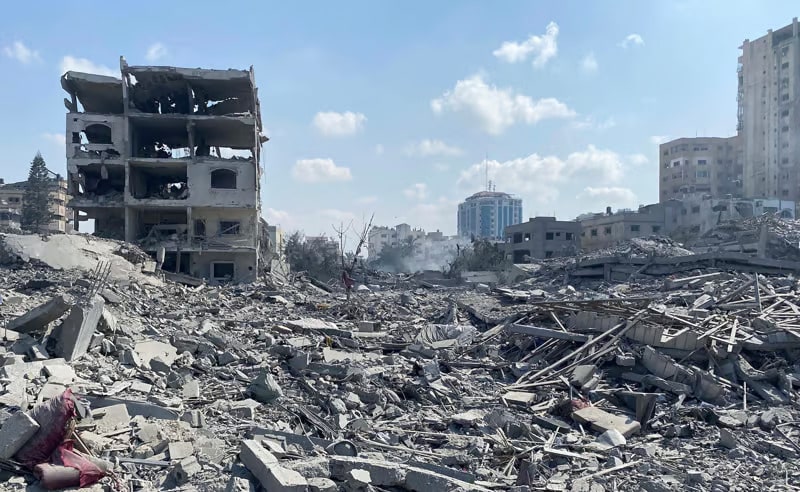
Today, Gaza is one of the most destroyed places in modern history.
The extent of the ruins is measured not only by the number of collapsed houses, but also by the brutality of torn memories and the rubble that invades the city and its memory.
This destruction is multiplied not only by the power of modern weapons but also because the whole world is watching it unfold in real time, without shame or denial.
History teaches us that atrocities are often only recognized after the fact: the displacement of Indigenous Peoples, slavery, the Holocaust… all these crimes only entered the collective consciousness when their denial became impossible.
What is happening today in Gaza follows the same tragic scenario, except that this time, the world is witnessing every moment of the siege and destruction.
A double loss: life and memory
Meanwhile, the city is suffering a first and a second loss: the loss of human lives and the loss of memory.
Gaza has not only been erased as a city and a place of life, it has also been erased as a memory. The rubble that fills the horizon is no longer just fallen stones, but layers of memories that have lost their place to rest.
Cities normally preserve faces and stories in their streets, in small cafes, behind doors that open in the morning and close at night.
But when a city disappears from the map, its collective memory disappears with it, leaving its inhabitants powerless in the face of a past that no longer knows where to reside.
With every house that collapses, every neighbourhood that disappears, we say goodbye to our entire past life, to memories that now suffocate us, haunt us, and cast a constant shadow of death over our existence.
Sarah’s family is raising money to leave Gaza. You can donate here.
Third loss: the return
The third loss is the most invisible, but also the most cruel: it is the loss of the very idea of return.
When residents realize that the city will never be what it was and that it is no longer possible to return to their house, the loss is tripled.
Destruction is no longer a temporary state while waiting for reconstruction, it becomes an indeterminate situation with no horizon.
Residents no longer cling to their keys as they did before, because the doors themselves have disappeared, and the walls that enclosed the details of their lives have been reduced to dust.
Today, displaced people carry fragile mental images with them, trying to preserve something of that place, but those images are crumbling day by day.
The child who remembered the way to school now lives in a tent with no streets, and the young man who dreamed of a house to get married in has only the memory of collapsed walls.
Little by little, the rubble is becoming a graveyard of memory, not just a graveyard for humans. Gaza, in its new iteration, is no longer a city visible to the naked eye, but a ghost that circulates in the imagination.
The inhabitants who were part of its geography are now experiencing a complex loss: the loss of what they possess and the loss of what they hoped to find again. This is the last and most painful of losses: losing one’s city forever, knowing deep down that it will never return.
Here, the painful question remains: if the city is wiped out of existence, where does memory remain? Is it enough for Gaza to survive only in the imagination, or will its inhabitants one day have to recreate it outside its geography?
What choice?
Every inhabitant of Gaza has gone through a series of relentless trials and deep pain, losing loved ones and everything of value. The scenes of ruin have struck everything tangible, turning daily life into a succession of suffering.
This reality can be measured through the images on screens and the figures in the news reports.
In these difficult days, I have come to a truth that everyone in Gaza shares: death awaits me here in the north as much as it awaits me there in the south. Whether I stay in northern Gaza or obey Israeli orders and move south, whether I wear my summer clothes, my winter clothes, or both layered on top of each other, death is predestined wherever I go.
So what does choice really mean when all directions inevitably lead to the same loss?
Sarah’s family is raising money to leave Gaza. You can donate here.
Author

Comments (2)
Leave a comment
Related Articles
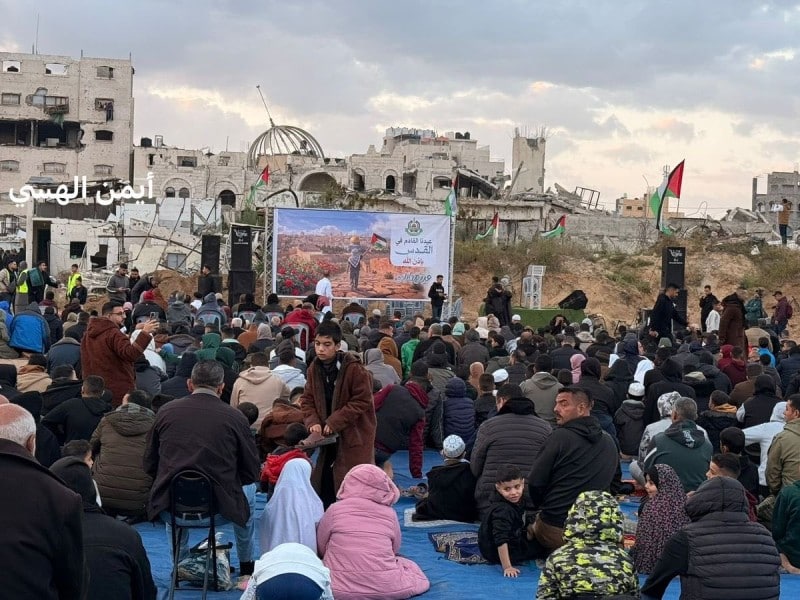
Eid in Gaza: Solidarity in the Face of Deprivation
The people of Gaza continue to help one another, sharing what little they have despite their own sorrow.
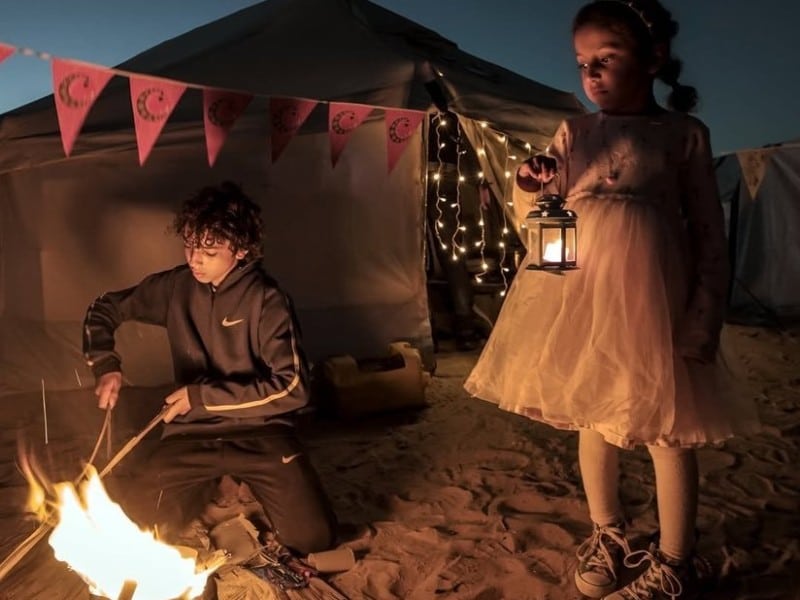
Ramadan in Gaza: The Month of Mercy Amid the Rubble
Since the start of the Israeli genocide, Palestinians across the Gaza Strip have struggled to rekindle the spirit of Ramadan.
Parlons de violence étatique
En 2026, les prestations d’assistance sociale demeurent largement inférieures au minimum reconnu pour vivre au Québec.
On behalf of real Canadians who support humanity and oppose war crimes, specifically genocide, Thank you for your coverage of this horrific daily onslaught being endured by so many of our Palastinian brothers and sisters. Let us pray and Believe in peace and a bright future for all those under oppression around the world
Your hamas heroes should have thought about all that before october 7 2023 shermouta go complain to them they are responsible for Every. Single. Death. In gaza. If they cared about palestinians they would have surrender and liberate all the hostages a long time ago.