
I Am a Survivor of the Genocide in Gaza
And I refuse to forget.
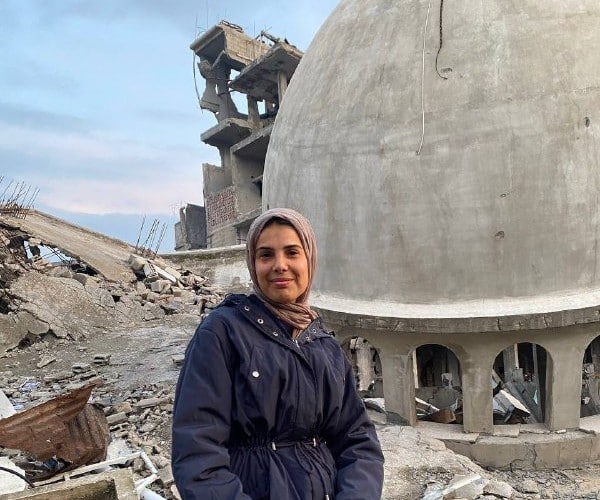
A survivor of the holocaust in Gaza… after 17,500 hours of genocide.
“Survivor of the Gaza genocide.” These words burn in my throat.
The war is over — that’s what they say. But in Gaza, even peace smells of dust and dried blood.
On October 10, 2025, the planes fell silent for the first time in two years. No noise, no missiles, no screams, only the breath of the exhausted, who cannot believe that the eradication has truly ended.
They walk slowly, on the same road of pain that witnessed their flight and the deaths of so many others. Today, it witnesses their joy at returning, at this miracle of survival.
They ask the same questions over and over again. “Is your building still standing? Did your family’s house survive?”
And the answer remains the same, heavy with sadness: most of the houses are gone, swept away by the war.
But deep down, one question remains unanswered: who will give us back our memories, our friends, Gaza before its ruin?
Sarah’s family is raising money to leave Gaza. You can donate here.
They call it “reconstruction.” But how can we rebuild after what we have experienced?
We can rebuild walls, but not children, not mothers. Who will give us back our memories? Who will give us back the laughter of children in the ruins? Who can restore Gaza to what it was before its destruction?
And now, what remains?
I am not seeking revenge. I only want our stories to be heard, our names to be spoken without trembling. I want the world to know that we loved, laughed, and sang, before we became statistics.
Living after surviving
During those two years of hell, under bombs and almost total destruction, our only goal was to stay alive.
Every day was a struggle to breathe, to not collapse, to find a little water, a corner of a wall still standing. We moved from one destroyed shelter to another, barely able to stand, living with the constant awareness that death could come at any moment.
We lived in an endless loop of fear and waiting for the next bombing, the next name on the list of the dead. No one had the luxury of thinking about tomorrow, or even mourning those we had just lost.
Each day was not a life; it was an act of survival.
After 733 days of feeling wiped off the map, the long-held tears finally flowed, carrying with them all the buried grief.
Each tear was proof of what we had endured. A reminder that the ceasefire does not end the suffering: it only opens the door to another form of pain.
When the guns fell silent, all that remained was to face the extent of the destruction. You could see it on people’s faces: the shock, the anger, the grief, the full weight of those two years under fire.
I didn’t cry. I felt empty, as if the war had taken everything, even my tears. They say that the end of a war brings relief. For me, all I felt was dizziness: the dizziness of still being here, when so many others are no longer.
I close my eyes and I can still hear the sound of the drones. My body reacts before my mind — even in peace, it remains on the battlefield.
I am alive, but not whole. Gaza lives in me like a breathing wound, a heart that cannot be numbed.
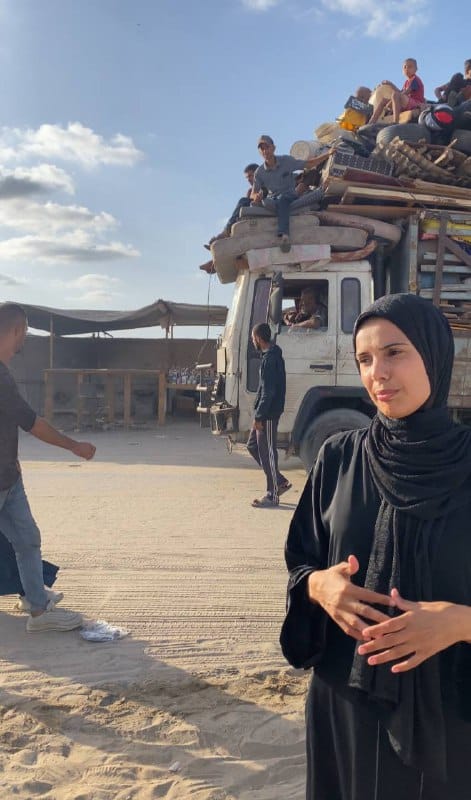
At night, I often dream that the war is starting again. I wake up with a start, convinced I’ve heard an explosion. Then I realize: no, it’s just silence, and that scares me even more.
Peace here feels like a pause between two nightmares.
People smile for the cameras, but their eyes remain elsewhere, where time stopped two years ago, frozen at the moment when the war took everything. They look at the empty streets and destroyed houses, as if waiting for those they lost during the war, when they are finally told that the war is really over and that this nightmare has ended.
The end of the war, but…
The war is finally over. Yes, it is over.
But the end of the fighting does not mean the end of colonialism or the end of the occupation that still weighs heavily on Gaza and Palestine. We are still under siege.
Every day I ask myself: who will rebuild our homes, our schools, our hospitals, our markets? Everything seems immense and arduous when Gaza is still locked down.
When the bombing stopped, people crawled out of their makeshift tents to find their homes and neighbourhoods reduced to rubble. The places that were once comfortable refuges are gone, and the streets that were once full of life are now piles of stones and dust.
The ceasefire may have stopped the shooting, but it has sparked new battles: restoring electricity and water, reopening schools, rebuilding hospitals, and trying to regain some semblance of dignity.
The question remains: will the world be content with symbolic gestures and empty rhetoric, or will it finally commit to helping Palestinians rebuild their lives?
Wars leave deep wounds, and healing them requires more than words. It requires concrete and lasting support. That is why international solidarity and the continuation of the boycott remain essential until Gaza and Palestine can breathe, live, and regain their freedom and justice.
***
I am a survivor of the genocide in Gaza.
But surviving is not living; it is carrying within oneself the faces of those who are gone, their laughter, their words, their dreams, and keeping them alive, no matter what.
They were like us. They, too, loved life.
Perhaps one day I will be able to say: I am living.
For now, I can only say: I remember.
I am a survivor of the genocide in Gaza… and I refuse to forget.
Sarah’s family is raising money to leave Gaza. You can donate here.
Author
Comments (5)
Leave a comment
Related Articles
Will Gaza Remain a Land of Camps?
When the temporary becomes a lasting policy.

“Don’t Come Here to Live”
Race, memory, and conditional belonging in Quebec.
Je pense sans cesse aux femmes incarcérées
La pauvreté des femmes est criminalisée au lieu d’être reconnue comme une urgence sociale.
“Israelis cannot experience pain and suffering, and they don’t deserve empathy, because something something occupation something something.”
You are truly a terrible and evil person if this is your argument.
It was interesting to read Sarah’s perspective. It would also be interesting to invite an Israeli author to write about how they survived the genocide in southern Israel on October 7.
YOU HAMAS FRIENDS STARTED THAT SHERMOUTA ITS A WAR
The Palestiñian Hamas started the war. They took hostages. They could have stopped the war. People like Sarah were their victims as well. Will Hamas rebuild their homes? Nothiñg good comes from war. M
You are clearly among the misinformed or willfully propagandized. Either way, this “war” was not a war, it was the continuation of 77 years of relentless, illegal, brutal ethnic cleansing of the Palestinian people from their land. After trying peaceful and legal roads to remedy for 4 decades, a resistance force was formed. Under international law resistance to occupation is legal and protected. Including armed resistance. Do your homework before you spread racist lies.