
Ramadan in Gaza: The Month of Mercy Amid the Rubble
Since the start of the Israeli genocide, Palestinians across the Gaza Strip have struggled to rekindle the spirit of Ramadan.
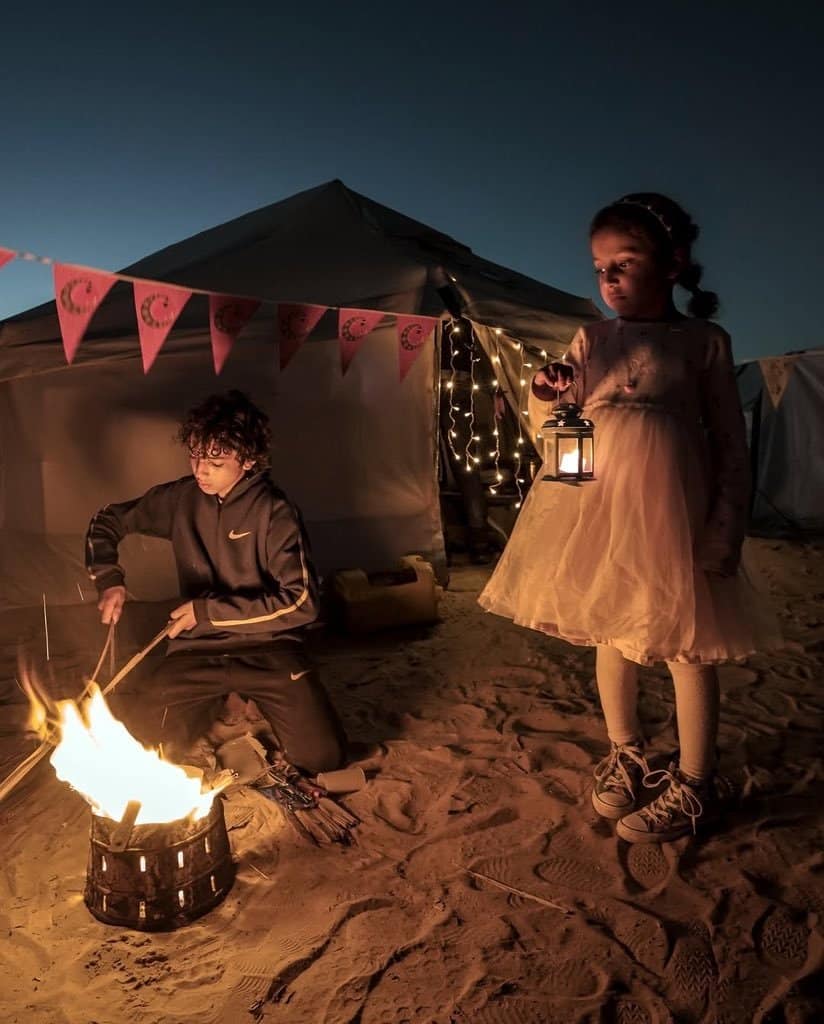
For the third consecutive year, the holy month of Ramadan arrives in Gaza, rekindling the painful memory of a life lost forever. Once marked by bustling streets, hearty meals, and moments of joy with loved ones, this celebration now takes place in streets devastated by bombs and plunged into darkness.
The holy month of Ramadan is celebrated by more than 1.5 billion Muslims around the world. For Palestinians in Gaza, Ramadan is a symbol of hope amid destruction and mourning.
Before the war, Ramadan was the most peaceful time of the year. Markets stayed open late into the night, filled with colourful lanterns and decorations. Families gathered around large iftar tables, and mosques filled up for tarawih prayers. My soul was nourished by warm family meals, long visits with friends, and the quiet discipline of teaching my body to endure hunger and thirst.
I never would have imagined that a few years later, such deprivation would be imposed on us year-round. It was, in every respect, a time of peace.
Sarah’s family is raising money to leave Gaza. You can donate here.
Ramadan Under Bombs
Today, many traditions have disappeared.
Entire neighbourhoods have been destroyed, thousands of families have been displaced, and daily life has become a constant struggle for survival. For many residents, the main concern is no longer preparing the iftar meal, but finding food and water.
Ahmed, 33, displaced to Al-Mawasi in Khan Younis, eagerly awaits the withdrawal of Israeli forces from the “yellow line” so he can return home.
This year, even after four months of ceasefire, Ramadan in Gaza remains unrecognizable. Israeli forces still dominate the skies over the Gaza Strip, carrying out sporadic bombings and pushing the “yellow line” further into Gaza every day.
At least 636 Palestinians in Gaza have been killed in Israeli attacks since the ceasefire began last Oct. 10, according to local health authorities.
“As Ramadan approached, we were always happy,” Ahmed says. “Now, we think of only one thing: when will our suffering from displacement and life in tents come to an end?”
He recalls the last Ramadan spent at home. “We cleaned our homes, hung string lights, and prepared the mosque for the worshippers.
“Today, there is no mosque, no neighbourhood, no loved ones, no trace of joy.”
He adds: “We miss those who have left us. Ramadan has lost its family visits, its gatherings, its sweets, and its tarawih prayers. It used to bring inner peace; now it is only a source of stress and exhaustion.”
“This is our third Ramadan in a tent.”
Families struggle to obtain basic ingredients for their evening meals, as food shipments remain strictly controlled and subject to Israeli approval. The few products available are exorbitantly priced. The threat looms: Israel seems dangerously close to breaking the ceasefire again or blocking the entry of food once more, as it did last year.
Shahd Al-Hilu, 23, the sole survivor of her family, confides: “I carry a heavy sense of survivor’s guilt. I am here to experience another Ramadan in Gaza, while more than 72,000 people — killed in Israeli attacks over the past two and a half years — are not. The absence of my family has transformed this month, once synonymous with shared meals and laughter, into a time of mourning and solitude. There are no longer places for them at the iftar table, and every meal reminds me of their absence.”
Celebrating Despite It All
Before the war, the streets of Gaza took on a completely different look with the arrival of Ramadan. The crowded market on Fahmi Beik Street, in the heart of the city, came alive from morning until night. Residents came there to buy fruits, vegetables, spices, and other ingredients to prepare iftar meals. The stalls were overflowing with fresh produce, while vendors offered traditional specialties of the holy month, such as dates and kharoub, which were very popular. The market wasn’t limited to food: the shops were decorated with bright ornaments, and the atmosphere was festive, punctuated by the hubbub of the locals.
Today, this street remains one of the most important popular markets that preserve the spirit of Ramadan. It is buzzing all day long, especially as iftar approaches. Sellers and buyers gather there in a spectacle that reflects the diversity and richness of the month of Ramadan in Gaza, even though most residents simply look at the goods without buying, due to the extreme poverty left in the wake of the war. Ramadan pastries, particularly qatayef, also fill the shops and attract passersby.
Despite everything, the holy month retains deep significance for the people of Gaza.
As a journalist, I interviewed dozens of people about their preparations for Ramadan after two years of war. Many spoke of their efforts to regain the spiritual calm and solidarity that characterize this month, clinging to memories of happier years and the hope of better days.
But no one could escape the pain of the genocide. Almost all of them had lost something priceless: loved ones, neighbours, entire families. I, too, thought constantly of two of my closest friends, five cousins, and dozens of relatives and friends killed in Israeli attacks. Nothing can bring back the lives we’ve lost.
Yet we remain hopeful for a future of peace, for a Ramadan free from wounds. Above all, we are grateful to have survived.
Today, where tables once overflowed with delicious food shared among loved ones and neighbors, Gazans struggle to feed their children with the meager humanitarian aid packages distributed. We continue to bless these frugal meals. Families continue to break the fast together. The faithful still perform tarawih prayers in the ruins of mosques or on mats spread out in the street.
In this third Ramadan in the devastated Gaza Strip, residents still find a way to hang a few strings of lights, to adorn their makeshift shelters with simple decorations, and to preserve their dignity, their faith, and their quiet determination to live amid the remnants of their past.
But all of us here cannot help but wonder: will we see the next Ramadan in Gaza?
Author

Comments (2)
Leave a comment
Related Articles
Parlons de violence étatique
En 2026, les prestations d’assistance sociale demeurent largement inférieures au minimum reconnu pour vivre au Québec.
Is Israel Preparing a Legal Framework to Execute Palestinian Prisoners?
Since October 7, 2023, prison conditions for Palestinian detainees have seriously deteriorated.

SAAQclic : quand l’État ne sait plus « faire » ni « faire faire »
SAAQclic dépasse le simple scandale administratif. Il révèle quelque chose de plus profond, soit l’érosion graduelle de la capacité de l’État à agir par lui-même et à encadrer efficacement les actions qu’il délègue.
I obviously sympathize with the suffering, but I will never understand why Palestinians and their allies constantly place the entirety of the blame on Israel and not, you know, their own actual leaders.
I also don’t understand why the rover continues to constantly write about Gaza while ignoring all 8 billion other people on this planet. I thought this was supposed to be a local media outlet spotlighting local issues?
RAMADAN IN THE HAMAS TERROR TUNNELS !!!! FREE GAZA FROM HAMAS