
Taking Care of the People We Lock Up
Prison is an extension of our collective failure to care.
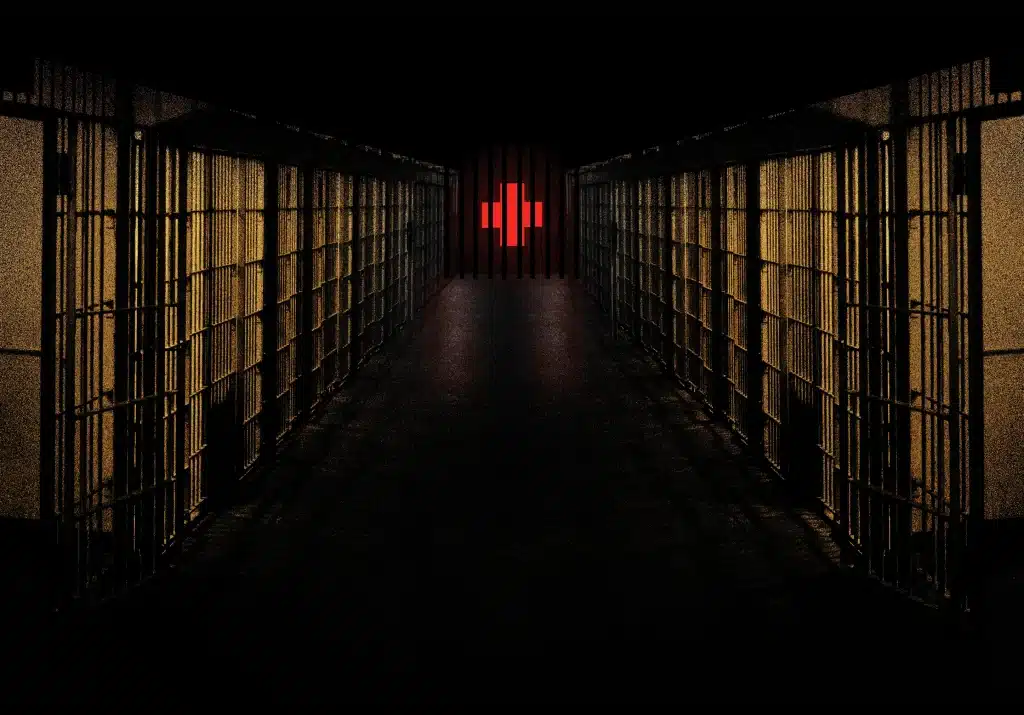
The latest report from the Office of the Correctional Investigator (OCI) paints an unambiguous picture of how Canada manages the mental health of its incarcerated population.
Dr. Ivan Zinger’s report is a kind of institutional X-ray that shows a system repeating, without self-criticism, a logic where order and security systematically take precedence over the care of prisoners. Prisons have become the default spaces for containing psychiatric crises that the state is no longer able to handle elsewhere.
“Dr. Ivan Zinger believes that, since his appointment as Correctional Investigator in 2023, a significant number of his recommendations for systemic reform have too often been ignored or rejected by (Correctional Service Canada (CSC)). He also criticizes the Department of Public Safety, which, regardless of the minister at its head, has shown reluctance to implement the recommendations of the Office of the Correctional Investigator (OCI) regarding psychological care.
The Correctional Investigator is particularly critical of the five regional treatment centers run by CSC, saying they increasingly resemble warehouses for people with mental health issues.”
***
As you read this, you may think that I have my priorities in the wrong place. That addressing the situation of incarcerated people when minority rights are under attack on all sides seems almost inappropriate. That financial precariousness is gaining ground so rapidly that thousands of people are ending up on the streets, that encampments are springing up across the province as damning evidence of our collective failures, and that children who are expected to be perfect so that they can be moulded into disciplined future workers are going to school on empty stomachs.
Those who end up institutionalized do not fall from the sky. They are often the same people who are left to drift upstream: children and teenagers tossed between failing services or young adults absorbed by financial insecurity and trauma. The institution takes over where the social safety net has collapsed. And if I see this so clearly, it’s because I was on that trajectory. Nothing in this report is foreign to me, because it is the logical extension of what I have experienced and observed.

From the age of 12 to 17 and a half, I was in a prison for children. We often hear the term “youth centre,” but for those who live there, it is a prison. During those five years, I was placed in the L’Escale youth rehabilitation center in Cap-Rouge. The door to my room was heavy and always locked, even at night. We moved around in single file during what were called “transitions”; our interactions were strictly supervised, and every little moment of our daily lives followed a rhythm imposed by the institution.
They called it rehabilitation — that’s what they told the parents of those who were lucky enough to have them involved in the process. But what really organized our days was essentially the management and control of our bodies and free thought. The routines were designed to keep us strictly docile, the expectations of the staff and social workers were often unrealistic, and the slightest emotional reaction became an “incident.” Punishment and isolation rooms were used to contain distress and correct what the institution perceived as out-of-control behaviour. I very rarely felt that there was a genuine willingness to understand what was going on inside our heads.
Those years taught me how child protective services (the DPJ, in French) treats children it doesn’t know how to support. And when I read reports on adult institutions today, I recognize this logic whereby distress is met with operational responses, and the Charter, which is supposed to protect everyone, comes up against so-called “institutional” practices.
I sometimes talk about this in my podcast Le temps des monstres, but it is still very recent for me to open up about my past as a young offender, especially in writing. It’s as if putting these words on the page leaves a trace, an indelible mark on my trajectory, which I am still a little ashamed of. However, the more I free myself from this past by accepting it as an important part of my critical view of social issues, the more I feel that it is no longer holding me back from speaking out.
Support your local indie journalists.
***
I believe that all of this is connected: the deterioration and privatization of the healthcare system, the way we treat workers who stand up for their rights, the way we handle our elders and the sick, and, yes, the way we treat those we lock up. These systems are permeated by the same institutional reflexes, the same blind spots, and the same value hierarchies. Negligence is tolerated and even institutionalized when it comes to lives that are considered less important or less productive, lives that do not lend themselves to the great game of accumulating capital. This logic is found everywhere the state exercises its power, including in detention.
Reading the report, it is immediately clear that regional treatment centres (RTCs), managed by CSC, are not hospitals. They do not offer the clinical environment or professional skills necessary to respond to the complexity of the individuals who are there. RTCs remain primarily prisons, due to their prison architecture, the culture of control that prevails there, the constant surveillance, and the punitive interventions that are prioritized above therapeutic responses. The correctional investigator writes quite frankly in the 174 pages of the report: these facilities are not designed to treat mental illness, only to manage it, often in a coercive manner.
Dr. Zinger describes a system that has gradually shifted the responsibility for caring for vulnerable individuals to the correctional system, without ever giving it the appropriate tools or staff to accomplish this task. The result is a hybrid, flawed system where medical practices are deployed in a setting that contradicts them. Clinical teams work in barred units, psychiatric assessments are conducted under duress, and emergency interventions are primarily entrusted to correctional officers rather than mental health specialists.
This structural disconnect is fertile ground for recurring, institutionalized violence. The report indicates that over the past five years, CRTs have recorded 1,534 incidents of self-harm or suicide attempts, and that force was used in 24 per cent of cases. Even more troubling: inflammatory agents — irritating chemicals normally reserved for situations of imminent danger — were used in 9 per cent of all self-harm episodes.
***
At La Marina, where I spent part of my long stay at L’Escale, a young Indigenous woman who regularly attempted to take her own life was placed in solitary confinement almost every time. To take her there, two huge intervention officers would stand on either side of her tiny body, lift her up while she screamed and struggled, and then throw her into this empty, dark room. A few hours later, she would return to her room, exhausted and wearing only a jacket with the Nachous logo, on which was written “Chat va bien” (“Cat is fine” a play on words with “Ça va bien”) under a small feline giving a thumbs up. And the scene would repeat itself the following week, as soon as she whispered “I want to die” in the ear of anyone who came too close to her.
***
The report also describes other violent abuses, including that of a patient in a suicidal crisis who was doused with flammable liquid in an observation cell, before two staff members attempted to cover up the incident in their internal reports, revealing a culture where the use of force is used to manage what is perceived as a threat to security rather than to support the person in crisis.
The inability to structure a coherent therapeutic framework is also evident in the widespread use of pharmacology. Without access to stable psychological treatment, many incarcerated women report being overmedicated. One of them sums it up: “You get pharmaceuticals here until you’re blue in the face (…) It’s not a long-term solution. (…) You have traumatized and dependent people.” Another adds, “They’re cheap counselors. A medicated inmate is easier to manage.”
The problem goes beyond clinical issues and exposes a structural failure. The report points to poor coordination, siloed teams, incomplete documentation, poor information flow, and a lack of risk monitoring. The internal culture resembles a series of procedures rather than a prevention strategy.
This disorder has serious consequences. The investigator notes 19 deaths in institutions, several of which were preventable. He also highlights assaults, unreported violence, and cases of self-harm that could have been prevented if the signs of mental deterioration had been recognized in time.
The overrepresentation of Indigenous people, who make up 34 per cent of CRT patients, adds the dimension of a colonial system that continues to shift violence toward the same groups, generation after generation. In this context, CRTs become a place of re-incarceration of trauma rather than a space for healing. Recommendations for decolonization, repeated year after year, remain largely unimplemented.
***
In juvenile detention, I knew girls who are no longer alive today: some murdered, others who died by suicide, and others who died of drug overdoses. My good friend at the time, Pascale Paré, has been missing since December 17, 2000.
This experience does not give me the absolute truth, but it does give me a concrete understanding of what incarceration does — especially when it is imposed on children and adolescents. At the very least, it allows me to point out certain blind spots in the public discourse on detention, responsibility, rehabilitation, and mental health care.
***
What I saw at L’Escale is confirmed by the numbers: according to longitudinal studies by the EDJeP (Étude sur le devenir des jeunes placés, or Study on the Future of Youth in Care), young people placed in youth centres are heavily overrepresented in adult prisons. Young people who grow up with their families have about a 0.9 per cent chance of ending up on the streets, while former youth in care have a 33 per cent risk of homelessness between the ages of 18 and 21. And those who become homeless after leaving care are 3.5 times more likely to be imprisoned than young people with stable housing. In other words, a significant proportion of young people who did not receive adequate support during childhood end up in the country’s prisons a few years later.
Canada uses prisons to fill the void left by a mental health care system that has been neglected for decades. As long as resources remain insufficient in provincial networks, federal institutions will continue to be the first — and sometimes the only — places of refuge for people in crisis. This implicit choice, because it is never publicly acknowledged, is implemented without any real assessment of its human consequences.
Prison is no longer limited to its purpose of detention, as it has become a mechanism for managing social suffering. A mechanism that, by default, takes in those whom other institutions are no longer able to support. The OCI proposes a series of structural recommendations, but points out that these have been ignored for more than 20 years.
This injustice persists because it operates according to a logic that confuses management with care. What is lacking is the political courage to recognize that institutional violence is not inevitable collateral damage: it is rather a structural choice.
***
I consider myself privileged because I am still alive. I was not killed, my suicide attempts were taken care of, and I never touched hard drugs or lived on the streets. Many have not been so lucky. If we want a society that truly protects children and offers them equal opportunities for the future, we must first build one that protects all children. You can never create a safe world for just one child: either you build it for everyone, or it doesn’t exist for anyone.
Author

Related Articles

Ramadan in Gaza: The Month of Mercy Amid the Rubble
Since the start of the Israeli genocide, Palestinians across the Gaza Strip have struggled to rekindle the spirit of Ramadan.
Parlons de violence étatique
En 2026, les prestations d’assistance sociale demeurent largement inférieures au minimum reconnu pour vivre au Québec.

Is Israel Preparing a Legal Framework to Execute Palestinian Prisoners?
Since October 7, 2023, prison conditions for Palestinian detainees have seriously deteriorated.
Comments (0)
There are no comments on this article.