
Where Is Your Humanity?
Montreal Gazette columnist Yara El-Soueidi is putting her collaboration with Postmedia on hold to protest against the dehumanization of the Palestinian people.
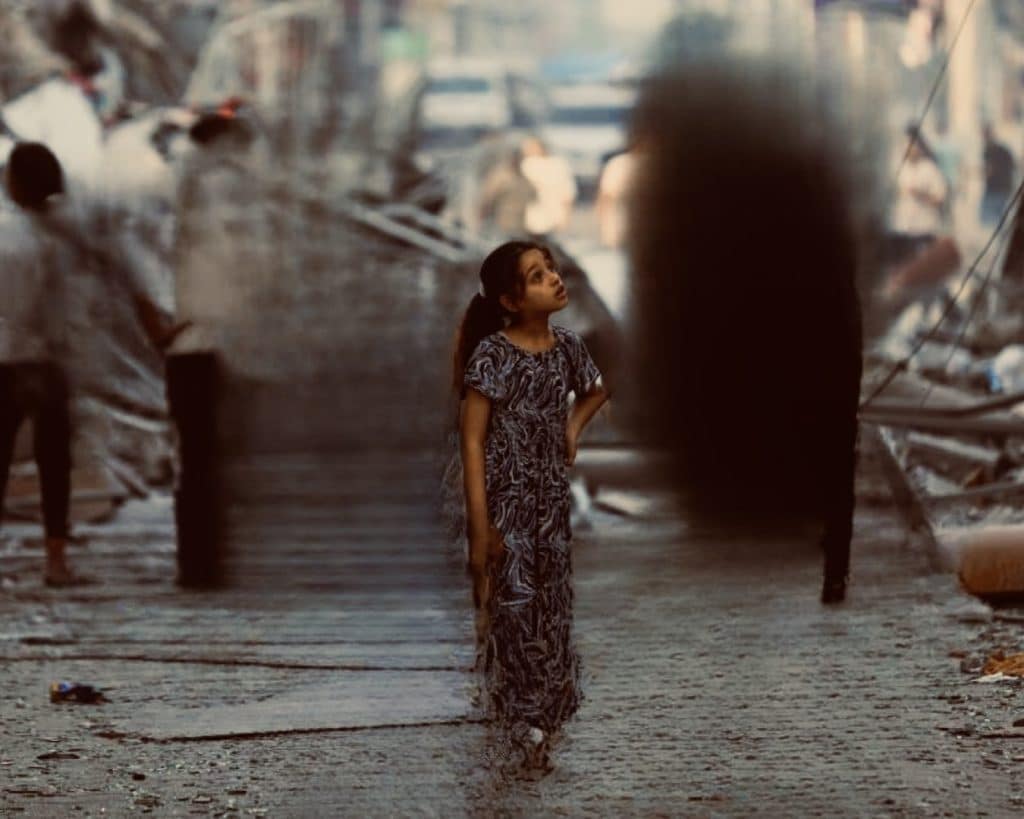
This is a protest column.
As a columnist for the Montreal Gazette since January 2023, I won’t be writing a column this week. I’ll pass it on to the next.
This column is not intended as a commentary on the newspaper’s editorial staff. Quite the opposite: I’d like to thank the editors and the newsroom for their support and kindness during my decision and throughout the past week.
This is a condemnation of the thinly veiled racism on the front pages of Postmedia newspapers, of which the Montreal Gazette is a part. This is a condemnation of how the media and decision-makers inhumanely treat the people suffering from this war. This text questions the humanity of our media and political authorities.
There has been no space lately in the news cycle for nuance and balanced opinions or reporting.
The horrific slaughter of civilians should never be celebrated or glorified. Bloody massacres should not be the answer to oppression or violence, no matter how dire the situation is.
As Nelson Mandela once said,
“I am not truly free if I am taking away someone else’s freedom, just as surely as I am not free when my freedom is taken from me. The oppressed and the oppressor alike are robbed of their humanity.”
Freedom. The young children of Gaza cannot understand the meaning of freedom. The children of the kibbutz have lost theirs at the hands of unimaginable terror. Yet these children are neither Hamas nor the government of Prime Minister Benjamin Netanyahu.
Fueling Hatred
Despite the loss of civil lives on both sides, a straightforward narrative has become apparent in the news, in political discourse and on social media over the past few weeks — one that evacuates any humanity from Palestinians. People of Palestinian and Arab origin have been repeatedly harshly labelled as human animals, savages, cockroaches. Eugenics has been used to talk about Gazans. Ninety-five-year-old Israeli army reservist Ezra Yachin, an Independence War veteran, called for killing children and women. “Erase them, their families, mothers, children,” he told a group of young Israeli Defence Forces soldiers.
Support Independent Journalism.
The past week has been difficult. I’ve seen public personalities, politicians, and radio hosts sharing disturbing, unconfirmed information. Multiple celebrity figures have endorsed these theories, even after they were disproven.
I’ve seen journalists ignoring the death of Reuters’ Issam Abdallah as if his life didn’t matter as much as the lives of their other colleagues.
I saw a Montreal morning radio host, Elias Makos, write that Israel is “the one bright light in the darkness that is the Middle East.” The same host has been associating Palestinian people with Hamas with his retweets and open declarations on X (formerly known as Twitter), yet he hasn’t been reprimanded.
While Jewish and Palestinian peace organizations work together to decry what’s happening, pro-Palestine rallies are unfoundedly dubbed “pro-Hamas” by politicians and the media, fueling the flames of hate. At the same time, people of Palestinian and Arab origin see their concerns brushed aside by political, governmental and media circles.
And when the damage has already been done, when in some countries citizens have already been denied their right to protest, half-hearted apologies are quietly issued by the media outlets responsible for these false statements, just before moving on to the weather, as if it were a banal error, rather than a severe mistake that adds to the growing chasm of racial hatred caused by misinformation.
A Barbaric Loneliness
These are lonely days for Palestinians and people of Jewish and Arab descent. These are lonely days for those who want to work towards a peaceful resolution and protect the freedom of others. The freedom to grow, live, and have the same opportunities as anyone else. These are endless days for those who are left to fend for themselves.
These are challenging days for journalists, who constantly have to fight against a system that spreads lies faster than they can refute them.
These are also dark days for people of Jewish origin who are against apartheid, against terror and for peaceful equality.
To quote Arielle Angel, Editor-in-chief of the Jewish-American magazine Jewish Current,
“Our Jewish movements for Palestine were not powerful enough to stop other Jews from gunning down Palestinians in peaceful marches at the Gazan border fence, or to keep Palestinians from being fired, harassed, and sued for speaking the truth about their experience or — God forbid — advocating the nonviolent tactic of boycotting. And now, we do not have a shared struggle able to credibly respond to these massacres of Israelis and Palestinians.”
A Country of Words
Over the past few days, I’ve been reading Mahmoud Darwish, the Palestinian poet and a significant figure in Arab literature. I look for his insights in his poems. I want to know what he would have thought of all this. How would he have responded? How do you make space for everyone’s rage and grief without ignoring the ongoing acts of aggression? How do you break the cycle of violence that crosses generations and continues to repeat itself?
I finally found the answer in one of his verses. A finale that applies to both Jewish and Palestinian nations.
“Our country is a country of words.
Speak, speak,
that I might lay a trail, stone by stone.
Our country is a country of words.
Speak, speak,
that we may know an end to traveling.”
If our countries are countries of words, I’ll grieve by stopping to write.
I’m taking a stand by abstaining from contributing to the Montreal Gazette this week. I refuse to write as long as we, people of Arab descent, are not treated as human beings. I refuse to write as long as the efforts of Palestinians and Israelis for peace are not recognized. I refuse to write as long as hospitals are bombed. I refuse to write as long as my sisters, brothers and cousins are inhumanely disregarded.
We’re far from being despicable metaphors.
We are descendants of civilizations that have inhabited the Levant for thousands of years. Our names are made up of melodies. Our eyes are dark to soak up the coming days’ sunlight. Our skin is the shade of our beloved olive trees. Our laughter is bright and contagious. Our language sounds like the most gentle of songs. We recognize ourselves in the light and darkness of our days. We open our arms to all.
Palestinians and Jewish people have long travelled to find their rightful home. Let the people speak. We must let them reveal the stories of their families so that they can remind us of our own fragile humanity through theirs.
Comments (1)
Leave a comment
Related Articles
Parlons de violence étatique
En 2026, les prestations d’assistance sociale demeurent largement inférieures au minimum reconnu pour vivre au Québec.
Is Israel Preparing a Legal Framework to Execute Palestinian Prisoners?
Since October 7, 2023, prison conditions for Palestinian detainees have seriously deteriorated.
SAAQclic : quand l’État ne sait plus « faire » ni « faire faire »
SAAQclic dépasse le simple scandale administratif. Il révèle quelque chose de plus profond, soit l’érosion graduelle de la capacité de l’État à agir par lui-même et à encadrer efficacement les actions qu’il délègue.
“Bloody massacres should not be the answer to oppression or violence, no matter how dire the situation is. ”
You mean like the massacre and kidnapping of innocent Israeli citizens?
“Hamas rejects any alternative to the full and complete liberation of Palestine, from the river to the sea.”
If you agree with Hamas, then there can never be peace.