
Why Are Quebec’s Wetlands Disappearing?
In Montreal, where 80 per cent of wetlands have disappeared, locals are fighting to make Quebec enforce its own environmental laws.
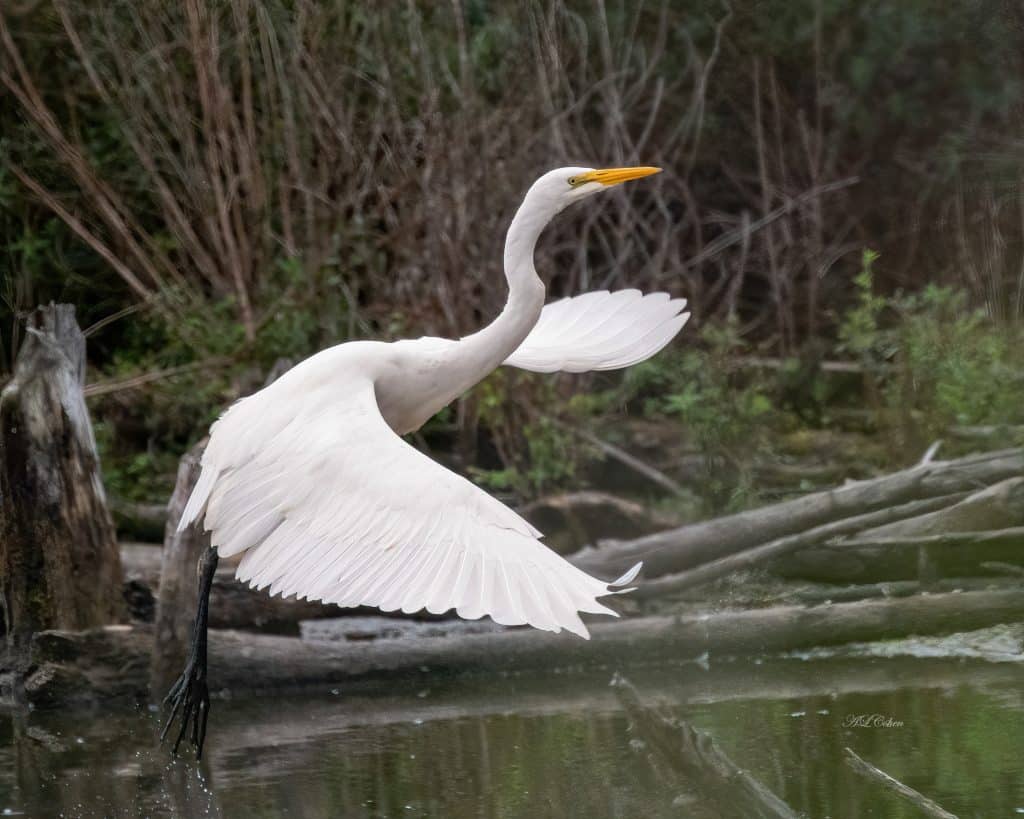
An egret takes flight outside of Montreal’s Technoparc. PHOTO: Ariane Lessoil Cohen
Two months ago, the City of Montréal made a deal with Hypertec, a company that planned to build its headquarters on 11 hectares of environmentally sensitive land in St-Laurent’s Technoparc area.
The city paid Hypertec $30 million —the amount the company initially paid for the land— and sold them a lot of land in LaSalle for $12 million.
Katherine Collin the President of TechnoParc Oiseaux, a nonprofit organization for the conservation of the TechnoParc wetlands and federally adjacent lands, says that protecting this space and its wildlife is a marathon, not a sprint.
Even though the land swap at Technoparc is good news because it will protect some of the land, the threat of development is constant in this area, especially in the Parc Nature Des Sources, a place that is home to a wide range of species due to its wetlands.
“We have this oasis of biodiversity that has been saved from development,” says Collin.
Wetlands are areas of land either covered by water, such as swamps, or saturated with water, like marshes or bogs. The combination of soil and plants in these ecosystems functions like sponges, soaking up rain and melted snow and slowly releasing water during the summer, which helps prevent flooding.
Wetlands also act like the planet’s kidneys by filtering pollutants from water.
“The microbiome in wetland soil is very different from other ecosystems. It transforms nutrients of the pollutants and removes them so the water leaving the wetland is clean,” explains Audréanne Loiselle, a biologist with a PhD in biological sciences and a postdoctoral fellow at Laval University.
In 2017, Québec adopted Bill 132 to protect wetlands and bodies of water from development projects. However, the law has been inefficient in accomplishing its objective, as it was admitted a week ago by Québec’s Minister of Environment Benoit Charette.
For this reason, activists, researchers, and other conservation organizations are circulating a petition to request Québec’s government to stop issuing permits to destroy wetlands due to their ecological importance, and enforcing the zero loss of these ecosystems in development projects.
In the case of the Parc Nature Des Sources, Technoparc Oiseaux wants to preserve 215 hectares of this space from development. This includes land owned by the federal government that is leased to the Pierre-Eliot Trudeau airport, 95 hectares of the Dorval golf course, and lands in the Technoparc industrial park, owned by two private companies; FPInnovations, a not-for-profit research and development firm, and Morguard, a Toronto-based real estate company.
“There’s an active authorization certificate to fill in five wetlands in the land that’s owned by Morguard,” says Collin.
In addition, the Monarch Butterfly fields, used by this endangered species to feed and reproduce during their migration to and from Montréal, are located in the space controlled by the federal government. During COP15, federal Environment Minister Steven Guilbeault promised to protect federal lands leased by the airport, including the monarch field. However, this habitat has not been protected yet and is still threatened by urban development.
Support Reporters Who Give a Shit
“Protection, coupled with the restoration of the sites is possible. We know we can’t go back and make everything perfect but we should protect the space we have,” explains Collin.
Apart from playing an important role in the water cycle, wetlands, like the ones at Parc Nature Des Sources, provide spaces to explore wildlife in their habitat.
For Ariane Lessoil Cohen, a bird watcher and photographer, this is a great place to photograph birds, from hawks to shorebirds, and even owls.
“It is imperative to be quiet around owls and not overstay our welcome when we spot them. They need their daytime sleep to be able to hunt at night. Technoparc is a great place to observe all kinds of birds, even if owls don’t make an appearance on the days that I’m walking around there,” said Cohen.

PHOTO: Ariane Lessoil Cohen
Wetlands serve as habitats or breeding grounds for different species, such as the Western Chorus Frog, a small brown tree frog almost as big as the nail of your index finger. This species is threatened in Canada due to the loss of its habitat.
According to Environment and Climate Change Canada, the Western Chorus Frog has lost 90 per cent of its habitat range in the southwestern Montérégie region.
In Québec, extensive agriculture and the lack of inspection in authorization requests for urban development projects are direct threats to wetlands and the species that inhabit them.
For example, the wetlands located in the flooding area of Lake Saint-Pierre, between Sorel-Tracy and Trois-Rivières, are exposed to agricultural pressures. In this area, peatlands, a type of wetland that stores large amounts of carbon, are often drained to cultivate corn and soybeans or extensively mined for horticultural compost.
This soil, dark brown or black with a distinct earthy smell, retains water and has low oxygen levels—ideal conditions for accumulating organic matter and creating fertile soil.
“The bacteria that eat up organic matter cannot function [without oxygen], so this organic matter accumulates but not very fast. It takes 1,000 years to accumulate in one meter. It’s a very long process,” explains Loiselle.
When peatlands are drained, oxygen enters the soil. Then, the bacteria start eating up the organic matter and releasing CO₂ in the atmosphere, contributing to climate change.
“In just a few years, we release CO₂ in the atmosphere that took thousands of years to store,” says Loiselle.
Canada has a big responsibility to preserve these ecosystems and mitigate the effects of climate change, as it holds 30 per cent of the world’s peatlands. However, they are rapidly disappearing.
“In southern Québec, we call them the Terre Noire, but they’re all gone. They’re all being cultivated right now,” says Loiselle.
Lake Saint-Pierre was designated a UNESCO Biosphere Reserve in 2001 due to its ecological importance for migrating birds and wetlands. However, according to Environment and Climate Change Canada, an area equivalent to 600 soccer fields of wetlands around the lake has been lost to agriculture since 1990.
In the Greater Montréal area, 80 per cent of wetlands have vanished. While agriculture has contributed significantly, the lack of control of the mechanisms to protect these ecosystems from urban development, such as Bill 132, has played an important role.
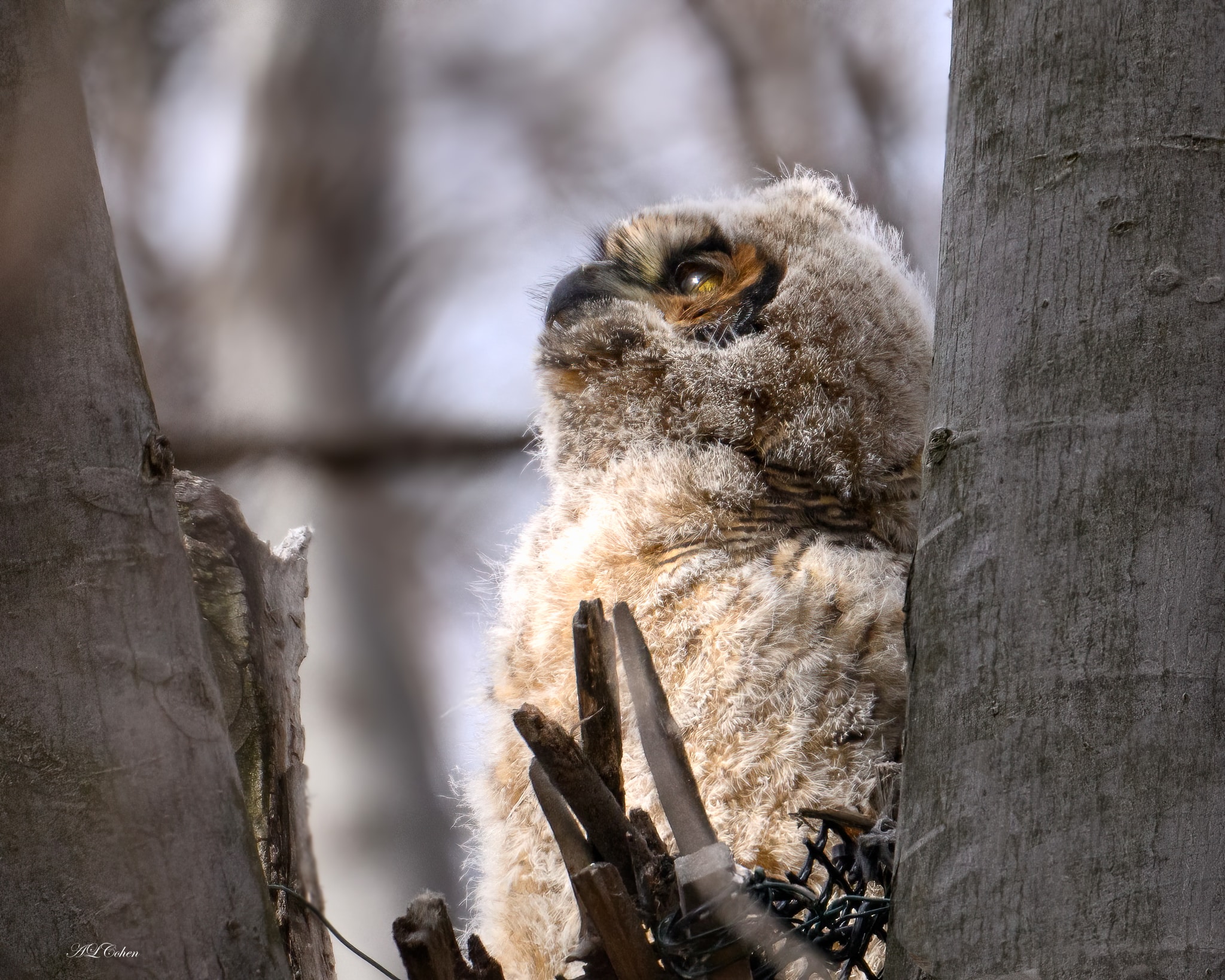
PHOTO: Ariane Lessoil Cohen
When Québec adopted the law to protect wetlands and water bodies, its objective was zero loss of these ecosystems by avoiding their destruction, minimizing damages, or compensating for unavoidable losses due to development projects.
The law states that in cases where it isn’t possible “to avoid adverse effects on the ecological functions and biodiversity of wetlands and bodies of water”, developers must pay financial compensation to obtain authorization to destroy wetlands.
Through this, the Ministère de l’Environnement, de la Lutte contre les Changements Climatiques, de la Faune et des Parcs (MELCCFP) aimed to balance the negative and positive effects of human activities on wetlands and bodies of water.
Theoretically, the funds collected would finance projects to restore or create wetlands. However, a Journal de Montréal investigation revealed that 98 percent of requests submitted to destroy or disturb wetlands have been approved since the law’s adoption, and from $173 million in financial compensation collected, less than 1 per cent has been used for restoration or creation of wetlands.
In addition, the Auditor General of Québec reported last year that most authorizations issued to urban development projects carried out in wetlands over the past 10 years have not been inspected.
The report also mentions that the MELCCFP does not apply the ‘avoid’ principle when analyzing authorization requests for urban development projects.
For Alain Branchaud, a biologist and executive director of SNAP Québec —the province’s chapter of the Canadian Parks and Wilderness Society—, an alternative solution to protect wetlands would be pushing promoters to create a new wetland and relocate the plants and animals before destroying them to ensure its protection.
“What’s happening now is that compensation is all the way,” explains Branchaud. “That’s why the idea of forcing the creation of a wetland before doing the destruction would really push people towards ‘avoid’ because all the burden and the work to do won’t be on the shoulder of the government but on the promoter.”
Restoring a wetland is a delicate task that needs a multidisciplinary team, as Loiselle explains. She is part of the project Recherche et Applications pour une Restauration Éclairée des milieux humides (RARE), where researchers from Québec and Montréal, in partnership with other environmental organizations, public institutions, and private firms, are testing different ways to restore them.
One of these procedures is transplanting the soil of a wetland.
“It is possible to do that with wetlands about to be destroyed. It’s like an organ transplant. We grab the soil, conserve all of the vegetation and seeds, and then transfer it to an ecosystem that needs to be restored,” explains Loiselle.
For Branchaud, there is a possibility of finding other ways of development to avoid the destruction of wetlands.
“An idea that would make things work would be to have a list of potential sites for restoration and sites for development. In a situation where a project could destroy natural life, they can have a mechanism to switch the project to another place.”
A week ago, the MELCCFP tabled a bill to amend various environmental laws and speed up the environmental assessment of development projects. However, the mechanism of financial compensation for destroying wetlands will continue without modifications.
Did you appreciate this article? Share it with a friend!
Author

Colombian journalist in Montréal. I love podcasts. Raccoon enthusiast 
Comments (1)
Leave a comment
Related Articles

‘Everybody Who’s on the Stage Is Part of Your Community’: Ctrl+Alt Festival Returns for a Third Edition
Free festival stacked with queer, local performers to take over the Place du Village July 24-26.

Moving Day: A “Desperate” Struggle for a Growing Number of Montrealers
July 1 is now a race against time for families facing homelessness once their lease expires.

Quebec Workers Experienced a “Counter Revolution” Under Jean Boulet: Experts
The outgoing labour minister leaves behind a legacy of attacking the Constitutional right to strike.
It is gratifying that Ariane’s talents and knowledge can be recognized in a way that many can enjoy her Labors of love