
Will Bill 21 ‘Erase’ a Generation of Muslim Teachers from Quebec?
The legal battle over Quebec’s religious symbols ban has reached the Supreme Court in a case that will make Canadian history.
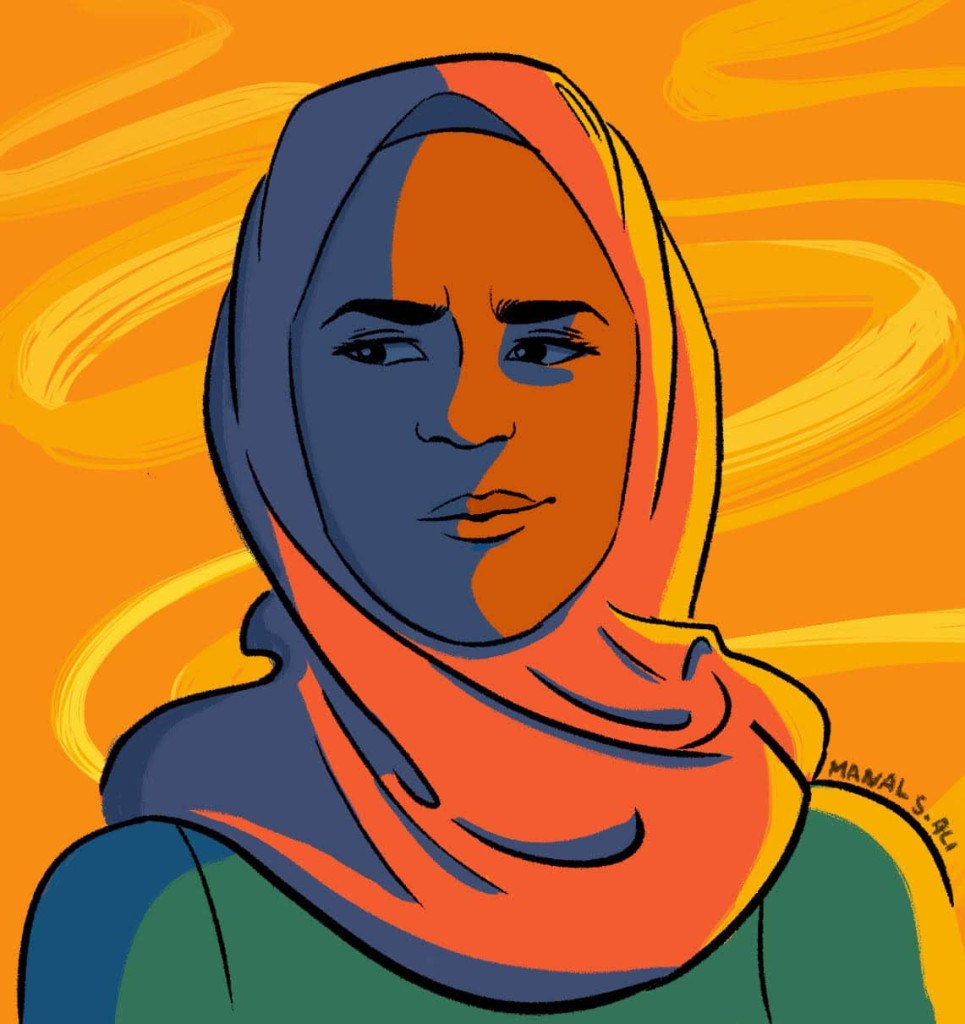
After Suhur, Shahrin Sultana Samia will go sit at her kitchen windowsill, watching the kids from her neighbourhood walk to school.
From where she is sitting, Samia could reach that schoolyard in under five minutes. Instead, her morning commute to Summit School in Ville-Saint-Laurent takes 75 minutes by metro, bus and on foot.
Samia admits “it’s demoralizing” that the private institute for young adults with special needs was the only school willing to hire a hijabi with Quebec’s secularism law in place.
Make no mistake: Samia likes her job. She just hasn’t given up on her dream of becoming an art teacher, though she’s unsure how much longer she can hold out if that law, called Bill 21, isn’t repealed.
Soon, she will have her answer.
Support your local indie journalists
On Monday, the Supreme Court of Canada began hearing arguments on the constitutionality of Bill 21 in what legal experts are calling the most widely anticipated case of 2026.
It will be the final chapter in a seven-year legal battle fought by the Canadian Civil Liberties Association (CCLA), the National Council of Canadian Muslims (NCCM), and the Montreal educator Ichrak Nourel Hak, now backed by over 40 intervenors.
According to Harini Sivalingam, director of equality for the CCLA, this unprecedented coalition, from the English Montreal School Board to the World Sikh Organization and the federal Attorney General’s Office, has come together for two reasons.
The first is Bill 21’s “blatantly discriminatory” exclusion of religious minorities from the public sector. The second is its preemptive use of Section 33 of the Canadian Charter of Rights and Freedoms (the notwithstanding clause) and what that means for Charter rights across Canada.
“The stakes are really high in this case,” Sivalingam stressed. “The harms from Bill 21 and the dangers of the notwithstanding clause are something that need to be critically addressed.”
Public discourse around Bill 21’s turbulent journey through the courts (upheld in 2019, partially struck down in 2021, and upheld again in 2024) has mainly focused on the latter.
With the two leading parties in the polls, the Parti Québécois and the Quebec Liberal Party, backing the law ahead of the provincial election this fall (the Liberals back it without the use of the notwithstanding clause), the Supreme Court hearings this week remain the last hope left to overturn Bill 21.
Hijabis need not apply
Sana Harroui* is too young to remember life before Bill 21.
But one of her earliest memories is watching the trailer for Les Héritiers with her aunt in Algeria; specifically, the scene of a schoolgirl taking off her hijab before going to class.
“I thought it was a dystopian movie,” Harroui said, believing this type of religious prejudice could not exist in real life.
But while it was “surreal” when she experienced it firsthand while working at a French-language summer camp in Trois-Rivières, she was not “surprised.”
“I think growing up as a hijabi here, you always know you’re not fully seen as a Québécois,” Harroui said, which is why she has requested not to have her name published.
Eve-Marie Grondin, a hijabi student at Université de Montréal, had a similar revelation after her supervisor at the City of Laval’s summer day camps refused to provide her with a prayer room.
Grondin was told it was “illegal for people to pray in schools,” but she doubts that now. Looking back, she is unsure if those restrictions existed in 2024 (public prayer had been banned, but private prayer was still permitted).
Just as these experiences put Grondin and Harroui off from becoming teachers, Doctor Sabrina Jafralie, a course lecturer in education at McGill University, says Bill 21 has effectively “erased” a generation of hijabi educators from Quebec’s classrooms.
“Research shows us that students need to see themselves in their teachers,” Jafralie said, with the province “sending a clear message” of who belongs in the classroom.
While Harroui and Grondin had time to pivot away from education, Fouzia Al-Ahmad* was already halfway through her degree at McGill University when she learned about Bill 21.
Al-Ahmad got lucky, landing a substitute teaching gig that fell outside the scope of Bill 21 at a French-immersion elementary school in Montreal.
Still, Bill 21 has put Al-Ahmad’s life on hold. As it stands, she cannot take a new job or even accept a promotion at her current school, and fears she could lose her position in the next budget cut — which is why she has requested to remain anonymous.
Al-Ahmad feels as if she’s “living in a parallel world … where no one really knows that I’m going through this,” having to repeatedly explain to her non-Muslim colleagues why she has not been offered a full-time position yet.
Al-Ahmad is not alone in this. Steven Zhou, a spokesperson for the NCCM, says the experiences of Muslims have long been invisible to broader Quebec society, with Bill 21 ushering in the “ghettoization of the Muslim community.”
‘There’s a lack of a functional relationship with the rest of Quebec,” Zhou said. “Muslim women can’t get jobs, they can’t make ends meet.”
Drawing from the findings of a recent survey by the NCCM, Zhou said that 73 per cent of Muslim women in the public sector have considered leaving Quebec because of the economic impacts of Bill 21.
“People keep on telling me to leave,” Al-Ahmad said. But since her family immigrated to Quebec in the 1990s, she cannot imagine living anywhere else.
“I was born and raised here,” Al-Ahmad said. “My family and friends are here. This is my life.”
Samia’s parents came from Bangladesh with “almost nothing.” Now they own a business and a home. Still, Samia wonders what it will take for her to be seen as Québécoise.
Social death
In the same study Zhou cites, 54 per cent of hijabis felt stressed and 39 per cent reported “a sense of hopelessness” due to Bill 21.
Despite her “optimistic nature,” Al-Ahmad admits she has been putting off moving out, and missing trips with her friends has left her feeling “sad most of the time.”
Doctor Zeinab Diab, a professor at Université de Montréal, says there is a word for what Al-Ahmad is experiencing: social death. Social death, Diab explains, is what happens when a person’s declining mental health coincides with a loss of identity and increasing social isolation.
“There are chronic pains, insomnia, anxiety… and the more force is imposed, the more tensions are created,” Diab said.
This pressure has taken such a toll on Samia that she has sought therapy to cope.
“I feel like I’m submerged in water, barely able to breathe,” Samia said.
In the weeks before the Supreme Court hearings, Samia stopped following the news. Each update takes away the “little bit of hope” she still has left.
Legal experts largely predict the Supreme Court is unlikely to strike down Bill 21. Still, Sivalingam remains “cautiously optimistic.”
Last month, the Supreme Court asked all parties to submit written arguments on which Charter rights Bill 21 violates. For the first time, the Court will consider how the law has affected people like Samia and Al-Ahmad.
“It is a tough case because of the notwithstanding clause,” Sivalingam said. “Had the notwithstanding clause not been used, I think this is a clear case … of rights infringement.”
This could allow the Supreme Court to declare Bill 21 unconstitutional, even with the notwithstanding clause in place.
First, they came for the hijabis
Ahead of the hearings, the Coalition Avenir Québec (CAQ) is pushing new measures to expand state secularism in the public sector. Zhou called Bill 21 “old news” compared to Bills 9 and 94, the latter of which expanded Bill 21 to all public-sector educational staff — including substitute teachers.
“There’s no way for me to work at a school anymore,” Al-Ahmad said.
Québec solidaire MNA Sol Zanetti estimated that more than 500 people like Al-Ahmad are at risk of losing their jobs, while the NCCM claims 12 educators have already been fired since the bill was introduced last fall.
Even if the Supreme Court strikes down Bill 21, Sivalingam says the new laws would still stand. But a ruling could set a precedent for “fresh challenges” or make the government reconsider introducing similar legislation in the future.
But Jafralie thinks it’s unlikely that the CAQ will take any defeat “lying down.”
“It will find another way of hurting those educators and civil servants, that I can guarantee,” Jafralie said.
The notwithstanding clause was once used primarily to protest the patriation of the Canadian Constitution. Now, Sivalingam says, Bill 21 has turned it into a tool used against minority groups in Quebec.
Jafralie did not mince words: “It’s giving me South Africa Apartheid. I’m seeing a number of laws come out that are creating linguistic and religious separation.”
If the Supreme Court strikes down Bill 21, Zhou estimates it will take years to heal from the “damage” and “mistrust” sown, though it is possible to do so.
“I think Quebecers are filled with tremendous goodwill,” Zhou added.
As the final court of appeal, Sivalingam says, win or lose, these hearings are “the end of the road.”
At least in Canada. If the Supreme Court were to uphold Bill 21, Diab says the challengers could appeal to the United Nations Human Rights Committee.
But it may already be too late to close Pandora’s box.
Each year, Sivalingam says more legislators seem willing to use the notwithstanding clause against marginalized groups — emboldened by Bill 21.
In Saskatchewan, it was used to push through the Parental Bill of Rights, targeting transgender youth in the public school system. Then Alberta followed suit, using it to forcibly end a teachers’ strike last year. And while Ontario’s premier initially faced public backlash over threatening to do the same thing, he later received the blessing from 12 mayors if he would invoke it to dismantle homeless encampments across the province.
“If it happens to a particular group, who’s to say it can’t happen to others?” Jafralie asked.
The Supreme Court is expected to deliver its judgment on Bill 21 within six to eight months.
Author

Comments (3)
Leave a comment
Related Articles

Is There Life after PEQ? Montreal’s Immigrants Search for a Path Forward
When the Quebec Experience Program ended in 2025, thousands of immigrants lost a near-guaranteed route to permanent residency. Facing the strict criteria of the PSTQ with no grandfather clause, what recourse do they have?
MP Slams ‘Authoritarian’ Decision to Bar Rima Hassan from Canada
The federal government prevented Hassan, a member of the European Parliament, from speaking at two Montreal conferences last month.
Ombudsman Rules in Favour of Student Suspended for “F*ck Israel” Post
The English Montreal School Board was ordered to retrain staff on its anti-bullying policy and students’ rights.
Talented and rigourous journalism demonstrating the violence of Islamophobia and white supremacy within Quebec, and the wider attacks on children in this country.
Gross miscaracterisation of the situation.
Hijab is cultural not religious.
Most Muslim women do not wear the hijab.
The law applies to everyone.
Everyone has the choice.
The ones who choose not to work are the same that choose to wear the hijab. It’s not a religious obligation.
Right On Khaled!
Individuals can choose to wear whatever adornments they wish… for whatever faith reasons they believe in.
And even if their choice is evangelizing or advertising their particular chosen faith,
they can still teach
— but in their own private school
— without demanding that public taxpayers subsidize them and their individual faith adornments, displays or teachings.
Individual choice has its limits when it interferes with others’ different choices… especially in publically tax-supported state-paid employment jobs.