
Editor’s Note: Haters Be Damned, it’s Awards Season at The Rover
With more nominations in our name, Savannah writes about why industry awards matter to an indie outlet like ours.
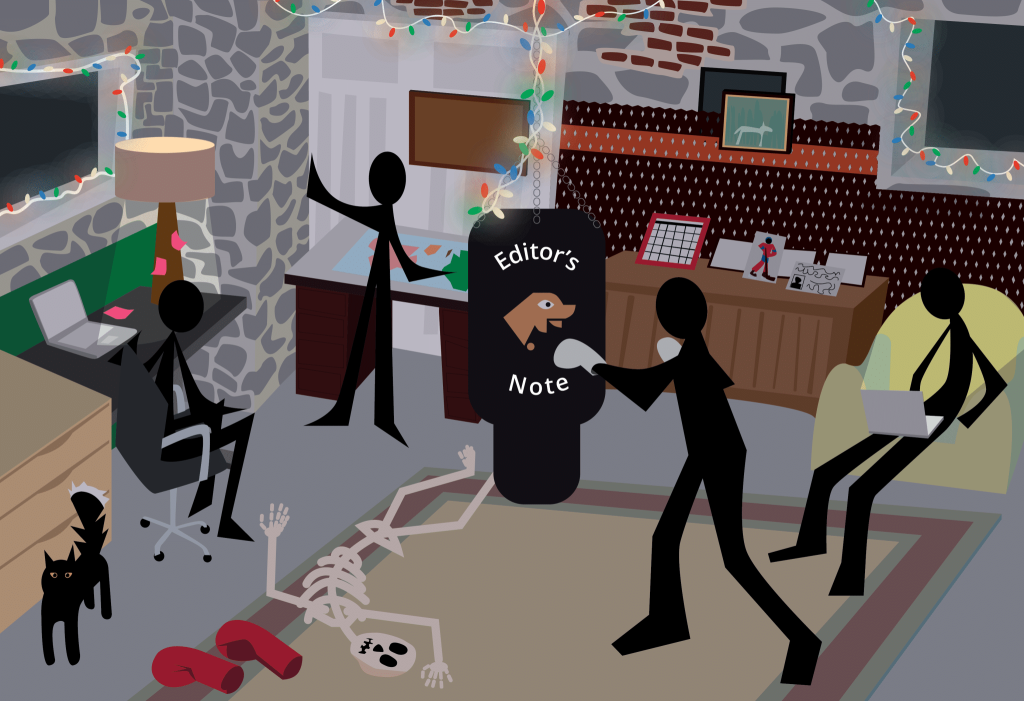
When you seek to challenge the status quo, people will come out of the woodwork to try to delegitimize you.
The kind of journalism we do is different from what you’ll see in traditional news media spaces, because we align ourselves with those who don’t have power rather than those who do. We aim to lay bare the inequities that keep the bottom at the bottom and the top at the top, to document the war on the poor through the neoliberalisation of our public institutions, and to always champion the interests of the community, not profit.
We always respect the right to comment of those who are the subjects of our reporting, and if they don’t comment, we try to incorporate their arguments in another way. We verify our information and attribute it when we can’t. In short, we do real journalism, just with an openly progressive perspective.
Support your local indie journalists
That means that we are sometimes accused of doing “activist journalism.” But you’ll never hear someone accuse a journalist in a mainstream outlet of being an activist for the business class. For some reason, that criticism only ever applies when it’s the other way around. Ask yourself why for just a second. Who benefits from discrediting journalism done for working people and the oppressed?
Because that is the contribution of journalism that presents itself as neutral and objective: it advocates for the status quo, which is inherently a political stance. The “view from nowhere” is a situated perspective, situated in the interests of the dominant group. After all, they set the agenda.
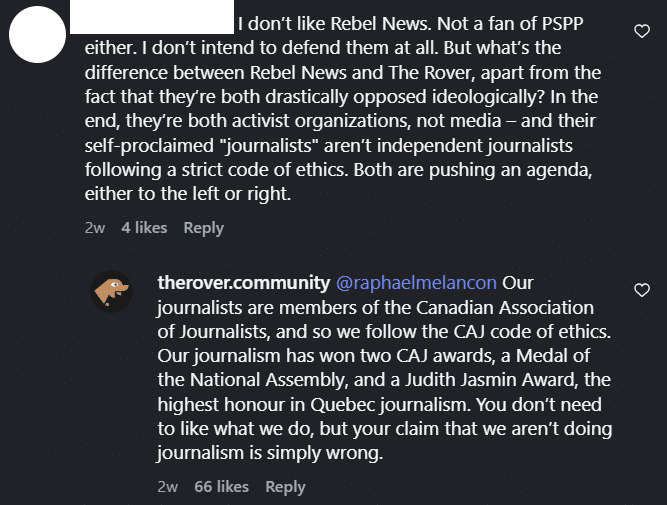
Sometimes we’re accused of not even doing journalism at all, usually because of that perception that we’re “too biased.” I suspect those same people aren’t aware that the supposed primacy of objectivity in Western conceptions of journalism is a direct result of marketability concerns — that’s right, capitalism! — and that, in many other places in the world, a commitment to the appearance of objectivity is not expected of journalists.
I phrase it that way, the “appearance of” objectivity, because that’s what we’re taught in journalism programs and textbooks: put all your biases aside and pretend that they don’t exist. Pretend you don’t own all the things you’ve acquired from your lifetime navigating this world in the body you’ve been given. As if I would know how to pretend not to be a woman, not to be white, not to be born in a free society, the same one I’m still a part of, not to be from privilege.
To counter the accusations that we’re activists, that what we do isn’t journalism, we need to be able to point to something concrete. That’s why we’re members of the Canadian Association of Journalists (CAJ), and every year we submit our best work for consideration for the annual CAJ awards — among other awards offered in our industry. We’d love to say that we don’t care about awards, but we’d be lying. The truth is, we desperately hope each year that at least one of our submissions will be nominated, because it gives us proof that we are legitimate, that we do good work.
Our wishes came true yet again this year: my colleague Justin Khan and I were nominated in the Best Community Broadcast category for our work of documentary journalism, Palestine on Campus.
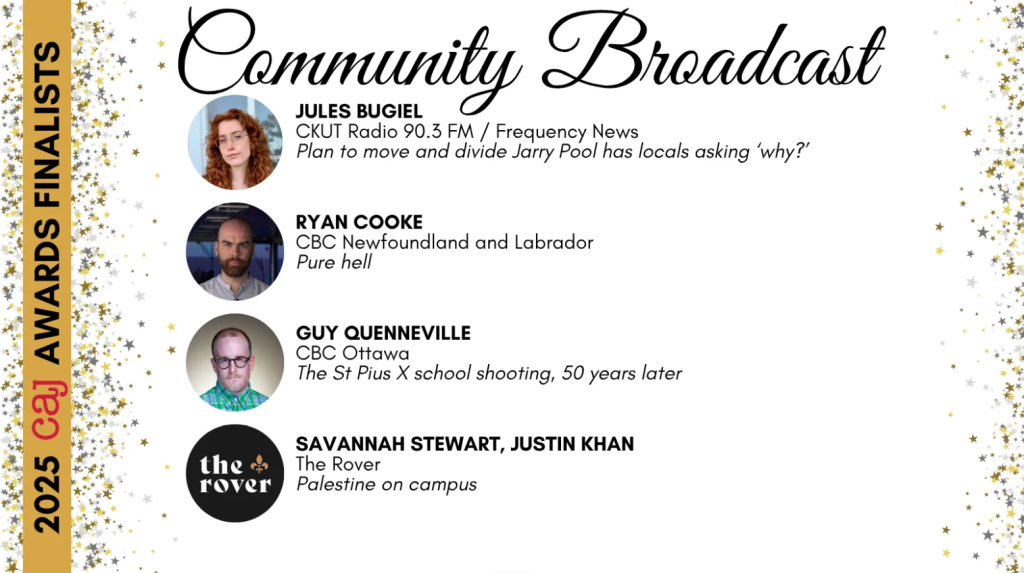
It’s my first-ever nomination, so that in itself is a huge milestone for me, one of the biggest highlights of my career thus far. (The other biggest highlight is becoming the co-owner of this thing we call The Rover).
Knowing that a jury of journalists, many of whom with a lot more professional experience than me, watched the doc and agreed that it’s an award-worthy piece of journalism, is profoundly validating. We’ll be attending the awards ceremony in June, and though it will be a dream come true to bring the award home, we’re really just happy to be nominated alongside our public broadcaster and our friend at CKUT Radio, Jules Bugiel. Local, community-aligned journalism rarely gets the celebration it deserves, so it’s amazing to have two Montreal-based indie submissions nominated in the same category.
A week after learning the good news about the CAJ nomination, it was announced that Palestine on Campus was also nominated for a Digital Publishing Award (DPA) for Best Online Video: Mini-Documentary — nominated alongside heavy-hitters like none other than Rad’s Julia Pagé! Another career highlight.
Friends and colleagues Gabrielle Brassard-Lecours and Isaac Peltz also snagged a DPA nomination for their podcast on the housing crisis, Building the Crisis, which we co-produced with Pivot. Chris also has another nomination under his belt, at the National Magazine Awards, for the deep-dive into Quebec’s justice system co-written with Hal Newman and co-produced with L’actualité, with funding from the Association des journalistes indépendants du Québec.
Naturally, we are over the moon. Not because of the awards per se, but because of what they represent: validation that we do quality journalism, haters be damned.
Because when people do seek to delegitimize us, like in the example I shared in the screenshot above, it sometimes has the effect of making us doubt ourselves and our work. For Chris and me, and for the freelancers we work with, this isn’t just a job we tune out from at the end of the day. Our identities, our sense of ourselves, are inextricably tied to the work we do, the public service we seek to fulfill. We know we do things differently, but we put a lot of care and thought into the why of it. I’m still learning how to deal with the discouragement when that is brushed off and discredited by others.
A code of ethics
As members of the CAJ, we are bound to the CAJ Ethics Guidelines. That means we commit to upholding foundational journalistic principles: accuracy, fairness, transparency, accountability, independence and diversity (notice that objectivity/neutrality is not among the principles discussed in the CAJ guidelines).
Having a code of ethics to point to also proves our legitimacy. Many journalism outlets have developed their own, which serve as complements or add-ons to those put forth by industry bodies like the CAJ or the Fédération professionnelle des journalistes du Québec. Up until now, we haven’t taken the time to do that. But The Rover continues to grow, we’re soon launching our YouTube show, which is bringing more team members into the fold, and we’re doubling down on chasing advertising revenue this year. It’s been on our minds. Emelia Fournier, who is co-hosting our upcoming show, suggested some material that could go into a Rover code, which is now in the works.
Ultimately, the goal of this exercise is the same as with the awards: to have something concrete with which to counter accusations lobbed at us, and to prove our commitment to doing quality work. Because the fight to assert our legitimacy is a never-ending one in indie journalism spaces, and so we have to use every tool at our disposal.
Did you like this column? Share it with a friend!
Author
Comments (6)
Leave a comment
Related Articles
How Gazans Are Watching the World Cup
Amid power outages, fear of bombings, and the loss of the places where they once watched the games, soccer remains a rare moment of respite in a life upended by war.
The Sea in Gaza: Memory, Survival, and the Last Refuge
Has the war changed the meaning of the sea?
Editor’s Note: The Rover Does TV News, Our Way
The Week Is Rover will bring our independent journalism to YouTube, where we’ll fight the information wars on a new front.
Best reporter out there is Alexandra The Voice from Rebel News shes the only one that covered the pro hamas protests in mtl for over 30 months. Thank god we have Rebel News that dare to show us what the mainstream media refuses to cover.
“[…] because we align ourselves with those who don’t have power* rather than those who do […] and to always champion the interests of the community*, not profit.”
*Except Jews, of course
Hi Gleb,
I’m the producer and editor for Palestine on Campus. Don’t let my last name confuse you. My mother is Jewish and my grandmother survived the Holocaust. I’m very proud of the doc we made. And I’m more than happy to be working with Savannah and the rest of the team at The Rover.
If you think reporting on institutions that utilize lawfare is not acting in the interests of Jews, I’m not sure what to tell you.
Jews are not a monolith and no one opinion will represent all of our thoughts and opinions. As I’m sure you’ve seen at family dinners. Thank you.
As producer and editor why did you chose to platform zero of the opposing voices?
Having a Jewish mother is irrelevant and doesn’t qualify you in any way as an authority on Judaism or the Jewish community.
There are plenty of Muslims who support Israël. Muslims are not a monolith and no one opinion will represent all of their thoughts and opinions. But you wouldn’t know because you don’t engage with people who don’t think like you. Thank you.
Hi Khaled (Gleb),
Ultimately, the point I’m trying to make is that Gleb doesn’t speak for Jews, nor do I. As an aside, I do find it telling that you can’t say I’m Jewish. I’m just someone with a Jewish mother. I see what you’re doing Gleb. Well done.
Funnily enough, my Dad’s side is Muslim. So I’m quite familiar with Muslims who don’t share the same opinion too.
McGill’s responses to our questions are in the documentary.
Hi again Justin,
progress is being made! Gleb might very well speak for “the Jewish Community”, there is such a thing in almost every city in the free world. It’s fair to qualify the Jewish community as having diverse opinions on most matters but you know very well it’s a gross mischaracterization to present the fringest and most marginal voices such as IJV as part of the Jewish community.
You do not represent the Jewish community if you are actively organizing against what is consensus within it.
The Jewish communities around the world build hospitals to care for everyone regardless of religion or ethnicity in every city they live in. The community is responsible for uncountable wonderful contributions to all societies which fabric they have been a part of for decades even when they have been mistreated in the past. McGill is a perfect example, how many millions have been donated over the years even though McGill has a history of documented antisemitism?
These are the voices who represent the Jewish community. You didn’t take the time to interview the students from the Jewish community, their parents, the associations they are part of. McGill suffered prejudice by months of illegal encampments putting the safety of all at risk but the direct victims are the students from the Jewish community.
Which brings us to the children of Gaza which is the supposed reason for the months of illegal activities on the McGill campus. Every single child would be alive today if the adults who were responsible for them hadn’t chosen to self-destruct on October 7th. There’s no amount of content you can shoot that will ever change that.
Be good Justin.