
How Montrealer Ben Clarkson Created “the Perfect Satire” of 2024
Justice Warriors tells the tale of poop monsters and political assassination attempts but it’s really a story of the crazy times we’re living in.
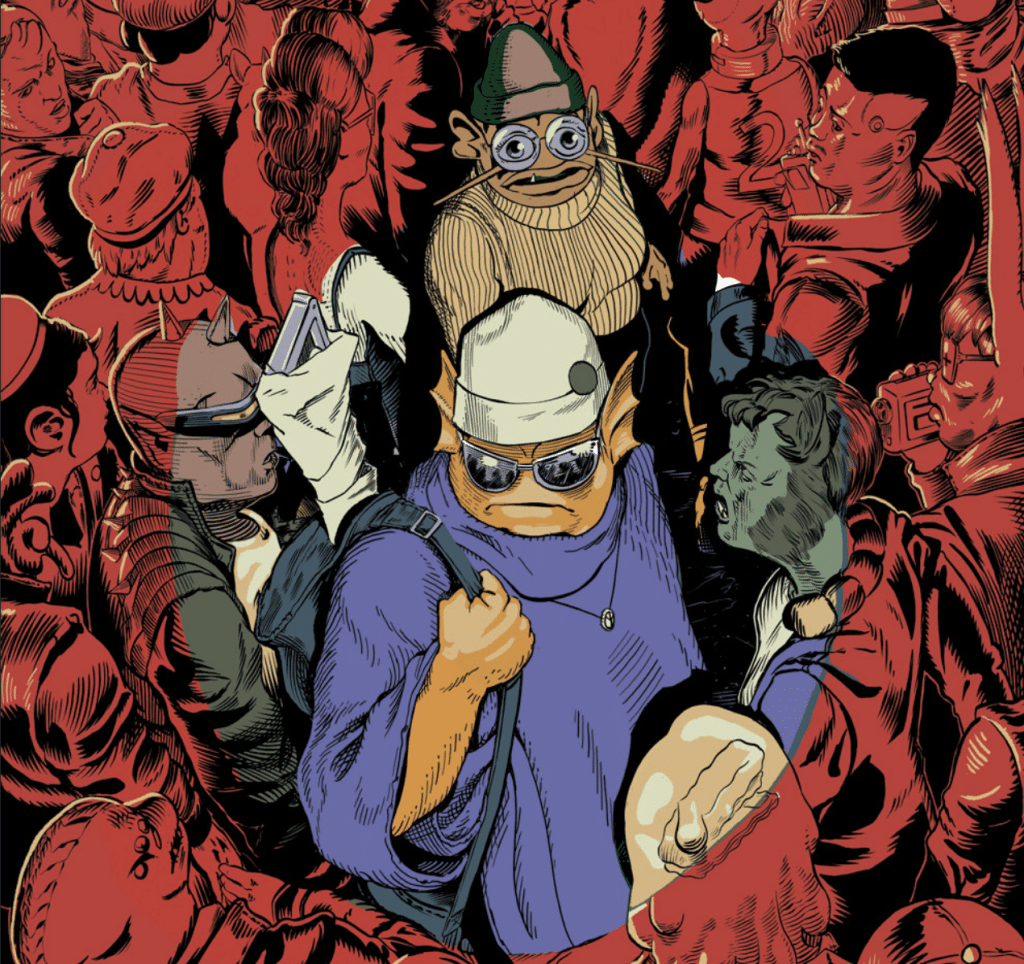
Officer Swamp goes undercover. ART: Ben Clarkson
Editor’s note: Hey there! Would you like to win an autographed copy of Justice Warriors? Come to The Rover’s fundraiser party on Saturday Sept. 28 and buy a raffle ticket (or 100 raffle tickets, who am I to stop you?). We’ll be giving away over 15 prizes, including tickets to see Bruce Springsteen in Montreal, tickets to see the Montreal Canadiens, tickets to see IWS wrestling, six movie passes and prints by some of the city’s coolest artists. All proceeds go to The Rover’s freelancer fund, which we use to pay emerging journalists a fair wage. We’re also celebrating four years of The Rover not erupting into flames! So come on down and party with us!!!
Justice Warriors is about a future where the elite live under a giant protective bubble in a city policed by literal swamp creatures.
The protagonists Officer Swamp and Officer Schitt (he’s literally made of poo) try to instill order during an election campaign in Bubble City, where democracy is a distant memory. The rich are so bored of being wealthy that they use lasers to carve their own faces in the sun. The poor, meanwhile, have become mutants living in a shantytown outside the bubble.
Officers Schitt and Swamp take us through both these worlds, thwarting assassination attempts, spying on political activists and navigating the world of online dating (still bleak) in the process.
Like most good science fiction, Justice Warriors is a reflection of the times we live in.
Co-authored by Montrealer Ben Clarkson and the American cartoonist Matt Bors, Justice Warriors depicts a world of growing income inequality, nonstop war, political polarization and a culture that thrives on overconsumption. It’s also really funny.
Plus there’s a Montreal connection!
The Rover sat down with Clarkson and Bors to discuss Justice Warriors Vol. 2: Vote Harder. The comic, which IGN called “Perfect superhero satire for 2024”, is the sequel to Clarkson’s massively successful debut (Justice Warriors Vol. 1).
***
The Rover: Comic books are so ubiquitous these days that they’ve gone from being the counterculture to the culture. Marvel movies, DC movies, superheroes on cereal boxes, very sanitized, pretty vanilla. But Justice Warriors feels like the old days, when comic books were something you had to find in the back of a dusty old shop at the mall in the 1990s.
Ben Clarkson: We wanted to make something that was anarchic but also something that doesn’t look like anything else that’s out there. There’s too much good taste in the world. No one knows how to deal with the possibilities of human creativity. We’ve really stamped down on it. We’ve become more and more like machines, just sort of regurgitating what we’ve seen before.
One of the things I love about this medium is, you can have a main character that is made of poop, you can have a joke in every panel, it can be wild, it can be a fever dream but still tell a cohesive story. You can make the funniest piece of political satire out there but also make it psychedelic and surreal and about the freedom of human imagination but then also about the boot that’s stomping the face of everyone around you.
TR: In the opening 49 pages there are two assassination attempts of political figures. One of the first scenes is cops and a tank (driven by a mutant cat) evicting people from their home for an unpaid tax bill. This is dark material and yet I find it so funny and compelling. What was it that pushed you towards this idea?
BC: Living in Winnipeg was the genesis of Justice Warriors. There’s areas of the city that are abandoned, burnt out, there’s people living on the streets. The Indigenous population is treated so poorly by everyone and the poverty on the streets, the violence is spilling out into mall parking lots. It’s a tough place to understand, I found myself wondering, ‘Who am I in this place? What’s my role here?’
The plot to Justice Warriors started off as the people got sick of Winnipeg and they put it in a dome on the moon. It was just a day to day journal of me going around Winnipeg on the moon. It morphed over time, people turned into mutants, the city changed but it was my direct experiences with some of the more stark elements of inequality and social failure, policy failure in Winnipeg.
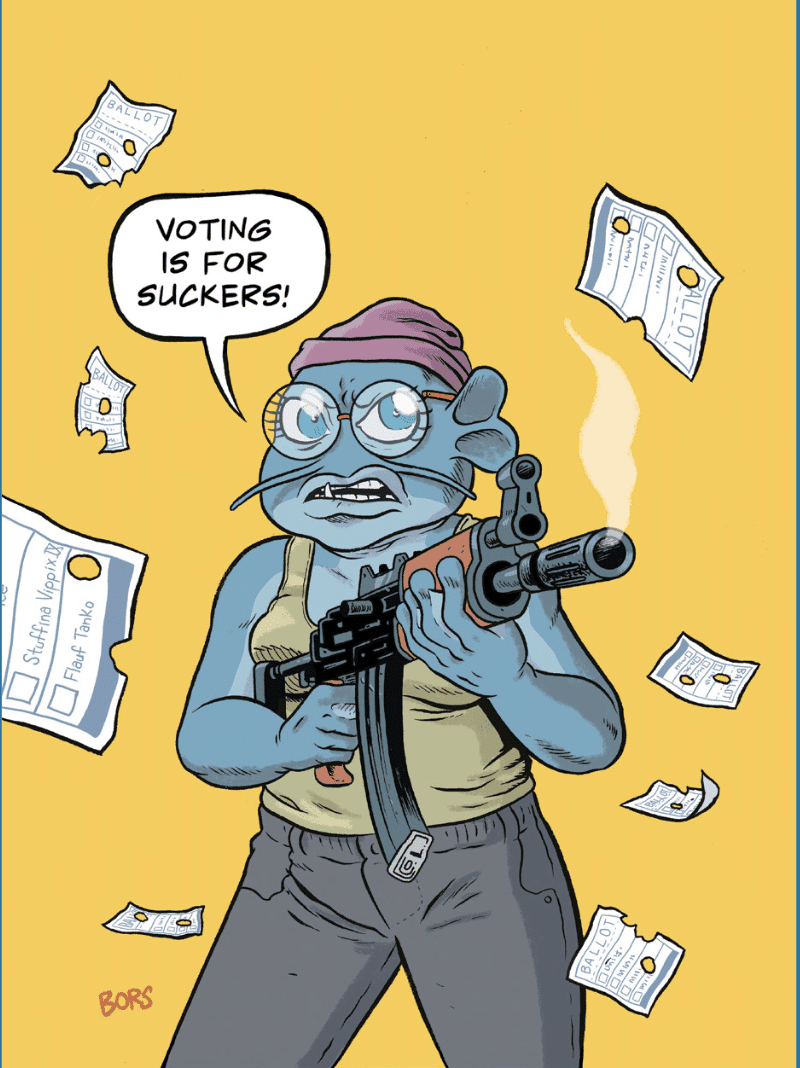
TR: Across Canada, homeless encampments are a part of daily life in every major city. The homeless population in Quebec has doubled in the past 10 years and there’s almost no reporting on that. I write about this all the time but sometimes I find it so hard to get through to people. So when you see it in a comic book, it’s a relief that no you’re not crazy, other people see this and they’re even making art about it.
BC: We have a motorcycle chase through a tent city, which is one of my favourite parts of the whole book, to show what’s happening around us.
Matt Bors: And there’s little jokes in there, like this character throws the voter registration forms down and a mutant picks it up and the form says “What’s your permanent address?” And it’s like, “Oh well I guess I won’t be registering to vote.” How much of the population (outside the bubble) is homeless? We never say but it’s a fairly large number. It’s a dark joke but it’s reality.
TR: It can feel like a lot to untangle. There’s a literal bubble protecting the rich from the poor, a TV character on someone’s phone trying to convince them to assassinate a candidate for mayor, the police murdering people with impunity. It feels like this would all be way too heavy if it was dealt with in a serious way.
MB: Well we try to merge lowbrow and high brow and one of the things Ben and I have talked about, creating fiction, is to try to give a language or a metaphor for something that feels impossible to describe. Bubble City is a lot of things. It’s about income inequality, obviously, but also these policies of diversity, equality and living in a crime free city are all good but they’re only good if everyone can access them.
But it’s also about weird versus straight society, the repression of people and thoughts that are different, it’s about the first world exploiting the rest of the world. If you imagine all the people in Bubble City, all of the stuff they consume, all the wealth they have, it comes from somewhere. They’re not going and working in factories every day. Much like our world, food is shipped here from across the planet, the goods we buy come from overseas, it’s an evil system but individually you have zero control over it. It’s impossible not to participate.
BC: Living in the economy is a schizophrenic experience. I draw all day and someone gives me an apple? What’s the relationship between these things?
TR: Just trust the system.
BC: Trust the system.
TR: Is there any Montreal in Justice Warriors? Because it’s a very Montreal thing to want to make everything about Montreal.
BC: Montreal is nice, I really like Montreal, there’s a lot of good things going on in Montreal, so it’s hard to compare it to (Bubble City). There is my view from Verdun, where you get to see the downtown skyline while walking down Bannantyne Ave. That, for me, is like a psychedelic reminder that I’m doing what I’m supposed to be because it looks like the bubble.
But also, I’ve been told horror stories. I have a friend who works with the homeless. He just tells me stories and he’s obviously very depressed about the situation. That’s where a big part of the tent encampment motorcycle chase came from. It was listening to him tell me about cops clearing the encampments. In a lot of Montreal, I’m protected but it’s good to remember that there are tent cities and there is this extreme poverty that so many of us choose not to see.
TR: How much of the bubble is something we create for ourselves and how much of it is something we accept just because it’s there?
BC: The bubble is inside of us. We carry it around in our minds and we make it with our hearts every day.
TR: That’s good, “Turns out the bubble was inside of us the whole time!”
BC: Well, in the book we have a character say ‘I wanted what the bubble wanted.’ We try to write the bubble as having will, as though it has its own agenda. But it’s hard to figure out where that agenda comes from. People are acting out what the bubble needs. We try to give these motivations to people but it’s the bubble working through them.
MB: A lot of storytelling, in comic books but also action movies and almost every big story, it’s a hero’s tale. Individuals overcome things, make choices and win. We wanted to show that systems often dictate outcomes more than heroic choices to defy them. In the book, we have characters do things and they have agency, Schitt and Swamp save the city in Volume 1. But of course, by saving it they preserve the system that’s oppressing everyone. So, you know, we’re trying to subvert those cop movie action tropes.
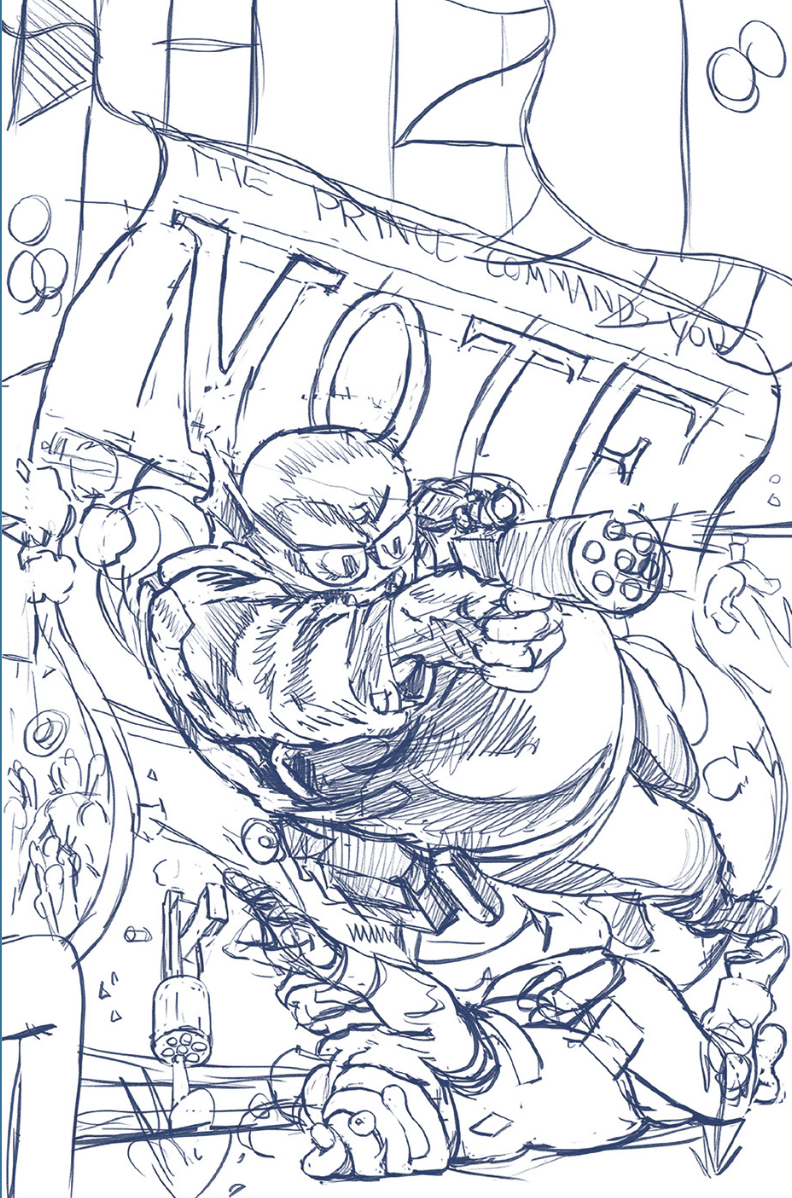
TR: But those tropes, they’re fun, they work. I grew up watching the Lethal Weapon movies, Die Hard, the Last Boy Scout, these are fun thrilling movies. You rarely look back and think, “Wait, that’s kind of a fucked up movie when you think about it.”
MB: Action movies, they’re about heroes. Sarah Connor, in Terminator, is a badass. Neo, in The Matrix, he’s The One. Lethal Weapon, Die Hard all these movies present you with a hyper competent badass in a crazy situation where they whip everyone’s ass. What we did was, what if the dumbest cops in the city, what if that guy you went to high school with who became a cop, what if he was placed in an extreme situation? It’d be a lot funnier, it’d be a lot more chaotic like what you see with Swamp and Schitt.
TR: It’s very Rosencrantz and Guildenstern are Dead. Don’t tell the story through these big heroic characters but instead it’s like “What if Gary from high school saved the city?” They’re idiots but they’re also kind of loveable idiots.
MB: We want you to like them, it’s the system they uphold that sucks.
BC: I like it because Justice Warriors is a new take on cop fiction. When you take away the humour, when you take away the wackiness, any kind of action cop movie is going to look demonic. Cop shows are like fascist fairy tales. All the victims are rich, the cops use as much force as they want, no one gets hurt unless they really deserve it, the cops don’t make mistakes. When we take all those tropes and crank them up to 11, it really makes the straight cop shows seem twisted.
TR: So much of what’s in the comic book speaks to this political moment. Rather than engage with policy, politicians write diss tracks about each other, the Prince character has a sort of online troll army, and neither of the mainstream candidates have any stake in reforming the political system. Is there anything from contemporary politics that’s been too far fetched to include in Justice Warriors?
BC: I don’t know if there’s something that cannot be contained by Justice Warriors. I was reading something about Tucker Carlson doing a video with these nicotine packets in his cheek. He started making these wild claims about their pharmaceutical qualities, he was claiming they were like these male enhancement pouches.
But then Phillip Morris, the tobacco company, came to him and said “We’d love for you to be a spokesperson for our nicotine patches just stop making the wild claims.” And he was like “This is woke nonsense, I’m starting my own nicotine company because I won’t be censored.” I feel like a political commentator selling a tobacco product but then starting his own because he wants to make claims about erectile dysfunction without liability insurance. That’s a bit far-fetched.
MB: I dunno. This is very Justice Warriors. The bubble is making that choice for him. When I hear that story, I think “Tucker Carlson is merely reacting to incentives about how to have the kind of career he has outside cable news.” It’s the same logic that caused Alex Jones to sell all those supplements. But then, when Phillip Morris says “Hey, can you stop making those claims?” that creates an opportunity for Tucker. Now we can use this free publicity, launch a kickstarter for my nicotine patches for the unwoke, free from mind control, free from woke Phillip Morris and for the listeners of my show.
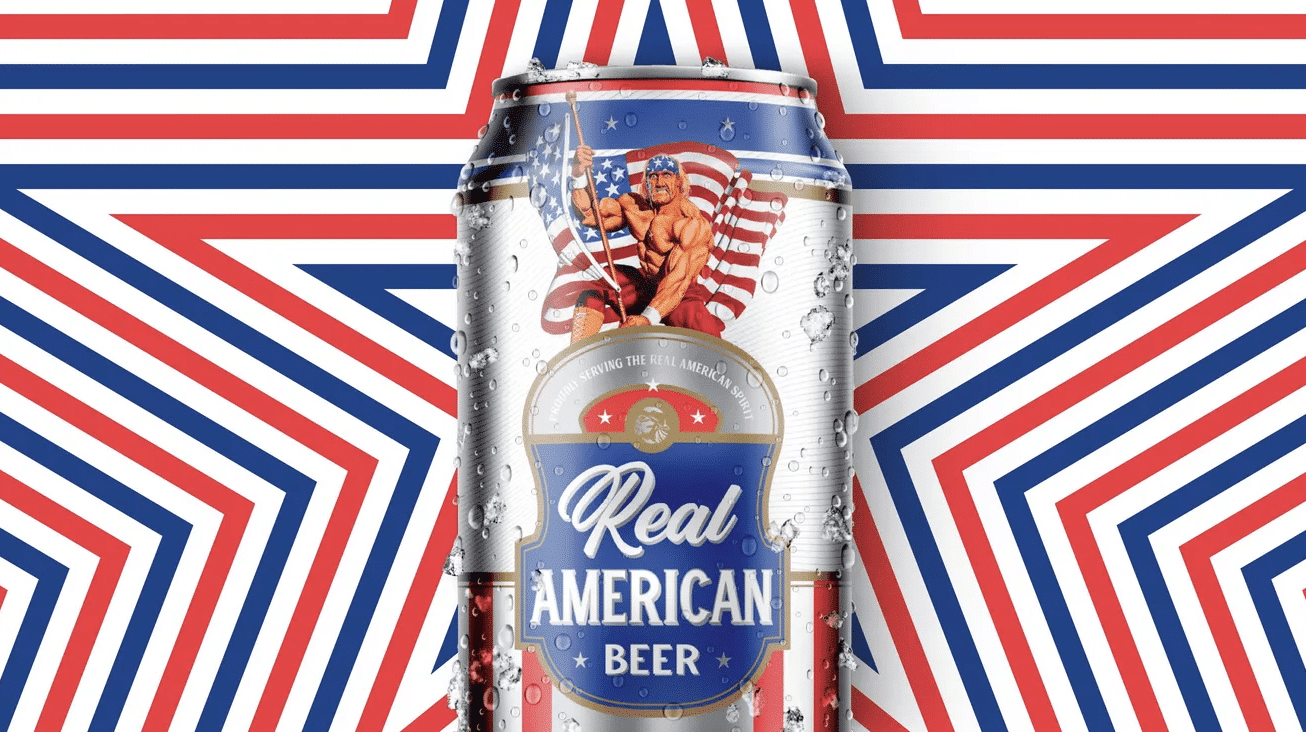
TR: Sort of like Hulk Hogan’s non woke beer. I think Hulk Hogan would fit nicely in the bubble.
BC: When we read the news, Matt and I, we’ve either predicted that would happen or thought “Wow, that’s great material.”
MB: Well that’s what the Prince does. He has his face carved into the sun because you’ve gotta do something big for the comeback album. You gotta think big. They’ll want to look at the sun once they hear there’s a face on it, then you can sell them the glasses to see it. It’s the perfect scheme.
TR: I was reading this article about how we’re not truly in a capitalist system anymore. That we live in a sort of tech feudalism where, at the bottom, we serfs just till the soil by feeding our data into the algorithm and, at the very top, they produce very little but get to control our entire reality.
BC: There’s a lot of that in Justice Warriors. The days of like, you go to work, you get wages, you buy goods that other people make, those days are gone. Our future looks like betting on digital collectibles securitized against bread that’s gonna go bad in a day so you have to sell it as soon as possible. Bread NFTs!
MB: The economy is so abstract. It’s based on bets on bets on bets. We tried really hard to capture that insanity but it’s all based on real stuff. Borrowed money from borrowed money, propping up the economy, making capital flow, tech companies cannibalizing labour costs or mining data or just inventing something that’s nothing. What the hell are NFTs anyway? What is artificial intelligence? It’s extremely overhyped.
BC: AI makes good collages.
MB: There’s not much utility of these inventions to make anything other than bullshit to post online.
BC: And they’re degrading our actual world. Elon Musk’s server farms are using like 20 per cent of the electricity in Mississippi. So there’s a noticeable drop in the quality of life for the people of Mississippi for something that will probably never end up paying off. It’s Justice Warriors bubble logic.
MB: If an alien came here and looked at our economic system, they’d just see a bunch of money moving around until it gets funneled up to Elon Musk. Meanwhile, the costs are pushed onto poor people. And nothing of value will be created.
BC: And then you have to make sure the people don’t take their destiny into their own hands. You need a poop cop and a swamp creature maintaining order at the end of a gun barrel.
TR: What’s the most Justice Warriors thing you’ve seen so far, in the American elections?
BC: The assassination attempts. Especially the second one, that’s literally a plotline in our book. It’s someone radicalized by their media into believing they had to commit an act of political terrorism to save the world. That’s the experience of the main character of Justice Warriors.
MB: The people who commit this violence, they’re not politically coherent. The latest guy, you can look at his politics, people on the left say he’s a Republican, conservatives calling him a big lib because he’s pro Ukraine. The reality is, if you look at his politics they make very little sense and don’t fit nicely into one ideology. Most people, if you sat down with them and really got into it, they have ideas that don’t always fit together.
TR: The Obama to Trump voter, the Trump to Biden voter, the Biden to Trump voter?
MB: People don’t want their lives to get worse but their lives are getting worse. But they don’t know how to articulate it. And so if there isn’t a place to put all this energy and anger, if they can’t find one, they’ll invent it. Like grabbing a high powered rifle and waiting in the woods at a golf course for 12 hours.
TR: When I watched the Harris Trump debate, I couldn’t help but notice that yeah, Trump embarrassed himself out there and it was fun to watch him squirm. But also the Democrats aren’t exactly pitching voters a bold new vision for America.
BC: The Dick Cheney endorsement (of Kamala Harris)?
TR: The Democrats are going to continue arming Israel no matter how many innocents they kill, at a time where poverty is decimating communities across the U.S., they’re not exactly pushing for radical change.
MB: We live in politically incoherent times. A lot of the issues aren’t on the table because we didn’t have a primary and it’s somewhat understandably about Trump not getting in office but is that the best we can do? There’s no conversation about medicare for all, student debt abolition and a host of other things.
TR: Not contributing to daily war crimes?
MB: Peace is not on the ballot.
Author

Related Articles

Fill Out Our Audience Survey!
Help us build The Rover.

‘Everybody Who’s on the Stage Is Part of Your Community’: Ctrl+Alt Festival Returns for a Third Edition
Free festival stacked with queer, local performers to take over the Place du Village July 24-26.

Des travailleur·euses du sexe de Montréal feront la grève pendant le week-end de la F1
Cette dernière initiative de « whoreganization » s’inscrit dans le cadre de la lutte des travailleur·euses du sexe pour leurs droits du travail et la décriminalisation.
Comments (0)
There are no comments on this article.