
‘Society Is Built to Keep Us in the Gutter’: Sex Workers in Montreal to Strike During F1 Weekend
This latest “whoreganization” effort is part of sex workers’ fight for labour rights and decriminalization.
Lisez cet article en français.
Emelia Fournier of The Rover interviewed eight sex workers in Montreal over the past 10 months to get a sense of their working conditions. Their names have been changed due to the criminalization of sex work.
Content warning: This article contains descriptions of sexual assault, transphobia, misogyny and institutional violence. This article discusses consensual sex work, not sex trafficking victims.
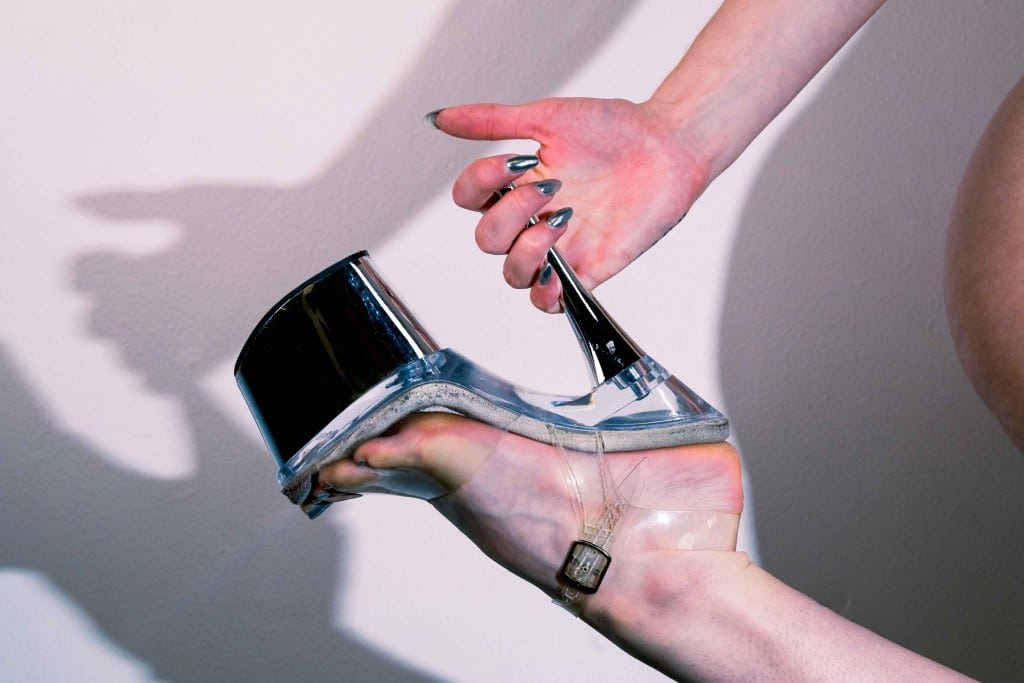
Photos accompanying this article have been edited to remove identifying features, such as beauty marks and tattoos.
If you are a sex worker seeking support in Montreal, call Stella at 514-285-8889 or email them at liaison@chezstella.org. For sex workers living outside Montreal, here is a list of sex worker support services from the Centre for Addiction and Mental Health.
Sexual violence helpline: 1-888-933-9007
If you or someone you know is in need of support or you want to report a potential case of human trafficking, call the Canadian Human Trafficking Hotline: 1-833-900-1010.
Sex workers strike back
A collective of Montreal sex workers is calling on strippers and erotic masseuses to go on strike during the Grand Prix weekend.
While the F1 weekend is a lucrative time for club management, sex workers say that it’s synonymous with rowdy, cheap clients, steep bar fees and higher rates of assault.
On Saturday, May 23, the throngs of tourists who flock to Montreal for more than just fast cars might not get their fix of scantily clad dancers, lap dances or happy endings. On that day, Montreal’s Sex Work Autonomous Committee (SWAC) is inviting sex workers and allies to participate in activities and a protest — and encourage sex workers to deprive the city of their services.
Their demands? Abolishing the bar fee in strip clubs. Gaining worker status with Quebec’s labour board, the CNESST, to get protections like sick leave, disability, Employment Insurance, and a way to report unjust or unsafe labour practices. Fully decriminalizing sex work. And eventually, even a wage.
Support your local indie journalists
Kit and Aileen, two strippers who have been organizing with Montreal’s SWAC for the past year, say these demands won’t be fulfilled overnight. But a strike can get momentum going.
“(Some sex workers) get freaked out, because, obviously, we stand in a grey zone as sex workers, especially massage parlour workers or full-service sex workers,” said Kit. “(But) migrant sex worker groups are essentially arguing that the answer is not to not organize. It’s to organize against these issues and not just take it anymore, essentially.”
As part of SWAC’s latest “whoreganization” efforts, Aileen and Kit are helping individual workplaces form autonomous unions. They understand not all sex workers will be able to refuse to work, but hope that workers present their demands to management by May 23, and refuse to pay a bar fee after that date.
“Because people hear ‘CNESST’ and ‘worker status’ and a wage, and they immediately think that we are for legalization. But to clarify, we want decriminalization, not legalization,” said Aileen.
SWAC conducted its own inquiry into the working conditions of sex workers, reporting high rates of workplace violence, unsanitary working conditions, expectations of unpaid labour, and bosses dismissing or even mocking their concerns. But despite these hurdles, many sex workers stay in the industry by choice, citing high pay, freedom and a genuine enjoyment of their work.
What’s it like being a sex worker in Montreal?
Kit and Aileen
Kit and Aileen strip at clubs in Montreal’s historic Red-Light district, now called Quartier des Spectacles, centred around the intersection of Saint-Laurent Boulevard and Sainte-Catherine Street. They’ve both been doing sex work full-time for a few years.
Aileen and Kit say many of the Red-Light district’s clubs feature stain-covered cushions, uneven floors that girls trip over in their sky-high Pleasers, seasonal fruit fly infestations and overflowing garbage cans.
Aileen said strip clubs are “gnarly, they’re disgusting. This is just something we’re used to, but it shouldn’t be something we’re used to. We have unsafe infrastructure, a lot of our poles are unsafe. There’s minimal cleaning. Sometimes we don’t have soap in the bathrooms or toilet paper in the stalls, and when we do it’s, like, exciting.”
“You ask for a cloth to clean the pole before you go up to your stage, and they’re acting like you’re asking for the fucking world of them,” said Kit.

While strippers are seen as independent contractors, Aileen said they fall into the employer/employee dynamic, subject to the whims of their managers. Management can dictate how much dancers pay their employers to work in the form of a “bar fee” (which can range from anywhere from $25 to $100+ per night), require them to wear staggeringly high Pleasers heels, decide which parts of their body they need to expose, can charge them late fees or no-show fees if they change or cancel a shift booked months in advance, and more. And as everyone hurts economically, they say walking out of the club in the negatives is becoming a more regular occurrence.
But rather than leave the industry, Aileen and Kit want to fight for better working conditions for all sex workers — many of whom are neurodiverse or disabled, or left with limited options due to their migrant status.
“I’ve got pretty intense ADHD. I’ve got a lot of anxiety,” said Aileen. “This type of work allows me to set my own hours, work to my own capacity, and also still make a living wage for the most part.”
“I’m not in sex work because it’s ‘the best option,'” said Kit.
“I think it’s just a matter of getting into these other options. We all know that good jobs are highly competitive, and I have a degree, and even with that, any entry-level job doesn’t pay me as much as this job does.”
Mystique
Mystique is a neurodivergent queer person who has been stripping for seven years and has also worked as an erotic masseuse. They had a hard time holding down a conventional job.
“Every time I’ve worked full-time, it’s been completely unmanageable for me,” said Mystique. “It’s not a life that’s worth living.”
They also say there is a huge emotional component to sex work.
“As a sex worker, I absolutely feel like I’m mothering people, and (clients) often try to suck on my boobs,” Mysique said, laughing.
Men “really turn into babies (at the club). I think it’s because they don’t allow themselves to connect to anyone who’s not a woman they’re attracted to.”
Despite having to perform femininity at work, they don’t have to “mask” nearly as much at strip clubs compared with low-paying service industry jobs.
“(Stripping) is more fun,” said Mystique. “I talk about religion and politics at work… It’s a job where you can get away with basically anything. You can be a total bitch to a customer and it’s fine. There’s a lot more personal, small freedoms in it.”
While Mystique does sometimes bend their personality to pander to clients, they say the direct financial benefit makes up for the performance.
But despite this freedom, Mystique says that there is always the looming threat of being fired by management. They’ve seen people get fired for gaining weight, for seemingly no reason, for the door manager not liking someone’s “vibe.”
“That’s always kind of a big fear, because the situation is a bit precarious,” said Mystique.
Mel
Mel considers herself a “veteran” sex worker, having done stripping and escorting for over a decade. With a bubbly, unrelenting smile, it’s not surprising that she laughs a lot with her clients.
“When you’re laughing with them, they’re going to laugh with you,” said Mel.
“It’s a contagious thing… and it keeps that connection. I’m not really laughing genuinely at everything they’re saying. Just pulling out my most giggly, fun, cutesy self.”
Mel never took dance lessons, but said, “I do feel like I’ve always just had the showgirl inside me.”
While she’s worked other jobs, Mel decided to capitalize on her natural talent and realized she could make the same amount of money working a few nights a week as she would at a full-time job.
Over the years, her boundaries have hardened, her social techniques have finessed, and she has honed her intimacy skills. She’s caught feelings for a client or two and allowed them to pay after… a big mistake.
“Something that I find really funny, though, is that it’s a consistent thing where many clients, they really want to be reassured that they’re a good guy,” said Mel.
“I had a client recently who I was dancing for, and he grabbed me so hard that I yelped like a little dog. His instant response was, ‘It wasn’t that hard.’ Then later that same night, I was telling a different client about that incident and his first response was, ‘But I’m a good guy though, right?’ Not like, ‘Are you okay?’ or ‘Oh, that’s rough.’ It’s like I cannot even tell the story of an assault without them feeling like, ‘Not all men. Not me, right?'”
On rougher nights, Mel says her fellow dancers have been able to support each other.
“I love strippers and sex workers, because they’re usually just the most caring and kind people who are really good at taking care of others,” said Mel.
“It’s something that comes very natural to them. We pour it out onto each other so much. It’s one of my favourite things about being a stripper.”
Ari
Ari started selling explicit photos and the odd escort date to supplement her income while she was in university. With her international student visa, the restricted number of hours she was allowed to work was nowhere near enough to make ends meet.
Then, after she graduated in 2019, she was stuck in something called “maintained status,” a sort of limbo while she waited for her residency application to process after her study permit expired. While Ari was technically allowed to work, employers were reluctant to risk hiring someone who did not have permanent residency. It led her to work at erotic massage parlours as her main source of income.
Ari said that while she didn’t feel “coerced” into sex work, she wouldn’t be surprised if there were less willing sex workers stuck in the same status purgatory.
“There are a lot of gaps that Immigration, Refugees and Citizenship Canada just isn’t bothered to fill,” said Ari.
“As long as those gaps exist, more people like me will frankly just pursue sex work because I’m not going to sit on my hands and starve. I’m going to find a way to survive.”
When Ari looks back on her time as a sex worker, she thinks of the mundanity of sitting around in her bra, waiting for clients, smoking cigarettes with her fellow workers. She recalls the fear of police raids, sprinting out the back door when they arrived. The criminality of the industry, the “bureaucratic barriers,” the off-nights where she ended up losing money, combined with the seemingly unavoidable unsavoury interactions with managers, were the main reasons why she stopped doing sex work.
“Sometimes, I’d have to change workplaces because a manager would get too flirty, and I’d be like, ‘I don’t want to have sex with my manager,’ and I’d have to leave,” said Ari.
“That would kind of be annoying because I had to move my whole client base, because I can’t go to the police and be like, ‘I’m being harassed by my manager.’ They’d be like, ‘What were you doing there in the first place?'”
She says that the current criminal framework only puts sex workers at risk, limiting their ability to screen clients, report managers for harassment, or rely on the police if they experience violence.
“If we keep kind of putting these barriers, it’s only sex workers who are going to be hurt by it,” said Ari. “It’s naive to try to make (sex work) more difficult because, I’m sorry, it’s not going anywhere. I think full decriminalization will help transparency because both workers and people who want to access services won’t feel immediately criminalized. I believe it will make it safer across the board.”
Cara
Cara works at a strip club in the Red-Light district. Now in her 30s, she’s had a variety of sex work experiences over the past seven years or so. During lockdown, she worked as a dominatrix and offered massages and cuddling out of her apartment.
“I’ve done a lot of bizarre things to make money to survive,” said Cara.
When the clubs opened back up again, she got back to stripping. Cara said her blunt, outgoing personality suits stripping much better than “normie work,” as she puts it.
“I just kind of have to put people in their place, and it’s a personal dignity thing,” said Cara.
“Sex work really does afford you a lot of privileges, not just financial, but you don’t really have to put up with people’s bullshit.”
It may seem an ironic statement to some. But Cara says she’s gotten the hang of picking the right clients to engage with, and says she’s able to fight her own battles.
“I’ve hit people, I’ve beat the fuck out of people because they’ve crossed (my) boundaries,” recalled Cara.
“When I think about it, that’s nuts that I’ve been able to respond (like that) and I’ve only gotten a warning. Like, you fucking fully went wild on that guy, you get a warning, not (told to) ‘Get the fuck out of this establishment right now.’ At the same time. It’s crazy that anyone would do anything that would warrant that kind of reaction.”
With only a high school diploma, Clara struggled for years, living paycheque to paycheque at service industry jobs. “It really was (hurting) my mental health, trying to fall asleep at night was difficult,” said Cara.
For Cara, stripping has changed her life financially and given her unprecedented control over her schedule. She’s been able to save money, spend time working on her art, and travel.
But tough customers, an impossible legal framework, and working conditions are starting to weigh on Cara, who is thinking of leaving sex work soon.
“The way that society is built is to keep us in this gutter… It’s backfiring. They’re enabling the worst people to come to us, and if they do something insane, they are violent if they abuse us, tough luck,” said Cara.
Lee
Lee, a trans man in his late 20s, got into sex work about six years ago because his chronic illness made it extremely difficult for him to hold down a full-time job. He said that “most of the sex workers” he knows are also disabled.
Having to continuously call in sick with an unreliable body made it extremely stressful for Lee to hold down a 9-to-5.
“Getting to control my schedule was huge and actually allowed me the recovery that I needed,” he said.
The freedom wasn’t the only thing that drew him to sex work.
“I am a very sensual and sexual being, so that also helps. I personally can’t do anything that I don’t genuinely enjoy to some degree,” said Lee.
Lee started off in porn, then moved on to stripping. When he was living in Vancouver, if he wanted to take to the pole as a trans man, he had to produce the event himself — no strip clubs hired strippers who were trans men. Then, after moving to Montreal a couple of years ago, trans strip nights started up at a couple of clubs in the gay village. And they accepted trans men dancers — but only, Lee said, after they fought tooth and nail to be allowed to perform.
While the money is certainly better than many jobs, Lee says that the get-rich-quick fantasy propagated by some OnlyFans creators isn’t realistic. And the amount of money trans strippers make pales in comparison to the earnings of cis strippers.
“Sometimes I have to leave the room if (the cis strippers) are talking about how little money they’ve made because it’s kind of devastating,” said Lee.
“If I was having a bad night and made $400 (like the cis strippers), I would not live in the negatives, because that’s what I do right now, is I live in the negatives.”
Escorting used to be a lucrative supplement to stripping, but he can’t afford the steep cost of PrEP (medication that prevents HIV) in Quebec. While PrEP is free in some provinces for high-risk or uninsured individuals, in Quebec, it costs $70-100 per month with provincial coverage — without coverage, around $300 per month. In an email response to The Rover, Quebec’s health ministry indicated that PrEP is available for free for those on social assistance, but does not plan on covering 100 per cent of the medication’s costs anytime soon, despite the province’s HIV rates increasing by 78 per cent between 2021 and 2024.
The challenges trans strippers face are different from those of their cis counterparts. For example, Lee doesn’t have to pay a bar fee at his club — but the club also doesn’t charge an entry fee, hurting strippers’ earnings.
The informality of the club also makes it tough for workers to advocate for themselves. Lee says the club managers are friendly with the dancers, but don’t seem to take their concerns as workers seriously. The club also has no security, so strippers are left to rely on each other — or whichever manager or bartender is on staff — if something goes wrong. Lines are blurred between dancers and clients, especially when some people frequent the bar as a “hangout space.”
Lee recalled a bar patron doing a body shot off a young dancer, then licking spilled alcohol off of their crotch without permission — or payment.
“That would never happen in a cis club,” said Lee. “The party culture of the gay village, unfortunately, seeps into this strip club in a way that is not good for the club.”
Despite having medically transitioned 10 years ago, Lee gets misgendered at work on a regular basis. Clients will often go in expecting all trans strippers to be trans women, and transphobia is still rampant in the gay village.
“I’ve experienced so much bullshit from the cis gay dancers when they are there. They have cornered me and just been like, ‘He/him pronouns, I don’t get it. So which hole do I stick it in?’ Just said some like heinous shit to my face,” Lee recalls.
As a slender, clean-shaven man, Lee’s seen as a “pretty boy” online, but in an in-person space, he says that if you’re not hyper-masculine as a trans man, people assume you’re a trans woman. He’s had clients tell him that testosterone “didn’t work” for him, that if his goal is to look like a man, he “didn’t succeed.” But sometimes, clients will come around. With the amount of gender education he has to do at work combined with his energy levels, Lee’s not sure he’d be able to strip more than the one night a week the club offers.
But Lee also sees bright spots of humanity and beauty at his job.
“You get all these people from different backgrounds coming in looking for connection,” said Lee. “I think this idea that sensuality or sexuality and being close to somebody makes sex work inherently dirty really devalues the fact that every human needs connection and everyone is just trying to figure it out.”
With the financial precarity, the fact that they only get one night a week, and the different priorities of strippers working at “cis” clubs, Lee doesn’t think he’ll be an active participant in the strike. While he’s supportive of the fight for sex workers’ rights, Lee emphasizes that trans strip nights are an extreme rarity with a precarious existence. Lee is grateful to finally have a club where he can perform and connect with other trans sex workers.
“I think a lot of us don’t want to push too hard because we’re so scared of losing the space,” said Lee.
As it stands, sex work is becoming less financially sustainable for Lee, so he’s looking to branch out, professionally.
“There’s so much about (stripping) that I like,” said Lee.
“I just think that without the systems in place to support us… the risk sometimes is far outweighing the reward because the economy is really bad right now. People just don’t have money. And if the money disappears, then I have no reason to be here.”
Onyx
Onyx, a trans woman, is also unsure about participating in the strike, citing financial concerns. She plans on showing up for the day of action, but wouldn’t say no to a client on the night of May 23.
Despite entering the stripping world less than a year ago, Onyx walked into the club with an aesthetic and persona she had honed over the years. Onyx finally felt comfortable in her transition to start stripping, especially at trans nights. She no longer had to wait until she could fully “pass” to try to strip at a cis club.
Stripping is something she’s considered since the beginning of her transition.
“Ever since I was younger, I knew that my body was a tool for me in some way,” said Onyx.
“I take pleasure in pushing the limits of the ways that I’m able to move, dance, the way that I can make myself look in all these positions and dress myself up in ways that I find aesthetically pleasing. I feel like if I can monetize off of it and get something off of it, it just makes sense for me to go into that field.”
At a previous office job, Onyx was constantly misgendered and deadnamed. People refused to use her name and pronouns. When she started stripping at trans night, that stopped being an issue.
“Doing sex work feels more freeing than that (job),” said Onyx. “The name that I tell you and the way that I portray myself is undeniable. I have full control and power over the way that I’m being perceived.”
She has had to navigate complex emotions of being fetishized as a trans woman for her genitalia.
“One thing that I find difficult is knowing that I’m going to be objectified because I’m walking into (the strip club), but also it’s about the one thing that I want to change about myself,” said Onyx.
Catering to male desires can also lead Onyx to perform femininity in a degrading way.
“I feel like some people would be very annoyed at hearing how, as a trans woman, I’m using femininity in that specific way, it’s in a very submissive energy,” said Onyx.
“It’s not something that I enjoy doing, but I have to because I see that it’s working. I want to say that to me, femininity is not submission and it’s not the loss of agency, but yeah, that’s (part of) my persona.”
Onyx had heard horror stories about doing sex work, but once she began stripping, a lot of those worries fell away.
“Maybe it’s not the first choice for everyone. I know that I could pursue other avenues and everything, but I don’t think I’m limiting myself to (sex work),” said Onyx.
“I think I see myself exiting this world in a couple of years. But for now, when I’m thinking about the surgeries that I want to get, where I want to take myself, for my transition and everything, I feel like sex work is the best solution for me for now.”
Decriminalization
All sex workers I spoke to said decriminalizing sex work would make them safer.
In the context of sex work, decriminalization would allow the sex work industry to have enforceable standards, like how restaurants have health and safety inspectors, without defining the standards for workers themselves.

In 2014, the Harper government decided to take the “end demand” approach to sex work. Bill C-36, the Protection of Communities and Exploited Persons Act (PCEPA), gave legal immunity to sex workers for exchanging their own sexual services for money, but made it a criminal act to purchase sexual services, advertise those services, or profit off of the revenue from someone else’s sex work. Language in the bill paints all individuals selling sexual services as victims of sexual exploitation. The Canadian Alliance for Sex Work Law Reform is appealing the court decision upholding the PCEPA, claiming that it violates workers’ Charter rights.
While businesses can obtain permits for limited forms of sex work with Quebec’s liquor and entertainment board, like stripping, pornography, and some erotic massage work, it does not negate the fact that sex work is shrouded in a veil of criminality.
To be clear: sex work is criminalized in Canada, making it impossible for sex workers to access worker protections, as Jenn Clamen explains in a 2024 Briarpatch article.
Clamen used to work with Stella Montréal, a community organization that provides clear information to sex workers in Montreal and advocates for them.
“It’s no secret that sex workers are sexually assaulted on the job without any recourse. It’s why sex workers are organizing, to prevent things like that from happening and to create some kind of system where people do have recourse,” said Clamen.
Clamen says that, combined with the criminality surrounding sex work, being categorized as “independent contractors” makes it extremely difficult to hold club management accountable.
Security in strip clubs
All sex workers told me that sexual assault is a regular occurrence on the job — even in establishments that have security staff and surveillance cameras that are ostensibly there to protect them.
Mel learned the importance of setting her boundaries the hard way. She recalls an assault from her baby stripper days. She was wearing a head-to-toe fishnet outfit with an opening at the crotch while giving a client a lap dance.
“I was bending over, and I kept feeling his hand getting closer, and I kept being like, ‘Don’t do that,’ repeatedly, until at one point he just like — ” Mel stopped speaking, grim-faced, and made the motion of sticking her thumb up abruptly.
“It’s because he knew I wouldn’t be able to feel it coming… I was so upset. I started screaming, and it freaked him out. I was crying,” said Mel. She went home early that night, resolved to be more careful with who she bent over for.
No matter how well you think you can judge someone’s character, Mel says there is always a risk.
Mel is extremely specific with what clients can and cannot do during a dance, sometimes playfully saying things like, “Don’t touch the kitty!”
“You are realistically stimulating a person in a very particular way, right, so you do also have to manage that energy and not let it go too far. But you are fanning the flame,” said Mel.
The strippers I spoke to all reported that sex workers who go to security too often, whether to report assault or for a client refusing to pay, can be seen as “difficult” or as “troublemakers.” When assaults happen, they say security and management rarely take action. It’s up to their fellow strippers to look out for each other.
“I know of girls who have been drugged before and have had to leave or go home or just stay downstairs in the change room until they kind of feel better. But nobody went to the cops over that,” said Mel.
The dancers working at cis strip clubs all said security is there to protect the club, not the girls.
“We essentially have no recourse in making sure that problematic customers don’t come back, and in most cases they do,” said Kit. “There are some clubs where, despite security being there to protect us, they refuse to collect our money if a customer refuses to pay us.”
“Even when clients do get banned, they get let back in like a week later. It’s happened before when they’re like, ‘This guy’s banned because he sexually assaulted someone.’ And then he just returned… they don’t take it very seriously,” said Mystique.

“They let anybody in,” said Cara. “Even people who we have complained about, they’ll be gone for like, I don’t know, a week, and then you’ll see them again, ‘Oh, yeah, it’s that fucking asshole,’ and like nobody touches that guy with a 10-foot pole. But they want to sell the four beers that that guy’s gonna buy, so they let him in anyway. There’s so much responsibility put on us.”
There are approximately 25 strip clubs featuring cis women dancers in the city — not that many, if you’re trying to get away from a creepy repeat customer, said Aileen.
“There have been a lot of accounts of stalking or predatory behaviour from clients towards dancers,” said Aileen. “When dancers have reported it to management, the management has legitimately said, ‘Sorry, nothing we can do about that. They’re a paying customer.’ You either move clubs or you deal with it, essentially.” Aileen
If a client is problematic, Mystique takes it into their own hands, usually by yelling at them. They don’t want to get an assault charge.
“I will start screaming at them,” said Mystique.
“Last time it happened, it’s maybe kind of an alarming word to use, but I yelled, ‘You’re a fucking rapist!’ I just kept repeating it over and over, and he got really scared, and he left. He was like, ‘I’m not a rapist!’ and I was like, ‘Yeah fucking right!'”
If it gets serious, Mystique might call security, but it doesn’t always work. “Sometimes they’re kind of flip-floppy. Sometimes they’ll do something. Sometimes they’ll be like, ‘Oh, what, he’s a nice guy.'”
Strippers will tell each other about the working conditions at different clubs and share stories warning of clients.
I visited a number of strip clubs to speak to managers and security about their working conditions. At a couple of clubs, staff said a manager would contact me (they never did). Some managers denied my request for comment.
A doorman at a club in the Red-Light district told me, “The girls are treated very well here.”
A security guard at another club told me that “No one is holding a gun to your head” to strip, and if they don’t like the working conditions, they should just leave. He also claimed that “half the city” was banned from that establishment, bans that security actively enforces.
A manager at another club downtown said that there “hadn’t been an assault in the 50 years the club had been open, only altercations.” He described an “altercation” where a stripper chased a man out of the bar and hit him in the head with her Pleaser. “Drunk, both of them,” he said. Unprovoked? I asked. “Well, they were both drunk.” He continued to say that if a client was crossing a dancer’s boundaries, he would immediately get security involved and call the police. I asked him if he enforced a dress code, especially regarding footwear. He laughed and said “The girls work for themselves, not the club,” saying they can decide what to wear. He claims a dancer with a sprained ankle showed up in slippers one time. I asked if she got in trouble for that, and he replied, “She still made tips.”
‘They’re not there to protect us… They’re there to bust us’
No sex worker I spoke to said they would call the cops if they were assaulted at work.
“The cops do come into all the clubs frequently, and they come in with their stance and their hands in their pockets, and they’re literally just glaring at us and everyone,” said Aileen, puffing out her chest, furrowing her brow and pursing her lips in imitation of an officer. “The intention of (police) coming into the club is to find illegal behaviour or migrants working or whatever it is. They’re not there to protect us whatsoever. They’re there to bust us, essentially.”
Cara said she had a friend who was brutally assaulted while working at a massage parlour. Haltingly, Cara recalled that her friend had to be hospitalized for the resulting injuries. “I was on the brink of tears, because it’s just so fucking horrifying. The cops (told her) ‘We’re not going to press charges, because, you know, you’re a whore, so it’s consensual.'”
For Lee and Onyx, as trans people, they would never call the police.
“While the trans women are definitely more subject to open violence, in this day and age especially, there’s so much violence towards anybody that is clocked as trans,” said Lee. “Like, even for me as a trans man, they don’t really care what kind of trans you are right now. They just know that you’re different and that that’s a bad thing. But we have a lot of trans women of colour at my club, there’s just way too much risk. No one would feel safe calling the cops.”
Montreal police, the SPVM, declined The Rover’s interview request. In an email statement, the SPVM said it takes all complaints seriously and advises anyone who feels they have been mistreated by the police to file a complaint. The SPVM also informed me that it has a “specialized investigation team” for sexual exploitation files that accompanies victims. It said nothing about its officers’ alleged behaviour in strip clubs or with sex workers.
Government ‘continues to monitor and study’ sex work laws
Government action on sex work decriminalization has stalled.
At the 2018 Liberal Party Convention, the Liberals voted to decriminalize consensual sex work. In the 2018 policy resolutions document, the Liberals stated that the PCEPA “does little to protect sex workers and instead pushes them to work underground and in dangerous conditions.”
But in a recent email statement to The Rover, Department of Justice Canada stated that sex work decriminalization is “not something that is being considered at this time.” It said the department “continues to monitor and study the current legal framework and its impact on all implicated people, including sexual service providers.”

Quebec’s Minister of Public Safety’s communications officer and the Minister of Women and Gender Equality Canada’s office did not respond to The Rover’s request for comment.
Montreal’s executive committee refused The Rover‘s interview request and did not reply to a request for a written comment on the possibility of eliminating the bar fee and enforcing workplace health and safety standards at strip clubs.
What would sex workers say to people who call them victims?
Ari
“I brush them off as someone who, frankly, is just very ignorant, and it doesn’t bother me personally, but it bothers me in a greater context that your attitude is the reason why (there is) criminalization, and sex work, in general, is more difficult to access.”
Kit and Aileen
Aileen: “Shut the fuck up,” she laughs. “Maybe not that.”
Emelia: “You can say that.”
Aileen: “Blow jobs are real jobs because real jobs suck. Yeah, I don’t know. I just so don’t even listen to them. It’s not even a dialogue, so stop talking about us, please. Listen to us, maybe.”
Kit: “I’ve worked at manual labour jobs my whole life. I cleaned houses for like, four years, and then I also worked on ranches and stuff, working 16-hour days for a fraction of what I make now. And the same with the cleaning. (Sex work) is nothing compared to those jobs. Honestly. Obviously, we have our issues still, but in comparison, this is far more dignified labour.”
Aileen: “Yes. I also worked a lot of odd jobs before this, and I was a server for years. This also is the best job I’ve worked. Not to say it’s a good job, to clarify, but —”
Kit: “That it doesn’t have its issues?”
Aileen: “Yeah, rather that. Or to say that I’m 100 per cent happy, but I am happier than I was.”
Lee
“We’re just not. Sex work, if anything, gave me the autonomy to reclaim my life. I’m the healthiest that I’ve been in years, and I would not have gotten to this point without doing sex work, having the freedom to control my schedule, making money on my own terms and in a way that works for my body.
“I was able to then put in the time to heal and pace things out, and now I’m better than I’ve been in a really long time, which is great. It’s not really about empowerment and it’s not really about victimhood. It’s literally just about doing the job that I want to do, and that’s that.”
Mystique
“I would say that we’re all victims of capitalism. I think that no matter who you are, unless you’re like a CEO, or you have a trust fund, or whatever, you’re going to have to work to survive. Everyone is working to survive. Most people don’t have a choice, and most people are working in the shitty jobs, so I would say that we’re all exploited in some way.”
Mel
“You’re wrong. We’re adults, and we’re capable of deciding who we want to sleep with and who we don’t want to sleep with. For whatever reason that is… People sleep with people for so many reasons that aren’t love. If that’s because I want a dinner to be paid for me, or if I want to be paid, what difference is that to anyone?”
Onyx
“I know my worth, I know that I’m worth probably a lot more than what I’ve been making since I started working. But still, there is a demand for me and for us girls. I’m just going to show up for it because I can, and I want to. So I don’t think I’m a victim. As long as I can keep taking money from these men, I’m going to keep doing it… People say that we’re victims also, but there are so many other jobs where you’re using your body for money, and you’re choosing to do that, am I calling you a victim?… Everyone in some way is selling themselves to someone.”
Related Articles
Des travailleur·euses du sexe de Montréal feront la grève pendant le week-end de la F1
Cette dernière initiative de « whoreganization » s’inscrit dans le cadre de la lutte des travailleur·euses du sexe pour leurs droits du travail et la décriminalisation.

Prison Recipes By and For Incarcerated People
La Cantine is a cookbook that helps inmates discuss risk prevention and reflect on food in prison.

Becoming Ballers: How Nunavik’s Youth Built a Community Around Basketball
In villages across the North, Inuit teens are creating a safe space for each other and the next generation of athletes.
Comments (0)
There are no comments on this article.