
Weddings Return to Gaza After Years of War and Tragedy
In the past, weddings in Gaza were synonymous with celebration. But today, the weddings we once dreamed of exist only in our imagination.
From the moment we are born, certain sounds accompany us, setting the rhythm of our days and giving us a sense of regularity and peace. The bustle of the markets, the laughter of children, the call to prayer echoing through the city, and even the crash of waves on the shore: these were not mere sounds, but symbols of life in Gaza.
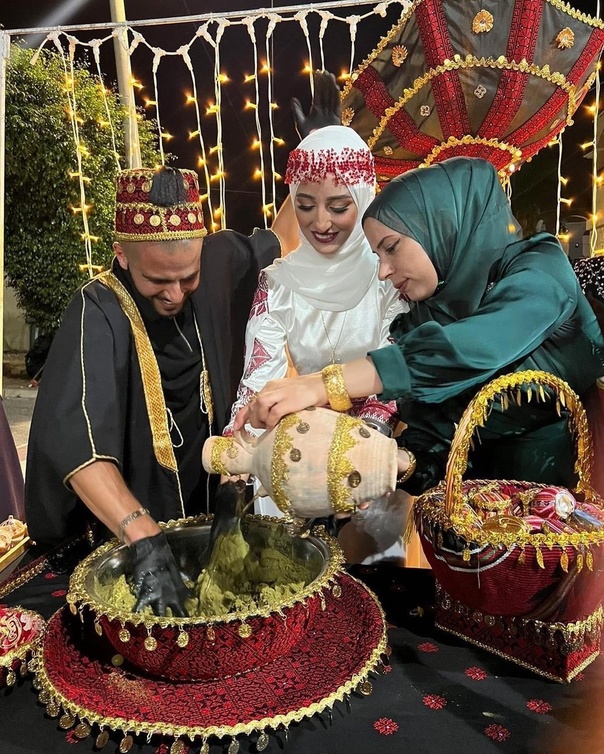
Before the war, this vibrant soundscape extended into weddings, which were an integral part of the social rhythm in Gaza. The celebrations took centre stage in family life, blending traditions, music, and gatherings over several days. Each home gradually became part of a collective dynamic, entirely focused on the event. The henna ceremony, youth gatherings, traditional songs, and large family reunions shaped these moments, where the wedding transcended the private sphere to become a shared celebration.
Sarah is raising money to fund her education. You can donate here.
Weddings before the war
Before October 7, 2023, life in Gaza was never ideal: the restrictions imposed by the Israeli occupation were present in every aspect of life, from the control of border crossings to repeated attacks. As for weddings, they were major social events that often spanned several days. They held a central place in family and community life, bringing together relatives, neighbours, and friends for celebrations blending music, traditions, and shared meals.
Preparations for a wedding in Gaza generally began several weeks before the set date. Between choosing outfits, sending invitations, and selecting the reception hall, the bride and groom, along with their families, methodically discussed the wedding arrangements based on each family’s financial means. Wedding halls are particularly numerous along Al-Rashid Street, by the sea; they offer different styles and capacities, suited to families’ varying budgets, and served as a central venue for celebrations before the war.
Henna is a deeply rooted tradition in Palestinian weddings, one that is difficult to erase
There is virtually no wedding in Gaza that is not preceded, one or two days earlier, by separate celebrations: an evening dedicated to the groom, hosted by the young men, and another dedicated to the bride in the presence of the women and young girls.
The henna evening, dedicated to applying various henna designs to the bride’s hands, is seen by many brides as a memorable moment of their wedding. Henna comes from a plant widely known in Palestine. Its leaves are dried and then used both as a natural hair dye and as the material for the designs applied to the hands. Its fruit, sometimes called locally the “henna date,” is recognizable by its distinctive scent.
“ سبل عيونه ومد إيده يحنوله غزال صغير وبالمنديل يلفونه ”
–Lyric from a traditional folk wedding chant commonly sung during celebrations in Gaza and Palestine. The lyrics are symbolic and poetic rather than literal, using imagery associated with beauty, affection, and celebration, sung during the groom’s henna ritual, when the groom stretches out his hand for the henna to be placed on it. The lyrics compare him to a small gazelle, drawing on imagery common in Palestinian folk songs and wedding traditions.
This passage from a popular song echoes amid the percussion and ululations, while the groom’s mother carries a tray of henna from which an ancestral scent wafts, decorated with rosemary, roses, and flowers that accompany the ritual.
During this celebration, many women wear embroidered Palestinian thobes, each reflecting her region of origin, with the bride’s being the most striking. These colourful and richly decorated outfits reflect the diversity of Palestinian cultural heritage and add a strong visual dimension to the celebration.
The henna night is a ritual deeply rooted in Palestinian weddings, passed down from generation to generation. It is marked by a festive atmosphere where traditional songs, percussion, and folk dances blend together. The henna night holds an important place in the hearts of Palestinian women, due to the memories and emotions it leaves behind. This celebration remains associated with moments of shared joy and the passing down of traditions between generations. The evening also features traditional dishes such as knafeh and saqamiya. Shared among families and neighbours, these dishes reinforce the atmosphere of conviviality and become a time for social interaction, where food also plays a role in maintaining social bonds.
On the wedding day, the community plays an important role in the preparations. In many cases, residents of the neighbourhood or village help with the organization, particularly in preparing a large festive meal — often meat-based — to welcome the guests. The groom’s friends accompany him from the start of the day. They help him get ready, dress, and apply cologne. When he leaves, a group of young people awaits him to escort him with traditional songs: “طلع الزين من الحمام، الله واسم الله عليه,” part of a playful folk song used in this moment.
The procession is then accompanied by a musical troupe, known locally as the fadaous, composed of percussionists and mizmar players. They enliven the procession by performing traditional songs dedicated to the families of the bride and groom. The procession accompanies the groom throughout the day until he arrives at the bride’s location. The cars, decorated with flowers, move forward honking their horns, surrounded by loved ones. Upon arrival, the bride is led to the groom by her father, her brothers, and members of her family. Together, they proceed to the celebration venue in the same procession. The celebration then continues late into the night, accompanied by music and singing.
I’m trying to rediscover my zest for life.
Since October 7, 2023, the war has profoundly changed life in Gaza, including its traditions and moments of celebration.
Many couples who were engaged before the war have had to abandon their wedding plans. The venues they had booked were destroyed or closed, and the savings set aside for the ceremony were lost or used to cover basic needs. Some nevertheless chose to marry during the war, but under extremely limited conditions, without a real celebration, due to the incessant bombings, forced displacement, and economic collapse. Since the ceasefire took effect, weddings have gradually resumed in Gaza, but in much simpler and more modest forms. They no longer resemble those of the past, but for many, they remain a way to carry on living despite everything.
Ibrahim Al-Masri, 26, has only his fiancée, Alaa, left today. His family was completely wiped out during the war. Before the war, he worked in a pharmacy and was preparing his apartment for his wedding. But his home and workplace were destroyed, and he now lives with very few resources, relying on humanitarian aid.
He was among the 300 couples who got married during a mass wedding held in Deir al-Balah on Friday, April 24.
“This isn’t the wedding I had imagined,” he says. “But it’s all that’s left to move forward.”
Ibrahim’s story is not unique; many other couples are facing similar situations in Gaza.
Among them is my friend Baraa Fawra, 24, who became engaged to Mohammed Al-Ar’ar, 28, before the war began. She had the opportunity to leave Gaza before the crossings were closed, while her fiancé remained in the enclave, waiting for their wedding. After the crossing reopened, Baraa returned to Gaza, reuniting with her fiancé after three years apart. The couple now plans to marry in a few weeks. However, they have decided not to hold a celebration in a banquet hall. Mohammed lost three of his brothers in Israeli airstrikes during the war, a loss that deeply influenced their decision. “There is no joy without them,” he says.
Beyond their grief, economic hardships are also weighing on their preparations. Baraa points out that wedding costs remain high, even for a modest ceremony, making the planning even more difficult.
Ayman, 27, a civil engineer, worked in his own office before the war. Today, he has had to change careers completely and sell clothing after his workplace was destroyed. He decided to marry his fiancée Mona, also an engineer, whom he met at university. The couple had become engaged before the war and waited a long time for it to end so they could celebrate their wedding.
“My wedding was postponed several times because of the war and family losses,” he says. “The war has imposed a harsh reality, one in which joy has become a heavy burden, especially when those around us are either martyrs or displaced persons.” After several postponements, they finally celebrated their union in mid-January, in a very simple ceremony, without a youth party or banquet.
Reda, the father of the bride Mona, expresses both sadness and hope. “I would have liked to see my daughter in a grand celebration worthy of her, like her brothers, and as we used to do in the past. But reality has changed; Gaza has changed,” he says. He explains that the family chose to organize a simple wedding out of respect for the pain of others and because the economic situation does not allow for more. “Despite everything, the simple fact that my daughter is starting her life despite all this destruction remains a source of joy and a clear message: the war has not succeeded in stealing our hope.”
The large street celebrations, once accompanied by performances and folk music, have largely disappeared. Today, only small, discreet gatherings take place, in a context marked by mourning and displacement.
Now, Mona and Ayman live in a tent. They have managed to be together, but their future remains uncertain.
In the rest of the world, getting married means starting a new, happy, and stable chapter. For Gazans, each month is merely an extension of mourning and instability.
In Gaza, Palestinian women see their dreams of marriage buried under rubble and grief, while newlyweds and engaged couples are killed. Engagement rings, dresses, and celebrations have become tragic symbols of lives and futures snatched away before they even began.
Gaza has changed, and so have its sounds. Many voices that once filled the air have vanished forever. War does not only kill; it steals voices, it erases sounds, leaving behind a silence that cannot be filled. Gaza is trying to find its voice again, but will it ever resonate as it once did? Or will the silence left by the war continue to weigh on lives forever?
Author

Comments (1)
Leave a comment
Related Articles
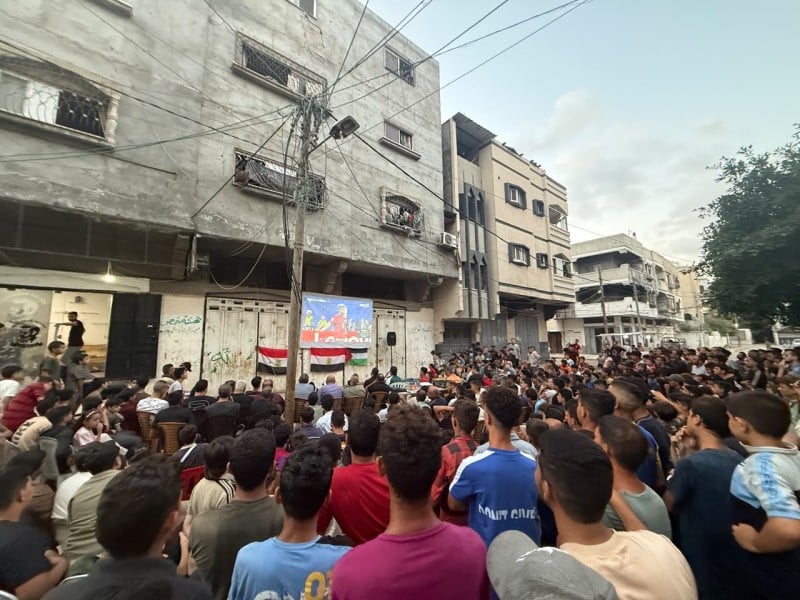
How Gazans Are Watching the World Cup
Amid power outages, fear of bombings, and the loss of the places where they once watched the games, soccer remains a rare moment of respite in a life upended by war.
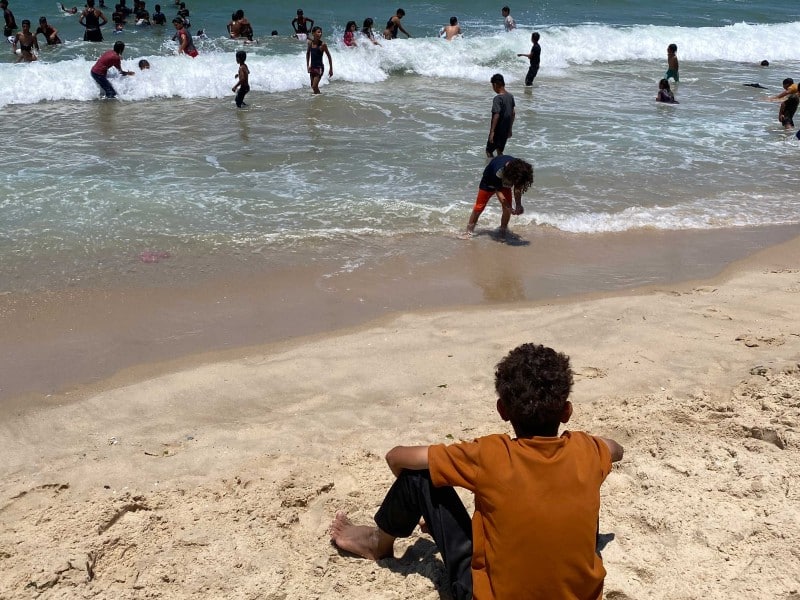
The Sea in Gaza: Memory, Survival, and the Last Refuge
Has the war changed the meaning of the sea?

Editor’s Note: The Rover Does TV News, Our Way
The Week Is Rover will bring our independent journalism to YouTube, where we’ll fight the information wars on a new front.
The rover should change his name for The Gaza!!