
What It’s Like to Raise Biracial Asian Kids in Quebec
We spoke about racism, assimilationist pressures, and connection to culture with two Asian parents and an Asian biracial adult.
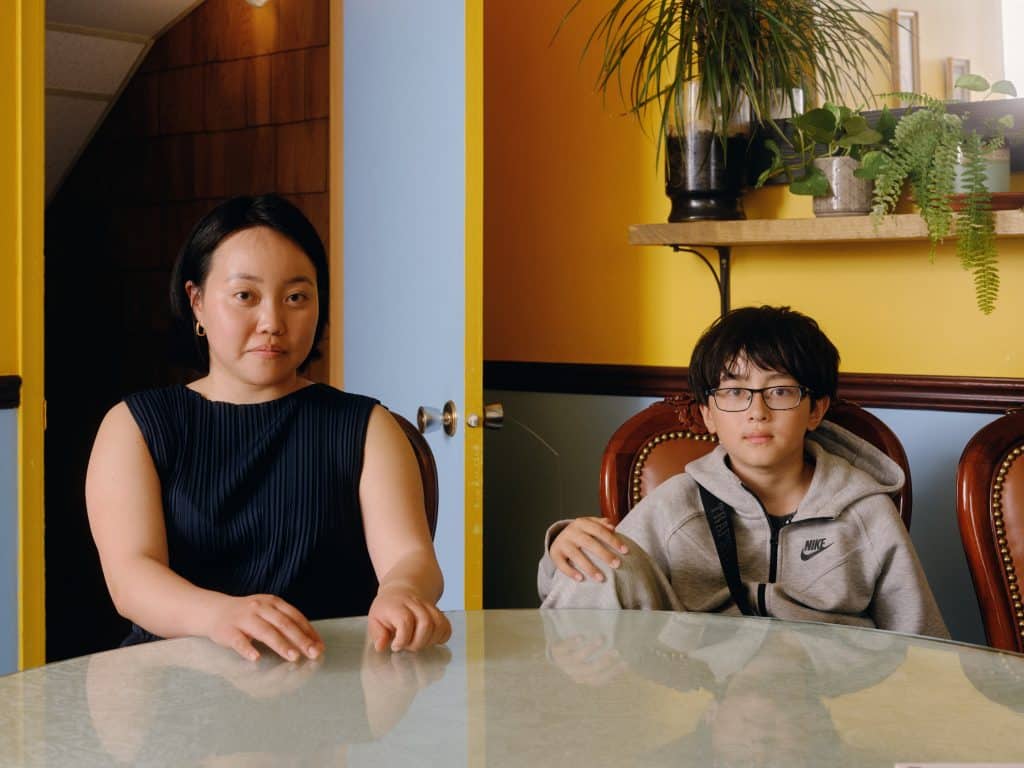
Emby Park and her son Johakim “Jojo” Dellah. PHOTO: Richmond Lam.
On a sunny Tuesday evening, Emby Park and her 10-year-old son Johakim “Jojo” Dellah greeted me at their Brossard residence.
Emby, who immigrated to Canada at three years old from South Korea and who has been living in Quebec since she was eight, parents her Korean-Tunisian child as a single mother. Although Jojo doesn’t live with his dad, he is closer to his Tunisian Muslim side than to his Korean side. He visits his extremely doting paternal grandparents every weekend, has been welcomed with open arms by his father’s large family and has many Arab Muslim friends he goes to mosque with sometimes.
By contrast, Emby, who comes from a small family and who describes her relationship with Korean culture as “fragile” due to assimilationist pressures in her childhood, has struggled to pass on her culture to him.
Their stories, just like those of many Montreal biracial Asian families, highlight the complex interplay of diaspora, migration, racism and family structure that influence the upbringing of Asian biracial people.
SUPPORT YOUR LOCAL TROUBLEMAKERS
During her childhood, wanting to fit in and speak French like everybody else, Emby stopped speaking Korean. She thinks that while she got a lot of support to learn French, she wasn’t encouraged by Quebec society to learn more about Korean culture.
The result was that she was not able to transmit much of her heritage to her son. As Jojo puts it, “I feel more Tunisian because I know nothing about Korea.”
To not repeat that situation with her next child, Emby is taking Korean classes with her current partner, a white francophone Quebecer. They want their future biracial child together to be exposed to Korean culture.
“As I had a child, it became clear that I wanted to be closer to my heritage. Because it’s a treasure that I would like to give to future generations”, she says. “I’m realizing now that maybe the best way for [my son] to be comfortable with his biracial culture is for me to be comfortable with my own culture.”
When Jojo was younger, the family also experienced the challenges of navigating two very different cultures. For instance, Jojo’s father’s family wanted him to get circumcised as a baby in accordance with Muslim traditions — something Emby did not agree with.
“I’m totally fine with other people doing it if that’s their belief. But it wasn’t my belief, and it was hard to accept that I would just give in to something that wasn’t part of my beliefs. I wanted it to be something that he decides later on,” she explains. The issue was compounded by the fact that both parents are racial minorities and were fearful that saying no to each other’s cultural practices would be perceived as cultural disrespect. It took them getting divorced when Jojo was four for them to learn to set better boundaries around how their respective cultures would influence their parenting.
There were also issues with Emby’s side of the family. Her mother and aunt were not fully accepting that Jojo did not have 100% Korean heritage.
“I really had to be a defensive force against all of that prejudice towards my son because of his Tunisian background,” she explains. “I really had to learn to say no to my mom and her family, and be like, ‘No, you can’t say those types of things. That’s not right. You have to respect my son.’”
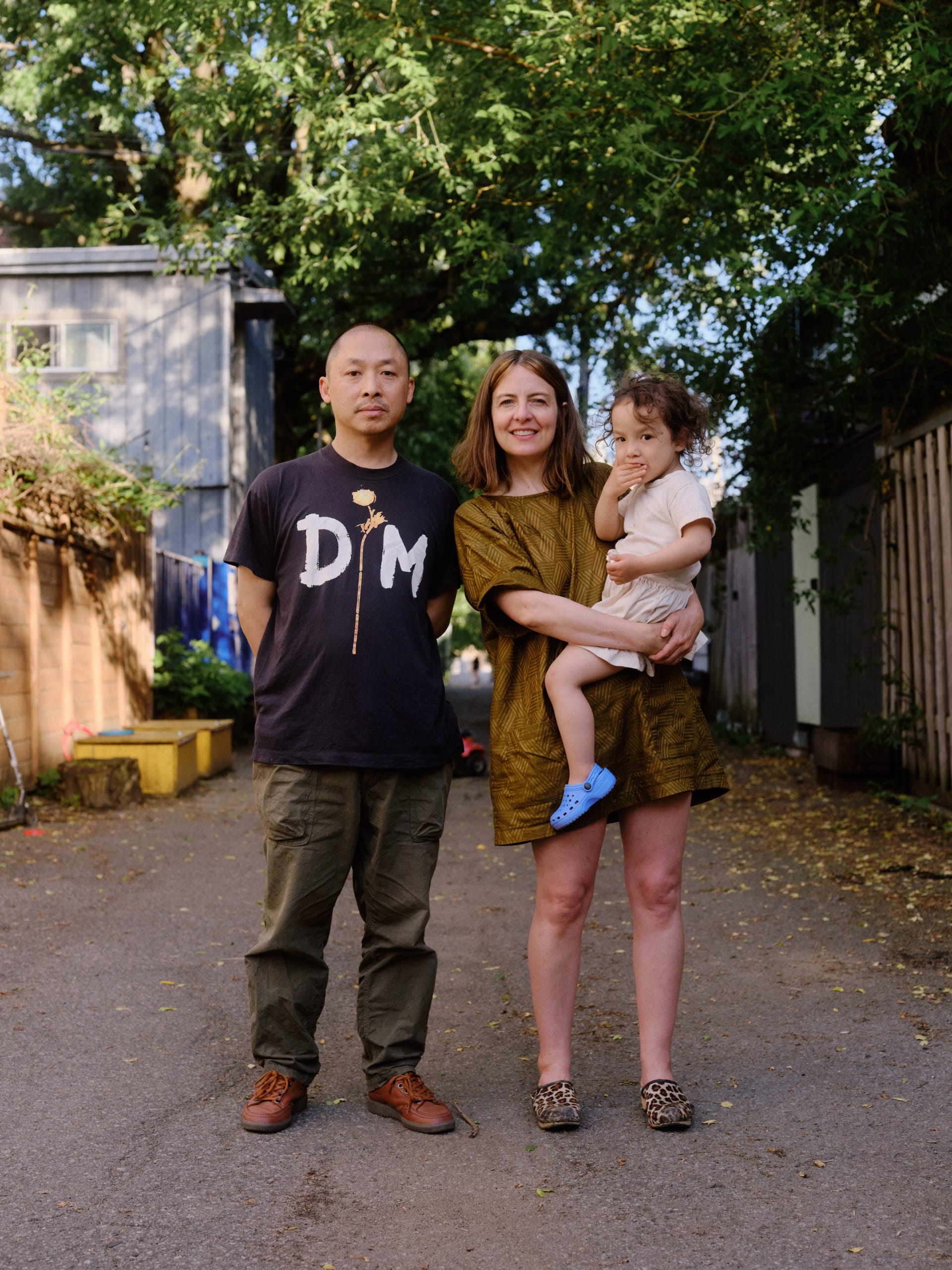
Richmond Lam with his partner and his daughter Céleste Tian Quenneville-Lam. PHOTO: Richmond Lam
Richmond Lam is fortunate that he did not have to experience such resistance when he became the father of three year old Céleste Tian Quenneville-Lam. His younger brother already had a biracial child, so his parents in Hong Kong were familiar with that reality. Nevertheless, Richmond is acutely aware of how challenging it is to transmit his Hong Kong heritage to his daughter. As a resident of Little Italy, he also knows that she will never have to worry about not knowing enough about her mother’s francophone Québécois culture. He especially wants her to learn Cantonese, a defining feature of Hong Kong.
To this end, Richmond has been trying to speak Cantonese to her as much as possible. He makes her watch Cantonese lessons for kids on YouTube and is trying to find Cantonese-speaking friend groups for her.
But since Céleste started daycare, surrounded by anglophone kids and a francophone daycare teacher, keeping up with Cantonese has been difficult. “It is really barely there. I think she retained a few things I used to say, like bo lo, ping gwo, sik faan (pineapple, apple, eating), little words here and there,” says Richmond. “I need to work to push her a little bit more.”
He worries about how she will cope with identity issues and racism when she starts school. As a father, he will make sure that she is exposed to environments with a lot of diversity so she doesn’t feel alone.
“[Racism] will happen sooner or later. As much as we are dreading it as parents, there will be situations where she’ll feel like she will be othered and alienated,” he says. “We will explain to her that [racism is] not our fault, but that we do have challenges in society that we need to all face. She needs to have the confidence and the tools in order to deal with it. I think that’s what we can do as parents.”
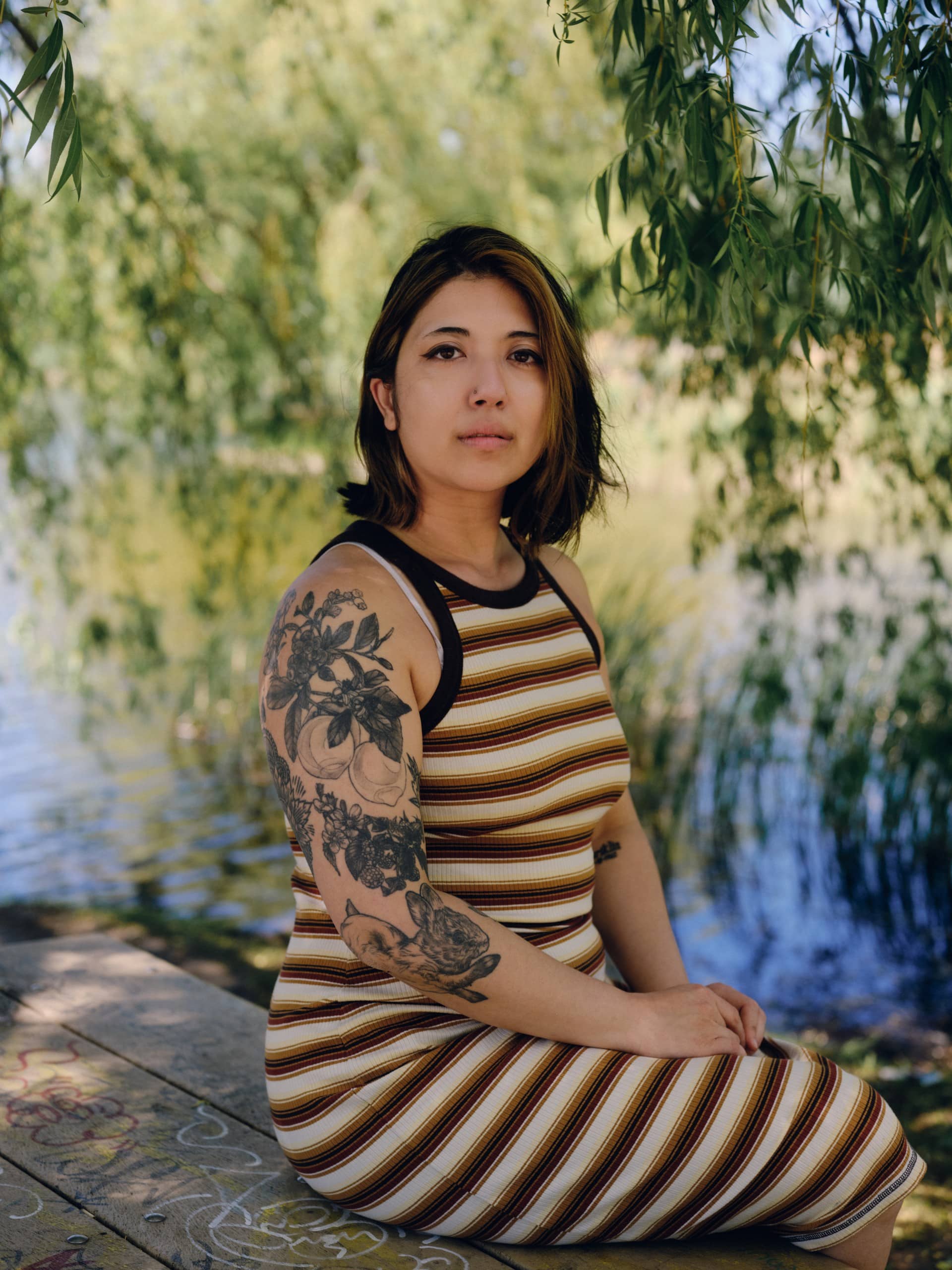
Bri Kang. PHOTO: Richmond Lam
Bri Kang, a masters student at a major university, wished she had those tools when she was growing up. Estranged from her mother’s Korean family since she was four, she was mostly raised by her father’s Greek family.
Growing up, her Greek relatives would constantly make demeaning comments about her appearance. “Then I realized that I thought I was ugly because I was half Asian,” she explains. “It’s something that hit me later on in life.”
Her father, although he himself never participated in the othering of his daughter, was ill equipped to deal with his offensive relatives. As a single father, he was overwhelmed with the responsibilities of raising a child alone.
“I’m not mad at him, because he also did teach me a lot of anti-oppressive values that were different from the rest of my Greek family,” she recalls. “It’s just that when [racism] would happen to me, it’s almost as if my dad thought that since I was mixed race, I probably wasn’t dealing with as much racism as someone else.”
Bri believes that parents raising an Asian biracial child should educate their kids on the privileges and oppressions that come with such an identity.
“For one, if the child is mixed with a white culture, you should tell your kid about white privilege and the privileges that they will have from being mixed race,” she says. “But then, it’s also really important for our parents to be able to protect us from racism when it does happen. Because a lot of mixed people will still be racialized in many different ways.”
She also believes that parents of biracial children need to find different ways of helping their child develop a relationship with all of their cultural heritage. During her childhood, aware that she might lose her connection with her Korean side, Bri’s father tried to make her have a relationship with her Korean mother.
“But that wasn’t good, because my mom was very abusive throughout my early years,” she explains. She thinks that biracial children should have opportunities to connect with their cultures outside of the family. “If they want to go take Korean language classes, [the parent should help them find] classes. Or help them find Asian social groups.”
Enjoying our content?
Subscribe to our newsletter to never miss out!
Comments (1)
Leave a comment
Related Articles

Fill Out Our Audience Survey!
Help us build The Rover.
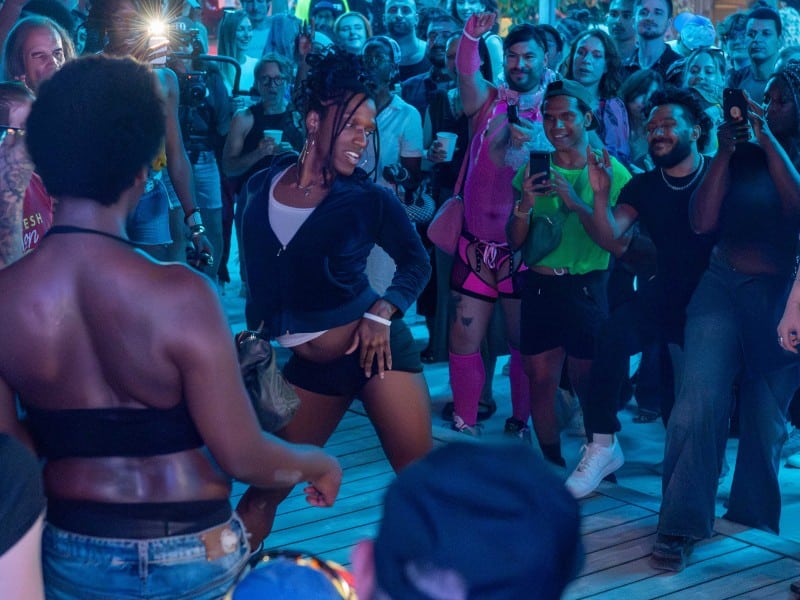
‘Everybody Who’s on the Stage Is Part of Your Community’: Ctrl+Alt Festival Returns for a Third Edition
Free festival stacked with queer, local performers to take over the Place du Village July 24-26.

Des travailleur·euses du sexe de Montréal feront la grève pendant le week-end de la F1
Cette dernière initiative de « whoreganization » s’inscrit dans le cadre de la lutte des travailleur·euses du sexe pour leurs droits du travail et la décriminalisation.
If you are worried about your children keeping your culture, you could, you know marry someone from that same cultural background! I know! What a shock! And before you dismiss me or anyone with that opinion as trolls, really consider why, when most of you speak of marrying outside your culture/race, it is always in relation to marrying white people. You can’t emancipate your children of feelings of inferiority if you constantly mirror them.