
Out of the Dark Ages
After being pushed underground by police raids and outdated regulations, kickboxing is making a comeback in Montreal.
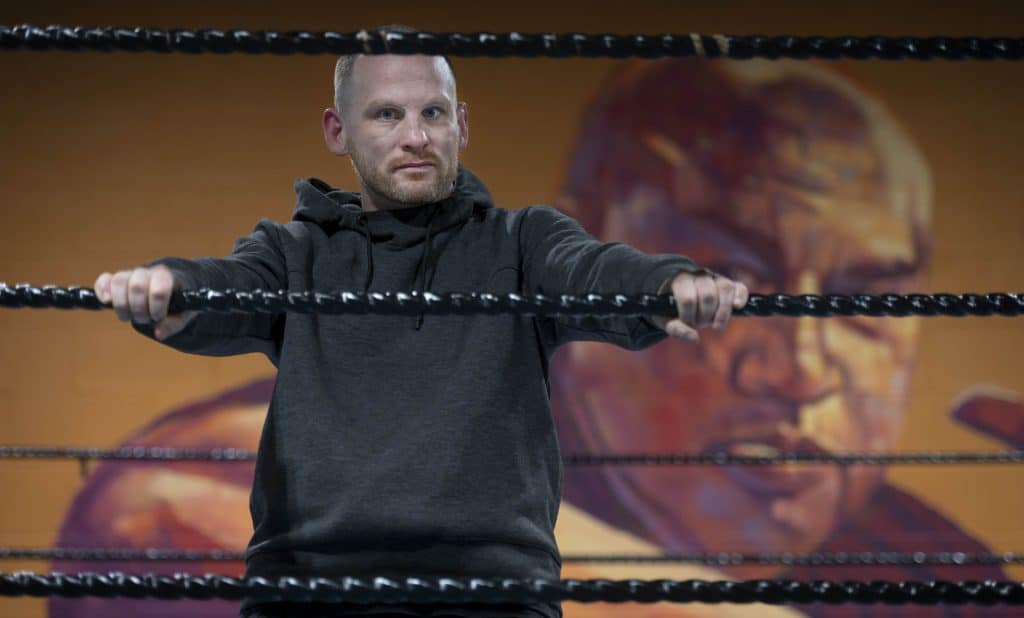
Kickboxing promoter Philippe Landreville Allaire. PHOTO: Peter McCabe
There were four people in the audience for Nicolas Leboeuf’s first kickboxing match.
Audience is a bit of a misnomer since the only ones there were other fighters waiting for their turn in the ring. They came from gyms across the city to compete in a smoker — an unsanctioned bout used to initiate prospective fighters into the world of competitive kickboxing.
When Leboeuf was called up, it suddenly dawned on him how small the ring was.
“No place to run,” said Leboeuf. “It’s a lot harder, in a small ring, to take a step back and think. You kind of just have to keep fighting nonstop.”
In a regulation size boxing ring, there’s space to backpedal and peck away at the more aggressive fighter with jabs until they wear themselves out. It makes for a far more technical match. When that space gets taken away, the fight almost always turns into a brawl.
Leboeuf knew how to fight. He’d competed in full contact karate for years. But this was kickboxing, a sport he’d only practiced for a few months. In karate, you can’t punch your opponent in the face and the matches last two minutes. Kickboxing, as the name implies, is essentially traditional boxing but with kicks, knees and clinching. And the matches are three times longer than in karate.
“The first round was competitive but I had nothing in the tank after that,” Leboeuf said. “By round 2, I started taking a lot of punches to the head. It wasn’t that they hurt too much, it was just overwhelming. I didn’t have an answer to that.”
A clean strike to the head — especially one that snaps it sideways or backwards — sends the body into survival mode. Your heart pounds, your vision tunnels, it feels like you’re suffocating and there’s the small matter of an opponent hurling his limbs at you.
“I couldn’t think, I couldn’t react so I just started to cover up and look down at the ground,” Leboeuf said. “In the middle of being swarmed by those punches, I tripped. That’s when the ref stepped in and stopped the fight. I’m glad he did.”
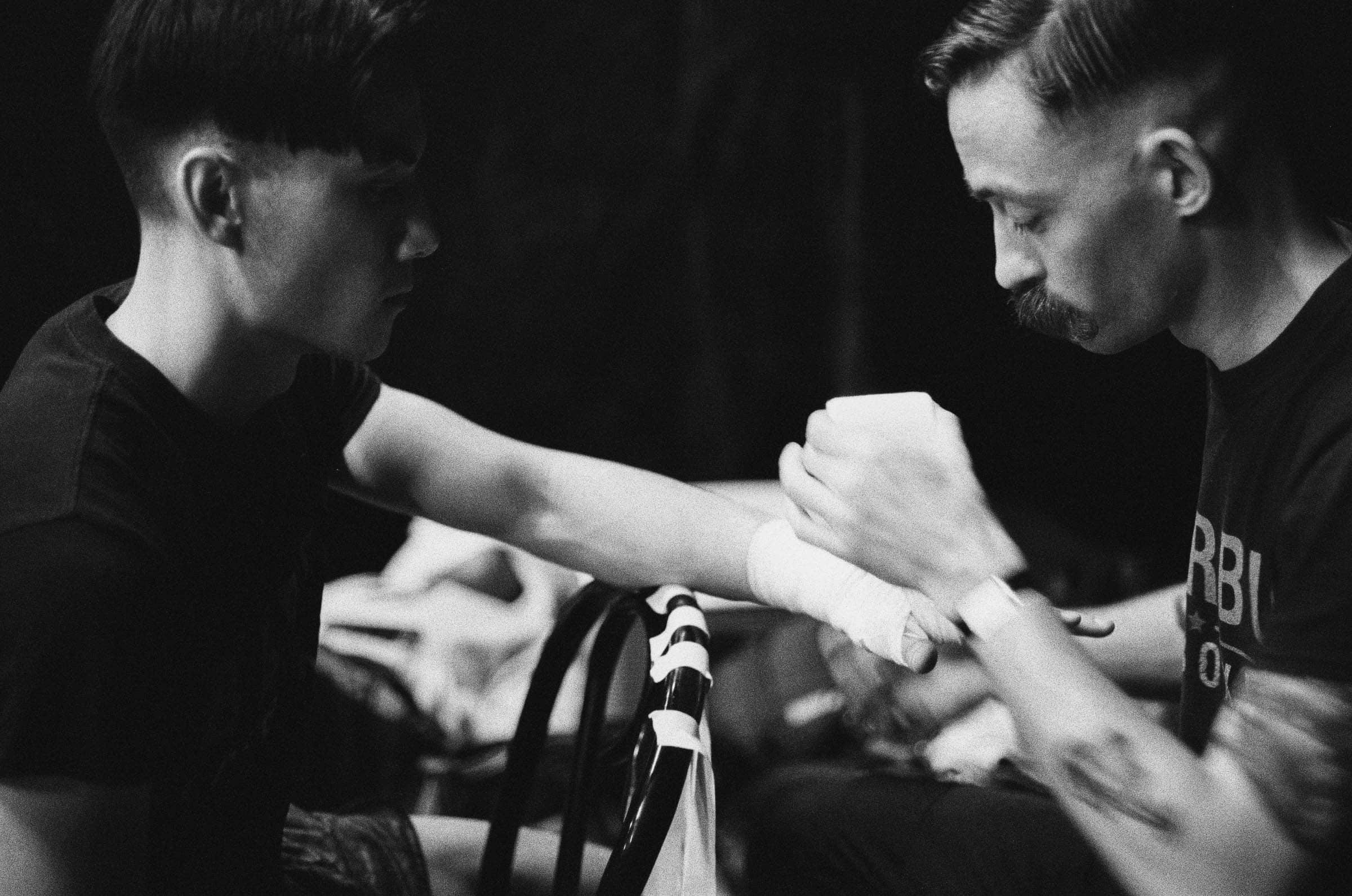
Nicolas Leboeuf (left) getting his hands taped by Francis Duguay ahead of a fight. PHOTO: Katia Briand
In the two years since that technical knockout loss, Leboeuf hasn’t stopped fighting.
I’ve seen him compete three times in the last four months, training twice a day for six days a week ahead of each match. A few months back, I watched him get knocked down in front of hundreds of screaming fans only to see him get back to his feet and win the fight.
“It was like he needed to get knocked down so he could focus himself,” said Francis Duguay, Leboeuf’s coach. “When you’ve known defeat early in your career, you come back strong or you don’t come back. A lot of people quit. And that’s fair, that’s totally normal. It’s an extremely difficult sport and most people have a job and a life to go back to.
“But every time (Lebœuf) fails, he’s come back stronger.”
Leboeuf quit his job in August so he could travel to Thailand and train with world champion “Superbon” Singha Mawynn. Over there, he’d get up at 5 a.m., catch a scooter ride to the Bangkok suburbs and jog five miles before training even started.
He did that in peak rain season.
“I was used to being one of the better fighters in the gym back home. But you go there and it feels like everyone is better than you. So it forces you to push yourself,” said Leboeuf. “To be good at kickboxing, you need to be mentally tough. You need to have a good fight IQ but you also need to have good emotional intelligence.
“Working on that gives me the confidence to tackle anything difficult in my life.”
On Sunday, Leboeuf will compete in front of 1,500 people at Olympia Theatre in what’s being billed as the biggest kickboxing event in Quebec history. It’s a far cry from being thumped around an empty gym but times are changing in Quebec’s kickboxing scene.
“Not that long ago, this was basically illegal in Quebec,” said Phillipe Landreville Allaire, the promoter of Sunday’s event. “But it was tolerated. What happened was, you’d have these dumbass promoters sabotaging each other’s events, calling the cops and saying ‘this guy’s a crook, this guy’s illegal’ and shows were getting shut down.
“Those were the Dark Ages. This year, the scene just popped. You have more people fighting, better fighters, better fights, better venues.”
Allaire’s Silvertooth Promotions puts on sold out shows every few months at Bain Mathieu in Montreal’s East End.
The venue is actually a hollowed out swimming pool with a ring built into it and chairs strewn across the shallow end. It sounds thrown together but I’ve never had a bad time watching fights at the pool. They serve cold drinks and Vietnamese food.
Olympia Theatre, with its plunging balconies and elegant wood moulding, generally hosts musical acts like Charlotte Gainsbourg and Motorhead. But it’s also become a staple of pro wrestling in the city and those do remarkably well.
When we spoke last week, Allaire had already sold out the floor and was pushing to fill the balcony.
“We’re fighting at Olympia,” he said, speaking just a bit louder than his usual whisper. “The mountain of the Gods! It doesn’t get better than that.”
Standing across from Allaire, you immediately understand this man is a fighter. Not just because he looks like the villain from a Guy Ritchie film — tracksuit, scar tissue across the brow and a silver tooth where his right incisor used to be. Those are all giveaways but there’s a kind of relaxed vigilance all fighters seem to have.
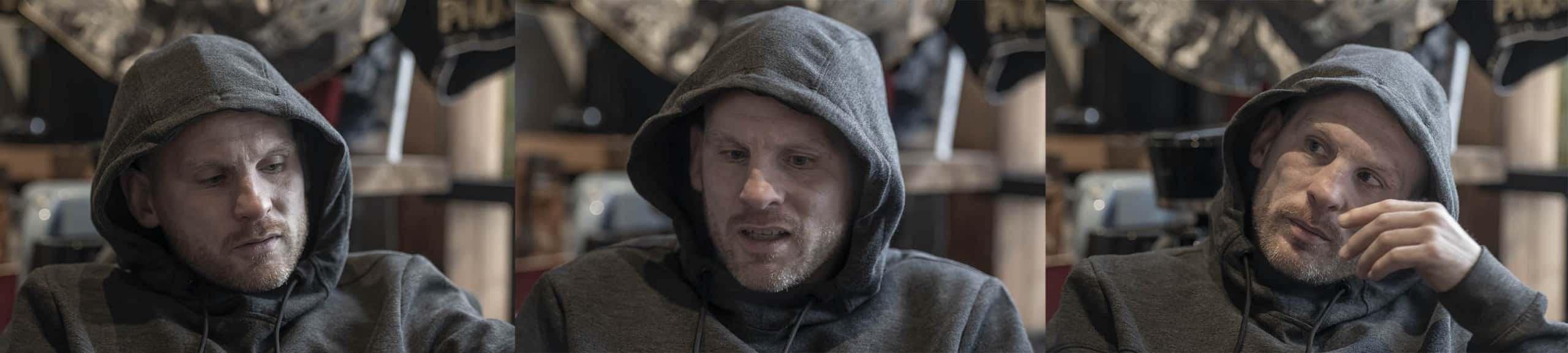
“I want our best fighters to compete in Quebec,” says Philippe Allaire. PHOTO: Peter McCabe
When Allaire says amateur kickboxing was “basically illegal” he means that it was outlawed in Quebec until 2018.
Section 83 of the Criminal Code of Canada prohibits participation in any combat sport not regulated by the International Olympic Committee. The law allows for provinces to regulate their own combat sports but Quebec has been resistant to change.
In 2017, Montreal police used it to shut down a Brazilian Jiu Jitsu (BJJ) tournament that featured kickboxing bouts. That year, promoters started moving their events underground or onto the Mohawk territories north and south of Montreal. But the raid also forced the combat sports gyms to start lobbying the provincial government and, by 2018, Quebec passed a decree legalizing amateur kickboxing. The kickboxing scene has seen an eruption of talent since then.
Last year, Montreal-based fighter Jonathan Di Bella won the ONE FC world championship in Malaysia — arguably the most prestigious title in the sport. On Saturday, fellow Montrealer Morgane Pouliot is fighting in Alberta for a $100,000 contract with ONE FC — the biggest fight promoter in Asia.
Allaire says Sunday’s event is another step towards mainstream acceptability of the sport in Quebec. Kickboxing is huge in East Asia, Europe, Africa and pockets of the United States but because pro kickboxing is illegal in Quebec, the province’s best fighters have to leave their home to make a living.
“I want our best fighters to be able to compete in Quebec,” said Allaire, who competed in over 50 pro fights in Thailand and Hong Kong. “I want this sport to grow because I love what it does to people. To see someone overcome their fears, to see them dedicate themselves to learning and helping others learn as well, that’s a beautiful thing.”
***
Suzanne Prémont could feel her lungs burning as she waited for the third round to begin.
Prémont had thrown everything she could at her opponent but she wasn’t sure she had anything left to give.
“It was clear that it would come down to who wanted it more,” said Prémont, a 34-year-old writer. “It was going to be about taking it all the way, pushing yourself to a place you didn’t know you could and then pushing it even further.”
With time running out in the fight, Prémont cornered the smaller opponent against the ropes and unloaded a flurry of strikes.
Moments earlier, she could barely keep her arms up but now she was operating on pure instinct, forcing the other fighter to cover up while she threw jabs, crosses, hooks and uppercuts. When it became clear her opponent wasn’t going to fire back, the referee stopped the bout and declared Prémont the winner by technical knockout.
“That was just willpower,” she said. “I didn’t know I had it in me.”
More than an outlet for stress or a way to get in shape, Prémont says kickboxing made her feel like she’s part of a community. She’s not fighting on Sunday’s card but Prémont will be there as she is at every show.
“It wasn’t always that way, the community aspect of it, we had to build that,” said Justin Etheridge, Prémont’s coach and the owner of Angry Monkey MMA in Verdun. “It used to be nasty in Montreal. You’d have gym owners lying about their fighters’ skill level so they could put him in the same ring as a beginner. Just to beat the shit out of them. It was dangerous and irresponsible and we needed something better.”
Five years ago, Etheridge launched Rumble in the Verdungle — a series of unsanctioned “smoker” fight nights that brought together gyms from across Quebec and raised money for charitable causes. Dozens of local fighters from across Quebec — including Leboeuf and Prémont — got their start in the tiny ring on Verdun Ave.
One of Rumble in the Jungle’s first major prospects — a shy, skinny teenager called Rabichan Ravichandra — was struggling to get through high school when he met Etheridge. French is Ravichandra’s third language and if he couldn’t make significant improvements he told Etheridge he might have to drop out.
“I told Rabichan, ‘No fucken way man, you’re getting your diploma,’” said Etheridge, Ravichandra’s coach. “Suzanne (Prémont) did the rest.”
Etheridge enlisted Prémont to tutor Ravichandra until he graduated.
“It’s like being in a family,” Prémont said. “Fighting is so intimate, it’s so personal that it’s hard not to develop that kind of bond with the people you practice that with.”
For Etheridge, the simple act of opening his gym to outsiders sparked something much bigger.
“We were all just waiting for someone to say, ‘Look, I don’t care what gym you’re from, I don’t care if you’re known or unknown, let’s get together and make each other better,’” Etheridge said. “And in the process of doing that, the fighters started getting along, the coaches started getting along and the quality of kickboxing took a quantum leap forward.”
It was in the spirit of community building that Etheridge brought together over 100 gyms and dojos from across the province in 2021 to form the Association des arts martiaux du Québec — a lobbying group that advocates for better government regulation of combat sports.
“Technically, we’re in competition with Justin (Etheridge), our fighters go up against his and we both want to see our people win but Justin wants everyone here to succeed,” Duguay said. “There was a time when Justin was one of the only people holding the sport together. I won’t ever forget that.”
***
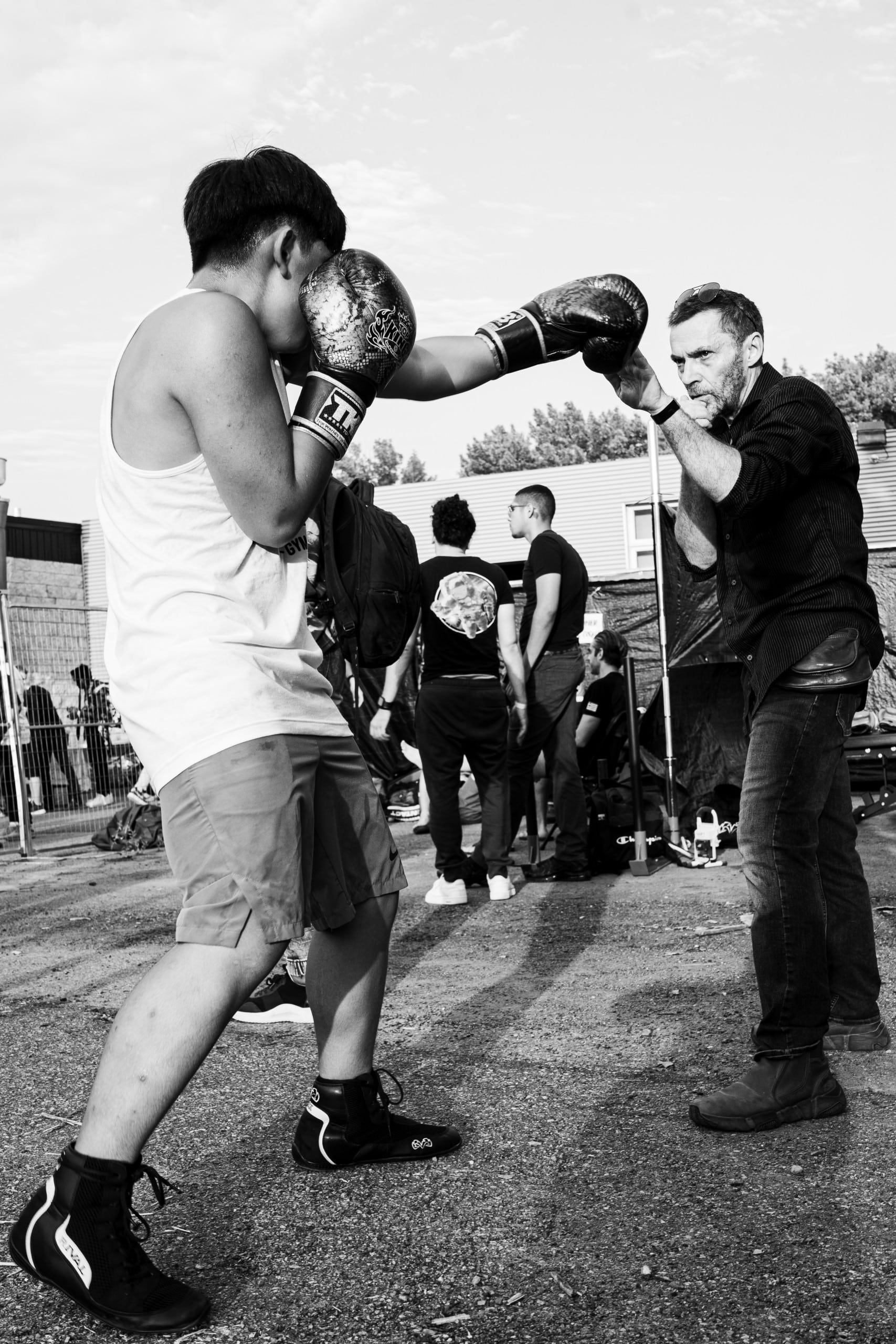
A fighter warms up ahead of his match at Silvertooth Gym in Montreal. PHOTO: Jay Walker
From the smokers in gyms that smell of Tiger Balm and cannabis to the swimming pool shows and beyond, the fight scene in Quebec is thriving because of this new era of cooperation.
The next step, Allaire says, will be convincing the province to get on board.
“This province and amateur fighting man, it’s some real Franz Kafka shit,” said Allaire, referring to the late German author’s penchant for nightmarish bureaucracy.
Because while amateur kickboxing is legal, amateur MMA, Brazilian Jiu Jitsu and amateur Muay Thai are all still outlawed despite being regulated in most jurisdictions across North America. One might think this means Quebec is protective of athletes but this same government sanctions professional boxing and pro MMA — a sport where fighters can split each other’s skulls open with knee and elbow strikes.
Absent the participation of Quebec, the fight scene regulated itself for decades.
In some ways, that means the product is a lot less corporate and a lot more fun. Where else but in Montreal’s underground fight scene could you watch fights above a Korean grocery store while sitting between a UFC fighter and a dog asleep next to the ring?
The only time I fought in a smoker was at Silvertooth Gym — a cinder block building nestled among the garages, used car lots and budget motels that line the south side of N.D.G. That night, so many people showed up to watch us that the fighters had to warm up in the parking lot. As the fear of God pulsated through me, I did my best to shadow box and throw kicks without making one of my tie-dye Crocs fly off.
That afternoon after we weighed in, Allaire sat us all down and read us the Riot Act.
“You guys are here to get experience not to take each other’s fucking heads off,” he said, in his low stern voice. “If you start to struggle in there we will warn you to defend yourself. And if you don’t defend yourself, we’ll stop the fight. If you’re beating the hell out of your opponent, take your foot off the gas and work your defence. No one’s getting paid to do this. No one needs to get injured over this shit.”
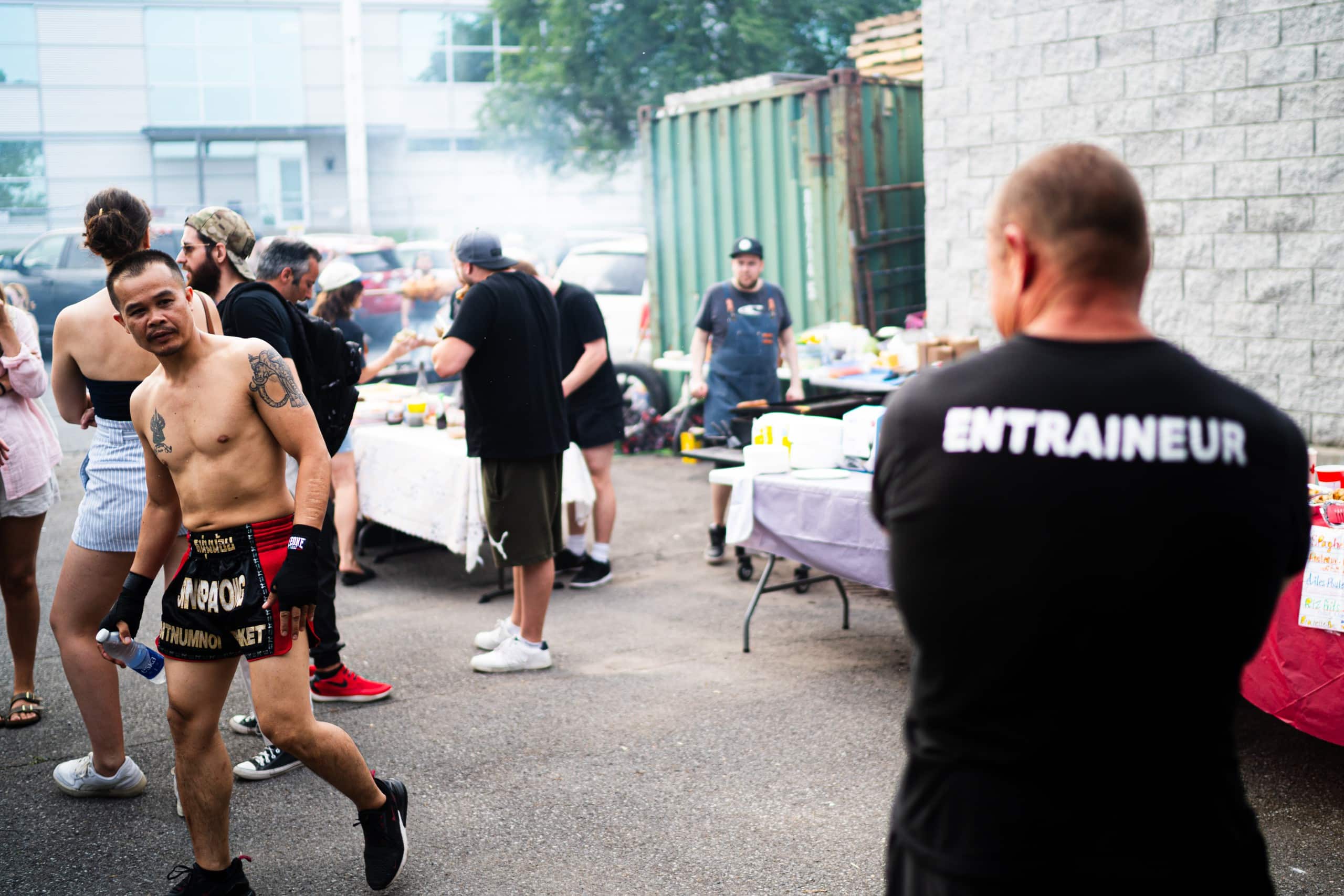
The beautiful chaos of Montreal’s fight scene on full display. PHOTO: Jay Walker
All I knew about my opponent, Clifford Cherenfant, was that he was significantly taller than me and that he participated in model UN in college. That bit of scouting was courtesy of my brother Vincent, who did some cyberstalking to see if he could probe Cliff for weaknesses.
“Actually he seems like a pretty great guy,” Vincent told me. “Civically minded.”
The fight itself was a blur.
I remember hitting Cliff with a left hook, right cross combination that snapped his head back and, for a moment, I allowed myself to dream that maybe I was born for this. Over the next 10 minutes, I was violently disabused of that notion. At one point he hit me with a clean uppercut to the chin and I felt my legs begin to wilt. It was then I realized he wouldn’t stop hurting me unless I made him.
Cliff never knocked me down and I kept the fight competitive as my body would allow but you can’t lie to yourself in the ring. He was markedly better than me and the only time I saw a trace of discouragement in his eyes was when he dug his fist into my liver and I smiled back at him. But that’s the beauty of the sport. You stand across the ring from someone, you knock each other around for a while and wind up making friends after. It’s one of the most intimate and peculiar things.
I could barely stand when it was over but I hugged Cliff and his coaches, who — in the kindest possible terms — told me they were impressed at how much punishment I took.
“You got heart, brother,” the coach said. “Come by the gym anytime.”
“Thank you. I think I need to puke,” was the best I could muster.
When it was all over and we gathered over a pint of beer at a nearby country and western bar, my coach Chris Shawbell showed me a ziplock bag full of giant homemade q-tips.
“I thought I was gonna have to jam one of these up your nose,” Shawbell said. “I’m glad he didn’t bust you open. Breaking your nose is a motherfucker.”
I owe Allaire a debt of gratitude for giving us a space to fight, for giving us the space to experience something so few people ever get to.
“What you see in that ring, it’s the truth, it’s the person at their most honest,” Allaire said. “Out there, in the real world, you can be labelled a million different things; an addict, a criminal, they might call you a bum, you might be rich out there or poor out there but in the ring we’re our truest selves.”
After fighting in the co-main event his last two bouts, Leboeuf got an unexpected phone call. Jonathan Di Bella — the world champion who trains in St-Leonard — wanted to take Leboeuf on as a sparring partner ahead of his next championship fight.
“Even in sparring, when he hits you, it’s like a gunshot to the body,” Leboeuf said. “But even if he’s taking you apart every time, you’re in the ring with a world champion. Soak it up.”
When I ask what it feels like to be part of such a historically significant card, Leboeuf deadpans.
“In the grand scheme of things, it’s just another fight,” Leboeuf said. “I have a goal to become a professional and that means you can’t get too high or too low, you can’t get bogged down in the crowd or the enormity of the moment. You just have to go in there and treat it like what it is: a fight. My opponent (local fighter Florian Bour) is a really good fighter and I’m excited to see what I can do in there and what I can take away from that fight.”
Leboeuf’s coach interjected.
“You’ve been training nonstop for the past six months. Every day you get up, we meet at the gym and we put you through hell,” Duguay said. “And you keep coming back, you keep getting better. That’s why we do this. We do it because it’s hard and we do it because — without it — most of us would probably be lost.
“I’m glad we found each other.”
Author

Comments (1)
Leave a comment
Related Articles
Parched, Harassed and Dispossessed: A Montrealer’s Correspondence on Violence in the West Bank
I volunteered with the International Solidarity Movement in the West Bank in October 2025. It was the most violent year to date in terms of settler attacks against Palestinians.
Occupation and Defiance in Trump’s America
Three months out from the reduction of ICE agents in the Twin Cities, Minnesota, residents remain on alert.

La « mort sociale » des femmes musulmanes au Québec
Confrontées à des pertes d’emploi et à des atteintes à leurs droits garantis par la Charte, des musulmanes s’interrogent sur leur avenir dans une province où elles se sentent isolées et en danger.
IRON CLAD CYBER RECOVERY IS A RAY OF HOPE
As the threat of fiat currency theft continues to grow, the need for a reliable recovery service is crucial. Working with IRON CLAD CYBER RECOVERY EXPERTS was a transformative experience, not only did they recover my stolen funds, they also demonstrated a level of professionalism that exceeded my expectations. I participated in an in-depth consultation to understand the details of the theft and the extent of the loss I suffered. They created a customized recovery plan that met my specific need using their extensive knowledge of blockchain technology and forensic investigative skills. IRON CLAD CYBER RECOVERY EXPERTS has an excellent track record. Countless clients have shared their great experiences working with them, highlighting the team’s professionalism, knowledge, and commitment to helping them recover from fiat currency-related issues. They care about the safety of their clients and uses cutting-edge technology and a knowledgeable team of experts to effectively recover stolen funds. They have built a solid reputation in the fiat currency recovery market with a robust track record. I appreciate them for their help. And I wish to recommend them to everyone out there caught up in systemic scams. Please contact IRON CLAD CYBER RECOVERY EXPERTS for your timely recovery.
Email Address: Ironcladcyber@techie.com, WhatsApp: +1(623) 688-8815