
Taxi Drivers Take On Quebec
A class-action lawsuit seeks compensation for taxi owners after Uber collapsed the province’s taxi industry — and the Quebec government legislated the ridesharing platform into legitimacy.
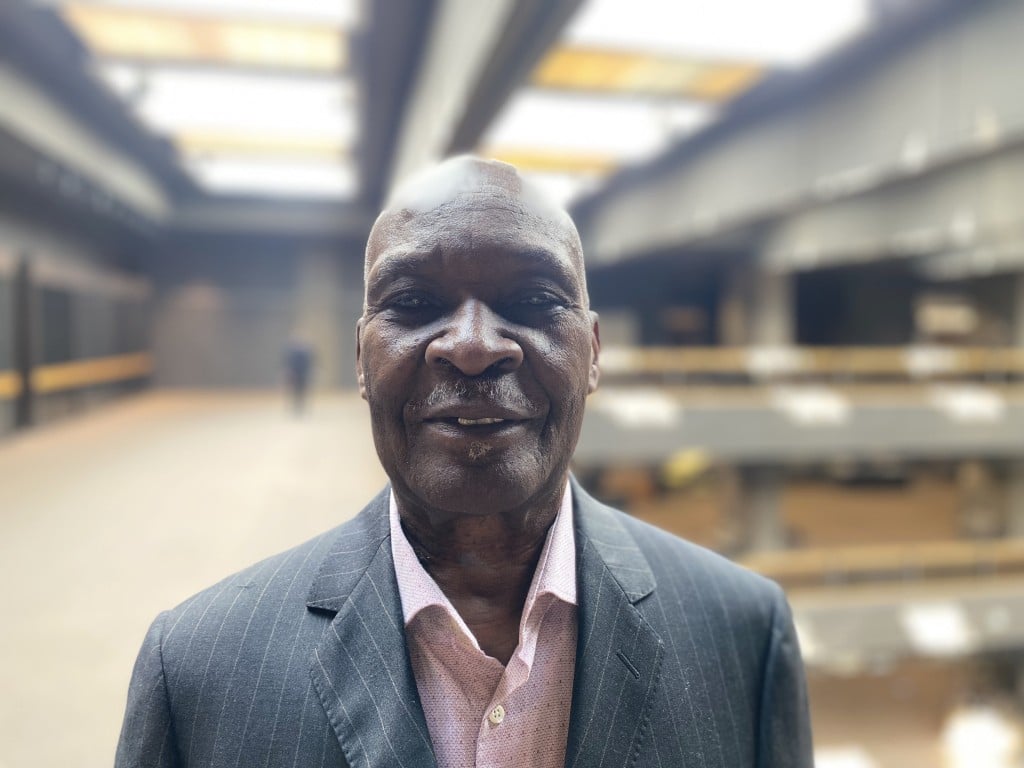
Jean-Pierre Derival once used his taxi permit as collateral to borrow money to pay for his wife’s funeral. After Uber tanked the taxi industry in Quebec, Derival can’t sell his permit for anything. PHOTO: Chris Curtis
Jean-Pierre Derival’s first job in Canada paid him $56 a week.
He washed dishes at a café in downtown Montreal, working nights and weekends until he could save enough to send for his wife in Haiti.
It would take years of dead-end jobs and coupon clipping but no matter how lonely things got, a life of hardship in Canada was better than raising a family under the brutal regime of François “Papa Doc” Duvalier.
By 1976, with Derival’s wife by his side, the couple invested their life savings, borrowed $1,500 from a friend and took out a small business loan from the Bank of Montreal to buy a taxi license.
“When I bought the license, I wanted one thing: to work, to take care of my family,” Derival said during testimony before the Superior Court Tuesday. “It put my kids through school and I thought, when I die, I will leave the license to them. They can use it or sell it. The permit was my lifeline.”
The value of Derival’s taxi permit grew to almost a quarter million dollars by the mid-2000s. When Derival’s father died in 2009, he used the permit as collateral to secure a bank loan and fly his family to Haiti for the funeral. When his wife died the following year, Derival used his permit to borrow money and cover funeral expenses.
“It was my only resource,” Derival said as tears streamed down his face.
But after Uber came to Quebec and started flouting the province’s taxi regulations, the industry collapsed and Derival’s permit was rendered worthless. While cab drivers played by one set of rules — paying licensing fees, undergoing quality control inspections and submitting themselves to provincial oversight — Uber drivers had none of those constraints.
Support Independent Journalism.
Forced to compete with a cheaper, faster and incredibly well-funded service, drivers like Derival saw their life savings go up in smoke. And while the Quebec government forked over $75,000 to compensate the elderly man, he says the money pales in comparison to what he would have earned renting or selling his permit.
Now that it’s worthless, the 81-year-old is stuck behind the wheel of his cab, scraping by on as little as $80 a day while he competes with the world’s biggest rideshare service.
He took a rare day off Tuesday to testify in a class action lawsuit brought on by a group of taxi owners against the Quebec government. The lawsuit seeks $400 million in compensation, an amount that plaintiffs say reflects the true value of the 7,500 permits rendered useless when Uber collapsed the province’s market for taxis.
In his opening remarks, the plaintiff’s lawyer Bruce Johnston argued that the government’s handling of the Uber file was “improvised, incoherent, unfair and indecent.” He said the government allocated a budget to compensate the drivers before evaluating the size of the market.
And while Quebec ultimately paid out $800 million to compensate drivers, Johnston says the true value of those lost permits is closer to $1.2 billion.
“It is indecent to force these cab drivers to bear that cost,” Johnston said.
As Johnston pleaded his case, drivers like Derival, Max Pierre and others sat quietly in the audience, waiting to tell the court how Uber upended their lives.
Max Pierre came to Montreal from Haiti in 1980 and worked for $3 an hour as a busboy. Just like Derival, he had to leave his family behind so he could get settled in Canada, save some cash and send for them once he established permanent residency.
“I deprived myself of many things back then,” he said. “There was no future for us in Haiti.”
Pierre went on to take jobs as a doorman, a parking attendant and a manager at his friend’s business until it went bankrupt. Tired of spinning his wheels, Pierre started saving what little he could to buy a taxi license, sacrificing some of the most basic necessities to make a better life for his kids.
In 1991, he borrowed $15,000 from his sister and paid $37,955 for a license. Ten years later, he bought another license for $210,000 so he could rent it out and set himself up for retirement. When the market collapsed, he lost everything.
“It was my pension,” said Pierre, now a grandfather to five children. “(The arrival of Uber), it brought us to zero, there are no words to describe it. I’m not out on the street but it’s zero. It brought us to zero.”
***
Beyond these harrowing stories, one expert argues that Uber and other tech giants are destroying local economies by paying their “contractors” a pittance, seizing the profits and siphoning them to the United States.
“The collateral damage is enormous,” said Richard Shermur, a professor at the McGill School of Urban Planning. “Basically, from one day to the next, these licenses became worthless. It used to be, you could not operate a taxi without this government-issued license that costs hundreds of thousands of dollars and then, all of a sudden, the government says ‘Well the permits don’t matter anymore.’
“These taxis are local businesses. Beyond what the drivers earn, they invest their profits locally, they expand their taxi fleet and they create a local economy, a local ecosystem. Bit by bit — through Uber, Airbnb and other platforms — all we’re left with locally is the little money each driver earns. The profits are being creamed off and sent to California.
“It’s creating an economy where all of our local services are provided by low-wage jobs and there’s no opportunity for small business owners.”
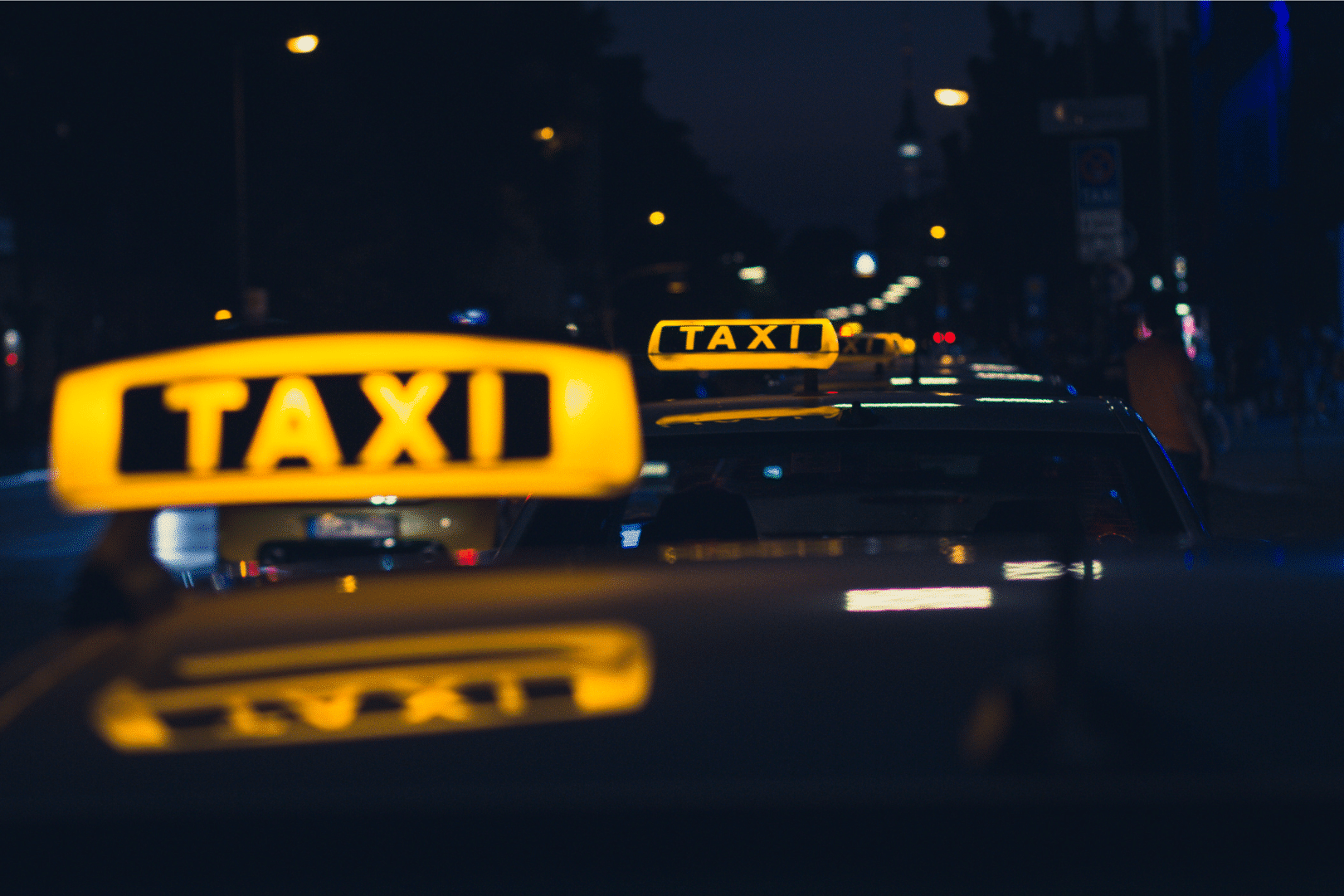
When Uber first came to Quebec in 2014, its refusal to abide by provincial law saved the company a fortune in regulatory fees. The tech giant passed those savings — and the convenience of ordering a car from an app on your phone — to customers. It was only in 2016, under pressure from taxi owners, that the government finally got involved in legislating Uber. That year, the Couillard government launched a pilot project that effectively ended the taxi industry in Quebec.
Under pressure from protesting taxi drivers — who instituted rolling blockades on the highway, marches and other forms of nonviolent resistance — the Quebec government set up two rounds of compensation totalling $873 million.
“The government made efforts to manage the situation,” said Éric Cantin, who pleaded the government’s case in court Tuesday. “We may argue that Uber should have never come to Quebec. We may argue that they are not a model corporate citizen and that the old taxi monopoly should have been maintained. But the government made political choices to manage the situation.”
Cantin said that while he empathizes with the drivers — many of whom came here from abroad and saw their life’s work go up in smoke — but he said that the taxi monopoly in Quebec kept the industry in the dark ages.
“You ordered a cab by calling them on your phone and you paid in cash,” Cantin said. “(With the arrival of Uber) the industry was forced to modernize in just a few short years.”
Shermur argues that by allowing tech giants to “steamroll” local regulations and to use nearly a $1 billion of public money to clean up their mess, the government set a dangerous precedent.
“If the big players can just ignore the rules, then why should anyone bother?” Shermur said. “It erodes our trust in the government. Because when Uber and Airbnb arrive, they have the resources to lobby the government. Taxi drivers don’t.
“Another problem is that Uber and Airbnb, they carry with them the “move fast and break things” narrative of innovation. It’s being used as a strong justification for them that, even though it has no legal standing, in the popular mind we’ve been habituated to accept anything that’s shiny and new as innovation. It’s striking how these companies can come in and break the rules because they brand themselves as innovators.”
In reality, Shermur argues, much of the transformation brought on by big tech is simply aggressive and borderline illegal business tactics. Montrealers saw for themselves how this “innovation” can have devastating consequences last April, when a fire at an Old Montreal Airbnb killed seven people.
An investigation later revealed that some of the rooms had no windows — a fire code violation — and that the Airbnb units were illegal under municipal zoning laws. The building had also been flagged as unsafe by municipal inspectors and, in 2022, one customer even complained about the building’s safety to Airbnb.
The fallout from the fatal fire sparked a criminal investigation, new provincial legislation and the City of Montreal created a task force to crack down on illegal short-term rentals.
***
In the end, all Max Pierre had left was a debt to the car dealership that sold him a Toyota he used as a cab.
After he sold the car and paid off the dealership, Pierre had to start over again in his late 60s. Today he lives on an old age pension and lives with a sense of regret that somehow he could have handled the crisis differently.
“It was an abuse of power,” said Pierre, arguing that the government acted without considering the generations of Montrealers who made their way in this country because of their taxi service.
“These drivers, in many cases, the taxi license was the biggest financial commitment they made in their lives,” Johnston said. “It was their retirement pension, it was a capital good they could borrow money against. They had confidence that this capital good would never be taken away without just compensation.
“That the good no longer exists is a constraint imposed by the state. It was a political choice and a shocking injustice.”
Author

Related Articles
Stripper Strike Provokes Internal Discord, Media Circus — and Worker Mobilization
While the majority of strippers did not strike on May 23, sex workers report feeling motivated to continue the fight for labour rights.
Murder in Mohawk Territory: Sources Say Organized Crime Ramping up Violence Around Cannabis Shops
A 24-year-old was shot, killed and had his body dumped in a hole in Kanesatake last week.
Who Raises Money for the Mayor of Montreal?
The mayor’s party is backed by real estate developers, big business and the pro-Israel lobby, according to its annual report.
Comments (0)
There are no comments on this article.