
Gaza in Ruins: Shattered Roads, Overrun Camps, and a Meaningless Ceasefire
More than 900 Palestinians have been killed since the October 2025 ceasefire.
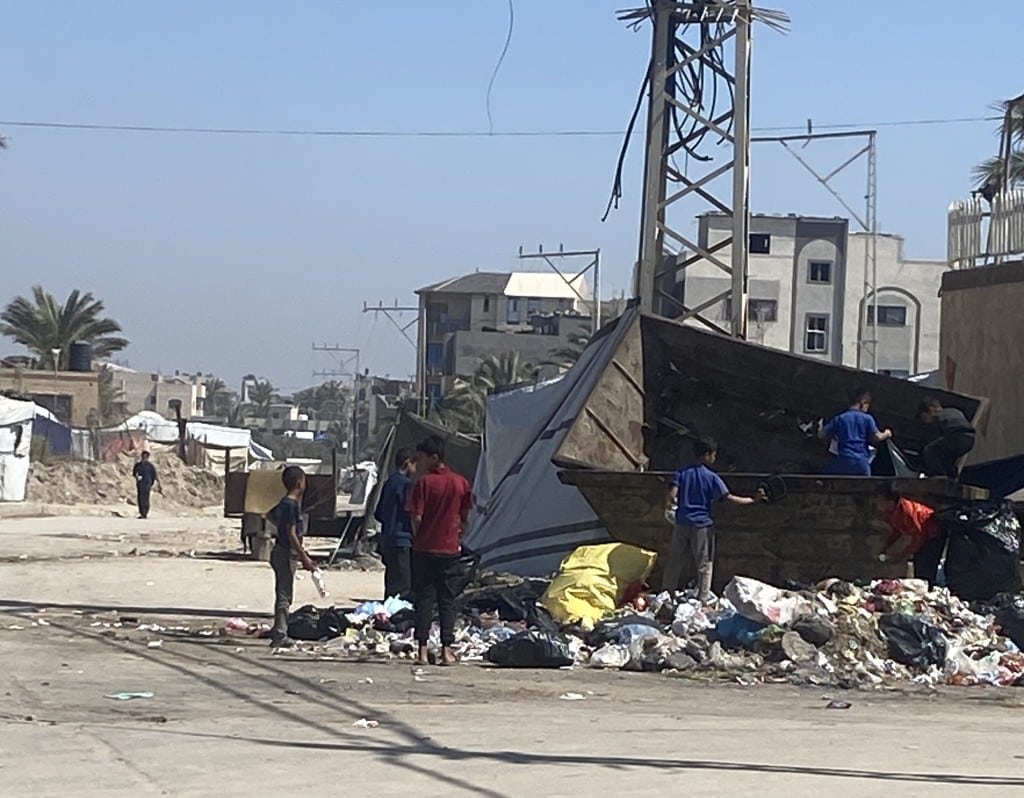
On May 17, an Israeli strike targeted a Turkish charity kitchen in Deir al-Balah, killing three people. The day before, two aid workers were murdered. Following the suspension of World Central Kitchen, it is those feeding the survivors who are being bombed.
Will Gaza face another famine?
Transportation in Gaza: “a daily struggle”
In Gaza, faces bear the marks of two years of war. Eyes are hollow. Bodies are exhausted. People are no longer seeking safety; they are seeking transportation, drinking water, food, and a place free of rats. Survival has become the only goal. In the devastated streets of Gaza, the scene looks like something from another era. Donkey carts, overloaded tuk-tuks, and cars patched up with spare parts that are impossible to find. Between 25,000 and 32,000 vehicles destroyed, 2,835,000 meters of road razed. What remains is not enough, and what is still running is falling apart.
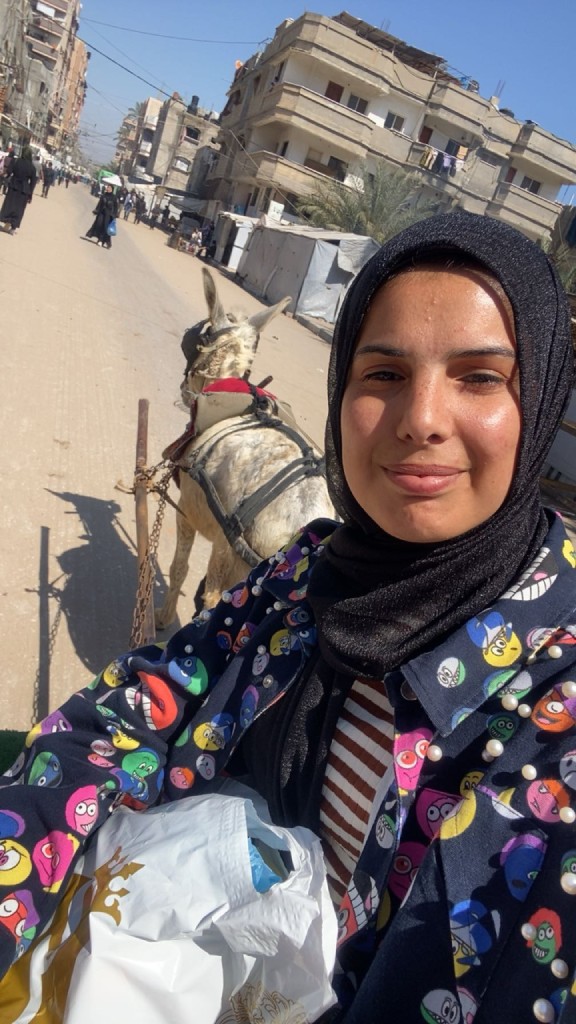
Khaled, 33, an emergency room nurse at Nasser Hospital in Khan Younis, has been waiting at an intersection for over an hour. He needs to get to his shift.
“Words aren’t enough to describe what we’re going through,” he says. “You wait for hours for a car that never comes. Sometimes you change your route entirely, sometimes you walk.
“A trip that used to take 10 minutes can now take a whole day. Tuk-tuks and trailers weren’t designed for roads full of rubble and craters. At every turn, you think about your life. You just think about getting there.”
The war in Gaza has officially ended. On the ground, it continues in other forms. Roads are torn up, entire neighbourhoods are inaccessible, and displaced families still cannot return home.
Cars struggle to navigate roads riddled with potholes and rubble. Drivers, meanwhile, face skyrocketing fuel and maintenance costs. Even fuel vendors are barely scraping by — they buy at high prices and sell little.
“Gaza! Gaza!” — the voice of 17-year-old Mohammad Abu Ras drowns out the roar of engines. He stands at the back of a trailer, calling out to passengers and helping them board. He isn’t the driver; he’s there to fill the trailer and earn a few shekels. Mohammad lost his entire family in the bombings. Only he and his sister remain, but she left to receive medical treatment abroad after being seriously injured. Since then, he has been alone. Every morning, he looks for work. Any work.
“I climb into the trailers, help load people, and shout out the destinations,” he says. “It’s not a real job, but it’s what I found. I have to eat.”
Sarah is raising money to fund her education. You can donate here.
Rats, a new daily threat in the camps for displaced people
Thousands of displaced families live in fear. In the tents, rodents have taken over living spaces. Garbage is piling up. The sewers no longer work.
Fouad Jandiyya, 33, father of five, fled eastern Gaza City. For months, he has been living in a camp in the city centre. To survive, he works with the municipality cleaning the streets, one of the few jobs left in a territory where unemployment exceeds all measurable levels. “The rats have been here since day one,” he says. “But now they’re multiplying between the tents at an abnormal rate. You get rid of one, and another takes its place. We have no real solution.”
The rats tear through the plastic tarps of the tents and destroy food supplies. Homemade traps are no longer enough. Poisons are either unavailable or prohibitively expensive. His wife Raghad recounts that a rat scratched their child while entering the tent at night. Since then, the children have been afraid to move after dark.
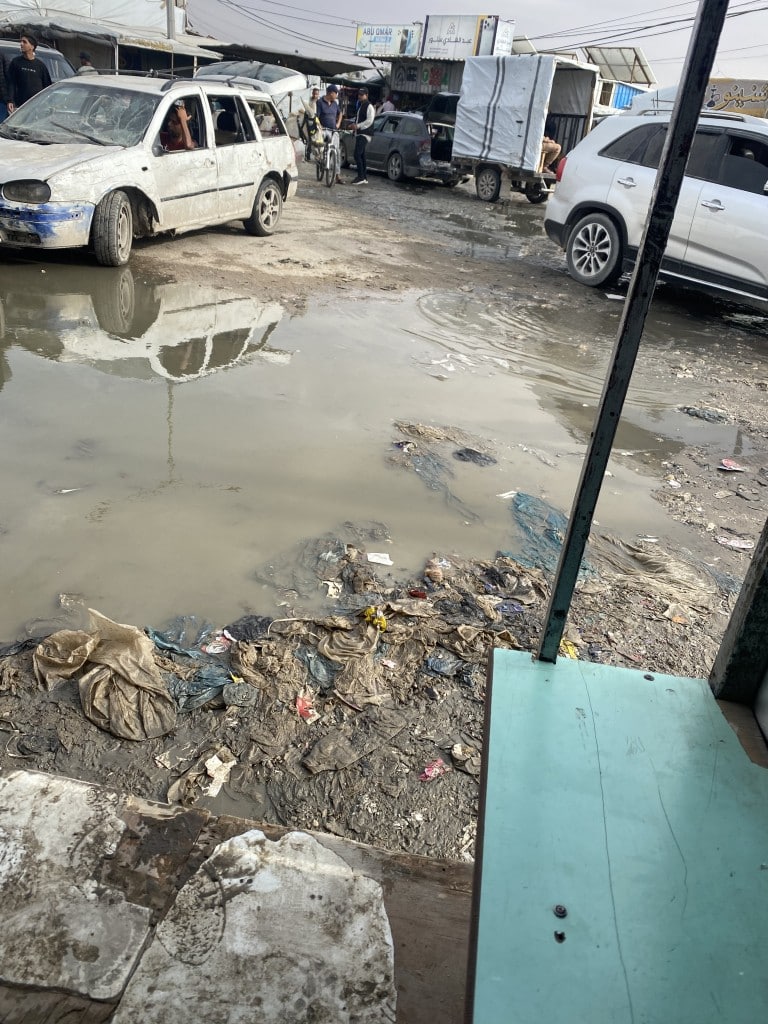
“Every morning we find rat tracks everywhere,” she says. “Even the food isn’t safe anymore. We live in constant fear.”
Oum Ahmed has been driven from her home five times. She ended up pitching her tent near a landfill — it was the only space left.
She is 55 years old. With her: her children and her 12 grandchildren, all huddled under plastic tarps just a few meters from the trash, in the cemetery neighbourhood near the Fares Market. She has been displaced more than five times since she left her neighbourhood of Shuja’iyya, east of Gaza. She, her children, and her 12 grandchildren. Each time, an evacuation order. Each time, a new tent in a new location.
“The smell at night is unbearable,” she says. “The heat makes it even worse. The mosquitoes won’t let us get a wink of sleep. The flies are on the food, on the children’s faces, everywhere.”
She holds out her grandson’s arms. Bites. Redness. Wounds that won’t heal.
“I looked elsewhere,” she says simply. “There’s nowhere.”
Umm Ahmad is not an isolated case. More than one and a half million Palestinians live in similar conditions in tents, without drinking water, without sanitation, in a territory where 88 per cent of the infrastructure has been destroyed.
Half of Gaza’s population now lives under plastic tarps. Not because they choose to, but because there is nothing else left.
Some have tried to return home. They were killed.
Israeli forces maintain what they call the “yellow line” — blocks painted yellow planted on the land and homes of Gazans — which demarcate a buffer zone covering more than 60 per cent of the territory. Every day, homes are demolished in this zone. Every day, gunfire. Evacuation orders were issued as if the war had never ended.
The ceasefire exists on paper. On the ground, Israel draws its borders on the ruins of others and kills anyone who approaches them.
Eighty-eight per cent destroyed: the face of a territory erased. One hundred thousand tons of explosives over 365 square kilometres.
210,000 homes completely demolished. 110,000 rendered uninhabitable. 180,000 partially damaged, according to the Gaza Government Media Office. Families who once slept in apartments now sleep in rat-infested tents, next to landfills, among the graves.
137 schools and universities were wiped out. 357 others were damaged. The children of Gaza are growing up without classrooms — those who survived.
34 hospitals out of service. 80 health centres closed. 162 medical facilities targeted. The sick walk for hours to a doctor, if they can find one.
832 mosques demolished. 206 archaeological sites destroyed. 19 cemeteries hit.
From the very first day of the war, Israel cut off the water. 330,000 meters of water mains destroyed. 655,000 meters of sewer lines razed. Sewage seeps into the groundwater. In winter, it floods the tents.
The consequences: intestinal diseases, skin infections, epidemics brewing in a territory where the medical system no longer exists.
(Source: Gaza Government Media Office, 2025)
Trapped in endless suffering
Diseases. Collapsing tents. Impassable roads. Rats attacking children at night. The spectre of famine returning. Two years of massacres and displacement, and now epidemics are finishing what the bombs started.
Gazans do not suffer only from the bombs. They suffer from the street they can no longer cross, from the water they can no longer drink, from the rat that bites their child at night, from the doctor they cannot reach. Each act of destruction compounds another. With each passing day, the situation worsens a little more. The people of Gaza are no longer facing a single crisis. They are surrounded. How long can a people survive under the bombs, in the mud, with the rats, while the world looks on?
Author
Comments (7)
Leave a comment
Related Articles
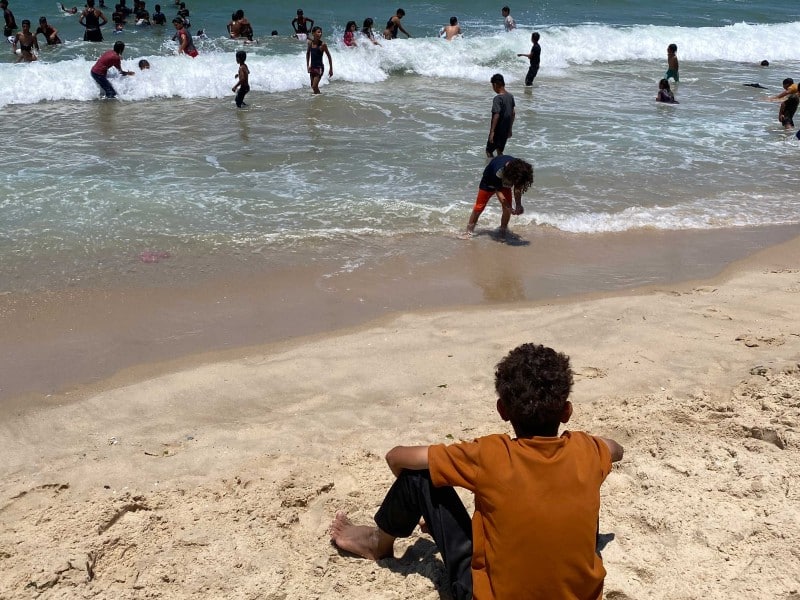
The Sea in Gaza: Memory, Survival, and the Last Refuge
Has the war changed the meaning of the sea?
Editor’s Note: The Rover Does TV News, Our Way
The Week Is Rover will bring our independent journalism to YouTube, where we’ll fight the information wars on a new front.
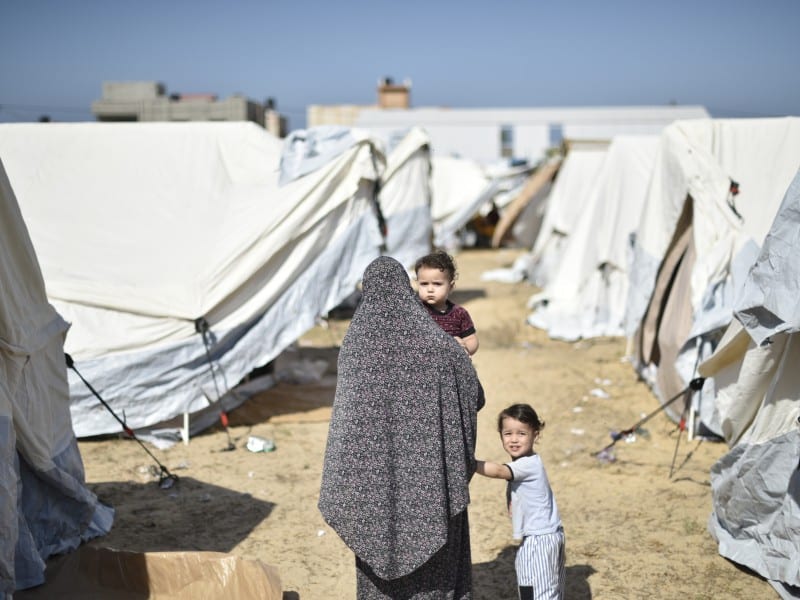
The Bombings Continue… Life at a Standstill in Gaza
“Calling this a ceasefire is a joke.”
Really, what about Israel?
What about it?
The article effectively conveys civilian misery through personal stories and photos, which are valuable. Humanitarian conditions in Gaza are objectively grim—destroyed infrastructure, displacement, health risks, and sporadic violence do not equate to normal life.
However, as journalism/opinion from a Gazan writer in a left-leaning outlet, it functions more as advocacy than neutral analysis. It attributes nearly all blame to Israel, erases Hamas agency and October 7 initiation, and uses loaded language (“massacres,” “erased” territory) without equivalent scrutiny of Palestinian leadership’s choices. A more complete picture: Hamas started/escalated the war with a massacre; Israel’s response caused massive collateral damage due to Hamas tactics; the ceasefire is fragile with violations on both sides and no clear path to demilitarization or governance reform. Suffering is real and should be alleviated via aid and reconstruction—but sustainable improvement requires addressing root causes (Hamas rule, rejectionism, security threats), not just ceasefires on paper. Independent verification of claims on both sides remains essential.
Palestinians are often asked to be “balanced” when they talk about their suffering.
But our story didn’t begin on October 7th. My grandparents were expelled from their land during the Nakba. Entire generations have lived through occupation, displacement, blockade, and successive wars. Speaking of historical and political responsibility is not an exaggeration. It is describing a reality lived for decades.
I respect the profound generational trauma Palestinians carry from the Nakba, occupation, and repeated wars—your suffering is real and deserves acknowledgment. At the same time, it is worth noting a tension in your words: you push back against any call for “balance” when describing Palestinian suffering, yet simultaneously invoke “historical and political responsibility” that begins only at the Nakba—omitting the 1947 UN partition (accepted by Jewish leaders, rejected by Arab ones), decades of rejectionism, and the choices of Palestinian leadership since.
Today’s generation in Gaza has grown up under Hamas rule since 2007: with rockets fired from civilian areas, aid diverted to tunnels rather than schools and jobs, curricula promoting martyrdom, and stifled opportunities. It is striking how an ideology that claims to fight for Palestinian dignity has so consistently delivered the opposite.
Balance means recognizing agency on all sides. A better path forward requires Palestinian leaders committed to deradicalization, demilitarization, accountable governance, and genuine coexistence with Israel—investing in education, economy, and state-building instead of perpetual conflict.
Both peoples have legitimate ties to this land. By choosing mutual recognition over selective memory, future generations can finally trade suffering for dignity, security, and shared prosperity. That is the hopeful future worth pursuing—together.
You speak of coexistence and balance from the comfort of theory. I speak from a history my family has lived through for generations.
My grandparents were displaced during the Nakba. My family, like millions of Palestinians, has lived with the consequences ever since. That is not “selective memory”; it is lived reality.
You ask Palestinians to acknowledge every aspect of history, yet you dismiss our experience when it does not fit your narrative. Coexistence cannot be built on denying or minimizing what Palestinians have endured.
I know my history because my family lived it. You are free to hold your views, but you do not get to redefine my reality.
Al amdullila one day hamas will stop slaughtering the palestinians in gaza. Free gaza from hamas inch alla