
Blainville Teenager Takes Stablex Fight International
After concluding that local avenues had been exhausted, a 14-year-old Blainville resident has brought the fight over the Stablex hazardous waste expansion before the CEC, an international environmental body established by Canada, the United States, and Mexico.
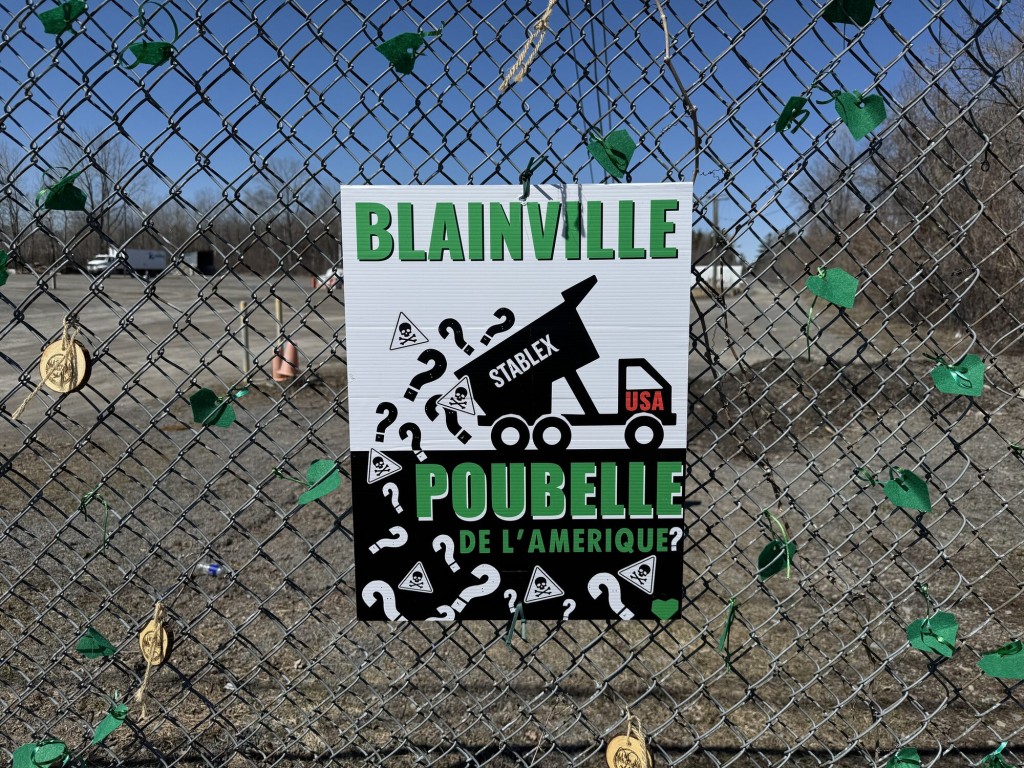
A 14-year-old from Blainville has taken one of Quebec’s most contentious environmental disputes to the international stage.
William Guindon is filing a formal submission alleging that Canadian authorities have failed to adequately enforce environmental laws surrounding the expansion of the Stablex hazardous waste facility north of Montreal.
On May 1, Guindon submitted a petition to the Secretariat of the Commission for Environmental Cooperation (CEC) under Chapter 24 of the Canada-United States-Mexico Agreement (CUSMA).
If the submission is accepted, it could lead to an independent factual record examining whether environmental laws were effectively enforced. Past investigations by the CEC have helped drive environmental cleanups, reforms to public participation laws and improvements to environmental infrastructure.
Support your local indie journalists
The youth’s submission argues that federal and provincial authorities have not effectively enforced legislation designed to protect migratory birds, species at risk, and local waterways in connection with the proposed expansion of the American-owned waste treatment facility.
“I decided to look into the CEC submission because there was no recourse to go after the organization itself,” Guindon told The Rover.
The submission places the teenager at the centre of a dispute that has divided residents, environmental groups, municipal officials, and the Quebec government for more than a year.
Stablex has operated its hazardous waste treatment and disposal facility in Blainville since 1981 on land bordering the Grande Tourbière de Blainville, a significant wetland ecosystem that environmentalists describe as one of the region’s most important natural areas.
The company says its proposed expansion is necessary to continue serving industries that require specialized hazardous waste disposal. Opponents, however, argue the project would destroy part of a sensitive wetland and further threaten ecosystems already under pressure from decades of industrial activity.
The controversy intensified in March 2025 when the CAQ (Coalition Avenir Québec) government passed Bill 93, legislation compelling the City of Blainville to transfer more than 60 hectares of municipal land to Stablex for the project.
The law sparked fierce criticism from opposition parties, environmental groups, and municipal leaders. Critics argue it significantly curtailed legal avenues available to citizens, environmental organizations, and public bodies seeking to challenge the project while limiting the ability of courts to halt construction through injunctions.
It was Guindon’s analysis of Bill 93 and the limitations it imposed on legal recourse that ultimately led him to pursue a submission through the CEC. “I thought it was very suspicious that they would pass a bill that effectively prevents citizens from challenging the government through normal civil processes while also limiting judicial recourse for NGOs,” he said.
“It made me very worried, and I thought this couldn’t be right, so I decided to make my submission, I gathered together different laws and compared them,” he says. “When I put everything together, I started noticing things that, it just didn’t seem right, especially with Bill 93.”
His submission argues that the legislation raises broader questions about environmental accountability and the enforcement of federal environmental protections. The teenager’s concerns deepened after reviewing environmental testing conducted by local citizen groups opposed to the expansion.
A coalition of residents, supported by the environmental organization Mères au front and biologist Daniel Green, commissioned independent laboratory testing of water and soil samples collected near the Stablex site. According to the group, the analyses detected elevated levels of several contaminants in nearby ditches and waterways surrounding the facility.
Among the most striking findings were cadmium concentrations that the group said exceeded Environment and Climate Change Canada’s aquatic life protection criteria by as much as 340 times in one ditch adjacent to the plant. Other samples reportedly showed levels between 7.4 and 12 times above guideline thresholds near the landfill area.
Inorganic cadmium compounds are classified by Health Canada as toxic substances and have been linked to a range of environmental and human health concerns.
Guindon’s submission to the CEC alleges that Canada has failed to effectively enforce provisions of the Migratory Birds Convention Act, the Species at Risk Act, and the Fisheries Act. It also raises concerns about contamination risks to nearby waterways and wildlife habitats, including the Fauvel Lakes area.
“It causes me a lot of stress and worry,” Guindon said. “What happens if we allow companies to bury toxic waste in our bog? What does that mean for our health in 50 years? We are talking about ecosystems that took thousands of years to develop. With the Blainville wastewater treatment plant located nearby, contamination is something that genuinely concerns me.”
The Secretariat of the Commission for Environmental Cooperation has confirmed receipt of the filing and will now determine whether it meets the criteria required to proceed under the environmental enforcement provisions of CUSMA.
Stablex rejects the allegations contained in the submission and declined an interview request from The Rover, but did, however, provide an email response.
“We won’t be commenting at this stage,” said Maxime Couture of Stablex in the written response.
“That said, both the City of Blainville and the Ministry have conducted analyses that contradict the citizen sampling cited in the submission, and the methodology behind those cadmium readings has never been disclosed. As for Lake Fauvel, it sits upstream of the site; water does not flow uphill.”
The company’s response reflects a broader dispute over the environmental impacts of the project. While citizen groups and environmental advocates argue independent scrutiny is needed to resolve conflicting evidence, Stablex maintains that official analyses do not support the allegations being raised against the facility.
The CEC reviewed the submission and notified the petitioners that the petition did not meet all the criteria, and that they had 60 days to submit a revised petition. Guindon hopes the process will bring greater transparency to a project that has become one of Quebec’s most divisive environmental battles. The teenager also said that he hopes his complaint will encourage greater scrutiny of the project and demonstrate that ordinary citizens can influence decisions affecting their communities.
“I really want the truth to come out,” he said. “I think it shows that citizens and people who come together have the power to make positive change for their area and for the environment.”
“Even in Montreal, there are a lot of people who have no idea about this or what is going on. I hope this submission helps raise awareness about what’s happening in Blainville, including the legal changes and the role the government has played in making this project happen.”
Author
Related Articles
Guns, Cash and Cannabis a Deadly Mix on Mohawk Territory
Pot shops, casinos and alleged gun-runners are wearing out their welcome in Kanesatake after another fatal shooting rocks the territory.

‘Everybody Who’s on the Stage Is Part of Your Community’: Ctrl+Alt Festival Returns for a Third Edition
Free festival stacked with queer, local performers to take over the Place du Village July 24-26.
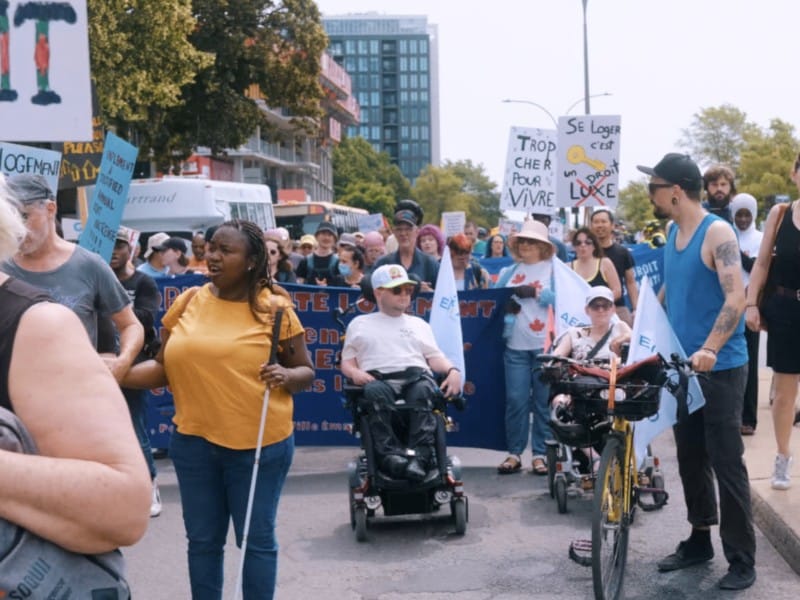
Moving Day: A “Desperate” Struggle for a Growing Number of Montrealers
July 1 is now a race against time for families facing homelessness once their lease expires.
Comments (0)
There are no comments on this article.