
The Bombings Continue… Life at a Standstill in Gaza
“Calling this a ceasefire is a joke.”
The noise came before dawn. A dull, heavy sound that pierced through the walls as if they didn’t exist. For those who have been living in Gaza since October 2023, this sound needs no explanation. It has become the punctuation mark of every day.
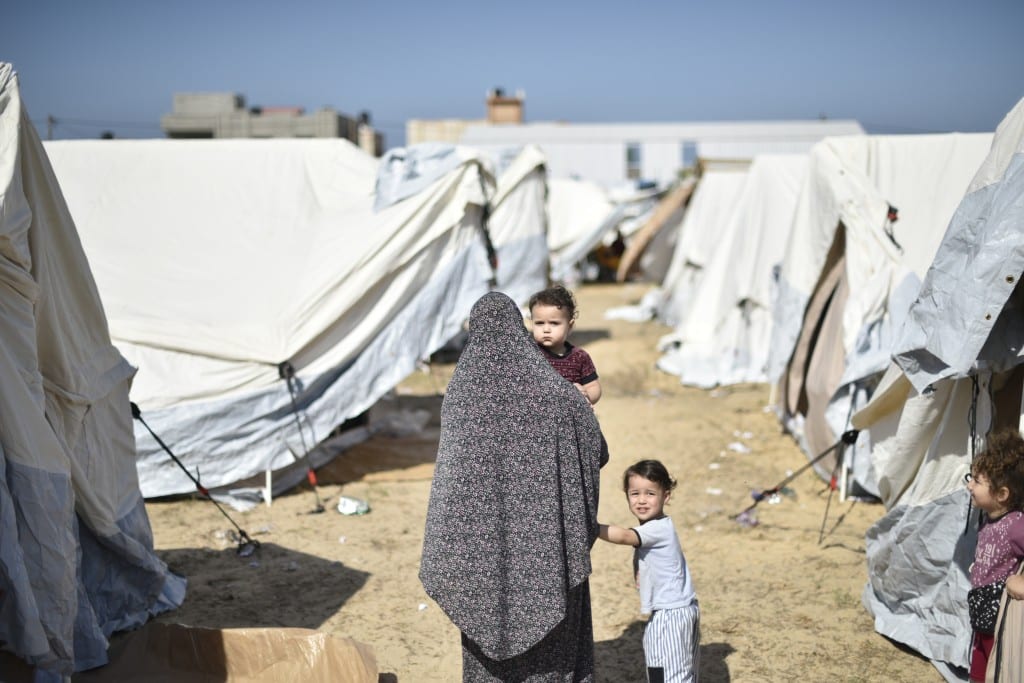
In her tent set up in southern Gaza, Maryam Qishta immediately recognized that sound — the sound of bombing. “Calling this a ceasefire is a joke,” she says.
In that moment, the memories came flooding back without warning. December 11, 2024 — the day she lost most of her family. The images, the screams, the dust — it all comes flooding back as if the scene were repeating itself. She remains silent for a few seconds before continuing, as if speaking of that date still requires a physical effort even today. She lost her husband, two of her children, and 10 other family members in Rafah, shortly before their forced displacement. According to her account, their home and those of relatives were struck without warning during the same series of bombings. The attack claimed dozens of lives and left more than 33 people injured.
Sarah is raising money to fund her education. You can donate here.
Living Under Bombs
“I still don’t understand how I’m alive,” she confides. “They pulled me out of the rubble. I don’t even know how I survived that.”
Since that night, Maryam has been living in a camp for displaced people in southern Gaza. Like hundreds of thousands of other families, she has had to rebuild her daily life from the ruins, in a territory where successive displacements have redrawn the map of life. Yet, despite the loss and destruction, she continues to speak of Rafah as a possible place to return to — a return she awaits, without knowing if it will ever come. “I dream of the day when I can go back to Rafah,” she says. “Even if I find nothing left there, at least I’d like to be on my own land. ”
Her daily life mirrors that of hundreds of thousands of families in Gaza, caught between repeated displacements, destruction, and constant uncertainty. Since the ceasefire agreement reached in October 2025, the Gaza Strip has continued to endure nearly daily Israeli strikes. According to local sources deemed reliable by the United Nations, at least 981 Palestinians have been killed and nearly 3,000 others wounded since the truce took effect.
In a territory of 365 square kilometres home to nearly two million people, repeated displacements and militarized zones have profoundly fragmented the living space.
In this context, one question stands out: Why do the bombings continue despite the ceasefire agreement?
On the ground, many residents describe a reality that contradicts the very idea of a “ceasefire.” Strikes are still hitting residential areas that have already been largely destroyed, where families live in tents or makeshift shelters. For them, the distinction between war and the ceasefire seems to have blurred.
“We no longer distinguish between days of war and days of truce,” says Awaad Khattab, 28, a pharmacist and soccer coach in Gaza City. He explains that, even after the ceasefire was announced, the fear never really went away. The explosions, he says, continue to punctuate the days and reshape the rhythm of daily life.
“Every night, we fall asleep not knowing if we’ll wake up in the same place,” he adds. “The truce exists in press releases, not in our reality.”
Gaza’s residents live in constant fear of a sudden collapse of the ceasefire. The trauma associated with the sound of explosions — even when calm has been officially declared — maintains a constant state of anxiety, in which memories of previous episodes resurface. Many recall, in particular, the breakdown of the truce in March 2025, when intense bombardments resumed, killing more than 400 people according to official local sources. Since then, the fear that the agreement could once again be undermined remains very much on people’s minds.
These fears reflect a deep mistrust: the fear that written commitments will have no effect on the ground, leaving people without real protection or any prospect of reconstruction.
When the “ceasefire” no longer changes daily life
In camps for displaced people, as well as in neighbourhoods that are still partially habitable, life is no longer organized around a stable daily rhythm but rather by implicit cues: the sound of planes, sudden movements, and evacuation orders that can be issued at any moment.
Some residents say they keep their essential belongings ready at all times, without ever really unpacking what they brought with them during their last evacuation. Others say they sleep fully clothed, out of habit, in case they have to flee again in the middle of the night.
In this context, the line between “times of calm” and “times of war” no longer truly exists in everyday life, but only in official announcements — which few people still trust.
“We no longer trust ceasefire announcements,” explains Abu Kamal Al Bobli, a displaced resident of Gaza City living in a tent in the southern part of the enclave at the Al Mawasi camp in Khan Yunis. “Every truce feels like a lull before the next explosion. We live in fear that it could all start again at any moment, without warning.”
“You get used to the sound of planes, but you never get used to the idea that it could start again at any moment,” he adds.
“I just want to get my old life back, stay at home, and tend to my plants like I used to,” he confides. But that simple wish now seems out of reach.
Over time, another concern has taken hold: that for his grandchildren. “I’m afraid for them because of the constant bombings. We live in fear that one day something will happen to them,” he adds. For him, the war has turned daily life into a state of constant waiting, with no clear prospect of a return to normalcy.
It is no longer just the fear of bombings that dominates, but the gradual erasure of any vision for the future.
In Gaza, many residents say they no longer make plans beyond a few hours or a few days. Studies, work, plans for marriage or rebuilding are constantly suspended by an unstable reality, where everything can be interrupted without warning.
In Gaza, these questions are no longer abstract. They are not just mine; they are the ones that many here ask themselves every day. How can one explain a life marked by uncertainty, repeated losses, and this constant feeling of never truly being safe?
I often wonder, like many residents here, how this conflict has come to be a continuous state of affairs rather than a series of events — a reality where suffering eventually takes root, simply because it repeats itself.
In a world saturated with images and narratives, I also see the immense gap between what is seen and what is actually changing on the ground. Testimonies circulate, as do images, but concrete responses remain absent. Between the words of the agreements and what we experience on a daily basis, Gaza remains suspended in a fragile space, where the hope for real protection and a stable future remains as strong as ever.
Author

Related Articles
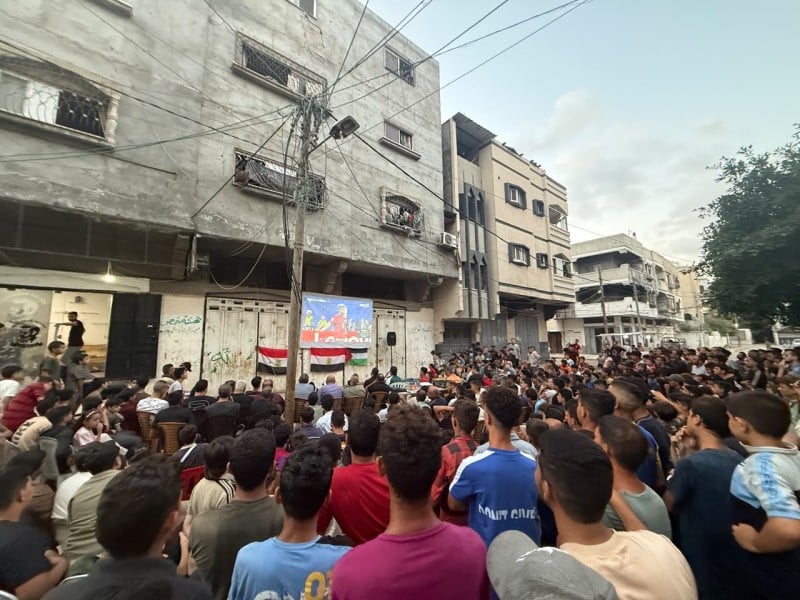
How Gazans Are Watching the World Cup
Amid power outages, fear of bombings, and the loss of the places where they once watched the games, soccer remains a rare moment of respite in a life upended by war.
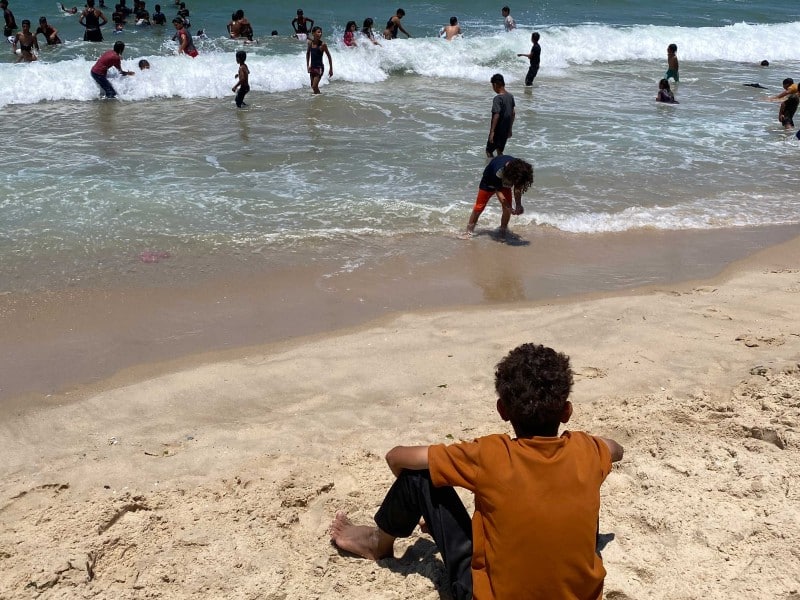
The Sea in Gaza: Memory, Survival, and the Last Refuge
Has the war changed the meaning of the sea?
Editor’s Note: The Rover Does TV News, Our Way
The Week Is Rover will bring our independent journalism to YouTube, where we’ll fight the information wars on a new front.
Comments (0)
There are no comments on this article.