
‘Everybody Who’s on the Stage Is Part of Your Community’: Ctrl+Alt Festival Returns for a Third Edition
Free festival stacked with queer, local performers to take over the Place du Village July 24-26.
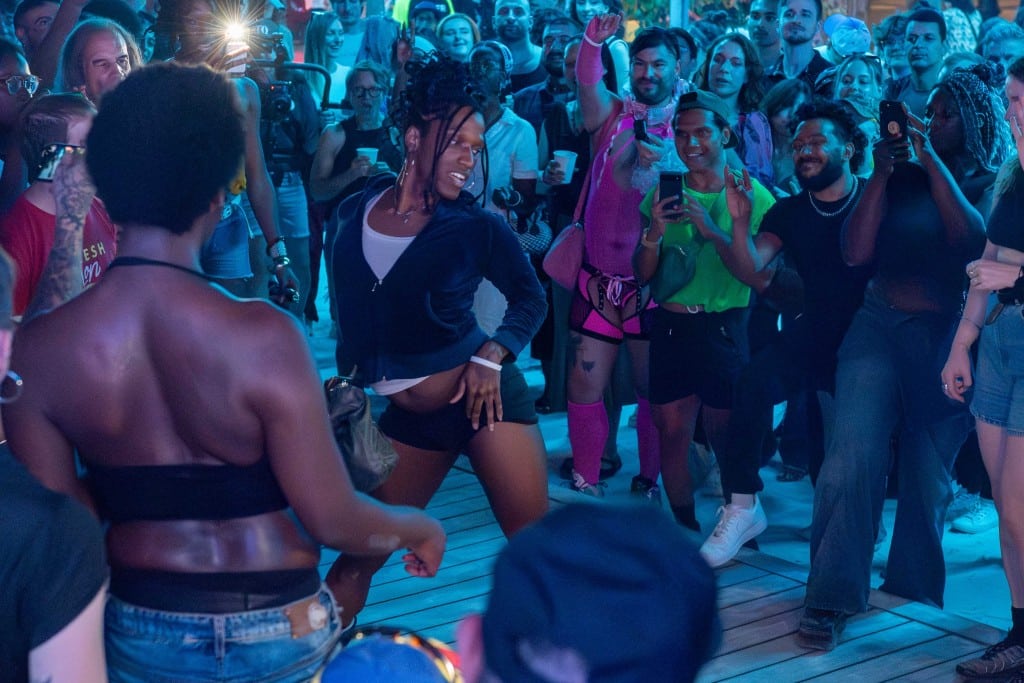
In an era of commodified queerness, corporatized Pride and overexploitation of artists, queer-run Ctrl+Alt Festival casts sunshine on Montreal’s underground for the third consecutive year.
Local nightlife icons and burgeoning artists, including DJs, drag queens, ballroom performers, and burlesque dancers will take to the stage July 24-26 at Place du Village. It’s free to attend, and the lineup and organizers are 100 per cent queer.
It’s a rarity, according to one of the festival’s hosts, Christen Marlot.
“You can go to any kind of party underground, you’re definitely going to meet queer people, but not everybody coming is necessarily going to be queer or like, queer-adjacent,” she says. “Whereas with Ctrl+Alt, you know that everybody who’s on the stage is part of your community.”
Support your local indie journalists
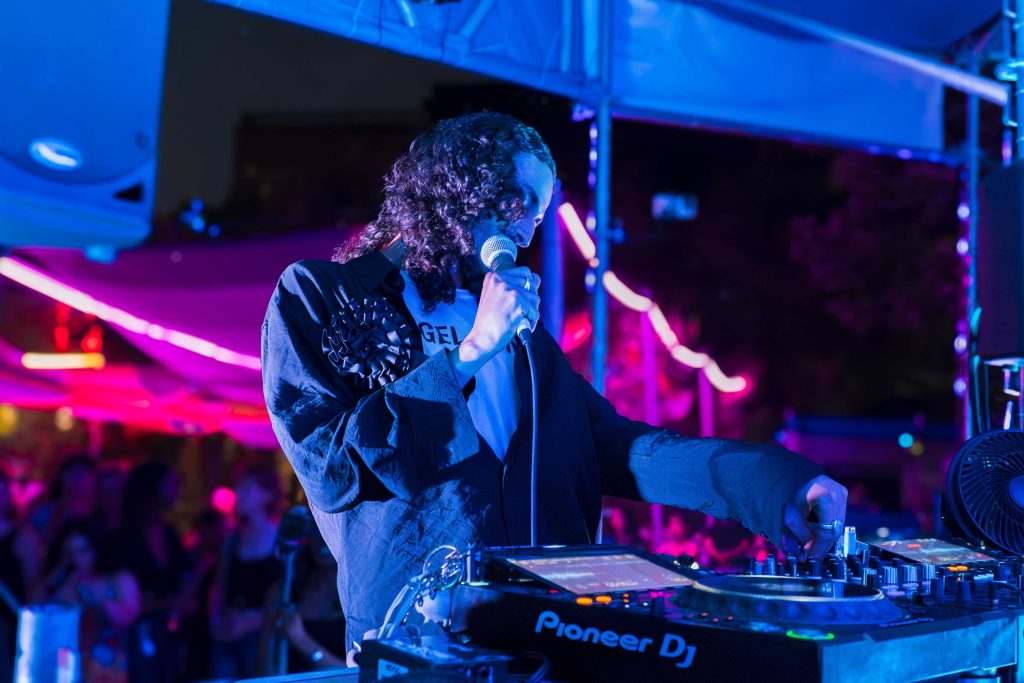
When Al Haytame Farsane, who performs under the stage name Monsieurmadam, heard about the first edition of Ctrl+Alt back in 2024, they said to themself, “Oh my God, this is everybody that I know, everybody that I consider close and in my community.”
They attended all three days of the first edition.
“It was beautiful and it was so much fun. That little space felt like a bubble outside of time and outside of space.”
This experience inspired Farsane to get more involved with the festival, first as a performer in 2025, and this year, curating AFT3RWE4R‘s Saturday evening dance party and serving as sound designer for the festival trailer.
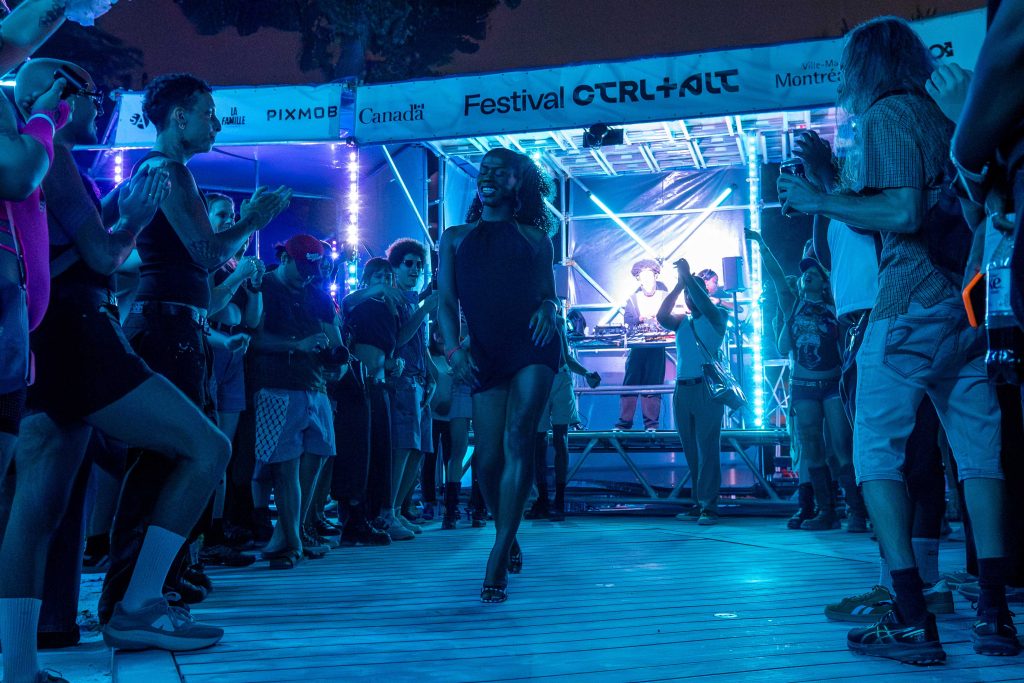
While Ctrl+Alt festival was born out of the DIY attitude that permeates underground queer nightlife, its format is a departure from the scene’s usual events.
Instead of dodging tree branches in a dark forest to emerge in a field soundproofed by the woods or shuttling to whichever venue a queer collective managed to secure the necessary permits for that night, Ctrl+Alt takes place in the heart of the Gay Village. Rather than arriving at the function after midnight, festival attendees and performers can bask in the summer sunshine, in full visibility.
“So often we see queerness… through a nightlife lens, right? And there’s nothing wrong with that, but I feel like it being during the day, being like a full weekend kind of thing, it makes it even more wholesome, it makes it even more special, in my opinion,” says Marlot.
The festival was started by trans and queer nonprofit Studio ZX. Vicky B. Ouellette, co-founder of Studio ZX, and general director of Ctrl+Alt, says the impetus for the festival was to create well-paid opportunities for trans and queer artists in Montreal, who are often tokenized and relegated to opening slots.
Festival attendees can expect queer art forms, performances that range from experimental, to comedic, to erotic, and, of course, music that will make them dance.
Queer BIPOC collective DISCOÑO and Latinx DJs from Pikete will flood the dance floor with Latine sounds and Afro beats. Local legend Syana‘s “genreless,” high-octane DJ set and a performance from energetic hip-hop duo Strange Froots will get the crowd moving.
C’est Ma Toune will host a “whacking” dance battle — a street dance style involving sharp arm movements and dramatic poses. Supernature‘s segment plans to bring together different queer art forms — drag, DJing, and whacking — for a performance set in the year 2079.
Drag performer Aizysse Baga and QTBIPOC “sensual performance art collective” Lust Cove will entertain the crowd with sci-fi-themed cabarets, while Canada’s Drag Race alum (and current All Star competitor) Sami Landri will bring her internationally renowned “trash chic” fashion and Acadian absurdist comedy to the stage.
Black Gxrl Sesh, a Black ballroom and performance collective, will cap off the festival with a mix of bassy, danceable techno DJ sets and live performances.
“By only booking local talent, it really makes us accelerate on that process of recognizing each other for the up-and-coming legends in our own rights that we are,” says Chivengi, co-founder of Black Gxrl Sesh.
The programming is tied together by this year’s futuristic theme. The festival trailer depicts artists being cloned and optimized to feed the insatiable algorithm.
Creative director Rico Serna (stage name RICO RICA) says that performers were asked to contemplate “where we stand as artists from our real self and the projection we’re giving to the crowd, trying to get in touch with that real self and connect as humans in this digital, overly saturated, distracting social media world.”
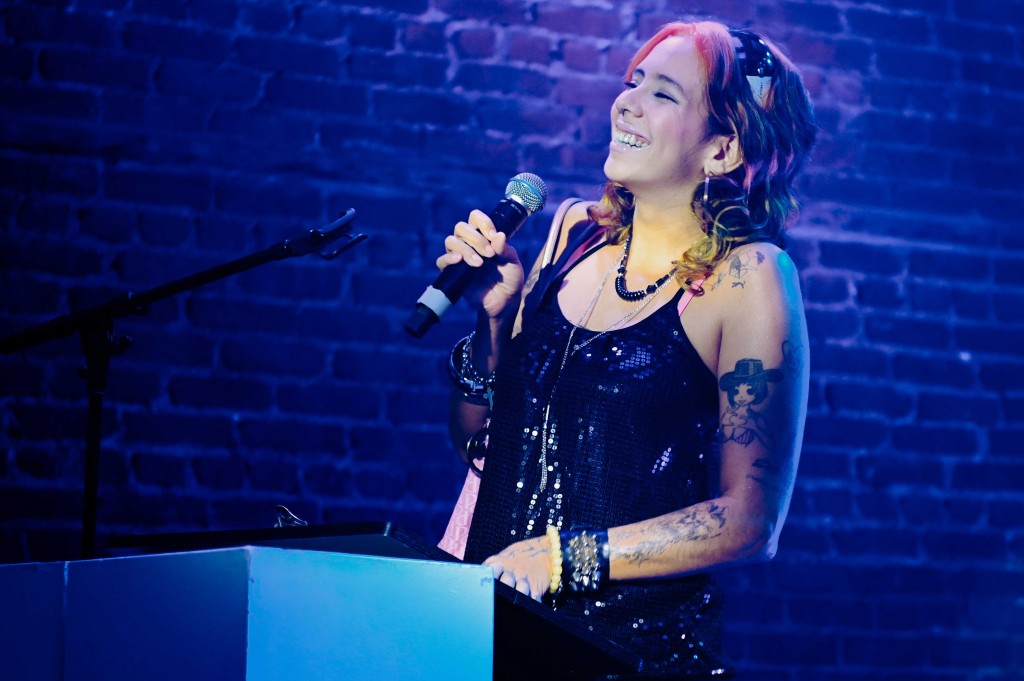
Artists from Black Gxrl Sesh are performing for the second year at Ctrl+Alt. Chivengi now counts on the festival as a recurring checkpoint for Black artists deemed too “alt” for the mainstream to be platformed and paid. She feels the festival’s creative direction encouraged her to platform outspoken and unique artists.
“I definitely wanted to include artists who I feel are originators of their own waves, who own their sounds, who own their presence,” she says.
“I wanted to include Fraud Perry, I wanted to include Djeity, I wanted to include myself. As we’re all people who have moved with that intention of like, ‘yeah, I fully believe in what I do, I fully believe in what I put out,’ but we’ve also not been polite about the state of the industry.”
Ouellette says that it’s significant that the event is taking up space in the Gay Village — a historic refuge for 2SLGBTQ+ people, but these days, it’s not known as the most inclusive neighbourhood.
“Who is the Village serving? And which community can benefit from having a space that is about queer celebration?” Ouellette asked herself while conceptualizing Ctrl+Alt.
“Centring the experience of queer people — ‘queer’ as a political identity that defies sexual and gender norms, and expectations — is really important, but also more than just showing faces, we need to give voices to racialized people, to lesbian and trans people, to people that would benefit from having their village be their headquarters of sorts or their sanctuary to this day, because it’s those communities that are under attack right now more so than the white cis gays.”
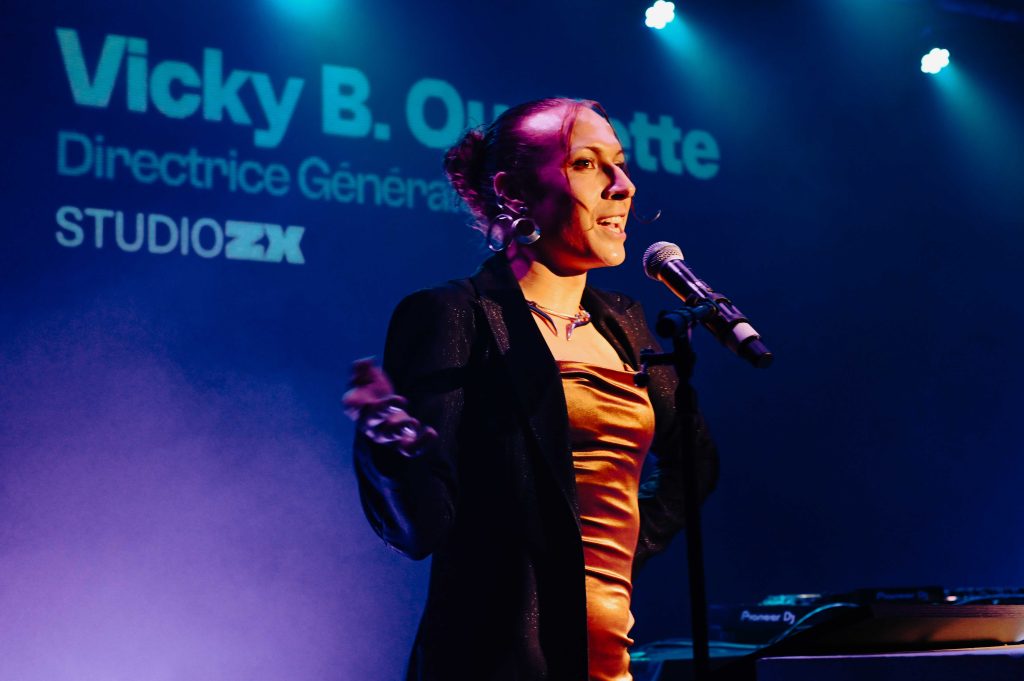
Serna, who has organized many “renegade” events themself, says that other people in the scene find it interesting and surprising that Ctrl+Alt is collaborating with the Ville-Marie borough. The borough was the sole funder of the festival’s first edition back in 2024.
“It is kind of breaking the stigma that we just have to fight for everything, like we do have to fight for everything, but that it is possible to actually, like, work with (institutions) instead of having to do things illegally,” says Serna.
“Everything that (Ctrl+Alt has) achieved allows for me to actually get paid to do this job, a passion project that I (used to) kill myself doing for free, basically.”
Their main funders are Canadian Heritage, the Ville-Marie borough, the Conseil des arts de Montréal, and the Société de développement commercial du Village. As the city has begun to recognize the importance of nightlife and legislate it in last year’s Politique de la vie nocturne, Ouellette says it’s important to take advantage of the current political moment.
“The underground was always seen as this well of culture and newness,” says Ouellette. “It’s seen as everything that, like, the mainstream isn’t, and yet it is pillaged, it’s taken from … and then used, translated to the main audience.”
“I find the feedback kind of funny that the moment that anybody from the underground starts to create these opportunities that are more visible for other people, that it becomes about this, like, ‘Oh, well, it’s not really that anymore.’ And I don’t believe that that’s a correct perspective because we make it, the underground is us.”
Farsane says DIY events and institution-backed ones can coexist.
“There’s space for part of the nightlife to remain underground because it’s important, we need that, but I also believe there’s space for initiatives like this one to be a bit more publicized,” they say.
“If we’re all (partying) in a shed, it’s going to be a very nice time in the shed, but we can’t pay the artists the same. I feel like queer people deserve money. The girls deserve to get paid handsomely.”
There seems to be a growing appetite for Ctrl+Alt: 2024’s edition had around 1,500 visits; in 2025, over 3,000. Consequently, Ctrl+Alt has upped their production this year, with a 600-person capacity venue and a three-episode podcast promoting the festival, titled THE CXNT ROLLOUT.
“What I’m really excited to see, now that we’ve ingrained (Ctrl+Alt), how are people going to act? Will they show up to the space with just that much more freedom of expression, freedom to be?” says Farsane.
As the festival becomes more visible, and its funding sources expand, Ouellette says Ctrl+Alt will never censor performances to cater to institutional whims.
“I think Studio ZX’s job and greatest challenge is to tread that line between the communities we exist for and the institutions that allow us to create jobs,” she says.
“At the end of the day, the priority will always be the people.”
Related Articles
Des travailleur·euses du sexe de Montréal feront la grève pendant le week-end de la F1
Cette dernière initiative de « whoreganization » s’inscrit dans le cadre de la lutte des travailleur·euses du sexe pour leurs droits du travail et la décriminalisation.
‘Society Is Built to Keep Us in the Gutter’: Sex Workers in Montreal to Strike During F1 Weekend
This latest “whoreganization” effort is part of sex workers’ fight for labour rights and decriminalization.
Prison Recipes By and For Incarcerated People
La Cantine is a cookbook that helps inmates discuss risk prevention and reflect on food in prison.
Comments (0)
There are no comments on this article.